BLAST, Le souffle de l'info
AI Audio Summaries
20 videos summarized
1 follower on BriefTube
Last summary: Aug 22, 2026
AI Audio Summaries
20 videos summarized
1 follower on BriefTube
Last summary: Aug 22, 2026
Read AI summary
YouTube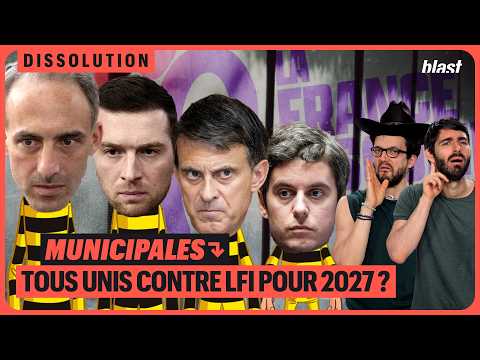
The recent municipal elections have provided a window into the shifting French political landscape as the country looks toward the 2027 presidential race. A dominant media narrative emerged immediately following the results: the idea that the left-wing alliance is poisoned by the presence of La France Insoumise (LFI). According to many commentators, the Socialist Party (PS) succeeds only when it distances itself from LFI, citing victories in Paris and Marseille while blaming LFI for defeats in cities like Toulouse and Limoges. However, a closer look at the data suggests this is a strategic oversimplification. In Paris, Emmanuel Grégoire’s victory was bolstered by a significant transfer of LFI votes in the second round, acting as a "Republican Front" against the right. Similarly, in Marseille, Benoît Payan saw his vote count jump from 100,000 to 160,000 between rounds, a surge that would have been impossible without the disciplined support of the LFI electorate. Despite this, these winners often fail to acknowledge the necessity of the alliance, preferring to project an image of independent strength.
Read AI summary
YouTube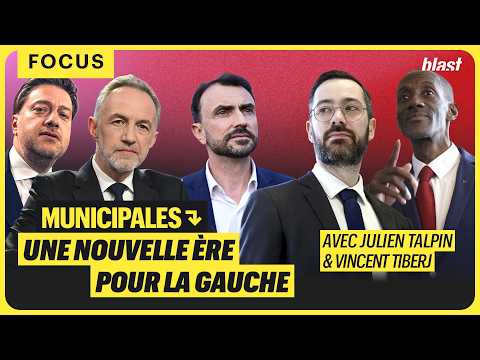
The recent municipal elections in France have sparked a complex debate regarding the state of the left-wing political landscape. While some critics argue that the left is losing ground and that Jean-Luc Mélenchon has become a "burden" for the movement, the reality presented in the results suggests a far more nuanced and fragmented picture. Far from being "on the ropes," the left has secured significant victories in three of France's largest cities—Paris, Lyon, and Marseille. However, these successes are tempered by a political landscape that remains deeply divided and characterized by a massive disconnect between the citizenry and the ballot box. One of the most striking takeaways from this second round of voting is the difficulty of applying a single, unified interpretation to the results. The outcomes appear to be driven heavily by local dynamics rather than a national wave. For instance, the Socialist Party managed to maintain its hold on several major cities, which was not a guaranteed outcome. In Paris, Emmanuel Grégoire’s victory occurred despite a lack of unity, whereas in Lyon, Grégory Doucet won through a successful coalition. Conversely, the loss of Pierre Hurmique in Bordeaux is viewed more as a personal defeat than a systemic failure of the left. These variations highlight how geographical and local factors dictate success, with university towns like Nantes showing a strong capacity for mobilization under Johanna Rolland, while other areas rely on the quirks of the voting system, such as in Amiens, where a minority victory was achieved through a triangular contest.
Read AI summary
YouTube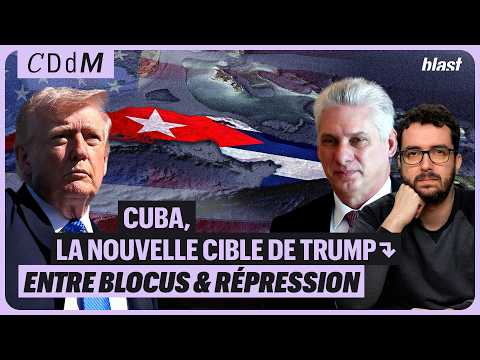
The political landscape of the Western Hemisphere is shifting rapidly as Donald Trump turns his sights toward Cuba. Following recent actions involving the removal of Maduro in Venezuela and ongoing tensions with Iran, Trump has declared that the Cuba we have known for decades is reaching its final moments. This aggressive stance was solidified during the "Shield of the Americas" summit held on March 7 at Trump’s Florida golf club. This event brought together several prominent right-wing Latin American leaders, including Argentina’s Javier Milei and El Salvador’s Nayib Bukele. While the official objective of this "Shield" initiative is to coordinate the fight against drug cartels, the underlying motivation is a geopolitical struggle to reassert American influence and block Chinese expansion in the region. The consequences of this "maximum pressure" strategy are already visible on the ground in Cuba. The island is currently gripped by a severe energy and economic crisis. In the city of Moron, frustrated citizens recently set fire to the local Communist Party headquarters, a stark symbol of the growing anger over constant electricity blackouts and fuel shortages. The situation has become unsustainable because Cuba is no longer receiving the oil it once relied on from Venezuela. Following the removal of Maduro, the new Venezuelan leadership under Delcy Rodriguez has aligned itself with Washington. This shift was highlighted by a friendly exchange between Trump and Rodriguez on social media, signaling a new era of cooperation that pointedly excludes Cuba.
Read AI summary
YouTube
The political landscape is undergoing a profound transformation where values that were once intolerable have become daily occurrences. We are witnessing a "tipping point" every week, characterized by a total inversion of values. In this new reality, fascists are rebranded as "moderates," while anti-fascists are cast as public dangers, ignoring decades of historical evidence. This shift isn't merely a return to the 1930s, but it carries haunting echoes of that era. Today’s political actors believe they can control the coming disaster by pulling worn-out strings, yet the traditional right wing is entering a state of moral bankruptcy by aligning with the far-right for the sake of political calculation. The primary victory of this movement is the annexation of vocabulary. Concepts and obsessions once confined to the fringes have infused society at large, with even opponents adopting the far-right’s lexicon. Through a process of "victimization," the far-right has successfully flipped the script: those who once stood as a "cordon sanitaire" against extremism are now labeled the new fascists. The modern far-right has traded black shirts for ties, presenting a respectable face that no longer threatens the interests of the bourgeoisie. They have adopted the slogan "rather Hitler than the Popular Front," updated for the modern age with the same recklessness.
Read AI summary
YouTube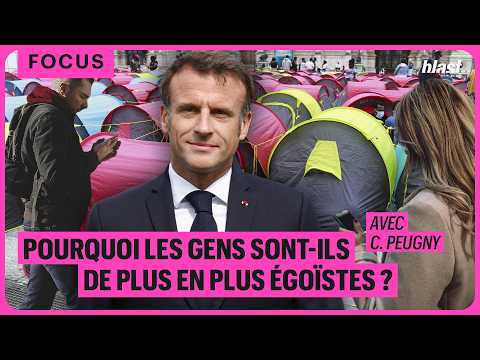
In this transcript, sociologist Camille Peugny explores the profound transformation of French society over the last forty years, specifically focusing on the rise of what he terms "selfish" behaviors. He clarifies that this is not a moral judgment but a sociological observation of how social constraints force individuals to adopt strategies that maximize their own interests, even when they know such actions might harm social cohesion. This shift is deeply rooted in the process of neoliberalization, affecting both the upper-middle class and the working class in distinct, yet equally significant, ways. Peugny begins by analyzing the ideological shift of the upper-middle class. Forty years ago, this demographic—comprised of young, educated professionals—was characterized by a "turn to the left." They supported traditional labor values like the right to strike and nationalization, while also embracing cultural liberalism, such as women’s rights and environmentalism. This synthesis made them the core electorate for leaders like François Mitterrand in 1981. However, Peugny argues that today, this group has taken a "rightward turn." While they acknowledge that inequalities are increasing, their interpretation of the cause has changed fundamentally. In the past, they attributed success or failure to social circumstances or the "luck of birth." Today, they overwhelmingly view inequality through the lens of individual merit. This "individualizing grid" suggests that everyone is responsible for their own path; those who succeed deserve it, and those who fail have only themselves to blame.
Read AI summary
YouTube
Is democracy the ultimate end of history, or can we, as progressives, imagine and desire a different way to organize our political lives? This is the central question posed in this analysis, which argues that France is currently in a state of "democratic asphyxiation." While democracy is often discussed through grand principles like popular sovereignty or the general will, in practice, it is merely a technical institutional framework. It is a method for answering a fundamental question: which small group of individuals should be granted the power to legislate and govern? In any complex society, the myth of direct, unanimous, and permanent participation by everyone is a fantasy. Politics will always require delegation, specialization, and the formation of a small group to make decisions for the collective. Once we view democracy as a technical tool rather than a sacred ideal, we can critically examine whether its primary institutions—general elections and parliamentary assemblies—are truly the most effective means of governance.
Read AI summary
YouTube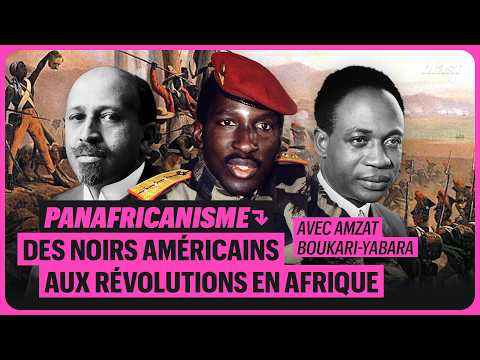
In this interview, historian Hamza Boukari-Yabara, author of *Africa Unite*, explores the complex history, evolution, and current state of Pan-Africanism. He describes the movement as an "historical enigma"—an international phenomenon born not in a single location, but among the African diaspora in the Americas during the 16th-century transatlantic slave trade. **The Foundations of Pan-Africanism**
Read AI summary
YouTube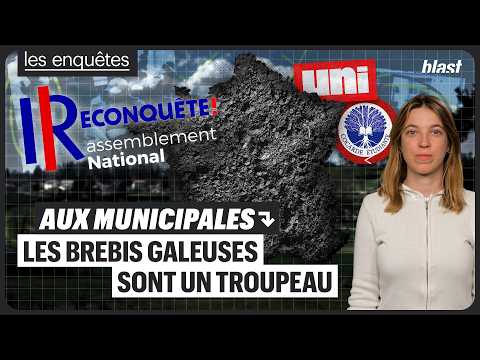
The recent first-round results of the French municipal elections have defied mainstream media predictions, marking a significant breakthrough for the radical left and the near-total disappearance of the Macronist bloc from the political landscape. While right-wing and far-right parties have not won every gamble, an investigation by Blast reveals a deeper, more structural transformation occurring within the institutional right. The core of this shift is the systematic "recomposition" and radicalization of right-wing forces, moving beyond the simple narrative of "isolated incidents" or "bad apples." The transcript challenges the popular media trope of the "brebis galeuse" (bad apple)—the idea that racist, negationist, or Islamophobic candidates are merely anomalies within an otherwise healthy political group. Jordan Bardella, leader of the Rassemblement National (RN), frequently uses this terminology to project an image of a "respectable" party that has purged its radical elements. However, the investigation argues that these views are not accidental deviations but the foundational core of the party. With organizations like Street Press identifying at least 235 problematic candidates on RN lists, the transcript suggests that these are not individual "slips" but evidence of a coherent ideological environment.
Read AI summary
YouTube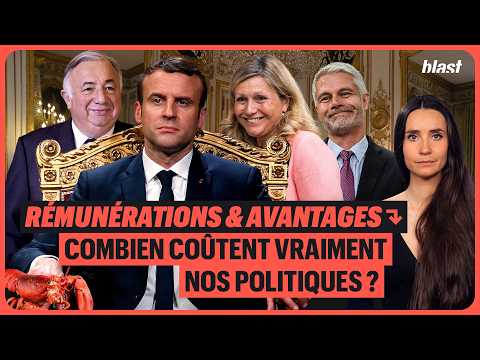
The question of how much political leaders earn and the benefits they enjoy is a recurring and often explosive theme in French public debate. This investigation by *Blast* breaks down the complex hierarchy of remuneration, the often-opaque world of "benefits in kind," and the resulting sociological disconnection between the governing class and the citizens they represent. ### The Pyramid of Remuneration
Read AI summary
YouTube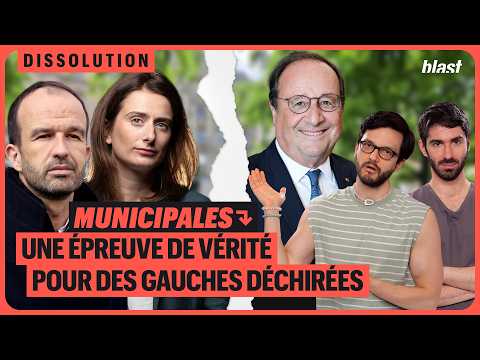
This summary analyzes the political landscape following the first round of the French municipal elections, focusing on the performance of major parties, media influence, and the underlying "democratic crisis." ### The Far-Right: Local Strongholds vs. National Limits
Read AI summary
YouTube
The first round of the French municipal elections has arrived, presenting a unique challenge for national media. These elections are inherently difficult to cover because the stakes are localized—ranging from housing and transport to public service access—and the political color of a candidate often matters less to voters than their ability to manage a small slice of "Macron’s France." However, as the transcript reveals, national political journalists often struggle to make these local issues "spicy," leading to a specific type of media framing that prioritizes personality, scandal, and a very narrow set of ideological themes. A primary example of this media fascination is Sarah Knafo, a European deputy for Éric Zemmour's "Reconquête" party and a candidate for the mayoralty of Paris. Despite being a candidate for a small far-right party, she has received disproportionate coverage, even winning a "revelation of the year" award from political journalists. This coverage is cited as a new stage in the "banalization" of the hard right. Knafo’s campaign relies heavily on artificial intelligence and a massive, arguably artificial, presence on social media. Data suggests her visibility on X (formerly Twitter) far outstrips her rivals, leading to suspicions of bot usage or algorithmic boosting by Elon Musk.
Read AI summary
YouTube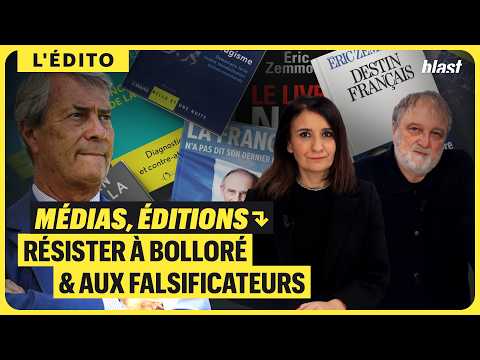
The media is the most powerful entity on earth, possessing the capacity to make the innocent appear guilty and the guilty appear innocent. This editorial, delivered in a world that feels increasingly dangerous and uncertain—much like a landscape under constant missile fire—seeks to address the control of the masses' minds. While authors like John Irving once dreamed of making the world a safe place, the current reality, shaped by figures like Donald Trump, is one of war, fake news, and messianic delusions. In this context, tracking the truth is not just a journalistic duty; it is a vital necessity. Five years ago, the independent media outlet Blast was created to provide a platform for information, emancipation, and resistance. Today, the team is expanding this mission into the world of independent publishing with the launch of "Blitz." This initiative is born from a desire to create a sanctuary of thought—an "island of insubordination"—against a backdrop of democratic decay and the "fascitization" of the public sphere. The goal is to produce texts and spark debates without relying on the commercial circuits controlled by a handful of "extreme-right oligarchs."
Read AI summary
YouTube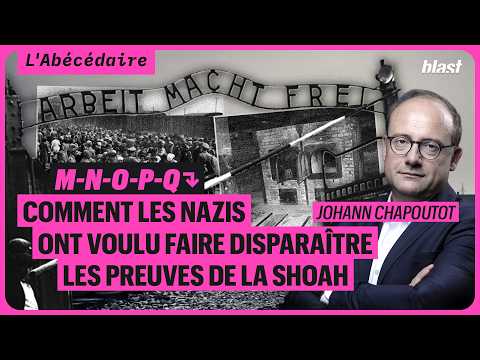
The following summary explores the deep and often overlooked connections between Nazi ideology, modern management techniques, and the psychological structures of performance and denial, as discussed in the provided transcript. ### The Nazi Origins of Modern Management
Read AI summary
YouTube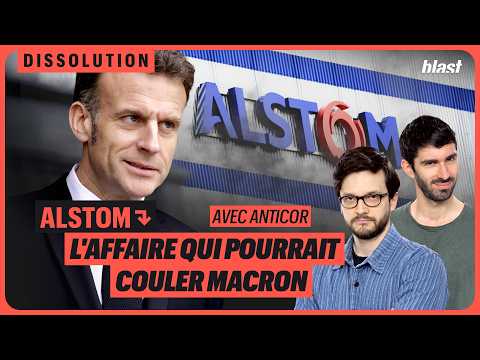
This summary provides an overview of the key political and industrial issues discussed in the transcript, focusing on the Alstom-General Electric affair and the dynamics of the 2026 French municipal elections. ### The Alstom-General Electric Scandal: A Question of Sovereignty
Read AI summary
YouTube
In this discussion, Olivier Berruer, founder of the analytical site *Élucide*, explores the catastrophic geopolitical and economic fallout of the recent escalation in the Middle East. Centering on a series of events set in 2025 and 2026, Berruer argues that the military actions taken by the United States and Israel against Iran represent a "fatal plunge into the abyss," marking the definitive collapse of an international order once based on law rather than brute force. He characterizes the current situation as a "suicidal barbarity" driven by leaders who fail to grasp the historical chaos they have unleashed. **The Collapse of Diplomacy and the "Perfidious" Strike**
Read AI summary
YouTube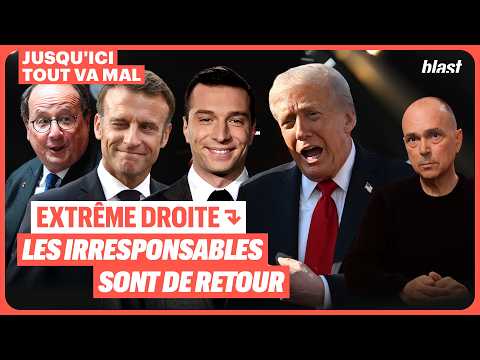
The political landscape in France is currently defined by a disturbing surge in violence and a profound distortion of historical and economic realities. This summary examines the key points from the provided transcript, focusing on the targeted intimidation of political movements, the systemic nature of tax evasion, and the shifting rhetoric regarding international conflicts. A central theme is the escalating physical and verbal aggression directed at La France Insoumise (LFI). The transcript details a series of attacks on LFI offices and campaign headquarters, including bomb threats and acts of vandalism by far-right groups. A particularly harrowing incident occurred in Strasbourg on the night of March 6, when Jamila Adou and her two children were threatened by a man wielding a knife. The assailant explicitly threatened to slit their throats because they were putting up campaign posters for a local LFI candidate. Despite these repeated acts of intimidation, which have been ongoing for months, there is a sense that little is being done to protect these activists.
Read AI summary
YouTube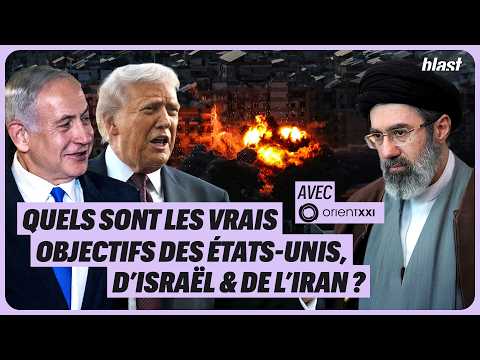
The following summary is based on the provided transcript regarding the geopolitical crisis involving the United States, Israel, and Iran as of February 2026. ### The Conflict and the Official Narrative
Read AI summary
YouTube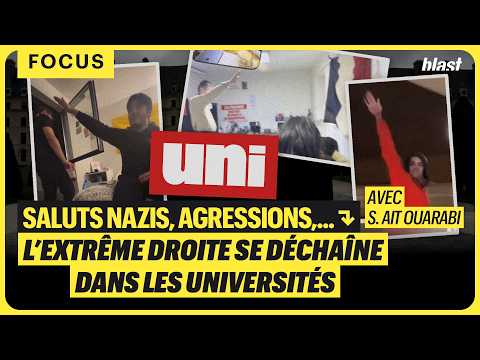
Recent months have seen a sharp rise in tension across French universities, marked by reports of racist and antisemitic messages, intimidation, and even physical aggression. At the center of these controversies are far-right militants associated with the student organization UNI (Union Nationale Interuniversitaire). To understand the nature of these groups and the hardening climate on campuses, we hear from Safia Awarabi, a 24-year-old doctoral student and activist with the left-wing student organization "Le Poing Levé." Awarabi provides a historical perspective on UNI, noting it was established in 1969 in the wake of the May 1968 protests. Its founding mission was explicitly to combat what it termed "Marxist gangrene" within the university system. From its inception, UNI has pursued a strategy known as the "Union of the Rights." This aims to organize the children of the bourgeoisie to ensure that right-wing and elitist ideas can compete with and suppress the spread of leftist and Marxist ideologies. Awarabi explains that UNI operates with two distinct faces. One is institutional: clean-cut students who run for faculty council seats and present themselves as "well-behaved" representatives. The other is far more radical and often overlaps with neo-Nazi circles. She cites historical examples, such as a joint list between UNI and the neo-Nazi group GUD in the 1980s, and notes that today the organization acts as a bridge for militants ranging from the traditional Republicans to the supporters of Éric Zemmour and Marine Le Pen.
Read AI summary
YouTube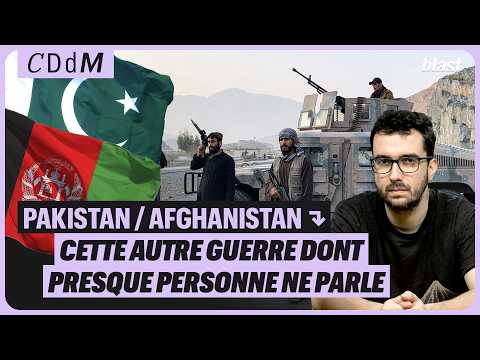
While global attention has been fixated on the escalating tensions between Iran, Israel, and the United States, a significant and deadly conflict has erupted elsewhere: between Afghanistan and Pakistan. This conflict, which saw a major escalation in late February, has largely been overshadowed by Middle Eastern headlines, yet it represents a volatile shift in regional dynamics that threatens to destabilize South Asia further. The most recent surge in violence began on February 22, when Islamabad launched selective airstrikes against seven camps and refuges belonging to the Tehrik-i-Taliban Pakistan (TTP), also known as the Pakistani Taliban. These strikes, initially targeting rural areas, resulted in at least 80 deaths. While the Pakistani government claimed to be targeting terrorists, local reports and testimonies from affected villages painted a grimmer picture of civilian devastation, with entire families being wiped out in the bombings. In retaliation, the Afghan Taliban launched a ground offensive on February 26 against Pakistani border posts. This prompted Pakistan to declare "open war," escalating to strikes on major Afghan cities, including Kabul. Specifically, Pakistani forces targeted military installations such as the Pol-e-Charkhi base, which housed an armored brigade of the Afghan National Army. Between late February and early March, the United Nations Assistance Mission in Afghanistan recorded dozens of civilian deaths and over a hundred injuries resulting from these clashes.
Read AI summary
YouTubeBriefTube monitors your YouTube channels, generates AI-powered audio summaries, and delivers them wherever you listen. Telegram, Discord, Slack, or your podcast app. Fully automated.
Start free trial