Interactiv Trading
AI Audio Summaries
20 videos summarized
1 follower on BriefTube
Last summary: Oct 5, 2026
AI Audio Summaries
20 videos summarized
1 follower on BriefTube
Last summary: Oct 5, 2026
Read AI summary
YouTube
The first quarter 2026 earnings season is underway, with over half of S&P 500 companies having reported. A significant 84% of these companies have exceeded net earnings per share expectations, a strong performance. Earnings growth is exceptional, exceeding 27%, a record not seen since 2021. Expectations for these earnings have been significantly revised upwards from an initial 13% in March. However, there are concerns that the market may be reaching a peak, with the forward price-to-earnings (P/E) ratio for the next 12 months standing at nearly 21 times earnings. This is above the 5-year average of 20 and the 10-year average of 19, suggesting a potentially overvalued market. Alexandre Barades from IG notes that while 84% of companies beating expectations and 27% earnings growth point to strong fundamental performance, the current valuation of 21 times earnings might have already priced in the rest of the year. This could lead to a zone of vulnerability where even good results may not be enough to drive indices higher, especially as the S&P 500 and Nasdaq are at historic highs.
Read AI summary
YouTube
This week's market debrief, delivered while resting due to a minor incident, covers significant events impacting global markets. Despite May 1st being a public holiday in France, US markets were open, allowing for this comprehensive review. A major development was the Japanese Yen's rapid appreciation against the dollar, following an intervention by the Bank of Japan (BoJ). The BoJ reportedly spent an estimated $35 billion over two days to counter the Yen's depreciation, signaling a more aggressive stance to protect its currency. This intervention also contributed to a slight dip in the US dollar.
Read AI summary
YouTube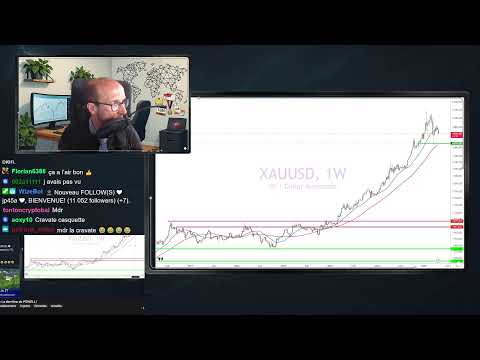
The speaker apologizes for technical difficulties and hopes that viewers who left will return. The live session will continue despite the issues. Upcoming Q&A sessions will address two to four questions. A significant event tonight is the earnings reports from four major tech companies: Microsoft, Amazon, Meta, and Alphabet. It's unusual for all four to publish on the same evening. Apple will also publish on Thursday evening after 10 PM. These publications are expected to have a considerable impact on the market, especially the S&P 500 and Nasdaq, driving the entire sector. The combined impact of these four reports, whether positive or negative, is estimated to account for about 40% of the index's weight relative to the entire sector and affected companies. This could be even more important than what Jerome Powell is expected to say, with his speech starting in 10 minutes.
Read AI summary
YouTube
The speaker begins by greeting various individuals and confirming that his microphone is working better. He apologizes for having to restart the live stream due to technical issues on Twitch and mentions he needs to tie a tie, a task he hasn't done in 20 years. This stream marks the last "Poel" session, as Poel is leaving in May. The speaker notes that between now and then, Poel is unlikely to make significant changes to interest rates. He jokes about a "disgusting" tie he made but says it will suffice. The discussion quickly moves to the upcoming Federal Reserve meeting on May 28th, which will be the last before Poel's departure. The next meeting will be on June 17th. The speaker thanks a viewer named Alcan for a subscription and for reminding him to restart the stream on Twitter. He notes the upcoming 2.5-minute speech by Poel, speculating he might have a few things to say despite having almost two more months of work.
Read AI summary
YouTube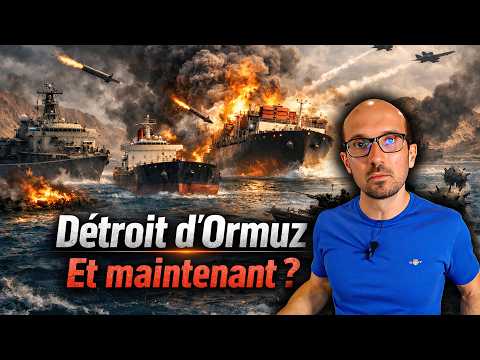
Welcome to a special weekly debrief. The host is joined by a guest, Loïc, to discuss a very specific and current technical topic: the Strait of Hormuz. The host begins by providing a brief update on market conditions. Despite a recent easing in oil prices, and a 14-day ceasefire, oil prices remain stagnant at the end of the week. Brent crude is below $100, but WTI is currently above $100, indicating continued pressure. Interest rates in the United States have eased slightly but not significantly, while the US dollar is weakening after reaching a key zone. Risky assets, as previously discussed, are "stuck to the ceiling," anticipating a positive resolution and the reopening of the Strait of Hormuz.
Read AI summary
YouTube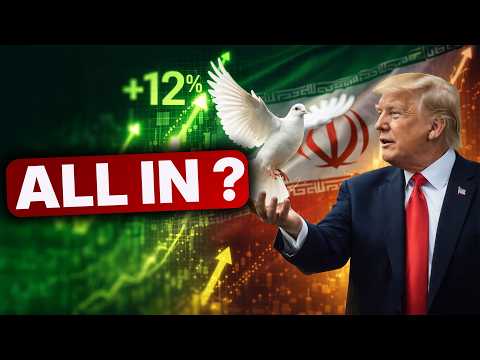
Welcome everyone to this mid-week semi-debrief. We've seen a 14-day ceasefire between Donald Trump and Iran, which has brought some relief to oil prices, interest rates, the dollar, and consequently, risky assets, particularly in American and European markets. We'll examine the current situation, key points, and what to monitor moving forward, especially from a technical perspective. This 14-day agreement is a tactical ceasefire, allowing time to develop a ten-point agreement between the two parties, though it's not necessarily binding. Today, the Strait of Hormuz is partially reopened, with some ships passing through. The main issue remains the colossal insurance premiums for vessels, which previously amounted to 20 million for a 200-million-dollar ship. This risk premium will be a crucial factor to watch in the coming days and weeks.
Read AI summary
YouTube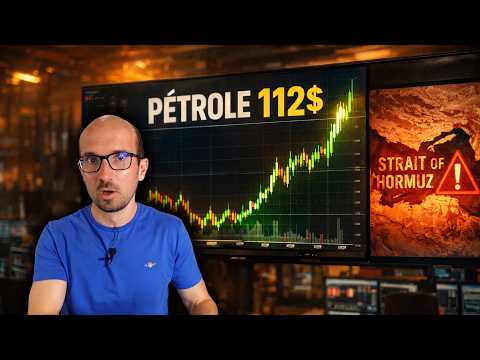
This summary provides an overview of the current geopolitical and economic situation, focusing primarily on the ongoing conflict in Iran and its widespread impacts on global markets. The speaker highlights key developments, market reactions, and future expectations, emphasizing the volatility and uncertainty pervading the financial landscape. The primary topic revolves around the war in Iran and its economic repercussions. Donald Trump addressed the White House, stating that operations were nearing completion but also threatening severe strikes on Iran over the next two to three weeks, potentially sending the country "back to the Stone Age." This contradictory message, delivered within a 19-minute speech, has created significant uncertainty. The context includes an ultimatum set for April 6th, requiring Iran to reopen the strait, which has been closed. While Iran has selectively allowed some vessels (Chinese, Pakistani, Iraqi, Malaysian, Thai, and recently Filipino) through, it is on a case-by-case basis and not for everyone. Iran has set five conditions for a ceasefire and reopening the strait: an end to American and Israeli attacks, a guarantee that the war will not resume, payment for war reparations, recognition of Iranian sovereignty over the strait, and an end to all attack operations on Iran and its allies in Lebanon and Iraq. Despite Trump claiming negotiations are ongoing, Iran denies this, leading to a complete impasse.
Read AI summary
YouTube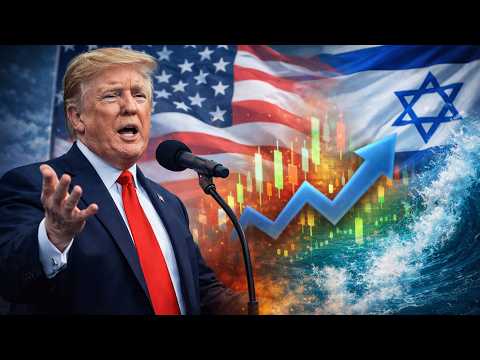
Welcome to this final debrief. Significant market movements are underway, with oil prices hovering around $100. While Donald Trump's announcement of a potential end to the conflict in Iran within 2-3 weeks has brought some market relief, causing American markets to rise by almost 3%, it's crucial to remain cautious. These developments are not yet finalized, and the situation can change rapidly. Several key indicators and events demand attention. Oil prices remaining above $90 suggest continued pressure and potential inflation beyond just gasoline. Even if an agreement is reached and the Strait of Hormuz reopens, conditions for passage and insurance premiums for tankers remain uncertain. The market is currently over-anticipating both positive and negative outcomes.
Read AI summary
YouTube
The past week has been exceptionally intense for global markets, with central banks facing a looming crisis, persistent pressure on oil prices, and significant inflation risks impacting even major tech companies. The situation is complicated, requiring a step back to understand the underlying issues. The primary factor influencing market conditions is the commercial closure of the D3 in Ormous. Insurance companies are refusing to cover vessels passing through the strait, with war bonuses having quadrupled or quintupled. This has made it financially unfeasible for ships to navigate the area, effectively blocking 20% of global oil production. Even Iran's allies, like China, are reportedly being denied entry for some of their ships. This differs significantly from the 2022 Ukraine war scenario, where Russia continued to sell oil indirectly. Currently, a physical bottleneck exists, forcing Gulf producing countries to reduce output as storage capacity is full, preventing exports. The International Energy Agency has termed this the "biggest energy security disruption in history."
Read AI summary
YouTube
The provided transcript outlines a macro-economic discussion set in 2026, featuring Alexandre Baradez, head of markets at IG. The conversation focuses on the unexpected shift in global markets following conflict in Iran and the resulting surge in oil prices to over $100 per barrel. While the beginning of 2026 was expected to bring monetary easing and relief for central banks, new geopolitical tensions have forced a reassessment of interest rate trajectories and inflation expectations. **The Dilemma of Central Banks: Fed vs. ECB**
Read AI summary
YouTube
This summary provides an overview of the market analysis and trading philosophy discussed by Rod and Xav, focusing on the current economic climate, psychological traps in trading, and specific asset outlooks based on the provided transcript. ### **Market Context and Macro Outlook**
Read AI summary
YouTube
This summary provides an overview of the recent Federal Reserve meeting and Jerome Powell’s press conference, based on the provided transcript. **A Relaxed Farewell Amidst Economic Turbulence**
Read AI summary
YouTube
This summary provides an overview of the current financial landscape based on the provided transcript, focusing on market technicals, geopolitical impacts, and strategic positioning across various asset classes. ### The Geopolitical and Macroeconomic Context
Read AI summary
YouTube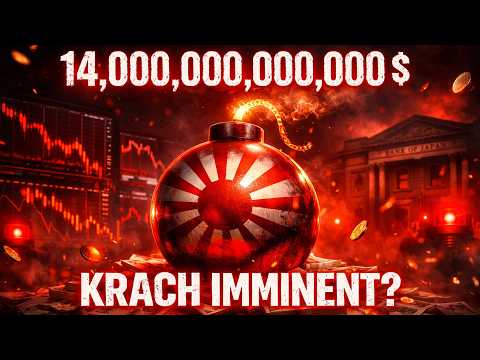
The video explains a financial phenomenon often called the "carry trade," which the speaker describes as the "heist of the century." For nearly 30 years, Japan has acted like a fee-free ATM for global investors. Because the country has faced deflation since the 1990s, the Bank of Japan (BoJ) maintained interest rates at 0%. This allowed hedge funds and large institutions to borrow billions of Yen for free, convert them into other currencies like Dollars or Euros, and invest in high-yield assets including Apple stocks, Nvidia, real estate, gold, and even Bitcoin. As long as the Yen remained weak and interest rates stayed at zero, this represented the largest "free money" leverage in modern financial history. The scale of this operation is staggering. While direct loans are estimated at $500 billion, the inclusion of derivatives, swaps, and hidden leverage brings the total exposure to approximately $14 trillion. This "sea of liquidity" has flooded global markets, with Japanese insurers and pension funds being heavily "long" on foreign markets. A significant risk factor is that Japanese insurers have only hedged about 46% of their currency exposure, leaving a massive portion of these investments vulnerable to shifts in the Yen’s value.
Read AI summary
YouTube
In this market update, the speaker addresses the current state of global finance, attempting to bring a bit of "lightness" to what he describes as a "brutal world." The primary drivers of the current market tension are skyrocketing oil prices, geopolitical instability involving Iran, and the looming decisions of major central banks. Amidst this chaos, corporate earnings are providing mixed signals, while cryptocurrencies continue to show surprising resilience compared to traditional assets. The central theme of the current economic climate is the price of oil. As the essential fuel for the global economy, oil impacts everything from transportation and industry to food production and fertilizers. With Brent crude flirting with $100 a barrel—nearly doubling in just one month—inflationary pressures are mounting. This surge is largely attributed to developments in Iran, including the appointment of a new Supreme Leader and the closure of the Strait of Hormuz. Several ships have been struck, and major producers in the Gulf have drastically reduced production because their goods simply cannot reach their destinations. Despite a historic move by the International Energy Agency to release 400 million barrels from strategic reserves, the market remains unimpressed. The speaker describes this as a mere "bandage" that has failed to stop the bleeding, as gasoline prices at the pump have already surpassed €2 per liter.
Read AI summary
YouTube
This technical market debrief provides a comprehensive analysis of the current financial landscape, shaped by geopolitical tensions in Iran, fluctuating energy costs, and shifting macroeconomic expectations. The speaker introduces a new format for these updates, designating Wednesdays for in-depth technical analysis while reserving Saturdays for broader, simplified overviews. The core objective is to move beyond reactionary trading and focus on understanding the underlying market mechanics during a period of significant volatility. **Energy Markets and the Impact of Geopolitics**
Read AI summary
YouTube
BlackRock, the world’s largest asset manager with over $13.5 trillion under management, has recently "gated" its private credit fund. This means the firm has temporarily locked the doors on withdrawals, preventing investors from reclaiming approximately $600 million. While such a move often triggers headlines about systemic crises and financial panic, a closer look at the transcript reveals that this situation is driven more by technical and regulatory factors than by a simple lack of confidence. To understand why this is happening, one must distinguish between how different assets are valued. Traditional stocks are "mark-to-market," meaning their value is updated instantly based on liquid trading. Private credit, however, uses "mark-to-model" valuations, which are typically calculated mathematically once per quarter. When the broader stock market drops significantly, private credit valuations often lag behind. Institutional investors, aware of this delay, often rush to withdraw their funds before the model eventually adjusts downward to reflect economic reality.
Read AI summary
YouTube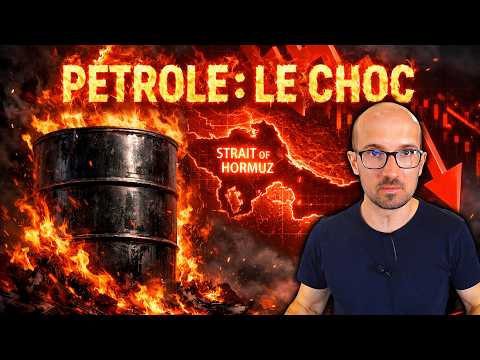
The following summary provides a comprehensive overview of the current geopolitical and economic crisis based on the latest market developments and the escalating conflict involving Iran, Israel, and the United States. ### **Market Turmoil and Geopolitical Escalation**
Read AI summary
YouTube
This weekly market debrief covers an exceptionally intense period following the outbreak of conflict in Iran. Over the past week, the geopolitical landscape shifted dramatically, leading to a surge in oil and gas prices, volatile stock indices, and a surprisingly resilient cryptocurrency market. This summary breaks down the implications of these events on the global financial ecosystem, focusing on energy, macroeconomics, and specific sector performances. **The Geopolitical Catalyst and the Energy Crisis**
Read AI summary
YouTubeBriefTube monitors your YouTube channels, generates AI-powered audio summaries, and delivers them wherever you listen. Telegram, Discord, Slack, or your podcast app. Fully automated.
Start free trial