Idriss J. Aberkane
AI Audio Summaries
18 videos summarized
1 follower on BriefTube
Last summary: Sep 19, 2026
AI Audio Summaries
18 videos summarized
1 follower on BriefTube
Last summary: Sep 19, 2026
Read AI summary
YouTube
This documentary is the first part of a larger investigation, and the presenter warns that it has been the most brutal, violent, and dangerous journalistic work of his career. He states that previous investigations, even those concerning Pfizer, pale in comparison to this subject, which has driven people "completely insane." The presenter is currently in Tunisia, having been interviewed by the police in connection with Interpol as a plaintiff in a serious case involving an international rogatory commission from Tunisia to Switzerland. This unusual occurrence, he claims, demonstrates the extreme reactions to his work. The presenter asserts that every effort was made to prevent the release of this documentary. He clarifies that this is only the first part, with other, even more serious cases involving dangerous and powerful individuals in different Swiss cantons still under investigation. However, even this initial part has required unprecedented efforts to suppress its release. He emphasizes that he is not one to back down from powerful, organized, and well-resourced "monsters."
Read AI summary
YouTube
The video explores the controversial topic of climate warfare, specifically questioning whether Iran and Turkey have been victims of such tactics. The discussion emphasizes the importance of intellectual honesty in journalism, acknowledging what is unknown and the existence of secret, decades-long research that can make definitive statements difficult. The presenter contrasts this with "negationists," who, despite lacking scientific expertise, adamantly deny the existence of climate weapons. The existence of climate weapons is affirmed, distinguishing between the technology and the intention. Historically, the United States has openly acknowledged using weather modification methods in warfare, citing Operation Popeye during the Vietnam War, which employed chemical methods like silver iodide for cloud seeding. These early methods, dating back to World War I, were focused on practical applications like dispersing fog. President Lyndon B. Johnson also expressed interest in using climate manipulation for strategic advantage.
Read AI summary
YouTube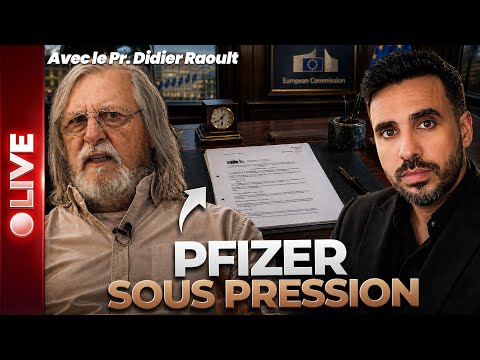
The discussion opens with the host and Professor Raoult, located by Lake Maggiore in Italy, noting that Professor Raoult's predictions have once again proven correct, five years later. They highlight the indictment of Fauci's right-hand man, an event that, while not directly implicating Fauci, signals a significant shift. Robert Francis Kennedy Jr. and Rand Paul are leading this offensive. A major topic is the side effects of vaccines, with a senator claiming Pfizer's inoculations were 55 times more dangerous than flu vaccines, citing the McClor Foundation. Recent publications also support these claims, which Professor Raoult will comment on. Professor Raoult begins by reflecting on the "society of fakery," a concept from his recent book. He suggests that society has become so artificial that people question if they are living in a Matrix-like reality, where information is often false or unreasonable. He cites the example of life expectancy, which he argues is a statistical construct rather than a true measure of longevity. He explains that official figures, like the CDC's claim of a 2.5-year drop in US life expectancy during COVID-19, then a swift recovery, are misleading. He points out that the average age of death in France is 81-82, with half of deaths occurring over 85. It’s impossible for a sporadic event like COVID-19, primarily affecting the elderly, to significantly alter the overall life expectancy, which includes babies and young people.
Read AI summary
YouTube
Good evening everyone. We're discussing the Aloncle commission and the state of public service media. Alexis Poulin and Johan Ducana Refractaire have collaborated on a video, "How they manipulate," which exposes current issues, including the Bardella-Bourbon-Parme scandal. This episode of XYZ, featuring Alexis Poulin (Generation X), myself (Generation Y), and Johan Ducana Refractaire (Generation Z), aims to pass the torch of citizen media. The Aloncle commission, while initiated by a right-wing deputy, reveals a deeper problem: public service media no longer serves the public interest but rather the powerful. We question if it ever truly did, drawing parallels to the ORTF era where government information was filtered. We're examining the exorbitant salaries, like Nagui's millions for unpopular shows, and whether anything has changed since the death of Jean-Pierre Elkabach.
Read AI summary
YouTube
The video begins by highlighting Jean-Pierre Petit's historical vindication on various subjects, including Russian weapons and his work as a research director at CNRS. A recent post on X by a former NSA research director states that propulsion using negative energy and negative mass is possible, a concept Petit has discussed for years. Additionally, Donald Trump's administration is reportedly announcing aliens.gov, a website intended to declassify UFO/OVNI (Unidentified Flying Object) information in the United States. While the site is not yet active, it has caused a stir on X. Another point of vindication for Petit comes from Sabine Hossenfelder, who suggests that dark matter may not be necessary to explain galaxy clusters, a view Petit has held for 15 years. The host encourages the audience to reach out to Hossenfelder to encourage her to collaborate with Petit, given their converging views.
Read AI summary
YouTube
The speaker begins by discussing an anticipated announcement from the White House regarding aliens, a topic previously predicted by Beatrice Rosen. This announcement is seen as a diversion from other issues. The speaker notes that figures like Jimmy Carter and Barack Obama have acknowledged the subject's reality, but there's an effort to ridicule it. The speaker plans to discuss this further with Jean-Pierre Petit, whom they admire, highlighting Petit's foresight on various topics, including the academic world's current state. The speaker criticizes the peer-review model in academia, citing the Epstein revelations and Robert Maxwell's influence on science. The conversation then shifts to a recent assassination attempt on Donald Trump, which the speaker contrasts with a previous attempt on Butler. The speaker finds the Butler incident unlikely to be staged due to ballistic details, but notes the lack of an inquiry, despite Trump's supposed power. This leads to a discussion of the "infallible Trump" phenomenon, where supporters refuse to acknowledge any errors made by Trump, attributing all his actions to an ungraspable, subtle plan. The speaker, as a psychologist, describes this as a tragic consequence of being defrauded, where individuals engage in cognitive sure-enchere to avoid admitting they were wrong.
Read AI summary
YouTube
Imagine being an F-35 pilot in Iranian airspace, flying a stealth aircraft designed to be virtually undetectable, a machine that cost $2 trillion to develop. Despite its advanced stealth capabilities, a missile suddenly locks onto you, forcing an emergency landing. This incident in Iranian skies is perplexing, especially given the F-35's reputation as the "iPhone of planes"—expensive yet reportedly vulnerable to remote control and hacking. The question then arises: how could such an advanced aircraft be detected in Iranian airspace? The answer lies in Russian and Chinese, particularly Chinese, technology. Even a stealth F-35 must generate propulsion, expelling air at 800 degrees Fahrenheit, an unavoidable heat signature. While stealth coatings and geometry can deflect radio signals, a hot plume is left in the sky. This is akin to how mosquitoes detect humans, following our CO2 plume, confirming it with infrared, and then using our scent. Similarly, for the F-35, while scent wasn't a factor, the Chinese have publicly stated their ability to identify aircraft by the disturbances they create in Starlink signals across the globe. Elon Musk's satellite network, while providing telecommunications, also creates a medium through which flying objects cause interference that the Chinese can exploit. This heat plume, combined with other confidential data, allows for the identification of previously stealthy aircraft. There's no way around this; an aircraft needs propulsion, leaving a heat signature.
Read AI summary
YouTube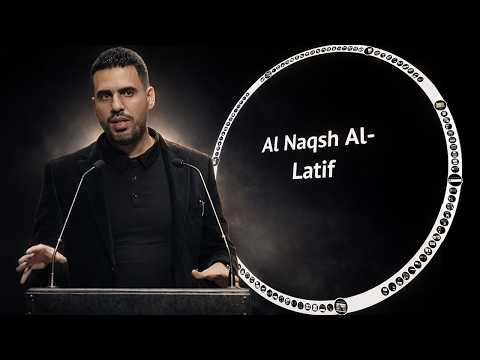
The speaker begins by acknowledging Ali Haidar, crediting him with popularizing moringa in Senegal by encouraging people to "steal" it, thus ensuring its widespread diffusion, similar to the historical spread of potatoes. He then introduces another mentor, Chir Aliendao, founder of the International Sufi School of Peace and Service in Dakar, whose wisdom has spread globally, influencing psychological studies of peace leaders like William Penn. The speaker emphasizes Senegal's ability to "export barrels of wisdom," citing Chir Aliendao's prophecy that "when Africa awakens, the world will emerge from greed." Drawing on the Sufi concept of humanity as a single entity, the speaker references the poet Saadi of Shiraz and the idea of "unity of being" (wahidat wujud) from Ibn Arabi. He metaphorically links this to quantum physics' theory of a single electron traveling through time, illustrating the profound interconnectedness of existence. He then uses the Sufi story of "the idiot in the great city" to highlight how humans often attach their identity to superficial, temporary material possessions, leading to confusion when confronted with the vastness of the afterlife, populated by 110 billion souls.
Read AI summary
YouTube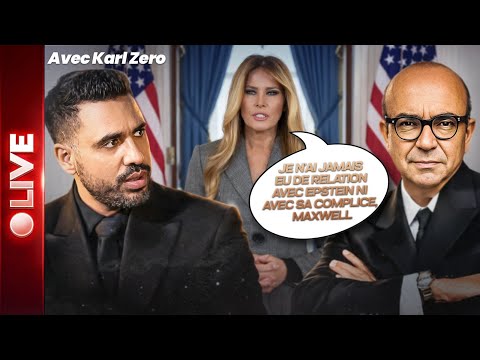
The video discusses recent events surrounding Donald Trump, his wife Melania, and the ongoing Epstein scandal, alongside geopolitical tensions involving Iran and broader political commentary. A significant portion of the discussion revolves around Melania Trump's unexpected press statement denying any knowledge of Jeffrey Epstein or Ghislaine Maxwell. The speakers find this denial highly improbable, given numerous photos and reports suggesting otherwise. They speculate that Melania's statement might be a preemptive move to distance herself from potential fallout from the Epstein case, or perhaps related to an impending event concerning either her or Donald Trump. Evidence is presented suggesting a connection through Paolo Zampoli, who facilitated Melania's special talent visa and was an associate of Epstein. Zampoli also reportedly received diplomatic status in the US from Trump, with testimonials suggesting he displayed numerous Trump portraits in his New York properties.
Read AI summary
YouTube
The speaker begins by drawing a parallel between the current situation with Iran and past conflicts, recalling Donald Rumsfeld's prediction of a short war in Iraq that ultimately lasted over 20 years, causing a massive humanitarian catastrophe and an embargo that killed 500,000 children. This is contrasted with claims of 30,000 deaths by the Iranian regime during foreign-influenced protests, emphasizing that geopolitics isn't driven by good sentiments but by seeking the best, or least bad, outcome. The consequences of past interventions are highlighted: over 3 million displaced in Iraq, the rise of ISIS (allegedly funded by the CIA), and the slave markets in Benghazi following the overthrow of Gaddafi in Libya. The speaker dismisses those who appeal to good sentiments as either "useful idiots" repeating media scripts or "true villains" like BHL, who was reportedly sentenced to 33 years in prison in Tunisia for conspiracy against the state. The desire for war with Iran is presented as a long-standing objective, tracing back to Benjamin Netanyahu's 1995 claim that Iran was weeks away from possessing nuclear weapons. The speaker then critiques the perceived ineffectiveness of political leaders, citing Barack Obama's failure to close Guantanamo and Donald Trump's unfulfilled promise to end the war in Ukraine in 24 hours. The continued operation of Guantanamo, the ongoing war in Ukraine, the lack of prosecution for figures like Fauci, Bill Gates, Hillary Clinton, and Jeffrey Epstein's associates, are all presented as evidence that "patriots" are not in control, and that a deeper power structure, a "deep state," is at play. This deep state, according to Putin, cannot be overcome by hypothetical patriots but only by "we the people." Even serious figures like Jayvans are compelled to follow the narrative, such as claiming Iranians are preparing "nuclear vests," a tactic more associated with Israeli deterrence.
Read AI summary
YouTube
Good evening everyone. Today, 8 million Americans marched in the streets against the war in Iran. This movement, initiated by "No Kings," which is reportedly backed by Soros and Rockefeller, is significant. Previously, "No Kings" could mobilize around 100,000 people per city, but this time, the scale is unprecedented, with numbers multiplying tenfold to millions across states. This indicates a growing dissent within the Maga movement, as evidenced by figures like Tucker Carlson and Joe Rogan distancing themselves, Candace Owens, a loyal Trump supporter, and Nick Fuentes, a far-right figure, even calling for a vote for Democrats, which is a major shift. We are joined tonight by Béatrice and Félix Marcard, both American citizens, offering valuable insights into US politics. Béatrice notes that Nick Fuentes, often considered neo-Nazi, has been rumored to be an agent designed to discredit the far-right. His call to vote Democrat could lend credence to such theories. She also points out that while Soros-funded organizations like Indivisible (which received $3 million from Open Society in 2023) organize these protests, the sheer number of participants suggests a deeper, fertile ground of discontent beyond mere funding. The protests are not solely about the Iran war but also issues like ICE (Immigration and Customs Enforcement), which has seen controversy and even deaths. Trump himself has backtracked on ICE, advocating for a change in strategy.
Read AI summary
YouTube
Elon Musk's ambitious "Terrafab" project is at the heart of a discussion about the future of the global semiconductor industry. The colossal factory, envisioned to be three times the size of Central Park, aims to mass-produce electronic chips, ultimately making them a commodity. This initiative is strategically linked to plans for fund-raising, a merger of SpaceX and Tesla, and the anticipated initial public offering (IPO) of SpaceX, projected to be the largest in history. The current semiconductor landscape is dominated by TSMC (Taiwan Semiconductor Manufacturing Company), which controls 70-90% of the market for high-performance chips. The cost of designing a single chip can range from half a billion to 750 million USD, and building a fabrication plant (fab) costs billions. A critical bottleneck in this industry is ASML, a Dutch company holding a near-absolute monopoly on the extreme ultraviolet lithography machines essential for advanced chip production. Elon Musk is currently a minor player in this market, if at all, for his chip needs.
Read AI summary
YouTube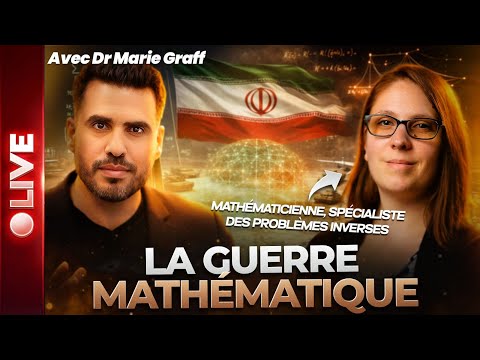
Mathematics has long been the silent victor in global conflicts. From John Nash’s game theory to Alan Turing’s code-breaking at Bletchley Park, the ability to model and predict complex systems has often determined the outcome of wars. Today, a specific mathematical field—inverse problems—is defining the modern strategic landscape, particularly in the ongoing technological and kinetic tensions involving Iran, Israel, and the United States. **The Nature of Inverse Problems**
Read AI summary
YouTube
In this geopolitical analysis, veteran investigative journalist Meron Rapoport discusses the implications of a potential war between Israel and Iran. Drawing from his thirty-year career, including his time as the news director at *Haaretz*, Rapoport argues that the current drive toward conflict is not only dangerous but fundamentally counterproductive to Israel's national interests. He frames the situation through the lens of the 1956 Suez Crisis, a pivotal moment when Israel acted as an imperial proxy for France and the United Kingdom. A striking insight Rapoport provides is the massive disparity between international and domestic Israeli public opinion. While skepticism of a war with Iran is high in the United States, polls suggest that 93% to 94% of Jewish Israelis favor military action. Rapoport warns that this consensus is the result of a decades-long effort by Benjamin Netanyahu to frame Iran as an existential, imminent threat that justifies a state of permanent mobilization. Despite the human risks, the Tel Aviv stock exchange continues to rise, driven by a defense industry that profits from showcasing high-tech missile and cyber capabilities to global markets.
Read AI summary
YouTube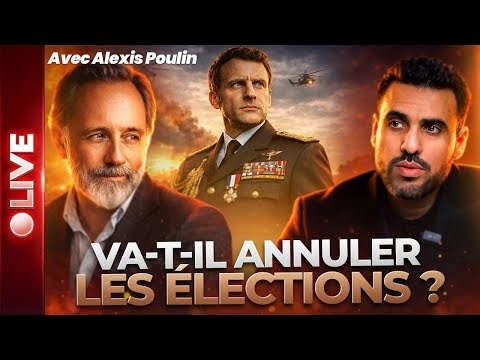
This summary explores the critical state of independent journalism, the geopolitical ramifications of the conflict in Iran, and the perceived erosion of democracy and human dignity under globalist agendas. Based on the provided transcript, the discussion highlights a disconnect between mainstream media narratives and the lived reality of citizens. ### The Crisis of Information and Energy
Read AI summary
YouTube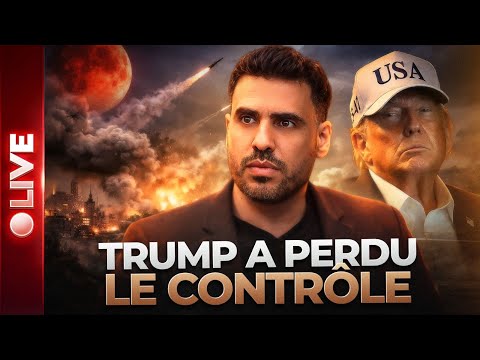
This summary is based strictly on the provided transcript, detailing a strategic and esoteric analysis of the escalating conflict involving Iran, the United States, and Israel. ### The Failure of the "Spectacular War"
Read AI summary
YouTube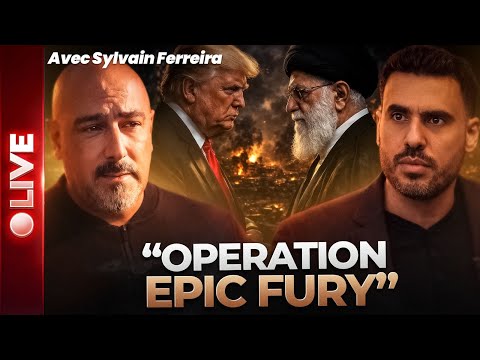
This summary provides an analysis of the discussion between host Idris and strategic analyst Sylvain Ferreira regarding the sudden escalation of military operations against Iran, referred to in the transcript as "Operation Epic Fury" or "Lion’s Roar." **The Outbreak of Official Conflict**
Read AI summary
YouTubeBriefTube monitors your YouTube channels, generates AI-powered audio summaries, and delivers them wherever you listen. Telegram, Discord, Slack, or your podcast app. Fully automated.
Start free trial