Tempête à la Maison Blanche: Melania dénonce Epstein, Trump perd ses alliés historiques
AI Summary
The video discusses recent events surrounding Donald Trump, his wife Melania, and the ongoing Epstein scandal, alongside geopolitical tensions involving Iran and broader political commentary.
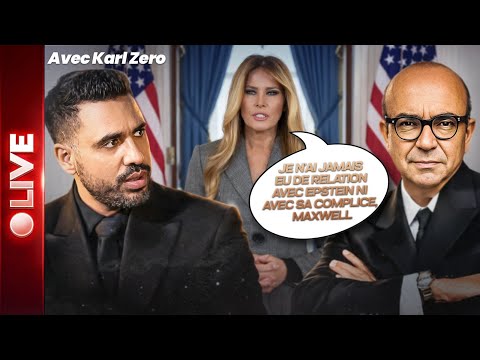
A significant portion of the discussion revolves around Melania Trump's unexpected press statement denying any knowledge of Jeffrey Epstein or Ghislaine Maxwell. The speakers find this denial highly improbable, given numerous photos and reports suggesting otherwise. They speculate that Melania's statement might be a preemptive move to distance herself from potential fallout from the Epstein case, or perhaps related to an impending event concerning either her or Donald Trump. Evidence is presented suggesting a connection through Paolo Zampoli, who facilitated Melania's special talent visa and was an associate of Epstein. Zampoli also reportedly received diplomatic status in the US from Trump, with testimonials suggesting he displayed numerous Trump portraits in his New York properties.
The conversation then shifts to Donald Trump's perceived alienation of his MAGA base. He is criticized for attacking figures like Tucker Carlson and Candace Owens, and for calling Alex Jones, who allegedly "ruined himself" for Trump, a "loser." This is juxtaposed with the financial struggles of Trump's own social media platform, Truth Social, whose parent company has seen its stock value plummet. The speakers question Trump's motives, suggesting that despite claims of a larger plan, he is also motivated by financial gain, citing past instances of him selling fake cryptocurrencies.
The discussion delves into the origins and mechanics of the Epstein network, with Carl Zé, author of "Dans la peau d'Epstein," explaining that Epstein and Maxwell shared a common interest in young girls. Robert Maxwell, Maxwell's father, reportedly introduced Epstein to intelligence work, including alleged connections to the Mossad and KGB. The idea of using sexual compromising material (compromat) for blackmail is attributed to Ghislaine Maxwell and supported by her father's knowledge of KGB operations. The Mega Group, reportedly funded by Les Wexner (former CEO of L Brands, parent company of Victoria's Secret and a mentor to Epstein), is identified as a key financial enabler for Epstein, funding his properties and operations. The speakers highlight that Epstein's network expanded from young girls to children, and involved elaborate ceremonies with elite figures, including politicians, billionaires, and celebrities.
The conversation touches upon the potential for Trump to be blackmailed due to his alleged connections to Epstein, drawing parallels to how the Monica Lewinsky affair was used to negotiate the release of Jonathan Pollard. The speakers suggest that even a marginal involvement could be used to severely damage Trump, potentially more so than the Lewinsky affair impacted Bill Clinton.
The geopolitical situation concerning Iran is also a recurring theme. Trump's administration is described as playing a double game, simultaneously sending aircraft carriers and troops while also engaging in de-escalation rhetoric. The speakers note that the Israeli government, particularly figures around Netanyahu, appear to be pushing for escalation, citing religious and messianic motivations. Contrasting this, the general Israeli public is portrayed as less enthusiastic about a conflict. The role of media outlets like the Daily Beast, allegedly close to Netanyahu, in bringing Trump's Epstein connections to light is also mentioned as a possible tactic to pressure him.
The role of various individuals and entities is explored, including Paolo Zampoli's connection to facilitating visas and his alleged ties to organized crime. The expulsion of Amanda Ungaro from the US at Melania Trump's request is highlighted, with Ungaro issuing threats to expose Melania and her family. The speakers also discuss the alleged involvement of figures like Bill Gates in the Epstein scandal and Alex Jones's prediction that Melania might be preparing for a departure from Trump.
The conversation touches upon the apparent breakdown of Trump's relationships with former allies like Tucker Carlson and Alex Jones, who now criticize him. The speakers question whether Trump's erratic behavior is a sign of cognitive decline or a deliberate strategy, with one commentator arguing it's a trap for those who refuse to accept his perceived betrayals.
The discussion also includes a segment with Alex Jordanov, who brings up the case of Puff Daddy (Sean Combs) and his alleged involvement in sexual misconduct and potentially murder, drawing parallels to Epstein's methods of control through compromat. Jordanov also discusses his graphic novel "Radio Club: The West Coast True Story of Hip Hop," which touches upon the Tupac Shakur murder case and his investigation into it. He claims that Puff Daddy was indirectly involved in Tupac's death due to unpaid debts to the Crips.
The speakers express skepticism about the effectiveness of the US military and NATO's ability to influence the conflict in Iran, particularly given the perceived weakness of some European allies and the potential for internal divisions within the US political landscape. The competence of figures like NATO Secretary General Mark Rutte is questioned.
Finally, the conversation touches upon the potential for a judicial or political reckoning for those involved in the Epstein scandal, including discussions about the possibility of releasing suppressed documents and the role of figures like Thomas Massie and the new Attorney General, Todd Blanche. The complexities of US legal and political systems, including the concept of parliamentary immunity and the checks and balances within the government, are also discussed. The speakers express concern about the influence of "wokeism" and its perceived negative impact on societal progress and discourse.