Elon Musk vient-il d'annoncer le plus grand projet de l'Histoire Humaine...?
AI Summary
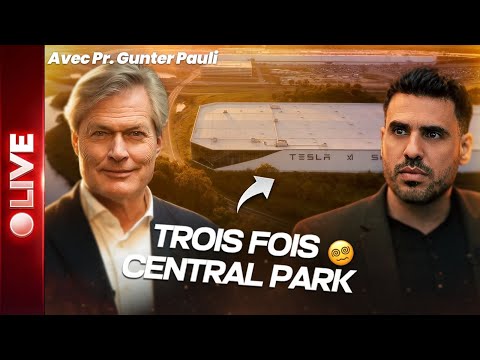
Elon Musk's ambitious "Terrafab" project is at the heart of a discussion about the future of the global semiconductor industry. The colossal factory, envisioned to be three times the size of Central Park, aims to mass-produce electronic chips, ultimately making them a commodity. This initiative is strategically linked to plans for fund-raising, a merger of SpaceX and Tesla, and the anticipated initial public offering (IPO) of SpaceX, projected to be the largest in history.
The current semiconductor landscape is dominated by TSMC (Taiwan Semiconductor Manufacturing Company), which controls 70-90% of the market for high-performance chips. The cost of designing a single chip can range from half a billion to 750 million USD, and building a fabrication plant (fab) costs billions. A critical bottleneck in this industry is ASML, a Dutch company holding a near-absolute monopoly on the extreme ultraviolet lithography machines essential for advanced chip production. Elon Musk is currently a minor player in this market, if at all, for his chip needs.
Musk's motivation for Terrafab stems from a perceived scarcity of chips and a desire to ensure their availability for his future ventures, including robotaxis, Optimus humanoid robots, and space-based data centers. He specifically notes that 80% of his chip requirements are for space applications, a niche currently underserved by specialized, radiation-resistant chips.
The expert guest interprets Musk's announcement primarily as a negotiation tactic directed at TSMC and ASML. By threatening to build his own massive fab, Musk seeks to gain priority and better terms from these monopolistic suppliers, as he is currently at the back of their client queues. However, the proposed 25 billion USD investment for Terrafab is considered insufficient; TSMC's latest fab cost 15 billion, and the company invests 50-55 billion annually in research and development (R&D).
Musk is also attempting to poach TSMC's experienced engineers by offering substantially higher salaries, leading to a "talent war." This strategy faces hurdles because TSMC employees often hold significant stock options, benefiting from Taiwan's favorable tax policies, which fosters strong loyalty.
Geopolitical factors significantly impact the chip market. US export restrictions on ASML machines to China have inadvertently strengthened ASML's and TSMC's market dominance. In response, China is aggressively developing its own lithography capabilities and expects to launch its own "Fablab" by 2028, potentially ending the current monopoly. This geopolitical pressure has also prompted TSMC to invest heavily in fabs in Arizona and Dresden, Germany, to secure supply chains for key clients and mitigate energy supply risks in Taiwan.
Musk's strategy for Terrafab is one of vertical integration, akin to Japanese keiretsu or Korean chaebols, aiming to create a captive market for his chips within his own ecosystem. Rather than directly competing with TSMC in existing markets, he is focusing on underserved niches like space-hardened chips.
The upcoming SpaceX IPO, expected to raise 75 billion USD, is crucial for mobilizing capital. Musk also plans to consolidate Tesla, SpaceX, and X (Twitter) into a single entity. He aims to implement a dual-class share structure, similar to SpaceX's current model (where he controls 79% of voting rights with 42% capital), to maintain strong control over the consolidated group, learning from past experiences with PayPal and early Tesla.
While Musk's projects are described as transcending science fiction in scale, the expert argues that the traditional focus on physical assets (factories) as a measure of value is outdated. The ability to generate free cash flow through secured contracts is now paramount. The 25 billion USD Terrafab investment, while large, is deemed too small to seriously challenge TSMC in cutting-edge chip production, representing only about 5% of TSMC's current capacity. It is primarily seen as a strategic declaration and a negotiation tactic.
Beyond Terrafab, other technological advancements are discussed, including direct satellite-to-phone connectivity via Starlink, which faces limitations, and an emerging Taiwanese technology for internet over AM radio, offering widespread, low-cost communication.
A significant prediction is made regarding ASML's future: its value could decline by 90% within the next decade. This is attributed to geopolitical pressure forcing the Dutch government to restrict sales to China, which will accelerate China's development of its own lithography technology, ultimately ending ASML's monopoly. This highlights the potential loss of a critical European technological asset due to geopolitical decisions.
In essence, Elon Musk's Terrafab initiative is a bold power play to secure chip supply and rebalance negotiation dynamics with existing monopolies. Its success will depend on overcoming substantial technological, financial, and geopolitical hurdles, particularly regarding ASML's critical role and China's rapid emergence in advanced chip manufacturing.