Conférence Sur la Géopolitique Soufie (Dakar 2026)
AI Summary
The speaker begins by acknowledging Ali Haidar, crediting him with popularizing moringa in Senegal by encouraging people to "steal" it, thus ensuring its widespread diffusion, similar to the historical spread of potatoes. He then introduces another mentor, Chir Aliendao, founder of the International Sufi School of Peace and Service in Dakar, whose wisdom has spread globally, influencing psychological studies of peace leaders like William Penn. The speaker emphasizes Senegal's ability to "export barrels of wisdom," citing Chir Aliendao's prophecy that "when Africa awakens, the world will emerge from greed."
Drawing on the Sufi concept of humanity as a single entity, the speaker references the poet Saadi of Shiraz and the idea of "unity of being" (wahidat wujud) from Ibn Arabi. He metaphorically links this to quantum physics' theory of a single electron traveling through time, illustrating the profound interconnectedness of existence. He then uses the Sufi story of "the idiot in the great city" to highlight how humans often attach their identity to superficial, temporary material possessions, leading to confusion when confronted with the vastness of the afterlife, populated by 110 billion souls.
The core work of Sufis, the speaker explains, is to transform "shit into gold," a metaphor for converting human compulsions, hatreds, and destructive actions into something valuable. This is compared to composting, where waste is transformed into fertile soil. He cites Gandhi's emphasis on humility and willingness to "clean toilets" as a prerequisite for engagement. The speaker illustrates this with the example of Nauru, an island nation that became wealthy from phosphate (bird droppings) but squandered its fortune due to a lack of self-identity, ultimately becoming an Australian prison. This demonstrates how even "good" things like wealth can turn into a curse without wisdom.
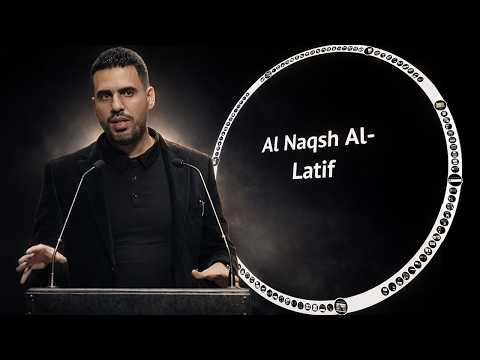
The speaker introduces the concept of "urban acupuncture," a subtle, precise action that can transform an entire city, like Jaime Lerner’s program in Curitiba, where recycling was exchanged for food, leading to reduced crime and increased literacy. This "subtle design" (al-latif), a divine name in Islam, represents the Sufi geopolitical approach to change the world. He then discusses the spiritual concept of karma as a "metallic lingerie" that can be shed all at once through subtle wisdom.
He provides historical examples of subtle wisdom, such as the unknown Celtic sage who replaced human sacrifices with the symbolic decapitation of wine amphoras, and the Japanese concepts of kintsugi (repairing broken pottery with gold, making it more valuable) and wabi-sabi (finding perfection in imperfection). These illustrate how humanity, even after making mistakes, can be repaired to be more valuable than before.
The speaker then delves into the "infrastructures of trust," arguing that civilization depends on them. He traces their origins to ancient Africa, specifically Egypt, where the need to manage agricultural surpluses led to innovations like accounting, receipts (ostraca), and standardized weights and measures. The concept of "counting" (computare) is linked to "purifying" (pur), suggesting that good accounting purifies trust relationships. The speaker also notes the use of divine authority (temple granaries, the goddess Juno Moneta) as a third party for trust.
He highlights the importance of standardized ingots (oxhide ingots) in the Bronze Age, facilitating long-distance trade and diplomacy. The collapse of the Bronze Age, caused by climate change and the disruption of tin trade routes, serves as a cautionary tale of what happens when trust infrastructures fail, leading to societal regression and the emergence of "Sea Peoples" like the Philistines.
The Roman Empire is presented as an apotheosis of trust infrastructure, unifying the Mediterranean through inspection, cadastral maps, notaries, and a robust postal system. The Roman "diploma" served as proof of mission, and wax tablets were used for contracts, with important agreements inscribed in bronze. The speaker notes the Roman practice of establishing straight-lined cities like Timgad, making land ownership clear and reducing conflict. He also mentions the Roman tourist industry, enabled by safe roads and predictable costs, which are direct results of distributed trust.
The Mali Empire under Mansa Musa is highlighted as another example of sophisticated trust infrastructure, using gold as a symbol of creditworthiness and developing systems like kirad mudaraba (profit-sharing contracts) and hawala (cashless transfers). The establishment of wakfs (endowments) for universities and legal scholars fostered education and a strong legal system, reducing the cost of trade across the desert.
The Aztec market of Tlatelolco, where cheating on scales was punishable by death, showcases another high-trust society. The Spanish Age of Discovery further developed trust infrastructures with the Casa de Contratación, standardizing navigation with the Padrón Real (royal world map), and introducing insurance (avería) and detailed manifests. The Spanish "piece of eight," a silver coin from Peruvian mines, became a global currency due to its purity and anti-counterfeiting measures (milled edges), influencing the design of the dollar symbol.
The speaker then emphasizes that "confidence is worth more than gold," illustrating this with the California Gold Rush, where the influx of gold, combined with greed, destroyed existing trust systems, leading to economic ruin for many. He contrasts this with entrepreneurs like Levi Strauss, who built lasting wealth by providing reliable goods to prospectors. The founding of Stanford University by Leland Stanford, who made his fortune building railroad trust infrastructure, further reinforces this idea.
The story of Deloitte's founding in 1845, born from the need for independent audits during the railway mania, demonstrates how trust failures (widespread fraud) can lead to systemic collapse and even revolutions. He connects this to modern financial crises like FTX, highlighting the timeless need for robust auditing.
The speaker concludes by advocating for "antifragile trust" in Africa, which strengthens in chaos. He points to Africa's inherent high trust within communities, despite its low economic development. He draws parallels with China's high-trust campuses, where food deliveries are left unattended, and Japan's culture of honesty. He proposes "high-tech low-tech" solutions for Africa, such as using stainless steel for rockets (Elon Musk) or developing technologies that leverage local resources and ingenuity. Examples include farmers in Benin using soldier fly larvae to feed chickens, Ethiopia mining Bitcoin with surplus electricity, and South African innovations in creating concrete from urine and sand.
He passionately argues for exploiting Africa's vast biological heritage, from unique plant varieties to camel antibodies, which could generate billions through scientific research and pharmaceutical applications. The speaker stresses the importance of local knowledge and sequencing Africa's biodiversity, making it accessible and valuable. He envisions "modular African ranches" combining traditional practices with scientific centers across the Sahel to transform problems into economic opportunities.
Finally, he emphasizes the role of "nudge theory" to positively influence behavior by leveraging existing cultural traits, like Taiwan's lottery system for receipts. He concludes by recommending the work of Nobel laureates Elinor Ostrom and Wangari Maathai, suggesting that Africa needs Nobel-worthy economic innovations tailored to its unique context. The ultimate message is that by fostering self-confidence and building robust, antifragile trust infrastructures, Africa can unlock immense economic potential and contribute significantly to global prosperity.