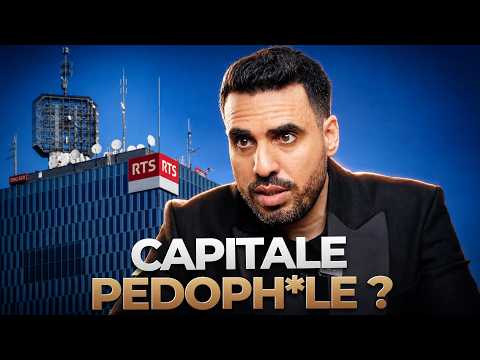
Pédocriminalité Suisse. Partie 1 : les horreurs de la RTS.
AI Summary
This documentary is the first part of a larger investigation, and the presenter warns that it has been the most brutal, violent, and dangerous journalistic work of his career. He states that previous investigations, even those concerning Pfizer, pale in comparison to this subject, which has driven people "completely insane." The presenter is currently in Tunisia, having been interviewed by the police in connection with Interpol as a plaintiff in a serious case involving an international rogatory commission from Tunisia to Switzerland. This unusual occurrence, he claims, demonstrates the extreme reactions to his work.
The presenter asserts that every effort was made to prevent the release of this documentary. He clarifies that this is only the first part, with other, even more serious cases involving dangerous and powerful individuals in different Swiss cantons still under investigation. However, even this initial part has required unprecedented efforts to suppress its release. He emphasizes that he is not one to back down from powerful, organized, and well-resourced "monsters."
He explains that this first part was recorded in advance, based on an article he wrote for Omerta magazine. He reminds the audience that he is not suicidal and that any disappearance should be considered highly suspicious. He also calls upon "citizen journalists" to investigate, ask questions, and interview, as this is a very serious matter. The second part of the investigation is underway, and those implicated are aware and have actively tried to prevent its release.
The presenter expresses gratitude for the support received and for the audience's attention to a subject as grave as the BBC pedophile scandal, which he claims is contemporary with and implicitly linked to the Epstein affair. He states that this connection won't be apparent in this first part, but it is part of the larger "iceberg." He reiterates that this documentary has literally cost him the most in his life.
He describes the RTS (Radio Télévision Suisse) pedophile affair as by far the most dangerous journalistic work he has undertaken. His journalistic career began in 2014, working for *Le Point* magazine. He contrasts the risks of this current investigation with his previous work, which many considered his most dangerous, such as his attack on Pfizer. He recalls the "Pfizer, a company that wishes you well" video, which is the most viewed on his channel, detailing over $6 billion in fines and agreements with US justice for charlatanism and endangering others. He mentions the risks involved in such work, including attacks from publications like *L'Express*, whose journalistic practices he criticizes. He claims to have successfully had *L'Express*'s editor-in-chief and Victor Garcia tried in criminal court twice for "intellectual terrorism." He highlights that such referrals to criminal court are not automatic and signify serious cases. He mentions Alain Veille, who was previously convicted of defamation for inciting racial hatred.
However, he insists that all of this is "small fry" compared to the RTS pedophile affair, which represents a far greater level of personal risk. This brings him to the concept of citizen journalism and the first fundamental duty of the Munich Charter: to respect the truth, whatever the consequences for oneself. He argues that the public has a fundamental right to know the truth. The RTS pedophile affair, he states, is a case study of the vital importance of citizen journalism in a democracy and its role in preventing egregious misconduct. He quotes Elon Musk's "We are the media" to underscore this point.
The core problem, he explains, is that the RTS, the largest journalistic organization in Switzerland (which he puts in quotes), is a "crime scene." This organization, naturally, will not investigate itself. He draws a parallel with the BBC pedophile scandal, where high-ranking executives repeatedly raped children for 40 years, and it took decades for the truth to emerge. He claims the same has happened at RTS, but the public is not informed. Furthermore, crucial historical sources related to the case are mysteriously disappearing, and journalists who should be investigating are engaging in "cyber blurring"—creating false leads and misleading information to deter the public from finding the truth. He calls this "anti-journalism," which is the opposite of a journalist's role as an intermediary between the public and truth.
He argues that the Swiss people, who fund the RTS (part of the SSR multinational, receiving over a billion Swiss francs annually), have a right to know what happened and why RTS tried to hide it, including through intimidation and intellectual terrorism. He uses the term "Omerta" to describe the silence, explaining its Sicilian meaning of humility, contrasting it with the actions of figures like Totò Riina. He thanks *Omerta* magazine for having the courage to publish his investigation after *Françoir* published an earlier version and suffered severe consequences. He emphasizes that investigating the RTS pedophiles is a race against time and against "the monster," as evidence disappears and articles vanish from the internet. He stresses that child rape is monstrous and that RTS, as a public service, should be transparent about its past.
He questions why no Swiss journalist, apart from one deceased individual (whose article also disappeared), has dared to publish on the RTS pedophile affair. He asks why *Le Temps*, a prominent Swiss newspaper, does not investigate, instead publishing minor RTS affairs that haven't even led to legal investigations. He attributes this to journalists not wanting to "go to the soup," meaning they compromise their integrity for personal or professional gain. He states that all professions, including journalism, are "prostitutable"—they can be swayed from their duty to truth. He argues that while an honest journalist reports to their conscience, a professional journalist also reports to their editorial board, which can demand that a case be quietly buried, as he believes happened with the RTS pedophile affair.
He then delves into specific cases, starting with Raymond Zumstegg, a high-ranking RTS executive and designer of Eurovision Lausanne in 1989. Multiple witnesses confirmed, "Everyone knew" Zumstegg was a child rapist. Zumstegg was convicted in 2005 for repeatedly raping his daughter between the ages of 4 and 8. The presenter notes that the full list of his victims is unknown and that he protected another RTS pedophile, Patrick Allenbach, who was convicted in France. Zumstegg's images have been scrubbed from the press, requiring library research to find them. Zumstegg, described as the "final boss" of RTS pedophiles, was sent to Bern to distance him from his activities, only to return to Geneva with significant funding for another executive, Mr. Chenevière, who, while not a pedocriminal, allegedly was not entirely ignorant of Zumstegg's actions. Zumstegg also covered for an executive who collected child pornography and threatened employees who discovered it, possibly Allenbach.
The presenter cites the late Patrick Nordmann, a journalist and co-founder of the satirical magazine *Vigousse*, as the only journalist who dared to publish an article on "the pedophiles of RTS." *Le Temps* only covered the Allenbach case, portraying it as an isolated incident. The presenter calls this the beginning of "cyber blurring." He quotes *Le Temps*'s 2012 article on Patrick Allenbach, who was condemned in France to a lenient 3-year suspended sentence for sexual assault on minors, with a 20,000 euro fine. Allenbach, whom the presenter considers the "least abominable" of the group and who genuinely repented, admitted his guilt. The article mentioned that "everyone knew" about Allenbach, but crucially, it did not mention Raymond Zumstegg or a wider network.
The presenter criticizes RTS Director Gilles Marchand's 2012 press release, which falsely claimed Allenbach's actions were "old facts relating to his private life." The court in Bourges-en-Bresse, France, contradicted this, stating there was an abuse of authority linked to his professional functions. Nordmann's article in *Vigousse*, which has since disappeared from the internet on the day of his death, directly refuted Marchand's claims, revealing that Allenbach was a full-time RTS employee and continued to work for the channel through a private company. This article, titled "The SSR does not lose the pedophile," was the only one to go so far, describing how RTS plays "surprise" when caught in a scandal.
He highlights that *Le Temps* of today, acquired by the controversial Avantinus foundation, would never publish such truths about RTS's pedocriminal network. He contrasts this with Nordmann's courage in revealing the connivance and network, not just isolated cases. He encourages citizen journalists to take up the torch and question *Le Temps* and other professional journalists, who, without external scrutiny, fail to self-examine. He cites the example of a *Libération*-affiliated journalist who was a serial rapist and torturer, whose case was met with "culpable silence" by *Libération*, a publication that had promoted pedocriminality in the 1970s.
He reiterates that Nordmann's article, the most important ever published by *Vigousse* in terms of the Munich Charter, disappeared on the day of his death. This article was the only one to clearly demonstrate the existence of a pedophile network within RTS, involving child rape and the consumption of child pornography on work computers.
The third case involves a person named "Thierry C." (full name given in the *Omerta* article but withheld by the presenter for potential rehabilitation). An IT specialist, Jor Resende, discovered hundreds of child pornography images on RTS computers. Instead of investigating, RTS persecuted Resende, whose life was shattered, and whose name is now hard to find online. He went on a hunger strike, prompting a right-wing Swiss MP, Oscar Fressinger, to raise the issue in parliament. Thierry C. was recycled into a French radio station, then dismissed when his past became known. The presenter praises Fressinger for his courage, despite their political differences.
He describes a protest in Geneva in January 2020 where former RTS employees displayed a banner stating, "Pedophilia is a long tradition at RTS." He explains how "cyber blurring" prevents people from finding information on these cases, with articles from *ID* (owned by the Avantinus foundation, like *Le Temps*) engaging in "name and shame" against whistleblowers like Yan Lopez, an autistic former RTS employee whose life was broken. *ID* portrays Lopez as a harasser of RTS, a multinational receiving 1.2 billion Swiss francs annually, while omitting any mention of the actual pedophiles.
He questions the Avantinus foundation's role in diverting the public from the truth, accusing it of "anti-journalism." He notes that *ID* was bought for 728,000 francs and *Le Temps* for 6.5 million francs by the foundation. After these acquisitions, *Le Temps* ceased to cover pedocriminality at RTS. Instead, *Le Temps* published an article about sexual harassment at RTS, using Darius Rochebin, an LCI journalist of Iranian origin, as a scapegoat. Rochebin, who was never charged or even investigated by justice, was publicly demonized by *Le Temps* as embodying the "toxic culture" of RTS. The presenter argues this was a tactic to whitewash RTS and distract from the true pedophiles like Zumstegg and Allenbach. Rochebin did not sue for defamation, having made a deal with the seller of *Le Temps* and moving to Paris.
The presenter laments that while Rochebin's name remains on Wikipedia, there is no mention of Raymond Zumstegg, Patrick Allenbach, or Thierry C. on RTS's Wikipedia page. He calls the disappearance of Zumstegg's conviction records "abominable," making RTS still a "crime scene" with disappearing evidence and false leads.
He then presents the fourth case: "Roland B.," an RTS employee who possessed hundreds of child pornography images on his work computer for personal consumption, and was convicted in Switzerland in the early 2000s. The Avantinus foundation's publications do not mention this.
The fifth case is "Walter Bert," a radio host at RTS, pursued and convicted in absentia for pedocriminality. His trace was lost after he fled to Haiti, where he worked for a press network and ran a restaurant, which Nordmann publicly suspected in 2011 was a front for his "little business." The presenter withholds his full name due to potential dangers in Haiti.
He also mentions an unnamed high-ranking RTS executive, referred to as "John Doe," who was named by Nordmann in 2011 as having left quickly for similar reasons as Walter Bert. This individual is currently in France. The presenter invokes "mercy" for these individuals, but not for the RTS structure, which he believes deserves parliamentary inquiries and citizen journalistic investigations.
Finally,