Trouble Fait
AI Audio Summaries
13 videos summarized
1 follower on BriefTube
Last summary: Oct 3, 2026
AI Audio Summaries
13 videos summarized
1 follower on BriefTube
Last summary: Oct 3, 2026
Read AI summary
YouTube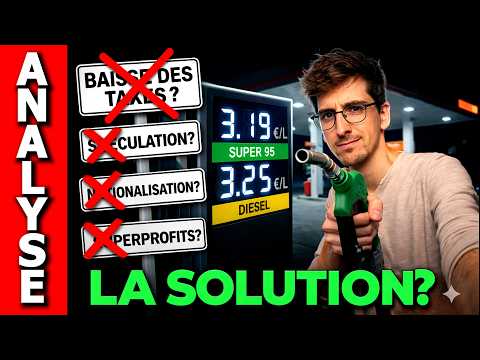
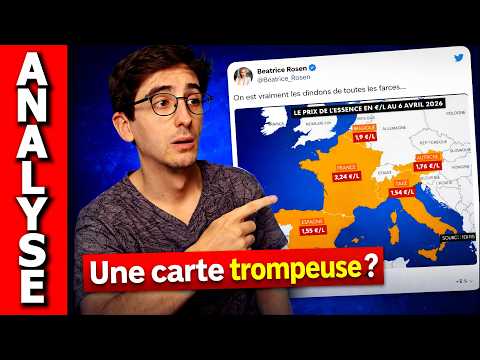
The speaker begins by addressing the highly emotional and sensitive topic of fuel prices, noting that much of the public discourse is simplistic and misinformed. He references a previous video where he debunked dubious comparisons of pump prices over time, explaining that increases are largely due to carbon taxes, diesel tax adjustments, the euro's decline, and general inflation. While a tank of gas costs more today than 20 years ago, representing about a 26% loss in purchasing power for someone earning minimum wage, this isn't the 100% increase often claimed. He also points out that a shift from an old diesel car to a hybrid could offset some of this, though the increased cost of cars, even used ones, might negate any savings. The issue of fuel prices is intertwined with the forced transition to electric vehicles and past tax hikes, which were a trigger for the Yellow Vest movement. He clarifies that the Yellow Vest protests were a broader reaction to a loss of middle-class purchasing power, not solely about fuel, and that subsequent government responses have deterred further large-scale demonstrations.
Read AI summary
YouTube
This analysis explores how France's financial policies, particularly through tax deductions and public subsidies, indirectly fund the Israeli army and various associated entities, raising questions about France's complicity in war and colonization. The speaker argues that these financial mechanisms, often masked as humanitarian aid or public utility, contribute to France's state deficit and ultimately burden French taxpayers. The discussion begins by highlighting the role of the CRIF (Council Representative of Jewish Institutions of France), described as an organization that claims to represent Jewish interests and fight against racism, but effectively serves as a lobby for Israeli interests. The CRIF is accused of influencing the French political class through various means, including intimidation and promises, and leveraging a network to finance campaigns and promote individuals in the media. A significant concern raised is the CRIF's ability, under the Digital Services Act (DSA), to request platforms to censor content deemed "anti-Semitic" or "racist" in France, operating with a lack of transparency. This situation is presented as problematic, where a foreign interest lobby can dictate content moderation on American platforms operating in Europe, undermining freedom of expression.
Read AI summary
YouTube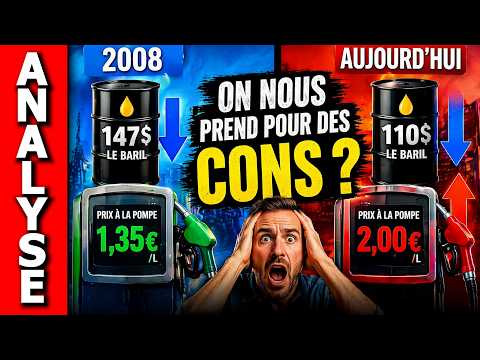
This analysis aims to determine if current gasoline prices are excessive, who is responsible for potential price inflation, and whether petrol is truly more expensive now than in the past, specifically comparing current prices to those in 2008. The discussion begins by addressing a common social media comparison that suggests a rip-off, as a barrel of oil in 2008 cost $147 with diesel at €1.35 per liter, while today, with a barrel at $110, diesel is €2 per liter. To accurately assess this, the analysis first clarifies the context. A barrel of oil contains 159 liters. The initial comparison of ratios (crude oil price to pump price) showed a doubling from 1.08 in 2008 to 0.55 today, implying a significant increase in pump price despite a cheaper barrel. However, this comparison is based on peak prices in 2008, where the $147 barrel price was a temporary peak in July, and the pump price was closer to €1.70. Similarly, the €2 pump price today corresponds to a barrel price closer to $100, not $110.
Read AI summary
YouTube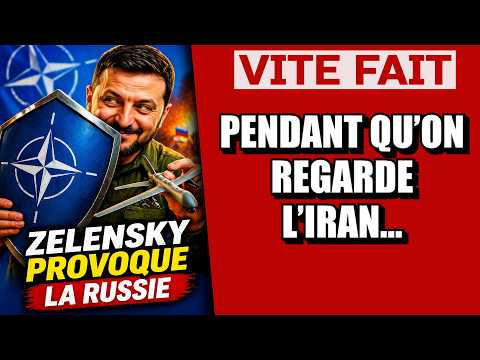
This discussion highlights a critical issue concerning drones originating from Ukraine crashing in NATO countries, specifically Estonia, Latvia, and Finland, and the media's portrayal of these incidents. Initially, an article was cited that ambiguously reported drones from Russia hitting a power plant chimney in Estonia and another crashing in Latvia. However, upon closer inspection of the article, it became clear that the drones were Ukrainian and were crashing in NATO countries, despite the initial insinuation that Russia was to blame. A subsequent article from "Observateur continental" clarified the situation with a direct title: "Two Ukrainian Drones Explode in Latvia and Estonia." This article detailed how authorities in Estonia and Latvia confirmed that a drone had struck a power plant chimney, causing an explosion, and that initial findings confirmed its Ukrainian origin. It was revealed that these Ukrainian drones were attempting to reach the Saint Petersburg region in Russia, a crucial hub for Russian oil and gas exports and potentially arms production. To avoid traversing Russia or Belarus, where they would likely be intercepted, the drones were rerouted through Poland, Lithuania, Estonia, and Latvia, bringing them closer to Saint Petersburg and potentially into Finnish territorial waters, reducing Russia's interception capabilities.
Read AI summary
YouTube
This video discusses the questionable methods employed by the French newspaper *Le Parisien* to generate clicks, sell advertising, and promote narratives, particularly in an era where mainstream media outlets are struggling financially. The speaker highlights how these outlets, despite receiving substantial public and private subsidies, resort to manipulative tactics to maintain influence and justify continued funding from their billionaire owners, who often use media ownership to indirectly sway politicians. The core argument is that *Le Parisien* uses "allusion" to spread misinformation and incite strong emotional reactions without being directly accountable for false claims. This technique involves crafting headlines and articles that strongly imply a certain narrative, allowing readers to draw incorrect conclusions, which the newspaper can then disavow by claiming the public "misunderstood." This approach is presented as a way to produce "conspiracy theories" and "fake news" without direct culpability.
Read AI summary
YouTube
This analysis discusses a visit by Brigitte Macron to Washington for a meeting with Melania Trump, focusing on the well-being of children in the digital age. The event, framed as a global coalition called "Fostering the Future Together," is presented as an initiative by presidential spouses committed to supporting children's welfare in the digital era, reportedly linked to the G7. The French President, Emmanuel Macron, is noted for his commitment to banning social media for those under 15 in France, a key focus for the end of his term, and is also engaged in discussions about the dangers of certain video games, AI agents, and chatbots on youth mental health. The speaker highlights Brigitte Macron's participation in this meeting, where she spoke for 40 seconds, proposing a logo to indicate AI-generated content. This is sarcastically described as a profound political analysis. The speaker then critiques Brigitte Macron's role, asserting that the status of "First Lady" does not exist in France, making her representation of the country an "usurpation of function." It is claimed that her annual budget exceeds 400,000 to 500,000 euros for an office, assistants, and stylists, not including travel expenses, all amalgamated with the Elysée budget, making the true cost unclear. She is also alleged to have excessive influence over her husband, reportedly choosing ministers, giving orders and advice, and even interfering in drafting laws. The speaker suggests that in a properly constituted democracy, this would lead to demands for reimbursement of funds and potential legal action, but France is depicted as a "banana republic" where nepotism reigns.
Read AI summary
YouTube
The discussion focuses on the changing landscape of chocolate products in supermarkets, specifically the disappearance of the word "chocolate" from packaging and the implications for consumers and the industry. The speaker notes that this trend was first brought to their attention by Fabrice, a cacao farmer, and decided to investigate further by visiting a local Carrefour supermarket, which boasts an exceptionally large chocolate aisle. Upon observation, it's clear that the word "chocolate" is increasingly absent from the front of chocolate bar packaging. Instead, brands emphasize their name and descriptors like "hazelnut," "milk," or "dark," with "chocolate" often relegated to small print, a corner, or even the side of the packaging. This trend extends to products that mix chocolate with other ingredients, such as Ovomaltine, where the product is a blend and not solely chocolate, and the word "chocolate" is entirely missing from the front.
Read AI summary
YouTube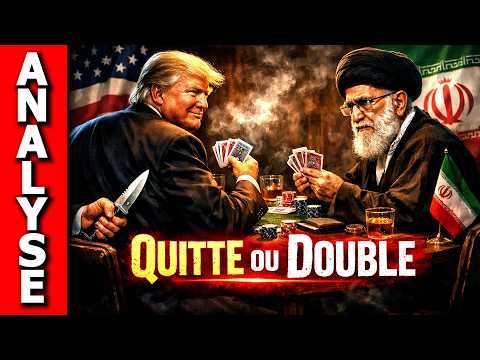
The video discusses the ongoing conflict involving Iran and the United States, highlighting President Trump's attempts to withdraw from the situation while claiming victory. This "victory," however, is characterized as a "regime change" concept where leaders are replaced, even if their ideologies remain the same. The speaker criticizes this notion, suggesting it's a superficial change. The transcript details how Trump aims to exit the conflict without admitting defeat, with his concessions being limited. He is reportedly seeking a scapegoat, potentially Secretary of Defense Mark Esper, who was allegedly motivated to start the war and resisted ending it. Trump's strategy is described as an "alternative world" where he can achieve all his goals.
Read AI summary
YouTube
In this discussion, Fabrice Petitjeunet, the founder of Camillos, provides an in-depth look at the chocolate industry, contrasting the deceptive practices of large-scale industrial producers with his own integrated, artisanal model in Cameroon. Having spent a decade building Camillos, Petitjeunet’s mission is to offer a clean alternative to the "industrial junk" often found on supermarket shelves by controlling the entire production chain—from the cocoa tree to the finished chocolate bar. ### The Failure of the Industrial Model
Read AI summary
YouTube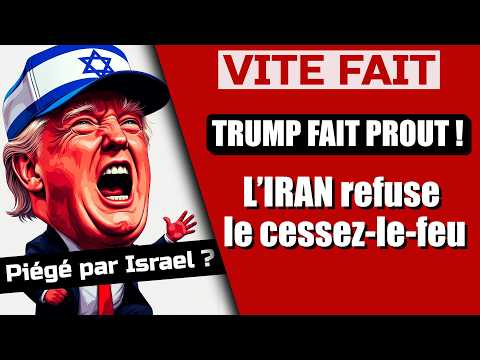
In a recent address from Air Force One, Donald Trump provided an update on the ongoing conflict with Iran, characterized by a significant disconnect between official rhetoric and the strategic reality on the ground. While Trump asserts that the war is nearly over and has cost very little, the situation suggests a deepening geopolitical and economic crisis. **The Rhetoric of Victory and Capitulation**
Read AI summary
YouTube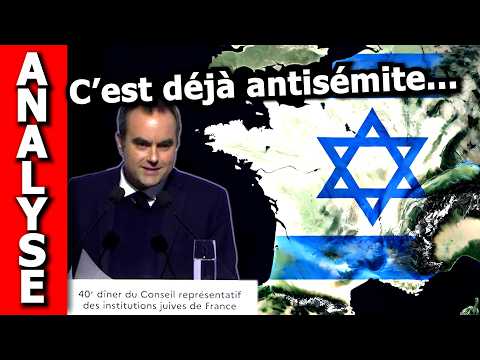
The video analyzes how the State of Israel, primarily through the Representative Council of Jewish Institutions in France (CRIF), is increasingly regulating French freedom of expression. The host warns that new legislative tools are being developed to suppress any criticism of Israeli policy, potentially leading to the censorship of content like this very video. **The CRIF Mechanism**
Read AI summary
YouTube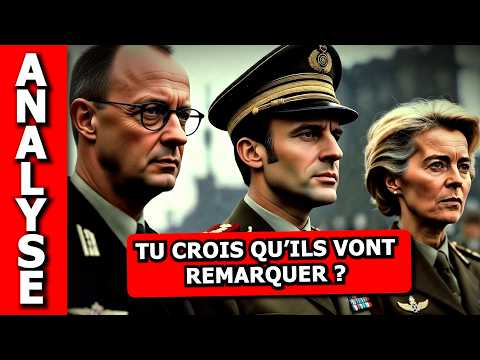
This analysis explores the evolving political landscape surrounding the war in Ukraine as it reaches its four-year mark. The current situation is characterized by deep confusion regarding peace negotiations and a disconnect between official rhetoric and reality. While European leaders like Emmanuel Macron and various German officials push for escalation, the underlying motives appear less about defending Ukrainian sovereignty and more about preserving a specific globalist economic order and advancing European federalism. **The Fabrication of the Enemy**
Read AI summary
YouTubeBriefTube monitors your YouTube channels, generates AI-powered audio summaries, and delivers them wherever you listen. Telegram, Discord, Slack, or your podcast app. Fully automated.
Start free trial