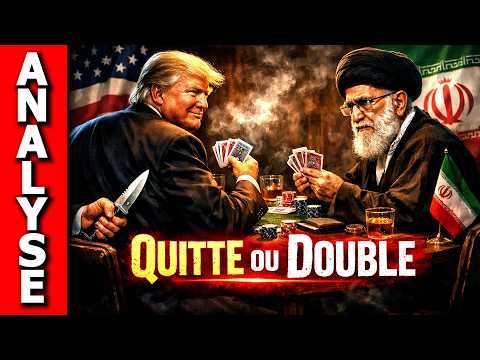
IRAN : Le dernier coup de Bluff de Trump avant le MERDIER TOTAL ! (Résumé du 23 au 25 mars)
AI Summary
The video discusses the ongoing conflict involving Iran and the United States, highlighting President Trump's attempts to withdraw from the situation while claiming victory. This "victory," however, is characterized as a "regime change" concept where leaders are replaced, even if their ideologies remain the same. The speaker criticizes this notion, suggesting it's a superficial change.
The transcript details how Trump aims to exit the conflict without admitting defeat, with his concessions being limited. He is reportedly seeking a scapegoat, potentially Secretary of Defense Mark Esper, who was allegedly motivated to start the war and resisted ending it. Trump's strategy is described as an "alternative world" where he can achieve all his goals.
Despite claims of destroying Iranian military capabilities, Iran continues to control its territory, fire missiles, and seek aid from other countries, even demanding significant funds to fight forces that are supposedly already defeated. The video points out that Iran can still impose its will, even threatening to block the Strait of Hormuz and the Bab el-Mandeb strait, which provides access to the Suez Canal. This latter threat could have severe global economic consequences.
General Jim Mattis criticizes Trump's military strategy, calling unconditional surrender and regime change demands "pure madness" as they don't align with the reality on the ground. Confusion and a disconnect between rhetoric and reality are reported within the White House, with Trump seemingly focused on saving markets and the economy.
Mediators like Turkey, Egypt, and Pakistan are attempting to de-escalate the situation due to the economic impact of the conflict. There are also reports of internal strife, such as a crisis between Israeli Prime Minister Netanyahu and Mossad chief David Barnea, with Netanyahu accusing Barnea of misinforming him about the Iranian regime's stability. The video suggests that individuals like Rubio and Kushner, influenced by Israeli interests, pushed for military action, while intelligence services warned against it.
European countries are beginning to question their support for what is described as an "absolute disaster." German President Steinmeier denounced the "American-Israeli war" as a violation of international law and a political mistake. However, French President Macron and Chancellor Merkel are criticized for not condemning the aggression and instead accusing Iran of being provocative.
Trump's public statements about peace negotiations are presented as manipulative, particularly his claims of Iran initiating contact after previously stating there was no one to talk to. This is linked to market manipulation, with oil prices fluctuating based on these announcements. The speaker suggests that Trump invented interlocutors and a peace plan to project an image of success.
Iran has repeatedly stated its rejection of negotiations before its war objectives are met, which include the lifting of sanctions and compensation for war damages. They have also indicated that they will continue their strikes until their demands are satisfied, including the end of attacks, guarantees against renewed war, compensation, an end to fighting on all fronts, and international recognition of Iran's authority over the Strait of Hormuz.
The video highlights Iran's refusal to negotiate with Trump's envoys, Steve Bannon and Jared Kushner, whom they accuse of having previously sabotaged agreements. There is speculation that former Secretary of State Mike Vance might serve as a more acceptable intermediary.
The narrative emphasizes a breakdown of trust, making honest negotiations difficult. Iran is portrayed as not having the capacity to annihilate the US but is determined to assert its position. The video also touches upon the possibility of a nuclear option if the conflict escalates, with Israeli society being described as leaning towards fascism.
The economic consequences are significant, with potential disruptions to global oil supply and severe impacts on countries like India, Vietnam, Bangladesh, and the Philippines, as well as Taiwan's electricity production. The global economy's dependence on a limited number of companies is highlighted.
In summary, the video portrays a complex and volatile situation characterized by Trump's contradictory actions and rhetoric, Iran's firm stance on its demands, internal divisions within the US and Israel, and growing international concern over the economic and security implications of the conflict. The possibility of a military escalation remains high, despite diplomatic efforts.