AI Audio Summaries
19 videos summarized
1 follower on BriefTube
Last summary: May 21, 2026

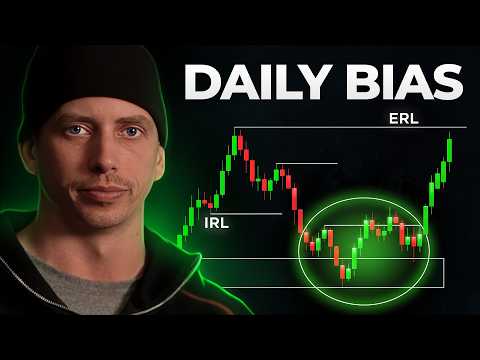
Most bad trades occur because traders ignore or fail to check the high timeframe bias, even if the setup looks good on their trading timeframe. High timeframe bias is the most crucial filter in trading, distinguishing profitable traders from unprofitable ones. This video provides a repeatable process to determine market direction before looking for an entry. High timeframe bias is essentially a directional filter. Before checking a 5-minute or 1-minute chart for entries, you must establish whether the asset is bullish or bearish based on higher timeframes. This dictates all subsequent trading decisions.
Read AI summary
YouTube


The speaker, Maine, provides an update on Bitcoin price action, market outlook, and discusses various news topics including a new virus, the S&P 500's record highs, and government UFO confirmations. Regarding Bitcoin price action, Maine references previous bullish predictions, specifically a pullback into a demand area that served as support. A key factor in confirming a long signal was a "sweep" within a 12-hour order block, a high-time frame setup that allows for tighter risk management. This setup, detailed in episode three of his series, allows traders to place stops below the liquidity sweep rather than the entire order block, improving risk-to-reward ratios. The trade proved successful, leading to profit taking as Bitcoin approached high-time frame resistance.
Read AI summary
YouTube
In this episode of The Order Book, the host, Maine, interviews his friend Jesse, known online as Casper SMC. Jesse is a seasoned trader and mentor, particularly successful in the futures market, who has evolved from being an ICT (Inner Circle Trader) acolyte to incorporating more advanced order flow and volume profile analysis. Jesse shares his remarkable life story, transitioning from a troubled past involving drug-related legal issues, where he faced significant prison time, to becoming a highly successful and free individual through trading. He recounts how, while fighting his case and unable to secure traditional employment due to his public legal troubles, he was forced to take trading seriously. Initially, he dabbled in various trading methods like harmonics and Elliot wave, and even bought a "terrible" algo. His breakthrough came when he discovered ICT concepts, initially applying them to crypto futures with a focus on 4-hour order blocks for 15-minute entries.
Read AI summary
YouTube

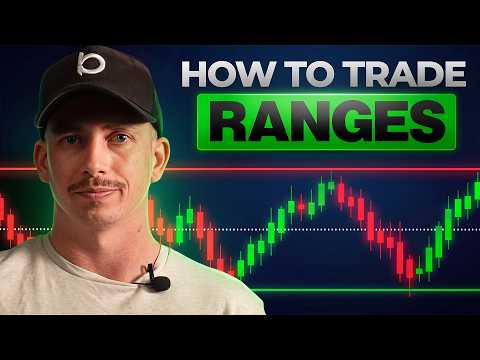
This video introduces the concept of "dealing ranges" as a framework for understanding price movement in any market. A dealing range helps identify the most likely direction of price movement, optimal entry points, and potential price targets before a reset is needed. A dealing range is defined by a significant swing high and a significant swing low. These are not just any swing highs and lows, which require three candles to form, but rather the clear and obvious points where price meaningfully reverses. For a swing high, it's the highest point before a significant pullback; for a swing low, it's the lowest point before a significant bounce. Once these are identified, horizontal lines are drawn from them to mark the range. The 50% point of this range is the equilibrium, dividing the range into a premium (above 50%) and a discount (below 50%).
Read AI summary
YouTube

The speaker begins by discussing the current market situation, highlighting that many stocks are pulling back despite beating earnings. He questions whether this signifies a market top or if there's more room for growth. He then delves into Bitcoin (BTC) and Ethereum (ETH) charts, referencing a previous discussion about a Smart Money Technique (SMT) between them. He explains that he previously shorted Ethereum based on its weakness compared to Bitcoin, yielding a 7-8% move. Now, he analyzes the next potential moves. He emphasizes that in trading, one must find asymmetric bets where potential reward significantly outweighs risk (at least 2:1 or 3:1). He illustrates how a 2:1 reward-to-risk ratio requires only a 33% win rate to break even, and a 3:1 ratio needs just 25%, allowing for more shots and mitigating losses.
Read AI summary
YouTube

The speaker begins by welcoming viewers and outlining a packed agenda, including discussions on Paul Tudor Jones, the California wealth tax, Ben Pasternak, and the busiest earnings week in history, coinciding with an FOMC meeting. Transitioning to Bitcoin, the speaker notes that not much has changed since the last video, but a daily close above a prior high has occurred. This creates a higher high, strengthening the argument for a higher low. While a three-day SFP (swing failure pattern) exists, indicating potential bearishness, the daily chart shows a bullish structure break. This highlights the inherent ambiguity in trading, where both bullish and bearish arguments can be made depending on the timeframe and chosen indicators. The speaker emphasizes that a trader's goal is not to be right every time, but to identify compelling setups with asymmetric risk-reward profiles that align with their edge.
Read AI summary
YouTube

This video discusses liquidity in financial markets, focusing on how institutional players manipulate price action by targeting retail stop-losses. This phenomenon, often experienced as a stop hunt or liquidity sweep, is not random but a deliberate design to facilitate large institutional orders. Liquidity, in this context, refers to resting orders in the market, particularly retail stop-losses. These stop-losses serve as the "fuel" that smart money and institutions need to fill their massive positions. When retail traders place stop-losses below obvious support levels or old swing lows for long positions, or above resistance for short positions, these areas become pools of liquidity. For a long position, a stop-loss is a sell order; for a short position, it's a buy order.
Read AI summary
YouTube
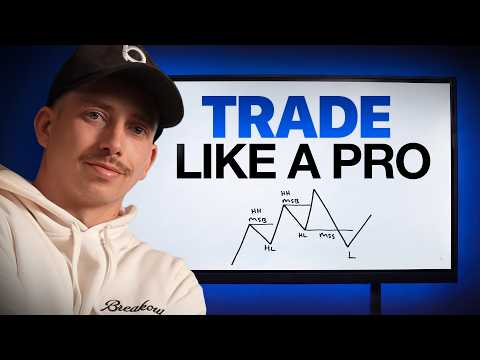
This video delves into the concept of market structure, explaining it as the fundamental roadmap for price action in trading. The presenter emphasizes that understanding market structure is crucial for predicting future price movements. The core idea is that price can only perform three actions: move upwards (uptrend), move downwards (downtrend), or move sideways (ranging). These three states apply to any asset and any timeframe.
Read AI summary
YouTube
This video introduces fundamental price action and smart money concepts, providing a glossary of terms essential for understanding a comprehensive trading framework. The concepts are categorized into structure, liquidity, ranges, points of interest/entry techniques, and general frameworks. **Structure:**
Read AI summary
YouTube
The speaker opens by noting the stock market is at an all-time high, a development he did not anticipate, expecting only a bounce, not a V-reversal to new highs. He mentions unusual market behavior, such as shoe companies rebranding as AI companies, and expresses confusion about the current market logic, suggesting either a continuous "long" strategy or the impending end of a massive bubble. Analyzing the S&P chart, the speaker highlights the unexpected V-bottom and subsequent rally to new highs, contrasting it with his earlier expectation of lower highs after a downtrend. He questions if this signals the start of a new, "hated" rally. While equities appear bullish, Bitcoin does not, leading him to hope it's merely lagging. He reiterates his stance that if the market holds above all-time highs, further price increases are likely across the board. He also mentions still holding some long positions in Bitcoin, hoping for a move towards 80K+, and acknowledges that a lower low is still possible later in the year, depending on how high the current rally extends. He points out that if Bitcoin were to bottom here and reach all-time highs, it would break the historical four-year cycle, an unprecedented event.
Read AI summary
YouTube
The speaker begins with an update on a recent long trade, which proved profitable for those following along on streams and Telegram. Despite the current market conditions, particularly in crypto, being described as "shitty and boring" due to headline-driven news, the trade was successful. The decision to enter the long was based purely on chart analysis, occurring before any ceasefire discussions emerged between Trump and Iran. Trump's statements, initially threatening annihilation and then announcing a 14-day ceasefire, were considered irrelevant to the trading decision itself. Regarding Bitcoin, the chart showed a retest of the breaker after a sweep, trading to the range high and breaking above it, though it has since pulled back inside the range. For bulls to have a chance at a bearish retest towards 80K, they need to reclaim 72K (specifically 717, but roughly 72K). When sweeps occur at the range high, the speaker looks for reasons to close longs or initiate shorts. Profit was taken on the recent long, which ran for over 3R. While the speaker would like to see a bearish retest of 80-82K, similar to a previous instance where a retest of 110K or over 100K was desired but only reached 98K, there's caution against holding longs with the assumption of reaching 80K.
Read AI summary
YouTube
This episode of "The Order Book" features a discussion on market volatility, geopolitical events, and emerging trends in the crypto space. The host and guest, Easy, explore the recent market bounce, attributing it partly to de-escalating tensions between the US and Iran. Despite the positive short-term movement, both maintain a bearish long-term outlook on major assets like Bitcoin, citing high timeframe charts. The conversation highlights the importance of not chasing price and basing trades on conviction rather than news headlines. The host shares taking profits on Bitcoin longs while holding the remainder, anticipating a potential move towards $80,000, but reiterates the overarching bearish bias.
Read AI summary
YouTube
The speaker discusses the current market situation, particularly focusing on Bitcoin and other cryptocurrencies, following an anticipated push upward. Bitcoin indeed pushed up from a previously identified level, breaking structure and experiencing a slight pullback. The speaker is currently in a long position, aiming for Bitcoin to reclaim the range high. If it surpasses this level, confidence is high for a trade up to around 80K. The current target is the range high, as the move has already hit 2R. The speaker draws parallels to the S&P, wanting to see a similar break above the current level, followed by a retest, and then a continuation upward. Despite some external factors, such as political figures' statements, the speaker hopes that market cycles and chart analysis will outweigh these influences, leading to the expected relief rally and a secondary push higher for Bitcoin. While some profit-taking is acceptable, the speaker intends to hold the entire trade, emphasizing the importance of staying above the mid-range. Losing the mid-range could signal a decline to lower levels. The initial setup for the long position was taken due to a favorable risk-reward ratio, as a failure to hold current lows would lead to a significant drop.
Read AI summary
YouTube
The speaker begins by discussing the current state of the crypto market, particularly Bitcoin, and its correlation with equities. They have been tracking a Bitcoin fractal, observing if it will repeat past patterns or if the current situation is different. In a previous consolidation around 90k, Bitcoin broke down as stocks distributed and then broke down themselves. Currently, Bitcoin is consolidating while stocks are aggressively repricing lower. This divergence creates a "morsel of hopium" for a potential relief rally in equities, which could allow Bitcoin to also see a relief rally, possibly up to 80k, before ultimately trading lower. The speaker emphasizes that for this relief rally to occur, equities need to break out of their downtrend line and sustain the move. They point out that the Dow has already broken its downtrend, suggesting a potential for broader market recovery. Regarding the ongoing war, the speaker expresses frustration with the constant, often contradictory, statements from Trump. They note that oil prices continue to rise, indicating the conflict is far from over, yet equities are also showing upward movement. This discrepancy suggests one of these markets is on "fraud watch." The speaker hopes for a resolution to the conflict, believing that a sustained bounce in equities aligns with a predicted daily cycle low.
Read AI summary
YouTube
The speaker provides a market update, noting that current trading patterns in a specific range are mirroring a previous range. They highlight a fractal pattern observed, including a weekly SFP, a 12-hour breakdown, a retest of the breaker, another SFP, a relief bounce, and then a sell-off. The speaker has been tracking this progression, which has been consistent with their observations on Twitter and Telegram. They suggest that a relief bounce might be occurring now before a potential further decline. The speaker addresses the sentiment of many who are calling for an "80K" target and a relief bounce. They recall having tweeted about a potential bounce in equities and Bitcoin before the market opened, suggesting a need for relief. They contrast this with the prevailing bearish sentiment on their feed at the time, which was similar to past instances where people were confident about multi-month breakouts. The speaker emphasizes that while they are happy to be bullish on a range breakout, it must hold. They point out that in previous situations, a perceived breakout failed, leading to a "nuke through," and that current sentiment often shifts from bullish at highs to bearish in the lower part of the range.
Read AI summary
YouTube
The speaker discusses the current market conditions, particularly focusing on Bitcoin and the S&P 500, drawing parallels to past price action and identifying key levels for potential trades. **Bitcoin and Market Patterns:**
Read AI summary
YouTube
The current market atmosphere is filled with euphoria, with many traders celebrating what appears to be a multi-month range breakout. Popular narratives, such as institutional buying, are fueling the idea that the market is "back." However, the speaker, Maine, approaches this excitement with significant caution. His strategy has remained consistent throughout this cycle: stay bullish near the range lows and become cautious as price approaches the highs. While the crowd is getting "horny and bullish," Maine is focused on whether this breakout can actually hold or if it is another trap similar to previous local tops. From a short-term technical perspective, the 12-hour chart shows a clear structure break above the recent range. Maine describes the current environment as "simple" to trade because the expectations are now binary. If the market has truly left its ranging phase, any pullback should find support and maintain a bullish structure. The most obvious immediate target for a continued move higher is the old range low, which converges with a "breaker block" on the weekly chart—an area that previously sent the market to all-time highs. If the price can maintain its position above the breakout point, a move toward the 80k level becomes the logical next step.
Read AI summary
YouTube
In this episode of the Order Book, Maine addresses the sudden shift from the "nothing ever happens" market to a period of significant geopolitical and financial volatility. With conflicts escalating in the Middle East and the stock market showing signs of a pullback, the current environment requires traders to move away from complacency and prepare for potential "black swan" events. The overarching theme of the session is that while the surface of the market appears stable, underlying structural data and geopolitical tensions suggest a major shift is imminent. **Bitcoin and the Current Range**
Read AI summary
YouTube
This summary provides a comprehensive overview of the market analysis, technical strategies, and economic outlook presented in the transcript. ### **Bitcoin and the Four-Year Cycle**
Read AI summary
YouTubeBriefTube monitors your YouTube channels, generates AI-powered audio summaries, and delivers them wherever you listen. Telegram, Discord, Slack, or your podcast app. Fully automated.
Start free trial