Sadhguru Français
AI Audio Summaries
20 videos summarized
1 follower on BriefTube
Last summary: Oct 11, 2026
AI Audio Summaries
20 videos summarized
1 follower on BriefTube
Last summary: Oct 11, 2026
Read AI summary
YouTube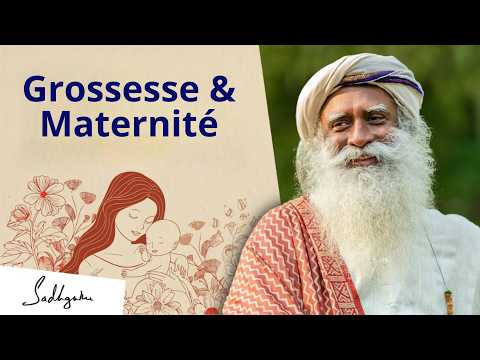
The speaker discusses the challenges of conceiving and shaping the human mind, particularly while still in the brain. Historically, there was an established process in many cultures for how a pregnant woman ate, acted, and lived to ensure the child's proper development, from preconception to birth and beyond. This included specific diets, behaviors, and avoidance of certain sights and sounds. However, modern life has changed dramatically. Women now work and face daily stressors like pollution, noise, and aggression, often while pregnant. Society lacks jobs that allow for extended absences, making it difficult for women to dedicate sufficient time and attention to nurturing the next generation. This societal neglect in caring for pregnant women and the developing child is seen as a significant issue, leading to a future price.
Read AI summary
YouTube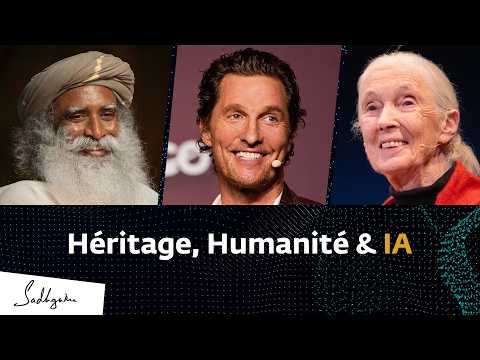
The panel discussion, titled "Leading with Purpose," brought together a primatologist, an award-winning actor, and a renowned guru to explore the meaning of purposeful leadership and its application to pressing global issues like climate change and the rise of AI. Jane Goodall, renowned primatologist, opened by stating that leadership is impossible without a purpose. Matthew McConaughey echoed this, emphasizing that purpose provides a reason to wake up, a sense of building momentum, and something to leave behind. He highlighted that having a purpose allows for a feeling of progress and growth, even through setbacks, and ideally creates a legacy that outlasts oneself. Sadhguru added that every life, from the smallest ant to humans, has an inherent purpose. However, for humans, the significant aspect is consciously identifying an inclusive purpose that extends beyond mere survival. He posited that true purpose is not something we create for ourselves, but rather an identified line of action that then guides us.
Read AI summary
YouTube
There are two types of illnesses: infectious and chronic. Only 25-30% of diseases worldwide are infectious, meaning caused by an external organism. The rest are chronic, self-generated illnesses. Every human cell is programmed for both life and health, and for death. When negative messages are created, certain cells begin working towards one's demise. This is the essence of disease: cells dismantle life because they received a message that is not clearly for health and well-being. For example, anger or resentment chemically poisons oneself. If even 2% of cells interpret this self-poisoning as a desire to die, they will begin to work accordingly, leading to conflicting activities within the body. Resentment, anger, fear, and anxiety are poisons consumed, with the hope that someone else suffers, but ultimately, the consumer is harmed. This gradual self-destruction is called disease.
Read AI summary
YouTube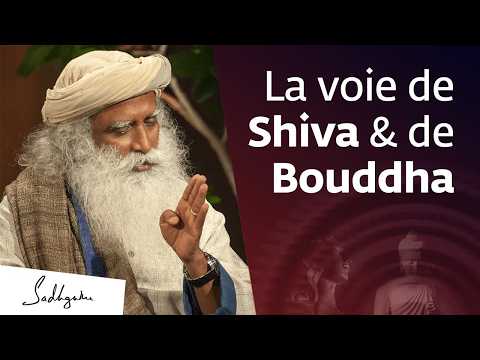
The fundamental difference between the paths of Shiva and Buddha lies in their approach to spiritual growth. Buddha's path is logical, scientific, and step-by-step, providing clear markers of progress. It's a path of consciousness, where one can measure their advancement even without faith or devotion, making it highly effective for those with patience for a multi-lifetime process. Shiva's path, however, offers no such guarantees or milestones. It's like falling into a bottomless pit—terrifying, yet ultimately safe because there's no "hitting bottom." This freefall experience, similar to skydiving without looking down, is described as wonderful, as long as one doesn't focus on the approaching planet. Falling, in this context, isn't negative; it's like falling in love. The problem only arises when one reaches a "bottom," which a bottomless pit avoids.
Read AI summary
YouTube
The speaker discusses the concept of Shiva, stating that for most people, this dimension is only accessible at midnight. To experience it at other times, significant personal transformation is required; otherwise, most individuals cannot reach it. He cautions against attempting to engage with Shiva’s forms without proper preparation, as they can be both ultimately wonderful and immediately horrific. The speaker clarifies that people visit crematoriums at midnight not due to a bizarre perversion, but because tradition dictates it as the only time Shiva is available. He recounts a personal experience from when he was 13, which sparked his quest to understand death. During a vacation, a classmate died of pneumonia. Her death deeply disturbed him, not emotionally, but due to the profound mystery of someone who was "just there and she just evaporated." This prompted him to seek answers.
Read AI summary
YouTube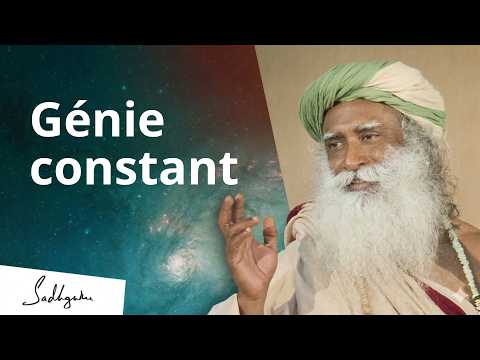
The speaker introduces the idea that while most people experience moments of genius only occasionally, it is possible for individuals to consistently operate at peak performance, appearing miraculous to others. This concept is explored through the analogy of being "in the flow," a state often described by athletes. The "flow" state, while perhaps a cliché, refers to an experience where one feels momentarily empowered, their influence extending beyond their immediate sport. However, being in the flow alone isn't always enough for success, especially in team sports, where collective flow is crucial. The speaker questions why this state is experienced only sporadically by most, comparing it to the sun rising only occasionally instead of every day. Just as life would be impossible without the daily sun, continuous flow is essential for optimal human functioning, akin to the constant beating of the heart.
Read AI summary
YouTube
The speaker emphasizes that if one seeks to become sensitive and perceptive to life, the type of food consumed becomes very important. Observing the body, it naturally thrives on vegetarian or plant-based foods. In India, about 38% of the population is purely vegetarian, a figure that was closer to 60% about 50 years ago. The decline is attributed to Western-trained doctors advising people that meat was necessary for nourishment. Despite this, meat consumption in India, even among non-vegetarians, is often just a side dish.
Read AI summary
YouTube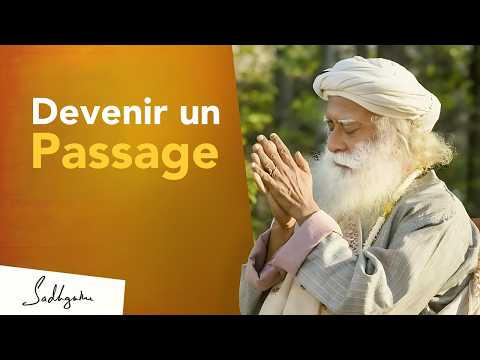
The speaker begins by using the analogy of a tree that unconditionally gives, regardless of whether others choose to receive. This sets the stage for a discussion on devotion, emphasizing that giving is a personal choice, and the recipient's capacity or need is not the giver's concern. The focus should be on the joy of giving itself. The core of the transcript addresses a question about understanding devotion. The speaker distinguishes between "understanding" devotion and "knowing" it. Understanding is presented as an academic pursuit, while devotion is described as a state of being "devoid of yourself." It's an advanced intelligence where one realizes the limitations of the physical body and intellect. When this realization occurs, one ceases to make themselves important and instead becomes less important, naturally leading to devotion.
Read AI summary
YouTube
The speaker, Pooja, recounts her journey into silence, which began five years prior. Before this, she was an artist seeking inner satisfaction, exploring various creative avenues without finding true contentment. Her path shifted dramatically in September 2019 when she participated in Kashikarma and experienced her first in-person Darshan with Sadhguru. Upon Sadhguru’s entry, the atmosphere in the room transformed, and she perceived invisible waves, though she initially felt nothing herself. During his singing, she felt as if everyone else around her disappeared, and she could only see Sadhguru amidst a spectrum of colors and light, leading her to question if something was wrong with her eyes. After this Darshan, she felt an urgent need to be in his presence again. Ten days later, she attended the culmination of an "inter-engineering inter-experience" in Noida. Again, Sadhguru's entry brought those invisible waves. This time, she recognized the experience as beyond rationality. When Sadhguru looked at her, she felt his gaze pierce something within her, leading to a profound sense of liberation, as if a part of her was dissolving, making her feel incredibly light. At that moment, her sole desire was to fully experience and prolong this feeling of presence.
Read AI summary
YouTube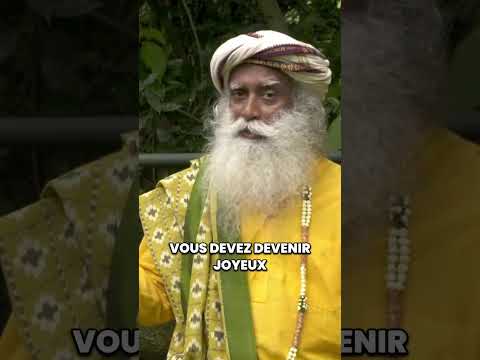
The complexity of relationships often arises after a certain point, whether between friends, partners, or spouses. While relationships offer sweetness, they also bring bitterness. Modern society often equates relationships with body-based connections, primarily between a man and a woman. However, relationships can be diverse. Body-based relationships, in particular, tend to lose their initial excitement over time as the physical attraction fades. When the main draw that brought people together dissipates, individuals may become disagreeable towards each other. This is because such relationships often aim to extract sweetness or joy from the other person. When the expected results diminish, bitterness can emerge.
Read AI summary
YouTube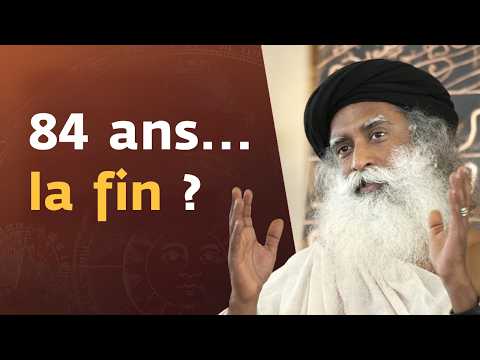
Our lives are profoundly influenced by the cycles of the Moon and the Sun. While the Sun is the primary energy source for the planet and impacts everything, the Moon, despite not emitting energy, has a significant effect due to its proximity. The fundamentals of our birth are linked to lunar cycles, and in a feminine body, biological cycles are connected to 1008 lunar cycles. This suggests that the source of our birth is tied to the Moon's movement. Generally, women are considered more existential because their bodies resonate with the language of the Moon, not in a mechanical sense, but in a deeply alive and powerful experiential way. The development of human energy and the energy system of a human being is significant when it encompasses 1008 full moons, which occurs around 84 years of age. This period marks the completion of seven solar cycles and 1008 lunar cycles, making the energy system a crucial point where one can easily transcend the cycles of birth and rebirth, even without spiritual knowledge. If a person dies after 84 years, it is believed they will not return to another birth, reaching different stages of existence. Living through these seven solar and 1008 lunar cycles allows a person to break a link with the Earth and its matter, a memory of which is carried within.
Read AI summary
YouTube
The speaker discusses the current global trajectory towards conflict, noting that Europe, which avoided this path after World War II, is now heading in that direction again. They express shock and dismay at the re-emergence of war, suggesting that many people cannot survive without it, as economies are built upon it. The speaker highlights the irony of fertile land in Ukraine, one of the most fertile soils on Earth, being in a war-torn country. A major concern raised is the immense investment by almost all nations in building and storing weapons, including bombs and missiles, some even called "smart bombs." The speaker questions the intelligence of such weapons, contrasting them with more primitive forms of combat that at least offer a "gross animal pleasure." The idea of dropping a bomb from 3 km away and having it enter a house through a window is presented as something people are proud of, yet ultimately leads to mass death. The speaker argues that these accumulated weapons are not for show; they will inevitably be used, and the only questions are where and on whom.
Read AI summary
YouTube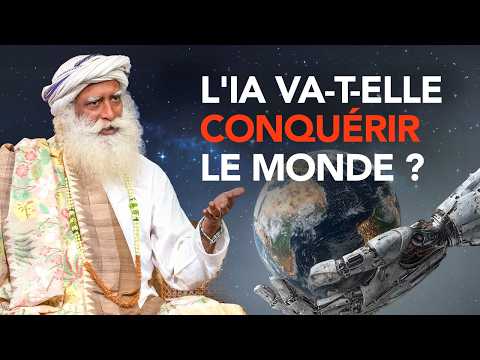
The discussion begins with an explanation of a chant, emphasizing that while birth is a joy, the goal should be to live in such a way that one's death is met with compassion, not laughter. The only issue with death is its prematurity; people only negotiate for more time, not to avoid death itself. Time is described as a mill that grinds without permission, passing at the same rate for everyone, regardless of their actions or emotional state. The key is whether one can "surf" the cycles of time or be crushed by them. Surfing these cycles leads to pleasure and compassion, while failing to do so results in being overwhelmed, as seen in the physical aging process. True vitality comes from mastering the cycles of time, which is achieved by managing one's energy, as time itself cannot be controlled. This allows individuals to accomplish in a year what others do in ten, not because they are superhuman, but because they realize the potential of being human. The conversation then shifts to Artificial Intelligence (AI) and the future of humanity. The speaker acknowledges two prevailing visions: a positive one, where AI, much like industrialization, frees humanity from physical labor and allows focus on higher pursuits like creativity and compassion; and a negative one, where AI creates an exploited underclass or leaves people with idle time that could lead to mental distress, as seen with social media. The speaker’s vision of AI is overwhelmingly positive, dismissing fears as unfounded. He draws a parallel to historical shifts, such as the introduction of cranes in Mumbai's docks, which initially caused strikes among manual laborers but ultimately led to a better quality of life as machines took over strenuous physical tasks. He argues that human beings are "bad data centers" and that it is "stupid to convert human beings into data centers," implying that AI taking over data processing is a beneficial development.
Read AI summary
YouTube
The speaker discusses how individuals react when deeply affected by something or someone. They question the feeling of being unable to escape struggles and the last time someone encountered a drill or a knife with a pen, implying a lack of effective defense. The core idea presented is that all pain is self-inflicted, not caused by others. While someone else might act in a way they prefer, and you experience pain, the choice to feel that pain is yours. The speaker asks why one would choose to be pained, suggesting that if this mindset is adopted, one will become isolated because everyone will cause pain. The concept of a perfect human being who will not cause pain is dismissed as non-existent. The example of a celebration in Gujarat for Krishna is mentioned, where even a man might not be suitable for everyone present, reinforcing that no one is perfect and will inevitably cause some form of discomfort.
Read AI summary
YouTube
Parents in India worry about their children's expenses, pondering how to pay 1000 or 2000 and what to do next. The speaker questions how people can find joy in life while constantly worrying about their children. They then explore various life stages, noting that people seem to suffer regardless of their circumstances: the poor suffer from poverty, the rich from taxes, and the uneducated from their lack of education. Those who are unmarried suffer, and even after marriage, or having children, suffering persists. The speaker suggests that this pervasive suffering stems from humans not understanding how to manage themselves. The key is to organize oneself internally so that one can face any situation, even challenging ones, joyfully.
Read AI summary
YouTube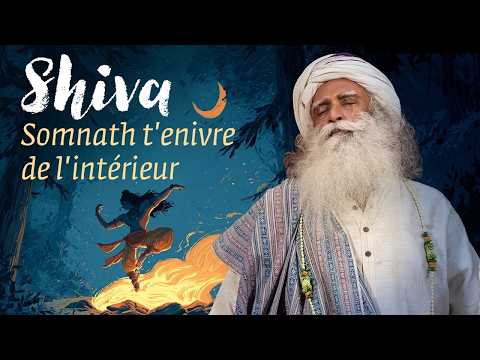
The Somnat summit, or Chuara, embodies three profound dimensions associated with Shiva: stillness, exuberance, and intoxication. The speaker clarifies that "intoxication" here doesn't refer to consuming external chemicals, which are described as incapacitating. Instead, it refers to an internally generated state, highlighting the human body as the "best and most sophisticated chemical plant on the planet." Creating the right chemistry within oneself is presented as an extremely empowering process, leading to ecstasy, unlike external substances that can lead to anxiety, unhappiness, or fear. This concept is central to the "Soma Sutra" in yoga, which teaches how to achieve a state of profound enjoyment by expertly managing one's internal system. The speaker personally guided the design of a monumental face, which took over two and a half years to create and is now recognized by the Guinness Book of Records as the largest face on the planet. This face was specifically crafted to vividly express stillness, exuberance, and intoxication. Stillness represents the fundamental nature of existence, mirroring the meaning of Shiva. Exuberance embodies the very nature of life. Intoxication, in this context, signifies the inner drive necessary for relentless pursuit, suggesting one must be "a little drunk within yourself" to achieve what truly matters.
Read AI summary
YouTube
The speaker addresses the common perception of love as unconditional, noting that this often leads to unhappiness. They explain that when people feel love, it's an internal experience of emotional sweetness, regardless of who or what might have triggered it. This feeling can be so strong that one perceives external elements, like flowers or birds, as reacting to their love. The core idea presented is that love, in this context, is an internal state. The other person acts as a "key" to unlock this feeling within oneself, but the speaker questions the need for a key if there's no lock or barrier. They liken this reliance on external triggers to an older car model that requires a push-start, contrasting it with modern cars that start automatically. The speaker then poses a rhetorical question: would one prefer to be a "self-starting machine" for joy and love, needing no external stimulation?
Read AI summary
YouTube
The discussion begins by highlighting a fundamental disconnect in how many people perceive the modern world. There is a common tendency to view environmental issues through a lens of apathy or displacement of responsibility. Many believe that their small personal contributions—such as eating less meat, driving less, or turning off lights—are insignificant in the grand scheme of things. However, the speakers argue that the greatest challenge we face is "waking up" the population to understand how the world truly functions and to realize that every individual step is a necessary part of a larger movement. A central theme of the conversation is the relationship between individual action and government policy. While individual lifestyle changes are vital, they serve a specific purpose in a democracy: they act as a signal. Governments and administrations do not typically change on their own; they respond to the expressed will and concerns of the people who elect them. Therefore, individual awareness is the catalyst that eventually culminates in sensible administration and strong ecological policies. The speakers emphasize that while it is great for someone to live simply—such as the example given of someone who avoids using lights at home entirely to the contentment of themselves and their pets—the planet has reached a point where individual efforts must be backed by robust, global policies to be effective.
Read AI summary
YouTube
The speaker explains that most people are unaware of their own negativity, comparing it to how one cannot smell their own bad breath. Recognizing your own negative traits is a vital sign of personal growth. To facilitate this progress, the speaker recommends a daily habit: writing one page every night about your internal experience. Rather than listing daily tasks, you should focus on whether you felt more joyful, peaceful, or worse. This practice is likened to keeping business accounts. By tracking your emotional state daily, you can determine if you are improving or regressing. Without this self-observation, you risk a sudden "bankruptcy" of well-being after years of neglect. People often believe crises happen suddenly, but they are usually the result of failing to monitor one's internal life. Regular reflection ensures that you remain conscious of your development and avoid the consequences of long-term neglect.
Read AI summary
YouTubeBriefTube monitors your YouTube channels, generates AI-powered audio summaries, and delivers them wherever you listen. Telegram, Discord, Slack, or your podcast app. Fully automated.
Start free trial