Sadhguru et son expérience de la mort
AI Summary
The speaker discusses the concept of Shiva, stating that for most people, this dimension is only accessible at midnight. To experience it at other times, significant personal transformation is required; otherwise, most individuals cannot reach it. He cautions against attempting to engage with Shiva’s forms without proper preparation, as they can be both ultimately wonderful and immediately horrific. The speaker clarifies that people visit crematoriums at midnight not due to a bizarre perversion, but because tradition dictates it as the only time Shiva is available.
He recounts a personal experience from when he was 13, which sparked his quest to understand death. During a vacation, a classmate died of pneumonia. Her death deeply disturbed him, not emotionally, but due to the profound mystery of someone who was "just there and she just evaporated." This prompted him to seek answers.
Driven by a desire to personally investigate, he attempted suicide by taking 98 barbiturate tablets from his father’s medicine cabinet, having learned that 25-30 could be fatal for an adult. He distributed his belongings to friends, telling them he was "going to see what all this is about," though they dismissed it as a joke. After refusing dinner, he swallowed the pills and went to sleep. Three days later, he woke up in his father's hospital, realizing his attempt had failed and he had gained no insight into death. This experience taught him that this was not the correct path to understanding.
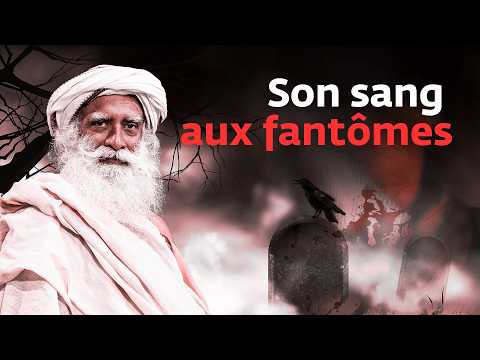
Subsequently, he spent extensive time in crematoriums, seeking explanations. He heard stories of ghosts and visited supposedly haunted places, even sleeping in them, but found nothing. He describes an encounter with a man who claimed to feed ghosts his blood every new moon, showing a constantly cut finger. The speaker accompanied him but saw no ghosts appear. He also befriended another man who claimed to trap ghosts in bottles, hoping to steal one, but found no evidence of ghosts escaping.
He continued to frequent crematoriums, hoping to witness something during cremations. He tried planting a nail in a tree at midnight, a local belief to summon spirits, but nothing happened. He observed hundreds of cremations, noting that most attendees left within an hour, before the body was fully consumed. He explains that the skull often rolls away as the wood collapses during cremation, and he would often pick it up with a stick and replace it, hoping a ghost would emerge from the head, but still nothing.
The speaker attributes people's reluctance to stay at crematoriums to an intense fear of dead bodies, even if they loved the person when alive. He recounts taking a friend to a morgue in a tuberculosis sanatorium, illustrating the extreme fear most people have of corpses, despite dead bodies never posing a threat. He contrasts this with the harm living people can inflict. He suggests this fear stems from an unwillingness to confront one's own mortality.
His almost daily visits to crematoriums, while not revealing ghosts, provided him with a profound and clear understanding of his own mortality. He emphasizes that knowing life is finite encourages one to live efficiently, rather than wasting time on "absolutely useless" activities and words, which often occurs when people believe they are immortal. He concludes that if every human being acted only on what truly matters to them, the world would be transformed. Accepting one's mortal nature from a young age is ideal, as it leads to a more sensible and purposeful life.