
Julien FLOT
AI Audio Summaries
20 videos summarized
1 follower on BriefTube
Last summary: Oct 8, 2026
AI Audio Summaries
20 videos summarized
1 follower on BriefTube
Last summary: Oct 8, 2026
Read AI summary
YouTube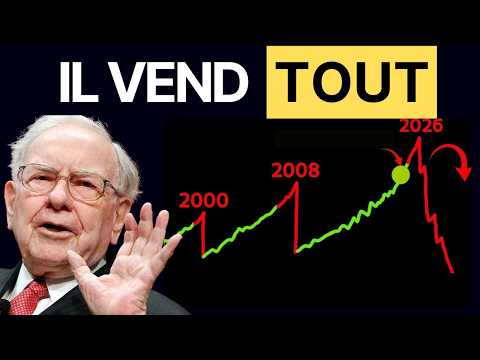
The current market is experiencing exponential growth in value stocks, leading some to believe a stock market crash is imminent. This video aims to explore how to detect, anticipate, and prepare for such an event, focusing on key indicators beyond market noise. A primary risk factor identified is the significant inflow of leveraged funds and options into the market, further amplified by ETFs. This concentration has led to large-cap stocks dominating indices and has pushed leverage levels to historic highs, yet the market continues to climb. This influx of capital indicates growing market nervousness and volatility, but not necessarily the end of the bull run. Investments in Artificial Intelligence (AI) are also boosting the economy by driving demand for infrastructure, manufacturing, and logistics.
Read AI summary
YouTube
The speaker begins by emphasizing the importance of a broad market recovery in cryptocurrencies for sustained rebounds, rather than isolated gains. He looks at AAVE, noting its descending wedge pattern. A break below $90 would signal a further decline to $60. However, staying positive, a successful break above the $94-$95 congestion zone could initiate a rebound towards $115. This isn't a long-term trend reversal but a first leg of recovery. The speaker believes that profit-taking from other speculative assets, like photonics, could flow into more attractively valued sectors, including software, tech, nuclear energy, quantum computing, and crypto-related stocks. He highlights that this broader movement is crucial for the market.
Read AI summary
YouTube
This video provides a graphical analysis of raw materials, indices, and specific stocks, complementing a previous macro-economic overview. The aim is to connect macro trends with technical analysis for timing investment decisions. Starting with oil, the situation in Iran remains volatile. Despite peace attempts, the market is eager to believe in de-escalation. While prices rebounded from $97, they struggle to surpass $105, indicating a rejection of higher prices and a return to a neutral zone. The resistance at $105 is crucial; a sustained break above it, using it as support, would signal a potential for further upward movement, possibly within a descending wedge pattern. This could reflect a market losing optimism due to prolonged geopolitical issues impacting the economy.
Read AI summary
YouTube
The semiconductor industry, particularly that linked to AI, is experiencing a boom, leading many to cry "bubble." Last year, some stocks saw a threefold increase, and there's been over a 60% rise in large-cap stocks. Memory-related values have seen two, three, or even fourfold increases in mere months. The question arises: is this a bubble, and will an AI crash occur? What could end this exponential growth? This growth might only be the beginning, as money from tech giants and hyperscalers is flowing into AI-related companies for chips, printed circuits, raw materials, energy, and memory. Spending is projected to double from 2025 to 2026, and continue growing into 2027, albeit at a slower pace. While some valuations seem high, with certain companies trading at 20-30 times their revenue without making significant profits, a closer look at large-cap companies reveals that future profits, given current exponential revenue growth, are not being overvalued. For instance, Micron, a memory-related company, has exploded but is still considered undervalued relative to expected profits.
Read AI summary
YouTube
SpaceX is expected to go public soon, with an anticipated valuation of around $2 trillion, making it one of the largest capitalizations globally, comparable to Nvidia and Google. This valuation, however, highlights a broader issue: the disproportionate capitalization of companies that employ relatively few people, yet command market values equivalent to the GDP of entire nations. This phenomenon is largely driven by speculation and narrative in a market where rules for index inclusion have significantly evolved. Over the past decades, stock market indices like the S&P 500 and Nasdaq have transformed. They no longer represent the same sectors; formerly dominated by energy and value stocks, they are now heavily concentrated in technology. Moreover, rules were introduced after the dot-com bubble of 2000 to cap the representation of any single stock within an index, typically at 10-15%. This means that even if a company's capitalization continues to grow, its weight in the index is limited. This was evident with Nvidia, whose weight in the Nasdaq 100 was capped three years ago when it started representing too much of the index.
Read AI summary
YouTube
The speaker discusses the current state of Bitcoin, Ethereum, and other cryptocurrencies, noting a rebound that is seen as a "step-up rebound." This means that each push to an upper resistance level typically leads to sales and profit-taking, a pattern expected to continue until a genuine turnaround occurs. The current market is characterized as a technical rebound within a downtrend, which can quickly reverse. The formation of congestion and its resolution are crucial for launching more sustainable medium-term movements with stronger surges. If Bitcoin exceeds $80,000-$82,000, targets of $90,000-$95,000 are possible. The speaker speculates on whether speculative flows might shift from stocks to crypto, potentially influenced by external factors like Trump's image improvement efforts or discussions around the Clarity Act related to cannabis, which could boost Bitcoin. The current strategy involves taking profits at resistance levels. Two main scenarios are considered for Bitcoin: either retesting the $64,000 zone for another stair-step push to $82,000-$85,000, or holding the 20-day moving average for a direct push. The straight-line upward movement is not favored. The market has taken a significant hit over the last three months, and while the rebound is building slowly, it indicates weakness and slow-returning confidence. This confidence could break if Bitcoin falls below $73,000, leading to a "precarious mode" and potentially new buying opportunities at $60,000-$55,000. For now, the "stair-step mode" prevails, with profit-taking at $83,000-$85,000 and re-evaluation if prices drop below $74,000-$73,000. Accumulation and discussions of medium-term targets like $90,000-$95,000 would only begin after significant congestion is built.
Read AI summary
YouTube
While everyone focuses on oil, which is reaching new highs, it's important to consider other, more significant factors. The price of oil, while impacting purchasing power and potentially leading to recession, is not the sole determinant. More critical are interest rates. The US 20-year interest rate has been in a three-year congestion pattern, which is poised to break out. A downward break would signify rising rates, a concern given persistent government spending. This could stifle credit, especially for AI investments, as the market anticipates negative impacts from sustained US rate hikes. Rising US rates also imply inflation, prompting central banks to potentially raise rates further, impacting the dollar and, consequently, the euro. A stronger dollar due to higher US rates would attract capital from Europe back to the US. Another key area to watch is the yen against the dollar. If Japanese rates rise more sharply than US rates (which aim to remain low), the yen could strengthen, drawing Japanese investment, particularly in tech, back to Japan—a "carry trade" reversal. The euro-dollar pair also merits attention. While the dollar is firm, its ability to break below 1.0616 would signal a repatriation of European flows to the US. Currently, remaining above 1.06 suggests a continued preference for Europe. This range-bound movement between 1.14 and 1.20 indicates short-term fluctuations, but a fundamental shift is expected in the coming months.
Read AI summary
YouTube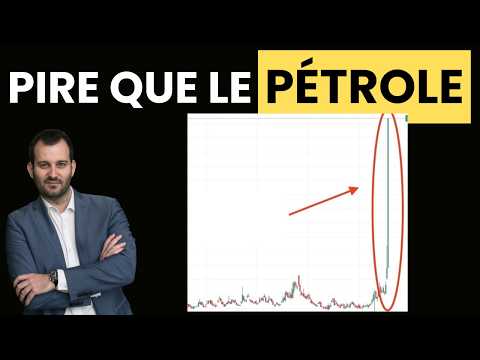
The discussion revolves around the current economic landscape, focusing on inflation, central bank policies, geopolitical events, and their impact on markets. A key concern is the rising inflation, partly driven by the war in Iran and its effect on oil prices, which then cascades into other materials and agriculture. This situation puts pressure on central banks, particularly the European Central Bank, and also affects the US Federal Reserve, which appears divided. Some governors are reportedly ready to accept higher inflation to support growth, while others may prioritize combating it. The narrative highlights a potential double shock on energy bottlenecks, impacting data centers and overall energy costs. This situation might force central banks to make difficult choices, either sacrificing the currency by letting inflation run unchecked or sacrificing growth and employment. The market is described as being in a "barack-a-frites" phase, favoring tangible assets. There's an acknowledgment that the inflation might be temporary, tied to the duration of the war, but the geopolitical situation, particularly concerning Trump, could prolong these pressures.
Read AI summary
YouTube
This video discusses Bitcoin, Ethereum, other major cryptocurrencies by market capitalization, and related stocks, highlighting interesting observations and potential movements. First, the speaker notes that Trump continues to navigate political challenges. The speaker's interest is piqued by Trump's recent comments on cannabis, suggesting that with the midterms approaching and Iran's situation, Trump might seek to improve his public image with the general consumer and voter. Cryptocurrencies could be part of potential announcements that could act as a catalyst.
Read AI summary
YouTube
The speaker begins by acknowledging a personal discomfort with making numerous purchases at the moment but highlights existing opportunities in the market. Despite potential market stagnation, sufficient volatility is anticipated to create trading possibilities. The video will cover both large and small-cap stocks, focusing on bearish, bullish, and potentially trend-reversing patterns, with an emphasis on fundamentals beyond mere speculation for small caps. The first stock discussed is SAP, which is currently in an undeniable downtrend. The speaker notes the recent negative sentiment in the software sector, driven by the rise of AI and its potential to replace traditional software. While it's difficult to pinpoint the exact bottom, some "small constructions" are observed, though a previous attempt in March failed. Despite market skepticism, these companies continue to deliver strong results. The speaker suggests that if the market's negative narrative proves unfounded, significant recovery could occur, especially given that many of these companies are financially robust. If CEOs are convinced that AI won't replace them and can even enhance their margins, they might buy back shares, pursue external growth, or reduce their free float, leading to substantial rebounds if AI doesn't disrupt software.
Read AI summary
YouTube
This video discusses the current state of financial markets, addressing concerns about their seemingly complacent rise despite macroeconomic questions, and the potential for a "return to the mean." It outlines four scenarios previously discussed: continued stagflation, a rally before a correction, continued growth without recession driven by factors like interest rate cuts and AI, and the risk of AI investments encountering bottlenecks. The third scenario, continued growth, is currently playing out. This involves potential interest rate cuts, possibly influenced by political figures like Trump, which would raise questions about the independence of central banks. Another key aspect is the dynamism of AI. The question is whether current AI investments will yield productivity gains and profits, or if bottlenecks in infrastructure, energy, memory, and hardware will limit growth and expected profits, potentially causing a market downturn. The market might use these bottlenecks as a pretext to decline later, even if they initially drive up prices for certain companies.
Read AI summary
YouTube
The video discusses demographic shifts and a potential investment theme related to assisted procreation. While acknowledging that general demographic challenges like aging populations and the impact of AI and robotization are known, the speaker emphasizes that this video will focus on a different, emerging trend. The core argument is that despite a general slowdown in population growth in Western countries, the global population continues to evolve positively, with emerging countries experiencing significant growth. This growth is characterized by a rising middle class with increased purchasing power and savings capacity, which remains a key interest for investors in a globalized world.
Read AI summary
YouTube
This video provides a technical analysis of various cryptocurrencies and stocks, focusing on potential trading strategies and market trends. The speaker begins by stating the intention to review AV, Bitcoin, Ethereum, XRP, and then stocks like Coinbase and Strategy Capital B. They acknowledge requests for analysis of other cryptocurrencies but explain that if they don't trade them personally, they won't analyze them on platforms like TradingView, preferring to stick to PRT. Regarding AV, the speaker identifies a clear bearish trend. They explain that constructing a bottom and rebound can take days or weeks, but a downturn can happen just as quickly, potentially due to news. While other cryptocurrencies are holding up relatively well, AV is taking a hit, suggesting a specific news event might be the cause. The current price is testing a support level but not yet breaking it, though the outlook is not promising. The speaker notes that as long as AV couldn't maintain the $105 support, a rebound was unlikely to materialize. Until it breaks above $105 and then $115, there's no buy signal. The risk of a downside break towards $60 is significant.
Read AI summary
YouTube
The market has seen a significant shift, moving from speculation on a few key stocks to a broader resurgence, bringing back interest in companies that had previously corrected. This rotation is now leading to renewed speculation across a wide range of stocks, and there appears to be further potential for gains even after a strong week. The video aims to highlight several stocks that the speaker believes still have upside potential. Vetokinol is mentioned as a potential candidate, with a possible breakout above €82 that could ignite further momentum, especially with upcoming results at the end of April. While results can be a double-edged sword, the current configuration is considered promising, and positive results could lead to a significant turnaround.
Read AI summary
YouTube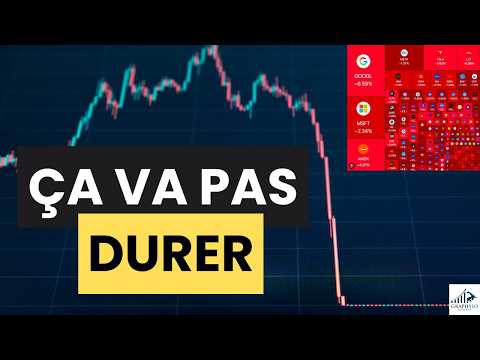
The speaker begins by noting a surprising 12% rise in US markets over the past week, a scenario he wouldn't have predicted. He emphasizes the importance of understanding market "sub-waves" to avoid unnecessary stress and focuses on what the market is actually doing rather than trying to predict its future movements. A key concept introduced is the distinction between different types of investors. One group, described as having high IQs and extensive knowledge of economics and macroeconomics, often correctly identifies market inefficiencies and overvaluations but struggles with timing, leading to frustration. Another group, more experienced, understands the critiques of the first group but possesses the ability to follow market trends and capitalize on momentum, even when it seems irrational. These investors prioritize following the market's flow and understanding its inefficiencies to generate performance, rather than proving themselves right. The speaker advocates for this latter approach, stressing that the goal is to make money by adapting to market movements and having contingency plans for potential shifts.
Read AI summary
YouTube
The speaker begins by outlining the video's objective: to analyze Bitcoin, Ethereum, XRP, major cryptocurrencies, and stocks related to crypto mining and trading. The initial focus is on how the duration of a price increase can impact mining and, consequently, cryptocurrency prices. The current market, represented by "Brint," is expected to continue consolidating for several more days. A key question is whether a prolonged price surge could lead to recession, beyond stagflation, and how this would affect energy prices, mining, and risk assets like Bitcoin. The speaker notes that current Bitcoin demand might be influenced by flows from the Middle East. A significant consideration is the future economic landscape of the Middle East post-conflict, particularly in Saudi Arabia and the Emirates, and whether asset sales will be necessary to fund reconstruction and economic recovery, potentially impacting markets. The speaker then delves into Bitcoin's technical analysis, describing it as being in a state of fear, similar to AI and software trends over the past six months. Bitcoin has shown more resilience than software in the past week. The current charts indicate ongoing construction phases. The speaker has maintained a cautious approach recently due to a lack of significant new information. The analysis suggests Bitcoin is in a short-term downtrend, a long-term uptrend, and a medium-term neutral phase. A crucial zone to watch is between $68,000 and $69,000. Holding this level could lead to Bitcoin reaching $80,000 to $85,000, which is identified as a profit-taking zone. The strategy recommended is "take what you can get." A sustained hold above this zone would signal growing hope for a medium to long-term trend reversal.
Read AI summary
YouTube
This video discusses various investment opportunities, focusing on energy, health, and technology sectors, with a particular emphasis on identifying potential turning points and long-term value. **Energy Sector and Market Cycles:**
Read AI summary
YouTube
The current market situation is characterized by a "stagflation" scenario, where inflation remains persistent, and economic growth is slowing. While a ceasefire in Iran might offer some temporary relief, it doesn't signal an end to broader economic challenges. The market is awash with liquidity, but underlying issues like inflation are preventing central banks, particularly the US Federal Reserve, from lowering interest rates. In fact, there's a possibility of further rate hikes, though not as aggressive as in 2022. Governments are expected to continue fiscal stimulus, leading to deficits, which in turn supports high spending by hyperscalers on AI. Corporate earnings are holding up, which is propping up the market. However, two key concerns are emerging: the impact of the euro-dollar exchange rate on companies and the potential for rising energy prices to force companies to revise their earnings downwards. If these two factors converge, it could lead to a significant economic downturn, increased fear of inflation, and a reassessment of corporate growth expectations.
Read AI summary
YouTube
The VIX, often called the "fear index" or volatility index, is frequently misinterpreted by the majority of people. It's commonly cited when markets are shaky, suggesting an impending crash or the "end of the world." However, the VIX is not simply an index of fear; it's a ratio of call options, indicating the differential between unprotected and protected market positions. When the market is "naked" or unprotected, and an unexpected "black swan" event occurs, the market tends to panic, sell first, and think later. These are the moments when the market is most exposed and biased in one direction, leading to the most significant reversals, whether upward or downward. Conversely, when the VIX is high, it signifies stress and vigilance, meaning many people are protecting themselves by taking short positions. It's crucial to understand that one can hold long (buying) positions while simultaneously covering them with short (selling) positions. Therefore, a fund being short on a particular stock doesn't necessarily mean it anticipates a fall; it could be a hedging strategy to compensate or serve as collateral for other elements. A holistic view is always necessary; numerous short positions might exist alongside many long positions, serving purely as vigilance and coverage.
Read AI summary
YouTubeBriefTube monitors your YouTube channels, generates AI-powered audio summaries, and delivers them wherever you listen. Telegram, Discord, Slack, or your podcast app. Fully automated.
Start free trial