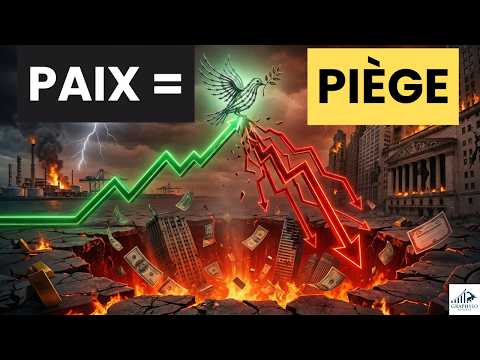
ALERTE IRAN : Le Cessez le feu va faire CHUTER la bourse !
AI Summary
The current market situation is characterized by a "stagflation" scenario, where inflation remains persistent, and economic growth is slowing. While a ceasefire in Iran might offer some temporary relief, it doesn't signal an end to broader economic challenges. The market is awash with liquidity, but underlying issues like inflation are preventing central banks, particularly the US Federal Reserve, from lowering interest rates. In fact, there's a possibility of further rate hikes, though not as aggressive as in 2022.
Governments are expected to continue fiscal stimulus, leading to deficits, which in turn supports high spending by hyperscalers on AI. Corporate earnings are holding up, which is propping up the market. However, two key concerns are emerging: the impact of the euro-dollar exchange rate on companies and the potential for rising energy prices to force companies to revise their earnings downwards. If these two factors converge, it could lead to a significant economic downturn, increased fear of inflation, and a reassessment of corporate growth expectations.
Even seemingly inexpensive stocks, like "Gafa" companies (Google, Apple, Facebook, Amazon), are priced based on future earnings. If these earnings are revised downwards, their current valuations could become expensive. While Gafa companies are investing heavily in AI, a significant roadblock would be rising interest rates making it harder for them to borrow and fund these investments. Such a scenario would be detrimental to the market, given the concentration of investment in these tech giants and semiconductor-related companies.
The prevailing trend, fueled by the belief in a de-escalation of tensions, has seen value stocks and small-cap companies outperform. This trend is supported by significant liquidity in the markets, both in equities and fixed income, particularly in short-term bonds and cash. As long as interest rates remain elevated, investors are likely to de-risk and favor these safer assets.
The speaker anticipates a potential window for central banks to lower rates once the immediate inflationary pressures subside and the economy shows signs of slowing. The role of cash on the sidelines could then become a significant driver for equity markets, provided there isn't a severe recession. In case of a recession, cash would likely flow into bonds.
The euro-dollar exchange rate is identified as a key indicator. While a weaker dollar might have been expected to bolster the dollar's safe-haven appeal amidst geopolitical tensions, this hasn't fully materialized. The gold market, despite its importance, has a small float, making it susceptible to volatility driven by large holders like states. The euro-dollar's weakness could be negative for European exporters but potentially positive for international capital flows into European equities, up to a point where it impacts exporter earnings. Trump's influence on the dollar, particularly through oil prices, is also a factor to consider.
The underlying support for the market remains the expectation of rising corporate earnings. However, the impact of geopolitical events on these earnings, especially concerning energy prices, needs close monitoring. Investments in AI are crucial, and any slowdown in these investments could negatively affect corporate results and valuations. The current situation is described as a "flight forward," and any interruption could significantly impact market valuations.
The speaker also touches upon the potential impact of tariffs, drawing a parallel with Trump's past policies. While tariffs can be a burden on consumers and businesses, the current geopolitical situation in Iran is not directly comparable. The ongoing flow of money into markets, fueled by stimulus and government spending, is a key driver.
The market's reaction to Gafa companies' performance is crucial. If they consolidate or show weakness, it could lead to sideways movement and volatility in the broader indices. The impact of oil prices on households and businesses is still significant, though less so than in the past. Prolonged high energy prices could push the stagflation scenario towards a recession.
The speaker notes that the current situation, where oil is a top-performing sector, is generally not a good sign for future index returns, often leading to economic slowdowns or recessions. The disparity between the rich and the poor is also relevant, as consumer spending in Western economies, particularly the US, relies heavily on the wealthy. Their spending habits are often tied to their portfolio performance. Authorities are in a difficult position: a sharp market decline could destabilize the economy, while a robust market is needed to support consumer confidence and investment.
Concerns are raised about the resilience of the US job market. While unemployment figures may appear strong, this could be due to a lower labor force participation rate. The impact of AI on youth employment is not seen as widespread, as technology and AI are not the largest employers. The geopolitical landscape may also lead to increased military recruitment.
The speaker suggests that the tech sector may have overhired post-COVID and is now using AI as a justification for layoffs that were perhaps an error in 2021-2022. Wage growth is identified as a key factor to watch. While manufacturing may see some hiring and wage increases, a significant second-round inflation effect is not anticipated. The market's focus will likely be on corporate earnings and the impact of energy prices on profit margins.
The current scenario is characterized by sticky inflation that prevents central banks from acting, but a sustained, second-round inflation surge is not the primary expectation. This leads to a widening gap between inflation and growth, reinforcing the stagflationary outlook. The Iran situation may accelerate or decelerate certain trends, but the underlying long-term dynamics remain.
The cycle of high energy prices, leading to inflation, central bank inaction or rate hikes, economic slowdown, and subsequent rate cuts, is expected to take several months to play out. The market's ability to absorb bad news while overpaying for good news indicates substantial liquidity.
The speaker highlights the importance of monitoring oil prices, the euro-dollar exchange rate, and interest rates. Oil prices remaining elevated above $85 per barrel suggest continued impact on corporate earnings. A significant drop in oil prices below $70 could signal deflationary risks and potential market turmoil. The euro-dollar's congestion suggests a potential weakening of the dollar, which could favor European assets and value stocks.
Interest rates have been stable for a year, which is beneficial for equities. However, a sharp drop in rates could signal a severe economic downturn and a flight to safety. The current sideways movement in indices, characterized by volatility, could continue. Gold is also exhibiting volatility but remains within a construction phase.
The CAC 40 index is trading within a broad range, and a decisive move above 8000 points is seen as positive, suggesting a potential upward trend. However, a break below 8000 points would indicate a deterioration of corporate earnings expectations. The market's ability to anticipate events is noted, with past positive reactions to geopolitical news.
The Nasdaq is also showing resilience, trading above key support levels. The speaker is optimistic about potential further gains, especially if capital flows continue to favor tech giants. The market is described as heterogeneous, with some sectors performing well while others lag. Semiconductors and Gafa companies remain key drivers.
The semiconductor sector is showing signs of a potential top, with resistance around current levels. While positive as long as prices stay above $350, a failure to break higher could lead to a period of consolidation. Small-cap companies, particularly value-oriented ones, are also outperforming.
The speaker emphasizes the importance of patience and observing market signals. The current environment is characterized by sideways trading and rotations, driven by available liquidity. The market is rarely purely bullish or bearish and often consolidates.
The video concludes with a call for audience engagement on their investment strategies and sector preferences. The speaker reiterates their optimism for buying on dips, targeting higher levels for indices like the CAC 40, and acknowledges the current market's technical nature.