The Quantified Scientist
AI Audio Summaries
13 videos summarized
1 follower on BriefTube
Last summary: Oct 7, 2026
AI Audio Summaries
13 videos summarized
1 follower on BriefTube
Last summary: Oct 7, 2026
Read AI summary
YouTube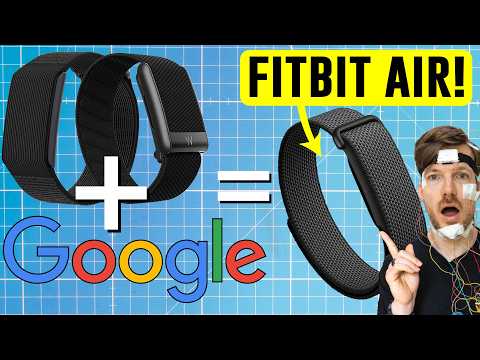
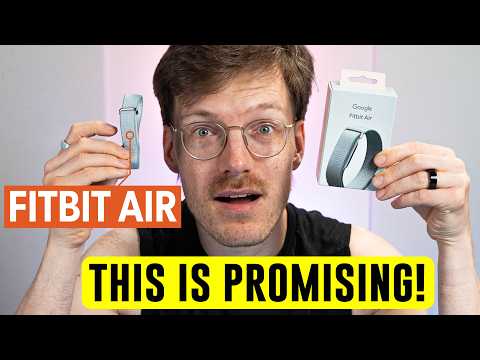
Google is launching the Fitbit Air, a new screenless wearable, alongside the rebranding of the Fitbit app into Google Health. This integration signifies a deeper merging of Fitbit's technology into Google's broader health ecosystem, with Fitbit remaining a hardware brand while the app experience transitions to Google Health. The Google Health app will consolidate fitness tracking, sleep monitoring, health metrics, and coaching, and will aim to work with various wearables, and even without any hardware at all. Notably, it will integrate with Apple Health, allowing data syncing from Apple devices. However, the AI-powered Google Health Coach, at launch, is exclusive to Fitbit and Pixel Watch users, with plans to expand its availability over time. Existing Fitbit users will migrate to the new Google Health app through an update, and Google Fit users can also transition, indicating Google Health is becoming the central platform. The Fitbit Air is positioned as a lightweight, unobtrusive 24/7 tracker, similar to the Whoop strap and Polar Loop. Its small size and lack of a screen are intended to minimize distractions and allow for comfortable wear during all activities, including sleep.
Read AI summary
YouTube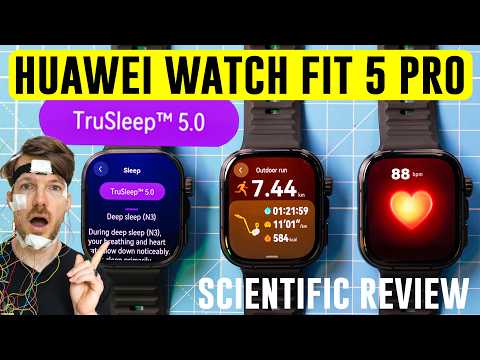
The video reviews the new Huawei Watch Fit 5 Pro, focusing on its sleep stage, heart rate, and GPS tracking performance. The reviewer notes that a separate video will cover the non-Pro version, but both models are expected to feature the new True Sleep 5.0 algorithm, which Huawei claims offers vastly improved sleep stage tracking. From a build quality perspective, the Huawei Watch Fit 5 Pro is described as a premium device, resembling an Apple Watch but with a more refined look and feel. It boasts a larger, brighter 1.92-inch screen with up to 3,000 nits, and a symmetric bezel design. The Pro version includes sapphire glass and titanium alloy bezels. While Apple Watches offer better integration within the Apple ecosystem, the Watch Fit 5 Pro is compatible with both Android and Apple devices. The estimated price point is around €280 or $300, placing it in a similar range to an Apple Watch Series 11.
Read AI summary
YouTube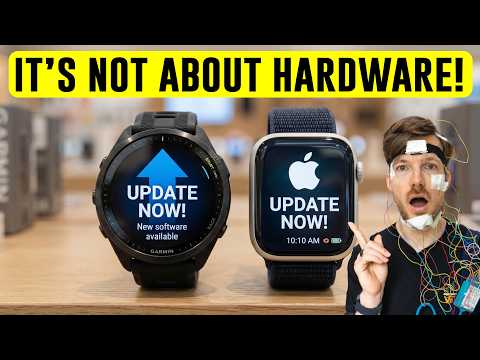
In the realm of smartwatches and health trackers, software and firmware updates have become increasingly critical, often surpassing hardware innovations in their impact on performance, particularly in health and sport metrics. While companies like Garmin, Apple, and Amazfit release multiple devices annually, significant changes are now predominantly software-driven. This shift introduces three levels of data, with levels one and two (direct and derived metrics, respectively) being the traditional focus. However, a third level, involving highly derived metrics like disease prediction, is emerging as the most influential and differentiating factor for brands. Firmware updates are as vital as hardware in enhancing smartwatch performance, a trend expected to intensify. Examining sleep stages tracked by the Oura Ring and Whoop strap illustrates this. For instance, the Oura Ring's deep sleep percentage data shows that while a hardware change from Oura Ring 2 to 3 had some impact, major firmware updates, specifically the sleep staging algorithm 2.0, caused a significant and sudden dip in deep sleep percentage, from approximately 23% to 17%. Crucially, the subsequent release of the Oura Ring 4, a hardware update, brought almost no change to deep sleep metrics. This indicates that for a mature product, software algorithms are the primary drivers of change, not hardware. The standard deviation in deep sleep also dramatically decreased after the 2.0 algorithm release, highlighting the algorithm's role in data consistency, rather than hardware generations.
Read AI summary
YouTube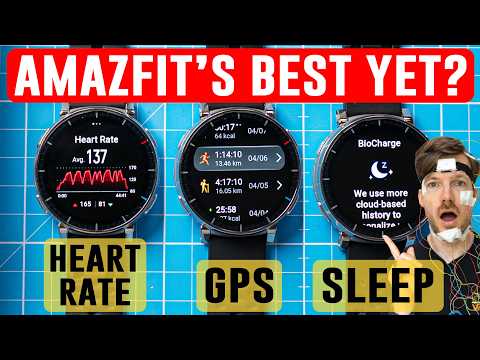
The Amazfit Active 3 Premium, priced at approximately $170, is a new smartwatch that offers competitive features, though it has some limitations. This review presents an independent scientific analysis of its heart rate, sleep stage, and GPS tracking performance, comparing it to other devices. Starting with heart rate tracking, the Amazfit Active 3 Premium was tested against the Polar H10 ECG chest strap, a highly reliable heart rate measurement device. For indoor cycling (spinning), the watch showed a correlation of 0.97, which is good but not as high as some competitors. It occasionally detected a heart rate that was too low, particularly at the beginning of sessions when the body was still warming up. In later stages of workouts, its performance improved significantly. When compared to other devices, the Amazfit Active 3 Premium's performance was similar to other Amazfit models like the T-Rex 3 Pro and Active Max, which isn't surprising given they share the same sensor. It falls in the middle range of devices, not among the top performers but also not the worst. The Amazfit Helio Strap, especially when worn on the biceps, demonstrated superior performance. Top performers in this category include various Apple Watches, some Huawei devices (e.g., Watch GT6, Watch 5), and the Amazfit Helio Strap. The Helio Strap's better performance is likely due to its lighter weight and better fit, resulting in less movement on the wrist, despite having the same sensor.
Read AI summary
YouTube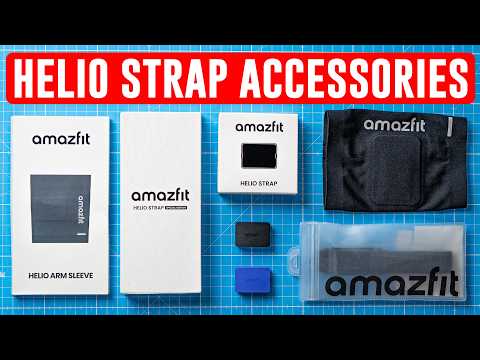
The speaker, a postdoctoral scientist specializing in biological data analysis, discusses their increased use of the Amaze Fit Helio strap, primarily due to two new accessories and recent testing of its accuracy. The main accessory highlighted is a biceps sleeve, which offers greater comfort compared to the official or unofficial biceps bands previously used. The speaker notes that the official biceps band could be uncomfortably tight and cause skin irritation during activities like running or weightlifting. The new sleeve is described as softer and more comfortable, with the Amaze Fit pod sliding into a pouch inside. The speaker uses a size M sleeve and mentions the availability of other sizes. The speaker also appreciates the new color options for the Amaze Fit Helio strap, mentioning a purple one. For exercise, the speaker prefers the sleeve, while for day-to-day use, they would opt for a biceps band, similar to how they use their Whoop strap. They note that the Whoop strap's biceps band is more comfortable for them than the Amaze Fit Helio strap's official band, which led to the switch to the sleeve. An additional benefit of the sleeve is the potential for better heart rate signal due to increased protection from ambient light on both sides of the sensor.
Read AI summary
YouTube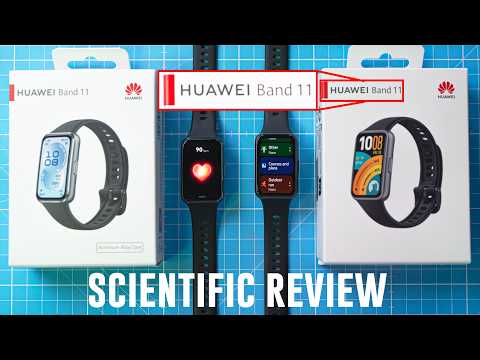
The speaker conducted a week-long test of two Huawei Band 11 models, one with an aluminum case and one with a plastic case, focusing on heart rate and sleep stage tracking. The normal Huawei Band 11 lacks GPS tracking but is significantly cheaper than the Pro model. Both versions of the Band 11 were visually identical, with the aluminum version being only 1 gram heavier. The speaker paid around 40-45 euros for each and noted that if the plastic one were cheaper, he would opt for it as no discernible difference in performance or durability was observed. The testing began with heart rate tracking during indoor cycling, comparing the Band 11s against an ECG chest strap, considered the most reliable method. For the aluminum Band 11, the correlation with the reference device was 0.88, which the speaker deemed "not great" but "probably just about good enough for most." A cloud of points below the blue line indicated instances where the Band 11 detected a heart rate that was too low. The plastic version performed slightly better with a correlation of 0.97, although it also showed some instances of detecting a low heart rate. Individual spinning sessions revealed that while the Band 11 generally detected intervals, it sometimes registered a slightly too low heart rate. Overall, the performance was considered "good enough" for the price, despite "random sudden drops in heart rate."
Read AI summary
YouTube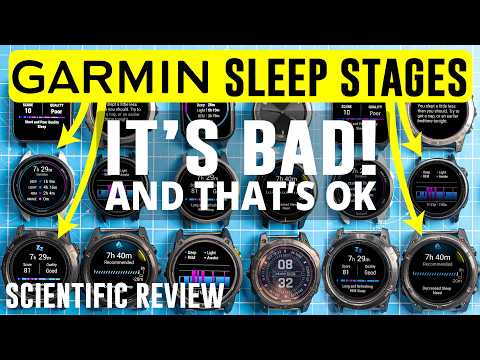
Garmin watches generally perform poorly in sleep stage tracking compared to competitors, a conclusion supported by three lines of scientific evidence. However, they excel in other nighttime metrics and are strong as sports trackers. The performance of sleep stage tracking is consistent across different Garmin devices, such as Fenix, X1, or Venue series. The first line of evidence comes from a sleep study conducted with the University of Selsburg, involving 18 participants over four to five nights. Participants wore various wearables, including Garmin (plotted in red), Polar, Aura, Whoop, Apple, Google, and the Circle Plus ring. These wearables were compared against polysomnography, the gold standard for sleep stage tracking, which uses electrodes to measure brain waves, eye movements, and heart rate.
Read AI summary
YouTube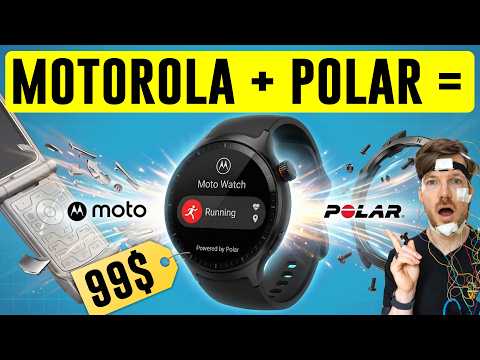
This review examines the Moto Watch, a device aiming to combine Motorola's hardware expertise with Polar's software algorithms, potentially offering a budget-friendly Polar alternative for around €99. The reviewer, a post-doctoral scientist specializing in biological data analysis, extensively tested the device, focusing on data quality and day-to-day functionality. His overall experience was largely negative, leading him to recommend it to only a small group of people due to numerous issues. Starting with subjective experience, the reviewer immediately encountered significant usability problems. He was unable to access his exercise data or connect the device to platforms like Strava, which severely limited his ability to perform a deep analysis of the raw data. This lack of access suggested that the company might not be "fitness driven" or "fitness first," positioning the device more as a smartwatch than a dedicated sports and health tracker, despite its Polar algorithms. The device appeared to function only on Android, as the reviewer couldn't download the app on his iPhone, though he wasn't sure if this was a region-specific or general issue.
Read AI summary
YouTube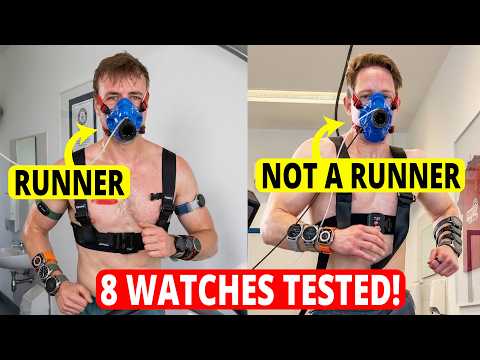
Rob, a post-doctoral scientist specializing in biological data analysis, is conducting a comprehensive, data-driven study to determine the accuracy of VO2 Max estimations across eight popular wearable brands. The study compares devices from Garmin, Coros, Suunto, Polar, Apple, Samsung, Google, and Amazfit against clinical reference standards. Unlike many casual reviews that rely on sporadic measurements, this research utilizes a systematic protocol involving multiple devices per person and repeated measurements over an extended period. Rob emphasizes that the current findings are preliminary, representing the start of a nine-month project that will eventually include at least twenty participants. The goal is to move beyond the typical method of showing a single number from a single day and instead understand how these wearables perform in terms of both absolute accuracy and long-term consistency. To provide context, the transcript defines VO2 Max as a metric indicating how much oxygen the body can utilize during maximum effort, typically expressed in milliliters of oxygen per kilogram of body weight per minute. In a laboratory setting, this is measured through respiratory gas analysis while the subject undergoes a progressively difficult exercise test. Because wearables cannot measure gas exchange directly, they must infer VO2 Max using a combination of heart rate responses, pace, power proxies, GPS data, and proprietary algorithms. The study aims to reveal how closely these inferences align with reality.
Read AI summary
YouTube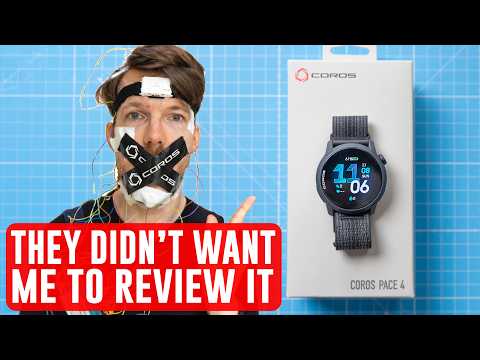
This summary provides a data-driven review of the Coros Pace 4, as presented by Rob, a post-doctoral scientist specializing in biological data analysis. Because the reviewer purchased the device independently after being "ghosted" by the brand, the analysis is strictly based on raw data comparisons against high-end reference sensors. The review focuses on three primary pillars: heart rate accuracy across various activities, sleep stage tracking, and GPS reliability. ### Introduction and Context
Read AI summary
YouTube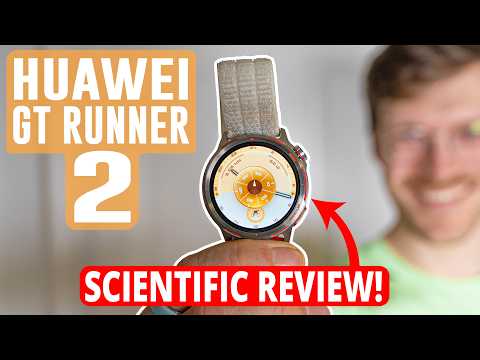
The Huawei GT Runner 2 represents a significant evolution in Huawei's sports-focused wearable lineup, aiming to capture the market currently dominated by established brands like Garmin and Coros. Tested by postdoctoral scientist Rob, the device was put through a rigorous series of benchmarks focusing on heart rate accuracy, GPS precision, and sleep stage tracking. Despite some initial data synchronization issues caused by pre-release beta firmware, the results provide a clear picture of where this watch excels and where it falls short. ### Heart Rate Tracking Performance
Read AI summary
YouTube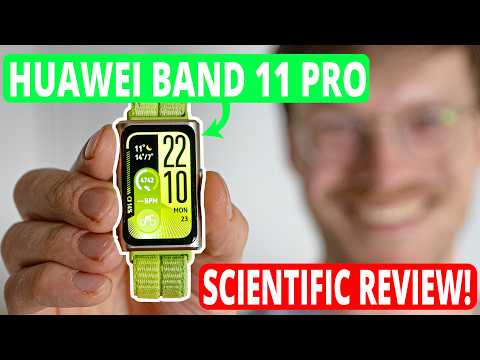
In this detailed evaluation, scientist and biological data analyst Rob provides a systematic review of the newly released Huawei Band 11 Pro. While Huawei launched both the standard Band 11 and the Pro version, this analysis focuses on the Pro model. The primary distinctions between the two devices lie in screen brightness, construction materials, and, most significantly, the inclusion of integrated GPS in the Pro model—a feature absent in the base version. The review is structured around three core performance pillars: heart rate tracking, sleep stage accuracy, and GPS reliability. As a budget-oriented device, the expectation is not for top-of-the-line precision but for "decent" performance consistent with Huawei’s previous entry-level wearables.
Read AI summary
YouTubeBriefTube monitors your YouTube channels, generates AI-powered audio summaries, and delivers them wherever you listen. Telegram, Discord, Slack, or your podcast app. Fully automated.
Start free trial