
Oussama Ammar
AI Audio Summaries
20 videos summarized
2 followers on BriefTube
Last summary: Sep 25, 2026
AI Audio Summaries
20 videos summarized
2 followers on BriefTube
Last summary: Sep 25, 2026
Read AI summary
YouTube
The speaker begins by acknowledging the unscripted nature of the live stream, contrasting it with his usual prepared content. He mentions that the live session might involve him working or bringing guests on screen, serving as a way to generate content and discuss various topics. A question about the SpaceX IPO is addressed, with the speaker referring viewers to a previous episode of "Sans Permission" for his detailed opinion. He expresses a general lack of interest in public markets, viewing them as overvalued with low floating shares and driven by hype.
Read AI summary
YouTube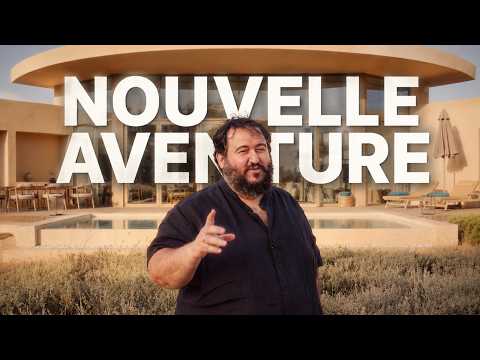
The speaker is in Dubai, brainstorming with J for their first deal in Japan. They are acquiring a fashion brand in Japan, the first in a series for a new company called Always Make Noise. Their goal is to help Japanese artisans, artists, and entrepreneurs gain global recognition. A short trailer introduces the venture. Despite language and cultural barriers, the speakers found raw talent in Japan, particularly among artisans who create inspiring products. They believe Japanese brands often lack effective storytelling and marketing, leading to an underexploited potential. Always Make Noise aims to acquire talented Japanese companies and help them "make noise" internationally, compensating for the traditional Japanese humility in marketing.
Read AI summary
YouTube
Anastasia, 24, has been in online business for two years. She manages female creators on private platforms and social media, and also runs a coaching business, training others to do what she does. She recently moved to Dubai and loves it. She started her business in September 2024, after studying law for four years, specializing in corporate and contract law. She always knew she didn't want to work for someone else, preferring to build her own business. While studying, she worked since age 18 to fund travel. She discovered her current field through videos and noticed a lack of women managers, inspiring her to become one. This was her first concrete business venture, though she had previously explored trading.
Read AI summary
YouTube
The current landscape for content creation is profoundly altered by AI, a shift often discussed superficially but deeply impacting work processes and individual capabilities. This raises several fundamental questions. For a long time, the speaker advocated for co-founders, but now, with AI, they question whether co-founders are still necessary, suggesting we might be on the cusp of an era dominated by "solopreneurs" leveraging AI. Another significant issue is the human desire to feel special and useful. AI's capabilities are leading to identity crises regarding our skills and purpose, as work no longer defines us in the same way. While some may seek spiritual paths or detachment, the speaker believes many simply express a desire for these states rather than truly embodying them. This leads to the core question: what remains interesting or valuable to discuss in the age of AI, what human contribution can AI not replicate?
Read AI summary
YouTube
This video introduces a new format of short tutorials, focusing on AI tools in a landscape rapidly filling with options. The presenter highlights Xfield as a tool they particularly love, capable of a wide range of functions including image creation, cinematic generation, Canva-like design, moodboarding, character creation, influencer simulation, and more. Xfield also provides access to advanced models like Se dans 2 for video generation and GPT Image 2, which the presenter considers superior to others. The core message is that while AI tools like Xfield significantly reduce production time, this does not mean less effort should be invested. Instead, the time saved allows for increased creativity and a higher quality output. The presenter cautions against "AI slop," which results from users becoming complacent with AI's efficiency and sacrificing quality. They argue that understanding your target audience, brand identity, and desired message remains crucial, and AI’s role is to enhance, not replace, this strategic thinking. The concept of a "Content Factory" is introduced, emphasizing the need for a strategic approach to content production. This involves "context engineering," meaning users must have a clear vision and strategy rather than expecting AI to formulate it for them. Brand planning, visual grammar, and production capabilities are highlighted as essential.
Read AI summary
YouTube
Alexandra, an attorney with 12 years at the Paris bar, specializes in corporate law, guiding businesses from inception to sale, including mergers, acquisitions, and capital restructuring. She also advises on shareholder relations and contracts. Initially studying psychology, her path shifted to law unexpectedly, a field she eventually grew passionate about. What she loves most about her work has evolved from technical legal intricacies to the human relationships forged with clients, even within business law. The discussion then pivoted to the complexities of business partnerships and legal protection, particularly concerning founder agreements and the choice between different legal structures like SARL and SAS. A practical scenario was presented: starting a social network for dogs with a co-founder. The first crucial question was whether to test the idea before forming the company or vice versa. Alexandra advised against incurring operational costs for a company that might be liquidated soon. These costs include legal fees, registration fees, accounting, and banking.
Read AI summary
YouTube
The speaker expresses frustration with people who criticize content creators, claiming they lack expertise or produce poor content. They argue that their legitimacy to speak comes simply from speaking, emphasizing that if you don't speak, someone else will. While acknowledging the courage required to face criticism, the speaker notes a pattern: those who criticize the most often do the least. Despite this, the speaker admits that there's a problem with the quality of content and believes more competition would improve their own work. They lament the fear prevalent in the French-speaking market, where people are afraid to speak up or create content due to various anxieties.
Read AI summary
YouTube
The video discusses two emerging topics of significant interest: aliens and psychedelics, suggesting they are more interconnected than commonly believed. It highlights how humanity generally resists new ideas, progressing through distinct phases: initial dismissal, marginalization, and finally, a claim of prior discovery. This resistance, according to the speaker, stems from the fact that our beliefs are often tied to our identity. The speaker argues that both the subject of aliens and psychedelics require immense open-mindedness, a willingness to shed preconceptions about how the world works, and a deep curiosity. These topics are presented as having profound implications for humanity's place in the universe, our understanding of space-time, and our potential for evolution as a species. They are framed as "civilizational subjects" with significant entrepreneurial opportunities arising from new discoveries and approaches.
Read AI summary
YouTube
The session, led by Amandine and Oussama, focuses on how to become the most visible expert in France, leverage new media, and achieve seven-figure annual revenue. The core objective is to attract premium clients naturally and enhance visibility, aiming for rapid business growth. Amandine begins with a quiz to challenge common beliefs. She asserts that being good at marketing isn't necessary, as a simple, viral mechanism exists. She also states that a large existing audience isn't a prerequisite for becoming a recognized expert; in fact, starting without one can be advantageous for building the right image from the outset. Despite the abundance of free online information and AI, she argues that making expertise visible and attracting clients is becoming easier for those who position themselves now. She highlights the immense consumption of content on platforms like YouTube, Instagram, and LinkedIn in France, totaling over 1 billion hours of video watched monthly, questioning where this attention is directed. The consensus is that new media are indispensable for visibility.
Read AI summary
YouTube
This video discusses the importance of clarity and organization when working with AI, emphasizing that AI does not tolerate confusion. The speaker shares a personal routine: dedicating four hours weekly to "tooling." This involves reviewing configurations, agent files (like `.md` files), checking API connections, testing and uninstalling skills, and deeply understanding global instructions and configurations. This practice has significantly improved the speaker's AI output. The speaker explains that AI systems are non-deterministic, meaning each prompt is like a lottery where results can vary. Clear instructions can influence this lottery. An interesting phenomenon is that Codex is becoming less literal, requiring users to fill in the blanks in their prompts, while Claude is very precise with instructions. Both tools demand significant, iterative effort in prompting and a deep understanding of desired outcomes. Tooling and system configuration are strategically important because a thorough audit helps improve things recurrently and prevents "drift."
Read AI summary
YouTube
The speaker hesitated to publish this video to avoid humiliating individuals, but their team insisted. The video features a dialogue with young people seeking advice, particularly about raising 50,000 euros for a pizzeria. The speaker criticizes their approach, highlighting their aggressive demeanor, poor presentation, and lack of self-awareness, which deter potential investors. The core message emphasizes that money isn't easily obtained. To secure funding, one must either convince someone to invest through emotional connection and a compelling project, or earn it by developing rare, valuable skills. The speaker suggests that instead of asking for money, the individuals should focus on their existing management skills, perhaps by reorganizing chaotic businesses for a percentage of the profits.
Read AI summary
YouTube
The most taboo topic in France, according to the speaker, is the relationship between employers and employees. While public praise for teams is common, private complaints often center on staff. This is attributed to the inherent human need to avoid being a machine, with the word "travailler" itself originating from "torture." The speaker identifies two key problems for French entrepreneurs: high taxes and additional employee costs, which erode profit margins. He then introduces the emergence of AI and AI agents as a transformative force. While not predicting mass unemployment, he foresees economic fragmentation and a multiplication of entrepreneurial opportunities, leading to smaller, more human, and less alienating teams. AI is poised to change the nature of work, allowing individuals to focus less on the act of working itself. The video promotes a "revolution" for entrepreneurs to replace employees with AI agents, offering a system by Payroll Less that removes technical barriers, allowing for immediate deployment of pre-trained AI employees.
Read AI summary
YouTube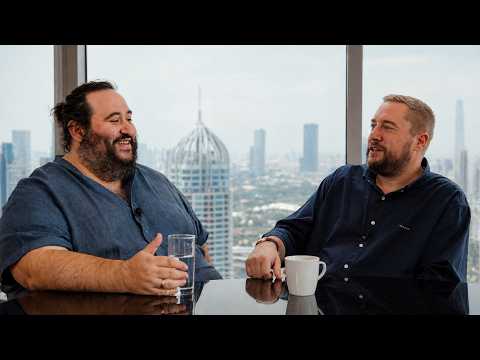
The discussion begins with the speaker's interest in AI, noting the challenge of connecting AI to pragmatic applications, especially for those who began with tools like ChatGPT. He admits to being a "control freak" and initially feared AI making critical errors, like responding to social media followers or emails, which could be costly. He compares this to his early career, where he meticulously reviewed all communications, even those from his first assistant. However, he believes that over time, trust can be built, similar to how he eventually trusted his assistant. The other speaker, Tiradine, emphasizes that AI should not impersonate humans. He explains that he uses an AI named Loky in his email inbox, which introduces itself as his chief of staff and explains that he doesn't have time to respond personally, but provides the answer he would give. He stresses that Loky is always instructed to present itself as an AI.
Read AI summary
YouTube
The speaker has been living in Dubai for just over a year and finds it conducive to focus, especially with the launch of a second business. They note that the current situation, while tense, has created a calmer atmosphere in Dubai with less traffic, making the city more tranquil. This has also led to a filtering of the population, with those who remain being deeply committed to the city. The speaker observes a unique vibe and connection among the people they meet, attributing it to a shared "resistance." The conversation touches on the impact of recent events, with one anecdote about a drone hitting a building and the resident choosing to stay. The speaker found managing external anxieties, like family calls asking about safety bunkers, to be the most challenging aspect. They even feigned stress to reassure their family. Similarly, another individual described their mother's daily calls, filled with anxiety from news reports, and how they countered it by showing their daily life via FaceTime.
Read AI summary
YouTube
The speaker discusses a common struggle people have with technical tools like the terminal, noting that many tend to freeze when confronted with such tasks. They emphasize that learning is key to overcoming this discomfort, and one doesn't need to be an engineer to use these tools. The speaker suggests formally learning subjects that cause blockages, such as watching tutorials or reading books on the terminal or software architecture, to build a solid foundation. They point out that many individuals exhibit laziness, especially when AI tools like Claude Code can achieve in three hours what might otherwise take three months. AI primarily requires users to conceptualize, understand, and manipulate, rather than delving into complex technical details like reading code or building infrastructure. The speaker expresses frustration for those unwilling to engage with these tools.
Read AI summary
YouTube
The speaker addresses the common practice of sending cold emails and the misconceptions surrounding ambition and networking. They highlight a critical comment received on a LinkedIn post about cold emailing, which pointed out two toxic assumptions often made by individuals reaching out. The first toxic assumption is that simply meeting someone influential will magically change one's life. There's a prevalent fantasy that encountering figures like Xaviniel, Steve Jobs, or Elon Musk will lead to a life transformation, as if by a wave of a magic wand.
Read AI summary
YouTube
In the world of entrepreneurship, most people are playing a game they don’t even realize they are in: the game of constant comparison. We are bombarded by "religious" messages about the right way to build a business—whether you must raise venture capital or bootstrap, whether you need to scale fast or stay lean. These narratives create the illusion that there are fixed rules for success. However, the reality is that the comparison game is one you can never win because no one is "good enough" to beat everyone else at their own game. The only game worth winning is becoming the most unique version of yourself. True success isn't about looking successful to others; it’s about living a life you’ve actually chosen, supported by a business that is specifically adapted to your desires, needs, and personal situation. The moment business becomes truly interesting is when you stop following the established rules and start writing your own. Many entrepreneurs fall into the trap of changing their strategy just because they see someone else succeeding with a different model. It is like a skilled chess player switching to checkers just because someone told them checkers is the "real" game. You end up being mediocre at a game that isn’t yours, following rules that don't fit your strengths. In the entrepreneurial ecosystem, people often chase a specific scenario of success without realizing it is just one choice among infinite possibilities.
Read AI summary
YouTube
The emergence of new technologies rarely follows the path we predict. In this transcript, the speaker explores a specific phenomenon he calls the "leadership paradox" created by artificial intelligence. While many initially believed AI would simply make work easier, the speaker argues that AI will actually make the role of a CEO ten times more difficult, but also one hundred times more human. If a leader views AI as a mere technological wave to surf, they are headed for a "monumental shipwreck." AI is not just a tool; it is a force that redefines the very foundations of performance, strategy, and leadership. The paradox lies in the fact that as machines become more intelligent, human emotional and relational intelligence becomes the primary lever for growth. Many leaders have spent years acting like "robots," priding themselves on their ability to process data coldly. However, even the most mediocre AI is better at being a robot than the most efficient human. To scale in the coming years, a leader must choose: become an "augmented leader" who pilots technology with discernment and teams with empathy, or become the manager of a disengaged "army of zombies" waiting for the next disruption to sweep them away.
Read AI summary
YouTube
Instinct is often described as something mystical or even magical, but the reality is much more grounded. It is essentially the brain’s "backend" processing—a non-conscious way of handling vast amounts of information to make split-second decisions. Whether you are a beginner or a seasoned entrepreneur, you rely on this flair every single day. However, instinct alone is fragile. It often operates in a fog of incomplete information and high pressure, making it difficult to listen to. To be truly effective, instinct must be "fed" and trained by data and feedback. Relying solely on your gut can build a vulnerable business that struggles to survive in the long term. This is where artificial intelligence enters the frame, not as a replacement for human intuition, but as a technological tool designed to serve and sharpen it. The speaker introduces the concept of becoming a "Cognitive CEO." In a world where intelligence is becoming a commodity and automation is ubiquitous, the value of an entrepreneur is no longer found simply in the work they produce, but in the systems they build to ensure high-quality output. To thrive today, you cannot win through manual labor alone; you must win through instinct, specifically an instinct that has been augmented by deep, data-driven insights.
Read AI summary
YouTubeBriefTube monitors your YouTube channels, generates AI-powered audio summaries, and delivers them wherever you listen. Telegram, Discord, Slack, or your podcast app. Fully automated.
Start free trial