L’IA ne volera pas ton job de CEO… mais elle va le rendre 10x plus dur
AI Summary
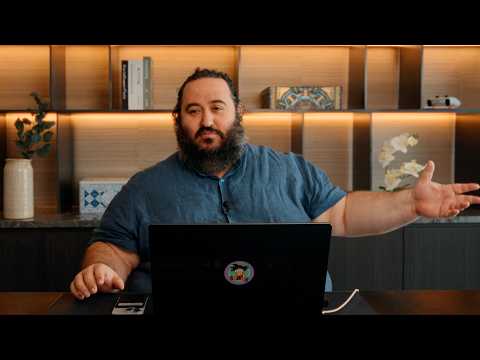
The emergence of new technologies rarely follows the path we predict. In this transcript, the speaker explores a specific phenomenon he calls the "leadership paradox" created by artificial intelligence. While many initially believed AI would simply make work easier, the speaker argues that AI will actually make the role of a CEO ten times more difficult, but also one hundred times more human.
If a leader views AI as a mere technological wave to surf, they are headed for a "monumental shipwreck." AI is not just a tool; it is a force that redefines the very foundations of performance, strategy, and leadership. The paradox lies in the fact that as machines become more intelligent, human emotional and relational intelligence becomes the primary lever for growth. Many leaders have spent years acting like "robots," priding themselves on their ability to process data coldly. However, even the most mediocre AI is better at being a robot than the most efficient human. To scale in the coming years, a leader must choose: become an "augmented leader" who pilots technology with discernment and teams with empathy, or become the manager of a disengaged "army of zombies" waiting for the next disruption to sweep them away.
The speaker points out a current disconnect in the corporate world. While many leaders are still debating how to implement AI, the reality of "Bring Your Own AI" has already taken hold. Statistics show that 75% of employees are already using AI tools, often without their company’s permission or knowledge, to work faster or manage multiple jobs. This creates a fragmented environment that can only be unified if a leader puts AI at the heart of the organization.
To do this effectively, empathy must become a strategic KPI (Key Performance Indicator). For decades, leadership was focused on lagging indicators like revenue and margins—data that only measures the past. Since AI is now the world's best tool for optimizing these metrics, the leader’s role shifts to managing the one variable AI cannot understand: the human element and the coexistence between human and AI "employees."
A leader must create an environment of "psychological safety." If employees feel that implementing AI will lead to their immediate replacement, they will resist it. The speaker cites examples like Facebook and the government of Dubai, where employees are incentivized or promoted for automating their own tasks. This turns AI from a threat into an opportunity for growth, ensuring that employees help integrate the technology rather than acting as a source of friction.
The speaker uses a powerful analogy to describe this new dynamic: AI is like a massive crane. It can lift enormous loads of data and handle repetitive structures at incredible speeds, but it can never be the site foreman. The leader's job is not to "carry the bricks" but to ensure the mason, the plumber, and the electrician are communicating. The leader must provide feedback, create context, and sense when the team is fatigued or discouraged. As the "crane" (AI) becomes more powerful, the need for human cohesion becomes even more critical because the risks of a mistake are higher.
This leads to a core competency for the modern leader: "decision agility." While AI floods us with dashboards and predictions, making a decision actually becomes harder, not easier. True leadership requires the clarity of mind to take courageous actions based on massive amounts of information without trusting the machine 100%. The leader must remain the "Human in the Loop," challenging the AI and asking the "uncomfortable questions" that algorithms are often programmed to avoid.
Ultimately, the entrepreneur becomes the conductor of an ecosystem where autonomous AI agents are integrated into the organizational chart. This requires a shift from a traditional pyramid structure to a complex architecture of human and digital collaboration. In this "whirlwind of innovation," the role of the storyteller is vital. Leaders must communicate the "Why" behind their actions, as AI can easily handle the "How."
To help entrepreneurs navigate this transition, the speaker introduces "Scale Wevus," a seven-week program designed to create "AI-first" entrepreneurs. The program aims to help businesses multiply their turnover without necessarily increasing their headcount. To launch this, the speaker is hosting a free 12-hour live event on March 10th, offering practical lessons on transformation and scaling. He concludes by emphasizing that in an era where AI can automate almost anything, the ability to build a strong corporate culture and maintain a human vision is what will truly differentiate a successful company.