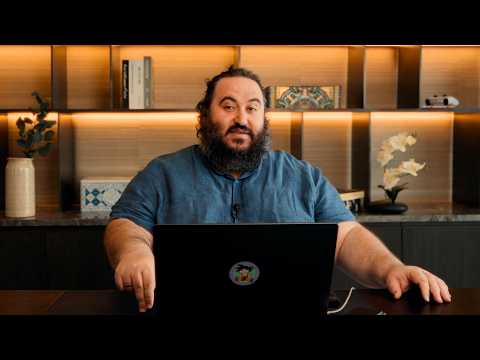
L'instinct ça se complète avec l'IA. Voilà comment.
AI Summary
Instinct is often described as something mystical or even magical, but the reality is much more grounded. It is essentially the brain’s "backend" processing—a non-conscious way of handling vast amounts of information to make split-second decisions. Whether you are a beginner or a seasoned entrepreneur, you rely on this flair every single day. However, instinct alone is fragile. It often operates in a fog of incomplete information and high pressure, making it difficult to listen to. To be truly effective, instinct must be "fed" and trained by data and feedback. Relying solely on your gut can build a vulnerable business that struggles to survive in the long term. This is where artificial intelligence enters the frame, not as a replacement for human intuition, but as a technological tool designed to serve and sharpen it.
The speaker introduces the concept of becoming a "Cognitive CEO." In a world where intelligence is becoming a commodity and automation is ubiquitous, the value of an entrepreneur is no longer found simply in the work they produce, but in the systems they build to ensure high-quality output. To thrive today, you cannot win through manual labor alone; you must win through instinct, specifically an instinct that has been augmented by deep, data-driven insights.
Looking at the current landscape, there is a significant divide in AI adoption. In Europe, only about 10% of companies utilize AI, rising to 30% for larger firms with over 250 employees. In contrast, the United States presents a much more aggressive market, with an estimated 58% of small and medium-sized enterprises expected to use AI by 2025. For French entrepreneurs, this gap is particularly dangerous. Operating in a country with high taxes and social charges like URSSAF, the failure to adopt AI creates a double disadvantage: it results in lost profit margins and an inability to improve work quality. Furthermore, AI has dismantled language barriers. An American entrepreneur who was previously limited to English-speaking markets can now seamlessly enter the French, Arabic, or Indian markets. This shifts the entire map of global competition, making the ability to scale more critical than ever. To help entrepreneurs navigate this, the speaker is organizing a 12-hour live event on March 10th focused on scaling.
To address these challenges, the speaker emphasizes the idea of the "augmented brain." Most entrepreneurs lack a massive data analysis team and find themselves overwhelmed on all fronts, leading to sub-optimal decisions based on obsolete information. AI changes this by allowing for the creation of agents that work 24/7 without fatigue, internal politics, or administrative burdens. A notable example is a marketing agency that quadrupled its client base with the same team by integrating AI into its documentation and content production workflows.
The transition from the pre-AI world to the post-AI world is defined by how we handle data. Previously, collecting and structuring data required rare technical skills. Today, the barrier is no longer technical; it is imaginative. The key is knowing your business well enough from the inside to identify which information truly matters. The speaker urges entrepreneurs to ask their teams a fundamental question: "How do we collect data, and how do we unify it into a single dashboard?" A personalized dashboard allows a leader to identify patterns, recurring customer complaints, and hidden flaws. For instance, in his own business, Scaleus, the speaker uses a dashboard to track leads, funnels, and the effectiveness of specific sales arguments in real-time.
This data-driven approach leads to the creation of a "strategic simulator." One of the hardest parts of being a CEO is the loneliness of decision-making—the feeling that no one else truly understands the specific context of your business. While mentors and coaches are valuable, an AI fed with the right context can be even more powerful. The difference between a "dumb" AI and a sophisticated system isn't just the quality of the prompts, but the depth of the data context provided. With the right data, an AI can simulate scenarios, showing how a decision might be impacted by sales trends, local events, or even the weather. The speaker even used this logic to select the date for his upcoming webinar, choosing March 10th because it was the day with the least external competition to maximize attendance.
However, the speaker warns against blind trust. AI is powerful but dangerous because it can inherit biases or "hallucinate." While studies suggest an error rate of 10% to 15%, the speaker argues that focusing on these errors is a mistake. If a human employee were right 85% to 90% of the time, they would be considered extraordinary. The rational approach is to treat AI as a partner that proposes solutions while the human acts as the final arbiter who tests and measures. The "Cognitive CEO" focuses on designing the tests that prove whether a decision was correct.
The ultimate goal is to turn AI into an execution motor. Strategy is worthless without it. Consider the example of a plumber who loses 85% of potential business because he is working under a sink and cannot answer the phone. An AI agent, properly contextualized, can handle those calls, draft quotes, and schedule appointments 24/7. This moves AI from a "copilot" that suggests ideas to an "agent" that creates measurable economic value.
In the end, AI isn't about replacing work; it’s about a return to a form of digital craftsmanship. It allows "one-man orchestras" to achieve more with less. Whether you want to build a small, lifestyle business or a massive empire, the method remains the same: iterative loops of decision, execution, measurement, and learning. The friction is no longer human; the leverage is now infinite. Taking a strategic advantage in AI integration today is what will ultimately change the game for any business.