Institut des Libertés-Charles Gave
AI Audio Summaries
19 videos summarized
1 follower on BriefTube
Last summary: Oct 21, 2026
AI Audio Summaries
19 videos summarized
1 follower on BriefTube
Last summary: Oct 21, 2026
Read AI summary
YouTube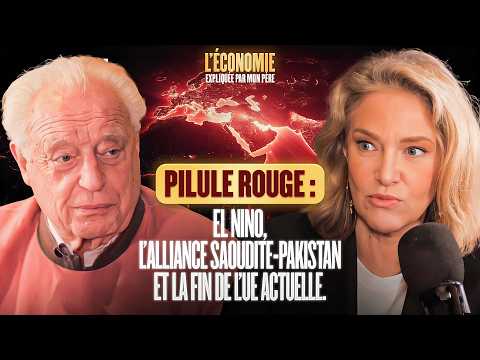
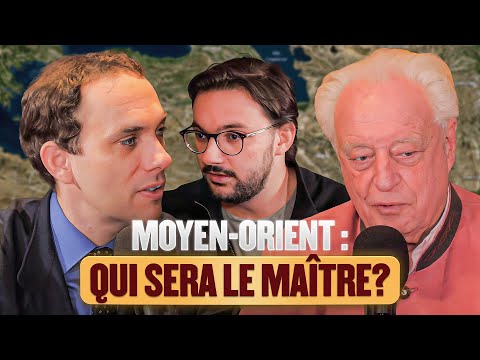
The discussion begins with the "law of maximum annoyance," akin to Murphy's Law, suggesting that when things go wrong, they tend to cascade. An example given is the Asian crisis of 1997-1999, caused by excessive dollar-denominated debt and a fixed exchange rate system. Countries like Thailand borrowed dollars at low US interest rates (e.g., 4%) to invest at higher domestic rates (e.g., 7%). This led to a dollar debt accumulation, and when current account balances deteriorated, the fixed exchange rates collapsed. The Indonesian rupiah, for instance, lost 85% of its value between late 1997 and mid-1998, leading to intense social unrest and racial riots against Chinese communities in Jakarta. Adding to this, the phenomenon of El Niño is discussed. El Niño, a significant meteorological event involving the warming of the Pacific Ocean, can trigger droughts in Africa, Australia, and Indonesia, and excessive rainfall along the Pacific coast (e.g., Peru, Ecuador). A "super El Niño" is predicted with high probability for the second half of 2026, potentially causing temperature increases of over 2 degrees. This is particularly concerning given the ongoing energy crisis. While cereal prices haven't significantly risen during past crises, possibly due to an aging population and productivity gains in some regions, a severe El Niño could severely impact rice-producing nations, exacerbating food insecurity in already fragile countries like Pakistan and India. The Arab Spring, for example, had roots in food supply failures. The situation in Egypt, with 120 million people living on a narrow strip of land along the Nile, highlights the fragility of food security in densely populated, energy-poor nations.
Read AI summary
YouTube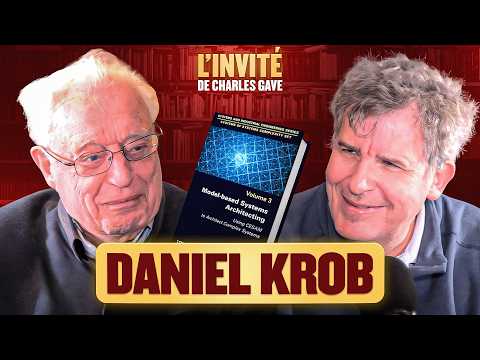
Daniel Crob, a Normal Sup graduate with a background in mathematics and computer science, has dedicated over two decades to specializing in complex systems. His career began in academia, where he focused on theoretical computer science, discrete mathematics, and mobile telecoms. A pivotal experience was working for seven years with Jean-Louis Chetter, the "father of GSM," who had standardized the radio layer protocols for mobile communication. Chetter, a hands-on engineer who once coded 95% of a new mobile solution himself, eventually left Nortel Networks after criticizing its strategy. This experience provided Crob with a deep understanding of mobile radio networks. After his academic career, Crob ventured into entrepreneurship, founding a firm called Sésame over 15 years ago. This firm, now employing around 40 system architects, specializes in system architecture, a discipline Crob essentially introduced to France. System architecture involves designing the overall balance within a complex system to ensure its detailed components function harmoniously. For example, in a car, this means ensuring that the six main subsystems (engine, body, software, etc.) are compatible and work well together, overcoming the inherent "siloing" within industries. The goal is to prevent issues like a fuel pump problem affecting the car's windows due to software interdependencies.
Read AI summary
YouTube
This discussion focuses on the problematic relationship between French citizens' savings and the state, particularly concerning retirement systems, Livret A accounts, and Euro funds in life insurance. The central argument is that the French state heavily captures and mismanages these funds, leading to poor returns for savers and ultimately undermining their financial well-being. Three key areas are examined:
Read AI summary
YouTube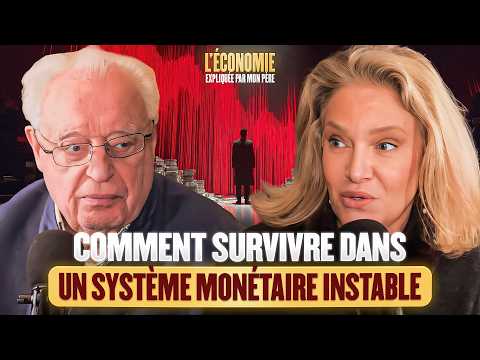
The speaker begins by admitting that the current state of financial markets, particularly the bond market, is incomprehensible, a sentiment he's held for 60 years. He clarifies that when discussing bonds, the focus is always on government bonds, as corporate bonds involve additional credit risk requiring extensive analysis. When buying a government bond, one expects a regular nominal income, equal to the yield at purchase, and repayment at the end of the contract. However, the reliability of this repayment is now in question, particularly for countries like France, the UK, the US, and Italy, unlike Switzerland, which is perceived as stable.
Read AI summary
YouTube
The video begins with a reflection on the paradoxical nature of May 1st as a day of labor where work is forbidden, questioning the philosophical implications of a society dictating when one can and cannot work. This leads to a broader discussion about the current state of financial markets, which the speaker finds perplexing. The S&P 500's 12-day consecutive rise and its recovery to pre-crisis levels are highlighted, juxtaposed with rising Treasury yields and oil prices. This disconnect prompts an investigation into the reasons behind this seemingly irrational market behavior. The speaker draws a parallel to a "Schrödinger's Cat" scenario for the situation in Iran, where the outcome is uncertain, and likens market movements to the unpredictable behavior of a drunk person in the short term, only becoming clearer over longer periods.
Read AI summary
YouTube
The discussion centers on Palantir, a US company valued at $200 billion, which, despite its valuation, doesn't generate significant profits, with its revenue primarily coming from government contracts, particularly with the US and other Western nations. Palantir recently published a 22-point manifesto on the "Technological Republic" on X (formerly Twitter), a condensed version of a text by its CEO, Alex Karp. This manifesto has sparked strong reactions, with some decrying it as "techno-fascism" and others applauding it. Palantir, founded in 2003 in Palo Alto, takes its name from "The Lord of the Rings," referring to a seeing stone that grants vast knowledge but corrupts its user. This name aptly reflects the company's business: developing data analysis software for intelligence agencies, the US military, border patrol, the Ukrainian army (since 2022), and the CIA. Their systems were instrumental in locating Osama bin Laden. The company, which went public in 2020 after 17 years of private operation, is deeply intertwined with government contracts, a fact noted as unusual for a publicly traded entity. The speaker advises against investing in Palantir.
Read AI summary
YouTube
The video discusses common misconceptions in finance and economics, particularly focusing on the role of interest rates and government policy in wealth distribution. The speaker, drawing on 55 years of market experience, identifies three fundamental risks: the risk of time (how long you lend money for), credit risk (who you lend to), and ownership risk (giving up ownership of assets for potential dividends). He argues that financial markets operate in a complex, three-dimensional space, not a simple one-dimensional one. A core argument is that in countries like France, the UK, and the US, the credit risk associated with the state is significant. This is why caution is advised regarding life insurance and government bonds. The speaker emphasizes that the currency in which contracts are made also introduces risk. While an asset like an Air Liquide share has intrinsic value regardless of the currency it's priced in, a government bond's value is tied to the currency in which the government can levy taxes. Gold, on the other hand, is presented as a stable store of value with intrinsic worth, as a gold coin can feed a family anywhere in the world.
Read AI summary
YouTube
The speaker, Arnaud Hupinski, author of "Le permis de tuer pour tous" (The Permit to Kill for All), expresses deep concern over recent legislation in France regarding euthanasia, which he views as a legal and philosophical aberration. He argues that laws should not encroach upon fundamental aspects of human existence like life and death, which he believes are not fully understood by humanity. Hupinski draws parallels between the beginning of life (abortion) and the end of life (euthanasia), both representing profound existential questions that society is attempting to legislate without adequate comprehension. He criticizes the proposed law for inverting established moral and legal principles. Actions previously considered crimes, such as assisting suicide or killing, are being legalized and even encouraged. Conversely, opposing these legalized practices could lead to legal repercussions. Hupinski posits that all laws fundamentally stem from two core principles: love for one's neighbor and the prohibition of killing. He asserts that current legislation undermines this foundational "do not kill" tenet by eroding personal conscience, which he believes is the true basis of morality, rather than written laws.
Read AI summary
YouTube
The video discusses the recent Hungarian legislative elections where Péter Magyar's party secured a significant victory with 54% of the vote, resulting in 138 out of 199 parliamentary seats. This marks the end of Viktor Orbán's 16-year tenure, a period often characterized by illiberal policies. The new Prime Minister, Péter Magyar, is presented as a figure who was previously involved in Orbán's administration for over two decades before breaking away in February 2024 following a presidential pardon scandal. Magyar's political platform advocates for a conservative, pro-European, and liberal reorientation for Hungary. Key promises include restoring the rule of law, judicial and media independence, limiting parliamentary and prime ministerial terms to two, and joining the European Public Prosecutor's Office to combat corruption. He aims to unblock an estimated 20 billion euros in frozen EU funds to revitalize the stagnant economy. Socially, his proposals include doubling family allowances, increasing small pensions, lowering income tax for low earners from 15% to 9%, and implementing a 1% annual tax on wealth exceeding 1 billion forints (approximately 2.6 million euros). He also plans a 25% salary increase for those in education, child protection, and social services, and relaxed retirement conditions for men with 40 years of contributions.
Read AI summary
YouTube
The video explores the complex relationship between liberty and virtue, questioning whether true freedom can exist without a virtuous citizenry. Drawing on thinkers like Rousseau, Lord Acton, and Edmund Burke, the discussion distinguishes between several key concepts: liberty, license, and the difference between singular "liberty" and plural "liberties." Rousseau is cited for his idea that liberty is demanding and requires virtuous citizens, a concept illustrated by the perceived difference between Swiss citizens, who respect laws, and subjects, who might defy authority. The speaker argues that free nations, while seemingly open, are often virtuous and perhaps even "annoying" because of this demand for civic responsibility.
Read AI summary
YouTube
The ongoing crisis in Iran continues to impact global events, particularly concerning oil. Despite claims of victory from certain political figures, the situation remains unresolved, leading to significant consequences, especially for energy markets. A crucial development is the breaking of the 7-year moving average for oil prices on March 27th. This indicator, when the oil price (black line) falls below its 7-year moving average (red line), signals that oil transformation is no longer profitable, leading to financial losses for those involved. While this could be a false signal if the conflict ends quickly, the current situation, with the Strait of Hormuz remaining blocked, suggests otherwise. Such a break has historically been associated with difficult periods for investors, having occurred only a few times in the last century.
Read AI summary
YouTube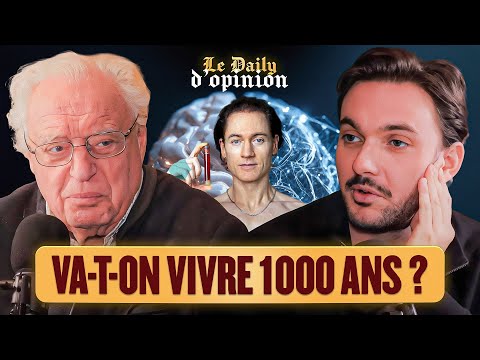
This discussion explores the intersection of medicine and artificial intelligence, highlighting how AI is pushing boundaries in healthcare, extending human longevity, and offering personalized medical solutions. Historically, medical advancements have dramatically improved human health and life expectancy. An average person today enjoys better health than any king or emperor of past centuries. Diseases like smallpox have been eradicated through global vaccination campaigns, initiated by Edward Jenner in 1796 with a vaccine derived from cowpox, and later advanced by Louis Pasteur who discovered the principle of attenuation. Pasteur's work, including a rabies vaccine administered after exposure, cemented his status as a medical hero. Numerous other vaccines followed, significantly reducing the prevalence of diseases like typhoid, plague, diphtheria, tuberculosis, yellow fever, and polio. These achievements have eradicated many diseases that were once common.
Read AI summary
YouTube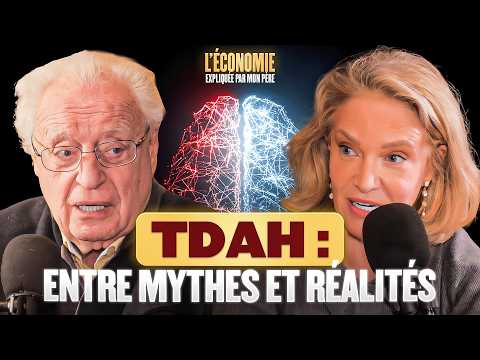
This discussion focuses on Attention Deficit Hyperactivity Disorder (ADHD), or TDAH as it's known in French-speaking countries, a topic often misunderstood and subject to misinformation. The speaker, an attorney diagnosed with ADHD at 35, shares a personal perspective, having also had a child diagnosed with the condition. The goal is to clarify what ADHD is, its symptoms, and how it impacts individuals, particularly in a societal context. ADHD is described not as a disease, but a "neurodivergence," a different way of functioning. It’s estimated to affect about 5% of the population, though this figure might be an underestimation due to underdiagnosis, especially in adults and girls. Historically, it was recognized as early as 1897 as a "moral defect of control," evolving into a better-understood neurological condition.
Read AI summary
YouTube
This discussion focuses on Javier Milei, the current President of Argentina, and the economic reforms he has implemented since his election in November 2023. At the time of his election, Argentina was in a state of severe economic crisis, with GDP stagnation since 2011, annual inflation exceeding 200%, public debt over 85% of GDP, poverty affecting more than 40% of the population, and unemployment around 7%. This was a striking decline for a country that was once among the richest in the world, possessing abundant agricultural resources, industry, raw materials, oil, and gas. The prevailing view was that decades of socialist and statist policies had led the nation to ruin, while those in power had significantly enriched themselves. Milei's program, dubbed "Motosierra" (chainsaw), promised radical changes to reverse this trend. Key proposals included dollarizing the economy to combat hyperinflation, closing the central bank, reducing the number of ministries from 18 to 9, drastically cutting public spending and subsidies, and privatizing major state-owned enterprises like Aerolíneas and YPF (oil). He also aimed to liberalize the labor market by facilitating dismissals, extending trial periods, and removing price and exchange controls. On the international front, Milei sought alignment with the United States and a break with China and left-wing South American governments. The overarching goal was to minimize the state and unleash market forces.
Read AI summary
YouTube
This summary explores the geopolitical and economic ramifications of the recent military escalation in the Middle East, based on the discussion between the speakers at the Institut des Libertés. **A Decisive Military Escalation**
Read AI summary
YouTube
In this discussion from the Institut des Libertés, Charles Gave explores the complex and often misunderstood relationship between gold and the financial markets. He argues that understanding this relationship is essential because it touches upon the very nature of money—a concept so difficult that even the great economist Joseph Schumpeter reportedly abandoned a book on the subject toward the end of his life. ### The Nature of Money and the "Canary in the Mine"
Read AI summary
YouTube
The following summary explores the crisis of representative democracy and the potential for a shift toward direct democracy, based on the insights provided in the transcript. ### The Obsolescence of Representative Democracy
Read AI summary
YouTube
This summary outlines the key economic, geopolitical, and philosophical insights from a recent Q&A session at the Institut des libertés featuring economist Charles Gave. **Taxation and the Erosion of Property Rights**
Read AI summary
YouTubeBriefTube monitors your YouTube channels, generates AI-powered audio summaries, and delivers them wherever you listen. Telegram, Discord, Slack, or your podcast app. Fully automated.
Start free trial