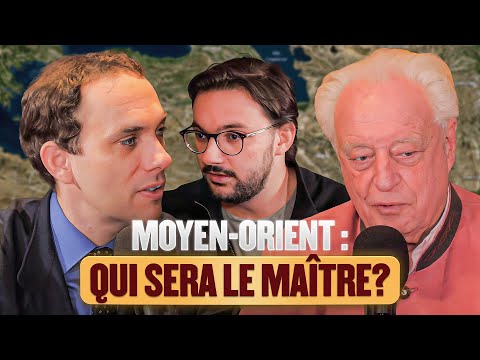
Qui gagnera la suprématie du Moyen-Orient?
AI Summary
The discussion centers on the latest issue of *Conflit* magazine, a bi-monthly publication edited by Jean-Baptiste Noé. The current issue focuses on the Persian Gulf, exploring its history, political struggles, border conflicts, and current dynamics, including the decade-long rule of Mohammed Bin Salman in Saudi Arabia. The magazine also features a report on the evolution of drone warfare in Ukraine by journalist Muré Vegler, highlighting the dangers faced by war correspondents today due to escalating insurance costs.
The host, representing the Institut des Libertés, announces a new partnership with *Conflit* magazine. The Institut, which has a significant ownership stake in *Conflit*, will now dedicate itself fully to the magazine. This collaboration aims to provide valuable and practical geopolitical education, emphasizing the importance of historical context and global events for understanding even domestic affairs.
A significant new initiative is the creation of a Master's program in Geopolitics and Defense, set to launch in September 2026. This unique Franco-Italian program involves three partners: *Conflit* for academic geopolitical content, the oldest journalism school in the world (IJ Paris, now controlled by prominent figures like Bernard Arnault, Rodolphe Saadé, and Vincent Bolloré), and Lumsa University in Rome. The program offers a legally recognized Italian Master's degree, allowing students to bypass the French state's monopoly on university degrees due to the Bologna Accords. The choice of Italy is strategic, leveraging its strong academic and professional expertise, particularly in defense (e.g., Leonardo) and oil (e.g., Eni). Courses will be held in Paris and Rome, with filmed sessions and automatic translation for remote learners, making it accessible and professionally oriented.
The host stresses the importance of *Conflit*'s mission to provide a platform for competent individuals who possess deep knowledge but lack access to traditional media or academic channels. He laments the current state where "culture diffusers" often overshadow "culture creators," leading to a proliferation of superficial content rather than genuine intellectual discourse. *Conflit* aims to counter this by giving a voice to true experts, fostering a culture of in-depth understanding rather than transient information consumption.
The discussion then delves into the historical shift of power in the Arab world, away from the culturally rich Mediterranean region (Syria, Lebanon, Egypt) towards the Gulf states, driven by oil wealth and strategic diversification. While Egypt and the Levant experienced decline due to war and mismanagement (e.g., Nasser's policies), countries like the UAE, Saudi Arabia, and Qatar invested in industry, finance, and human capital. The UAE, in particular, has transformed into an industrial and financial hub, attracting global talent and becoming a bridge between Asia and Europe. This "Asian" orientation contrasts with the more "European" focus of the Mediterranean Arab world and represents a strategic choice for economic development over ideological pursuits, unlike Iran. The expulsion of Jewish populations from Muslim countries between 1948 and 1955 also significantly altered the cultural and intellectual landscape of the Middle East, leading to a loss of diverse expertise.
The UAE's strategy of attracting the best talent through tax incentives and high quality of life is highlighted as a stark contrast to Nasser's expulsion of Europeans in 1956, which led to Egypt's economic collapse. This approach positions Gulf cities as new "city-states" or "Venices," reflected in their ambitious architecture and global connectivity, like Dubai's airport serving as a major international hub. This re-emergence of communication nodes, sometimes along ancient trade routes, is also seen in Oman's strong ties to India.
The conversation touches upon India's often-underestimated economic rise and its potential as a global power, despite significant internal inequalities. President Macron's efforts to strengthen relations with India are praised as a positive development.
The "Shia arc" is then examined, tracing its origins to the early schism in Islam between Sunnis and Shias. This enduring religious and ethnic conflict, primarily between Arabs and Persians, has shaped the region's geopolitics. Iran, a predominantly Shia nation, has developed a network of proxies (Houthis in Yemen, Hezbollah, Hamas, Syria) to project its influence and defend its interests without direct military engagement. This "axis of resistance" extends to international allies like Venezuela and Bolivia, linked by oil production and anti-US sentiment.
A concerning aspect of this geopolitical web is the role of drug trafficking, particularly involving the Palestinian and Lebanese diaspora in Africa and Latin America. This illicit trade, centered in the "triple frontier" zone (Paraguay, Brazil, Argentina), generates funds for groups like Hezbollah and Hamas, with cocaine transiting through the Gulf of Guinea to Europe. This highlights how drug trafficking is used as a "weapon of war" to destroy societies and finance conflicts, posing a significant challenge to global security and public health. The discussion criticizes the purely security-focused approach to drug problems, advocating for public health solutions like detoxification programs, as drug addiction is a complex issue beyond law enforcement.
The recent conflict in the Gulf region is analyzed for its broader implications. The US, particularly under Donald Trump, has suffered a significant loss of credibility. Their failure to guarantee peace and security to their Arab allies, instead bringing war and instability, has eroded trust. In contrast, France has gained credibility by honoring its defense agreements with Saudi Arabia, Qatar, and the UAE, demonstrated by the deployment of the Charles de Gaulle aircraft carrier and Rafale jets. This has benefited French defense industries (e.g., Dassault's Rafale sales) and enhanced France's overall image, making it a more trusted partner in the region compared to its diminished presence in Africa. President Macron's diplomatic efforts in this context are seen as a positive, albeit late, development.
The rise of drone warfare is identified as a revolutionary force, transforming military strategy and potentially rendering traditional assets like helicopters, aircraft carriers, and fighter jets vulnerable. While old technologies don't disappear, drones are accumulating, changing the landscape of warfare and reducing human casualties. This also raises critical questions about the future of maritime transport security. The blocking of the Strait of Hormuz, for instance, was primarily due to soaring insurance costs rather than direct Iranian action, highlighting the financial dimension of geopolitical conflicts. The loss of maritime control could shift dominance back to land routes and impact global financial power if new players like China step in to insure shipping.
The host and guest express concern over the US's perceived "godless" image in the Middle East, further eroding trust. The fragility of Gulf states' infrastructures, particularly water desalination plants, makes them vulnerable to attacks, a concern highlighted by Trump's threat to target such facilities in Iran. While water infrastructure was largely spared, energy infrastructure was hit, further diminishing confidence in US protection. The targeting of water resources is deemed a war crime, emphasizing the ethical dimensions of modern warfare.
Looking ahead, two main hypotheses are presented for the conflict's resolution. The first suggests a "muddled" ending where all parties claim victory (Iran for regime survival, US for strait reopening, Israel for Hezbollah weakening), only to set the stage for future conflicts. The second, more pessimistic, predicts a deep and lasting fracture, similar to the 2003 Iraq War. The US stands to lose the long-standing support of Saudi Arabia, the UAE, and Qatar, as well as some European allies. The ultimate winner is seen as China, which is poised to capitalize on the shifting alliances and economic opportunities. Russia, despite some success in selling oil, faces significant economic challenges (high inflation, 17% interest rates) and a severe demographic crisis due to the exodus of its youth, particularly the highly skilled, to places like Dubai and Georgia.
The discussion concludes with a strong critique of state control over universities and the stifling effect of "memorial laws" on academic research. The guest advocates for the absolute separation of politics and academia, arguing that state funding compromises intellectual independence. He praises the independent nature of the new Master's program, which could be rapidly developed due to its autonomy, contrasting it with the bureaucratic hurdles of state-controlled institutions. The Master's in Geopolitics and Defense, open to both recent graduates and professionals, aims to provide essential geopolitical understanding in a rapidly changing world.