Sabri Thaï
AI Audio Summaries
14 videos summarized
1 follower on BriefTube
Last summary: Oct 8, 2026
AI Audio Summaries
14 videos summarized
1 follower on BriefTube
Last summary: Oct 8, 2026
Read AI summary
YouTube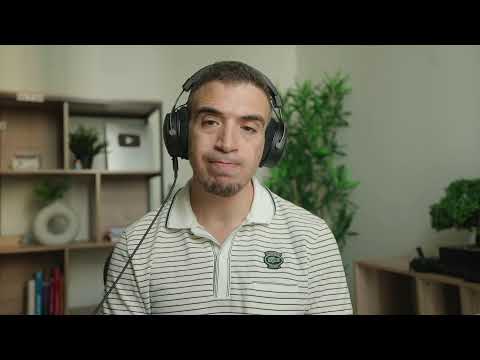
The speaker begins by apologizing for a slight delay to the live stream from Bangkok, Thailand. He mentions a recent trip to Shanghai, highlighting the ease of travel from Thailand even without a passport, using only a Thai driving permit. The main topic of the day is expatriation to Thailand and how to prepare for this life change. He stresses that people often seek a change of life because they are unhappy, feeling like "robots," dissatisfied with taxes, and experiencing depression. The speaker invites viewers to share their current life situations, frustrations, and ambitions regarding moving to Thailand. He encourages interaction, promising to respond to questions and comments in the chat.
Read AI summary
YouTube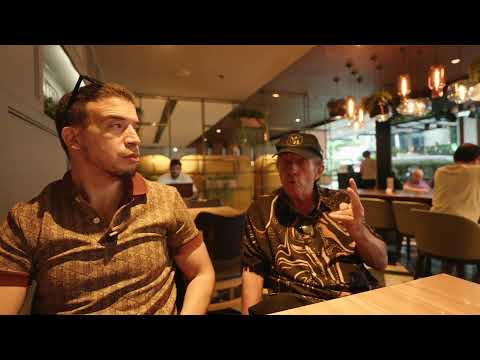
The live stream features a conversation between the host and Jesse, discussing various topics ranging from travel and living abroad to personal experiences and current events. Jesse shares his upcoming plans to spend three months in Saint-Tropez from June 18th to September 23rd, where he intends to eat oysters frequently. He also mentions his preference for eating oysters, followed by chocolate, as a healthy and enjoyable habit. A significant portion of the discussion revolves around Jesse's living situation and preferences. He is looking for a spacious, empty house, at least 100-120 square meters, to accommodate his belongings, including cooking and magic equipment, as well as furniture. He initially struggled to find a suitable place and ended up renting a 150 square meter house for 11,000 baht per month, which he finds acceptable despite some minor issues like the lack of hot water in one bathroom. He contrasts this with his previous residence, which was 4km from Sukhumvit and cost 4,000 baht.
Read AI summary
YouTube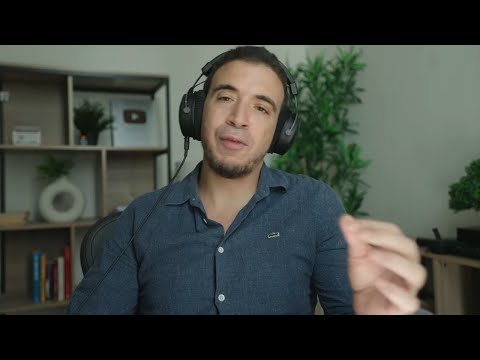
The speaker welcomes viewers to a live session, starting with a discussion about bottled water and its suitability for babies due to mineral content. He then transitions to a recap of a previous video about buying a house in Thailand, particularly for those married to a Thai national. He explains three main solutions: a 30-year leasehold, which he finds less appealing, and the concept of "usufruit" (usufruct) for married couples. Usufruct grants the foreign spouse the right to live in, rent, and receive income from a house owned by their Thai partner for life. However, he cautions about potential complications in case of a separation, highlighting that if the usufruct is legally justified by a financial transaction (e.g., the foreign spouse paid for the house), it's more protected than if it's merely a gesture of love. The speaker then addresses general advice for living in Thailand, emphasizing the importance of adaptability and seizing opportunities. He likens Thailand to a game of chess or a film set, where not everything is as it seems. He warns against "mythomanes" – people who invent elaborate stories about their success or connections to impress others, especially in environments like Thailand or Dubai. He stresses that many people invent lives in Thailand as a protective mechanism, to avoid admitting failure or aimlessness. He advises caution and intelligence in navigating this "jungle."
Read AI summary
YouTube
The speaker, Dida, discusses his experiences in Muay Thai in Thailand, contrasting his reality with the fictional portrayal in a film. He clarifies that he never went to prison, unlike in the movie. His initial motivation for going to Thailand was to learn Muay Thai. Upon arrival, he found that Thai camps were primarily focused on training young Thai fighters and were not readily open to foreigners seeking to learn, viewing it as a business where they didn't have time to waste on outsiders. Dida acknowledges that at the time, there was a belief that foreigners couldn't box effectively, and the sport was more exclusive to Thais. He credits legendary fighters like Ramon Dekkers and others who paved the way for international fighters to compete and prove their capabilities.
Read AI summary
YouTube
The speaker discusses his initial experiences in Thailand, focusing on his pursuit of learning Muay Thai. He clarifies that the film depicting his journey incorrectly portrayed him as being in prison, stating he was never incarcerated. His primary motivation for going to Thailand was to learn the boxing style, and he sought to join a camp. He notes that, as a foreigner unfamiliar with the sport, he often lost, which he viewed as a measure of his strength and skill. He explains that camps in Thailand are typically managed for local fighters, and there's little incentive to invest in and train a foreigner who might not prove successful, as it would be a significant responsibility with no guarantee of return. He recounts a specific instance where he was asked to fight an intoxicated Thai individual, seeing this as an opportunity to prove himself. He emphasizes that he has no regrets or history of missed opportunities because he actively pursued his goals. He highlights the importance of personal responsibility, stating that if one decides to travel without sufficient funds, it's their own choice and consequence. He views Muay Thai as a "school of humility," finding joy in the daily routine of training, eating, and observing the dynamics among the Thai people. He expresses his fondness for Thailand and his desire to return.
Read AI summary
YouTube
The speaker, having lived in Thailand for 10 years, discusses reasons why he might consider leaving the country, despite having built a stable life there with work and family. He emphasizes that while Thailand offers a sense of freedom compared to France, this doesn't mean disregard for laws or customs. He aims to provide an honest perspective, beyond the typical tourist attractions of sun, beaches, and street food. One primary concern is disrespectful mass tourism. The influx of tourists often disregards local temples, modesty, traditions, and customs. This behavior can lead locals to mistakenly associate long-term residents and expatriates with the same disrespectful conduct, even if they have lived in Thailand for many years. The speaker, who lives in Bangkok, chose the city for its stability and productive energy, avoiding the constant "vacation" feeling associated with tourist-heavy areas like Koh Samui or Phuket. Bangkok, with its 12 million inhabitants, offers a conducive environment for business and networking, where most foreigners are settled residents rather than transient tourists. It also allows for quick travel to other parts of Thailand.
Read AI summary
YouTube
This live stream, broadcast from Bangkok, Thailand, addresses various topics, including the host's personal and professional life, his views on the French community in Thailand, his upcoming film project, and advice for those considering expatriation to Thailand. The host, who has lived in Bangkok for nearly 10 years, expresses his satisfaction with life in the city, highlighting the autonomy offered by its public transportation system, such as subways, which reduces dependence on taxis. He contrasts this with experiences in places like Copeng, where reliance on small, expensive boats creates a sense of dependency. While he enjoys Bangkok, he is also considering exploring other destinations.
Read AI summary
YouTube
Thailand can give the illusion of wealth due to inexpensive activities and food, but this can lead to financial ruin if not managed carefully. The cost of living in Bangkok has increased by 15% in the last three years, while the purchasing power of the Euro has stagnated. Many expatriates arrive with high hopes, sharing success stories, but others return home ruined, having lost their savings or been victims of scams. The notion of living comfortably on €600-1000 per month, which might have been possible 8-10 years ago, is now very difficult. The "low cost" era in Thailand is over. Prices for everyday items, like sushi, have seen rapid increases. Visa regulations have also tightened; the previously lenient "visa runs" are no longer easily tolerated. While visas like the DTV (around €350) or LTR (initial cost €15,000-€25,000) are available, even marriage or student visas incur costs. Many individuals who don't meet the requirements for certain visas (e.g., retirement visa requiring €1750 monthly income) resort to agencies in places like Pattaya or Phuket, which can charge between 20,000 and 60,000 baht to facilitate the process, often by arranging necessary documents—a practice that, while common, is not condoned.
Read AI summary
YouTube
This live broadcast from Bangkok, Thailand, focuses on the topic of expatriation, covering budget, visas, and the necessary mindset for such a significant life change. The speaker emphasizes that many people want to take action but are blocked mentally, struggling to anticipate and approach changes in their lives. Current global events, such as war, are making travel complicated, with concerns about affordable tickets and flight cancellations, especially for direct routes. The speaker notes difficulties in avoiding Middle Eastern stops on flights.
Read AI summary
YouTube
The speaker offers a cautionary perspective on integrating into the French-speaking community in Thailand, warning newcomers to be extremely wary, not only of their compatriots but also of deals that seem too good to be true. This advice is rooted in observations of widespread scams and deceptive practices primarily targeting new expatriates within this community. A significant issue highlighted is the tendency for expatriates to segregate into distinct groups based on their length of stay. Newcomers often find themselves isolated and, seeking familiarity, may gravitate towards fellow French speakers, inadvertently making themselves vulnerable. Conversely, more established expats, having been in Thailand for many years, tend to stick to their own circles, creating a disconnect that can be exploited.
Read AI summary
YouTube
The speaker, broadcasting from Bangkok, Thailand, welcomes viewers to an early morning live session. He notes the significant time difference with the West, feeling as though he's already had a productive day. He mentions releasing a video on his secondary channel addressing common questions about bank loans. He shares his recent exploration of Chiang Mai in Northern Thailand, a city he finds appealing for potential future living. He contrasts Chiang Mai with Bangkok, citing Bangkok's noise pollution and traffic as drawbacks, though acknowledging its advantages. He observes that people's preferences for living locations in Thailand vary greatly based on personality and life stage. For a young, single individual, he suggests places like Pattaya or Phuket might offer more opportunities for social activities, but for himself, now with a family, his perspective has shifted.
Read AI summary
YouTube
In this video, the speaker provides an insightful look into what he calls the "Thai Bubble," speaking directly from the heart of Bangkok. He describes a world where, while the rest of the planet seems to be teetering on the edge of major conflict and geopolitical instability, Thailand remains a unique sanctuary of calm. This "bubble" is not just a physical space but a psychological state of being that offers a total disconnection from the anxieties plaguing the Western world. The speaker emphasizes that Thailand’s geographic position—roughly 11,000 kilometers away from the tensions in Europe and the Middle East—plays a massive role in this feeling of safety. This physical distance translates into a psychological buffer. He observes that the average Thai person is largely unconcerned with global geopolitics. Whether it is American military operations or the latest strikes in Iran, these events do not seem to penetrate the daily consciousness of the local population. Instead, people focus on their immediate lives, a mindset often associated with the "Sabai" lifestyle—a way of living that prioritizes comfort and avoids over-analyzing the future or "building castles in the air."
Read AI summary
YouTube
In this interview, Sabri meets Madou, a French expatriate who has been living in Koh Samui, Thailand, for eight months. A former modern jazz dance teacher, Madou discusses her transition from a dynamic career in France to an active retirement abroad, centered around a family business and a deep commitment to cultural adaptation. **The Path to Thailand**
Read AI summary
YouTubeBriefTube monitors your YouTube channels, generates AI-powered audio summaries, and delivers them wherever you listen. Telegram, Discord, Slack, or your podcast app. Fully automated.
Start free trial