Thaïlande Expatriation : changement de vie 🇹🇭
AI Summary
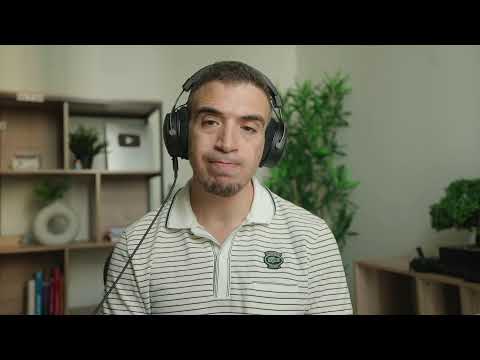
The speaker begins by apologizing for a slight delay to the live stream from Bangkok, Thailand. He mentions a recent trip to Shanghai, highlighting the ease of travel from Thailand even without a passport, using only a Thai driving permit. The main topic of the day is expatriation to Thailand and how to prepare for this life change.
He stresses that people often seek a change of life because they are unhappy, feeling like "robots," dissatisfied with taxes, and experiencing depression. The speaker invites viewers to share their current life situations, frustrations, and ambitions regarding moving to Thailand. He encourages interaction, promising to respond to questions and comments in the chat.
One viewer comments on the difficulty of earning money in Thailand, to which the speaker clarifies that the real difficulty is earning money in "baht." Another viewer expresses the ambition to "lose their return" to their home country, which the speaker finds excellent, relating it to his own experience of losing everything in Thailand during his first trip, which ultimately led him to stay.
Regarding driving permits for tourists, the speaker explains that an international permit is valid for three months, after which a local Thai permit is required for longer stays. For regular travelers, an international permit is sufficient.
He then recounts his first trip to Asia, which began in Malaysia. After a week in Kuala Lumpur, he and a friend felt bored and decided to explore other destinations. They considered Hong Kong and Phuket. The speaker initially resisted Thailand due to its "bad reputation" among young people and the rainy season in Phuket. However, being a fan of Jean-Claude Van Damme, who filmed many movies in Bangkok, he agreed to a one-night stop in the city.
This stop proved chaotic. Within hours of arriving in Bangkok, his friend had an altercation with a taxi driver, resulting in the taxi driving off with all of the speaker's belongings, including his passport. Stranded at 4 AM in an unfamiliar area, with no internet and only a screenshot of a map to the police station, he faced the additional challenge of navigating through a pack of dogs. He eventually reached the police station, where he encountered a general-like Thai police force. They initially laughed at his predicament but directed him to the embassy.
At the embassy, he was given two choices: a "laissez-passer" to leave immediately or an emergency passport, which would take several days. During the wait for his new passport, he experienced a profound "click" with Thailand, falling in love with the country.
A viewer asks about renewing a Thai driving permit. The speaker clarifies that the first renewal is after two years, and subsequent renewals are every five years. He confirms that driving is on the left side of the road in Thailand.
He compares the authenticity of islands in Malaysia, like Perhentian Island, which he highly recommends, to those in Thailand. He believes Malaysian islands are more preserved from mass tourism, offering a more authentic experience with local hospitality and fresh food. In contrast, he feels Thai islands, like Maya Bay, are often overrun by tourists, diminishing the experience.
When asked if he plans to stay in Thailand, the speaker, who is married with a child, expresses hope to stay but acknowledges that Thailand is not his "only issue." He emphasizes adaptability and the importance of having options in different countries. He encourages viewers to envision their ideal year, suggesting a mix of countries like France (June-July), Thailand (six to seven months), and then Japan and Algeria for other experiences. He notes that having a family (an infant) adds a significant layer of responsibility and limits such extensive travel.
He discusses the Philippines, describing it as predominantly Catholic and very devout. He compares the advantages and disadvantages of the Philippines versus Thailand. The Philippines offers better security, business opportunities, and more "virgin" plains and islands due to less mass tourism compared to Thailand. However, Thailand has superior infrastructure (trains, boats) precisely because of its high volume of tourists. He clarifies that his preference is to visit the Philippines for vacation and Thailand for settling down.
He reiterates the importance of financial planning for retirement, emphasizing property ownership as a priority to avoid rental pressure. He also touches on the high cost of living in Switzerland compared to France. Investing in real estate in France is deemed a "donation" due to taxes and tenant rights.
The speaker promotes his guides on expatriation to Thailand in 2026 and Thai fiscality, available in the description. He also offers consultation calls for those planning to move to Thailand within the next 12-18 months.
He shares an anecdote about a previous live stream where someone made crepes with cognac. He clarifies that while alcohol in cooking often evaporates, he personally avoids alcohol entirely. He suggests a Nutella banana crepe as a better "authentic recipe."
Regarding administrative documents, he states that in Thailand, both English and Thai versions are generally accepted.
He expresses interest in potentially moving to Chiang Mai in the future, citing its "vibe" and the educated, civilized, and entrepreneurial profiles of foreigners he encounters there (developers, online business owners, content creators, artisans). He also notes linguistic specificities of Northern Thai, such as using "jiao" instead of "kha" for women.
Learning Thai is discussed, with the speaker emphasizing consistent daily practice and setting challenges. He shares his own method of learning through "mimicry" and amusement, rather than strictly through books. He would repeat sounds and simple phrases, often with taxi drivers, finding it a fun way to engage with the language.
He criticizes expatriates who live in Thailand for decades without learning the language, calling them "digestive tubes" who only consume without contributing or respecting the local culture. He argues that learning the local language is a sign of respect and love for the country that hosts them. He also defends his own French language skills, noting that after 10 years in Thailand, primarily speaking English and Thai, his French reflexes have diminished, and he finds French speakers often overly critical of grammatical errors. He contrasts this with Americans who are generally more encouraging.
He offers a link to his Thai language learning method, which focuses on practical daily expressions to "prime the situation" and solve problems, rather than aiming for full bilingualism. He believes knowing around 300 words can be sufficient to get by.
A viewer asks about opening a business in Thailand with 10,000-20,000 euros. The speaker advises targeting businesses with higher potential for profit, as earning money in baht can be challenging. Many francophone expatriates open businesses not primarily for profit, but to secure a visa, job, and social status, often subsidizing their ventures with foreign income.
He concludes by stressing that expatriation is more than just obtaining a visa or permit; it's about addressing deeper issues in one's life. He cautions against rushing the process, emphasizing the importance of preparation and seeking guidance to avoid pitfalls. He recommends arriving prepared so the first month can be spent enjoying Thailand, rather than being overwhelmed by administration. He confirms that marrying a Thai person can facilitate staying in Thailand, but requires a 400,000 baht deposit. He ends the live stream by wishing everyone a good weekend and encouraging them to take care of themselves and their loved ones.