AI Audio Summaries
20 videos summarized
1 follower on BriefTube
Last summary: May 20, 2026

On May 3, 2026, the WHO issued an alert regarding the MV Yondus cruise ship in the Atlantic, which had an outbreak of Hantavirus. Three deaths had already occurred, and quarantines were imposed on at-risk passengers and their contacts, with repatriations organized for 23 different countries. The resurgence of discussions about masks, PCR tests, and vaccines immediately brought back the trauma of the COVID-19 crisis, leading to fears of another global pandemic. The video aims to provide a closer look at Hantavirus, its origins, its effects on the body, its lethality, and why it is unlikely to become the next COVID-19, which is presented as excellent news.
Read AI summary
YouTube
Choosing a TV in 2026 has become a challenge due to the trade-offs between OLED and LCD technologies. OLED offers perfect blacks but struggles with brightness in well-lit rooms, while LCDs are bright but can produce a "grey mush" effect, particularly in dark scenes. The ideal solution would combine deep blacks with high brightness, a promise fulfilled by a new technology called SQD Mini LED. This video, in partnership with TCL, aims to explain how this technology has managed to "tame light." Before delving into SQD Mini LED, it's important to understand the basics of Mini LED. A TV typically consists of at least three essential layers: a backlight layer that produces light, a layer that controls brightness (like a blind), and a final layer for managing colors. Mini LED technology specifically refers to the backlight layer, which is composed of numerous small LEDs. This is an evolution of traditional LCD TVs, which also use LEDs for backlighting, but Mini LED uses significantly smaller and more numerous LEDs, grouped into zones. More zones lead to better backlighting, resulting in more contrasted images and deeper colors. Mini LED TVs also often achieve excellent peak brightness, and crucially, they nearly eliminate "blooming," the annoying white halo around subtitles caused by imprecise backlighting.
Read AI summary
YouTube
The landscape of personal health monitoring is undergoing a significant transformation, driven by advancements in artificial intelligence and the increasing availability of health-tracking devices. Companies like Google, Whoop, and Bevel are at the forefront of this shift, introducing new services and products that aim to provide users with deeper insights into their well-being. By 2026, a subscription-based model for health monitoring is expected to become a major trend, with consumers potentially paying for continuous analysis of their health data. Google has made several key announcements that signal its commitment to this burgeoning market. Firstly, the Fitbit app is being rebranded as Google Health, consolidating health data from various devices into a single, user-friendly interface. This platform will offer clear statistics on activity, heart rate, and sleep patterns. Secondly, Google Health Coach, an AI-powered assistant, will analyze user health data to provide personalized recommendations. For a subscription fee, users will have their data processed by a specialized Gemini AI model, offering advice on exercise based on recovery levels and predicting future health trends. Thirdly, Google is launching the Fitbit Inspire, an affordable wearable priced around $100, designed to collect continuous health data. This device is crucial for Google's strategy, as the success of its AI analysis tools depends on a steady stream of data. The company anticipates a surge in the market for less intrusive wearables, such as bracelets and rings, that can collect data 24/7.
Read AI summary
YouTube
In April 2026, the average price for a mobile plan in France with unlimited calls and at least 20GB of data has reached €13.34 per month, a 31.1% increase in one year. This rise follows a "golden age" of cheap mobile plans, characterized by 14 years of price wars and aggressive promotions, mainly driven by Free's entry into the market. Before 2012, France had three main mobile operators: Orange, SFR, and Bouygues Telecom. Standard mobile plans cost between €50 and €80 per month, offering limited data, a few hours of calls, and often a 24-month commitment with a subsidized phone. The market was comfortable for these operators, leading to a €534 million fine in 2005 for anti-competitive practices.
Read AI summary
YouTube
When people think of how Apple makes money, the iPhone immediately comes to mind, along with Macs, iPads, and AirPods—essentially, all the high-end tech products found in an Apple Store. While this has been true for over 50 years, Apple has been strategically shifting towards becoming a services company for nearly a decade. These services range from digital life facilitators like iCloud to entertainment offerings like Apple Music, with the App Store at the core of this strategy. By 2025, over 40% of Apple's annual profit came from its services. The goal is to transform occasional hardware purchasers into regular, recurring subscribers. Once integrated into the Apple ecosystem, users can easily spend over €250 per year on iCloud storage, music, bundled services, and App Store purchases, not including hardware costs. Over several years, this can amount to the cost of an iPhone, demonstrating Apple's strong business acumen, which has kept it among the world's top three most valuable companies for over 15 years and a key driver of the S&P 500. The S&P 500 tracks the performance of the 500 largest U.S.-listed companies, serving as a global economic barometer, and Apple is a crucial component. Investors often use ETFs or trackers to invest in this index. Fortuneo, a partner, offers access to over 140 ETFs, including several that replicate the S&P 500's performance, through its PEA (Plan d'Épargne en Actions). A PEA with Fortuneo requires an initial deposit of €100, with orders placed via their app. The main advantage of a PEA is its favorable tax regime: no taxes are declared as long as funds remain invested. After five years, gains are exempt from income tax, with only social security contributions (18.6% on capital gains) remaining. Fortuneo was named the best PEA in March 2026 due to its low fees, including €0 for opening, account maintenance, or custody, and flexible brokerage profiles, such as the "Starter" option with free brokerage on the first order up to €500 monthly on Euronext markets, otherwise 0.35% per order. Currently, the first 100 orders are free for new or transferred PEAs.
Read AI summary
YouTube
On April 10, 2026, a significant day for the future of autonomous driving in Europe, one European country will authorize Tesla’s FSD (Full Self-Driving) technology, translated as CEA (Conduite Entièrement Automatique supervisée or Supervised Full Automatic Driving). This marks a historic step towards cars capable of driving themselves, even bringing you home if you're tired. This video documents an early test of FSD in Europe, specifically in Amsterdam, a challenging city for cars with 1 million bicycles for 800,000 inhabitants. The journey began by activating FSD and setting IKEA as the destination, involving both city and highway driving, including parking. The system navigates intersections and turns automatically, even allowing the driver to remove their hands from the steering wheel, a feature not available in previous Tesla assisted driving systems. While not fully autonomous driving, as European approval for full autonomy is still pending, FSD handles the vast majority of the route: making decisions, changing lanes, signaling, and stopping when necessary. This represents a major step towards autonomous driving.
Read AI summary
YouTube
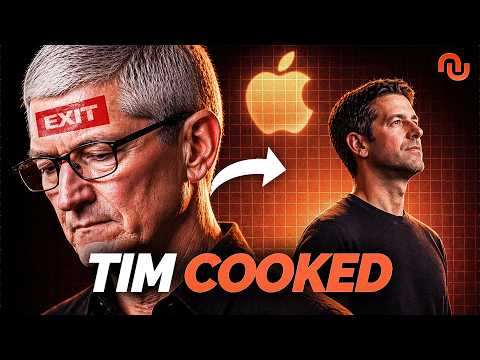
The tech world is abuzz with news that Tim Cook, the long-standing CEO of Apple, will be stepping down on September 1, 2026. Cook, a pivotal figure in the technology industry for 15 years, has helmed Apple, the world's largest tech company, during an era marked by the annual unveiling of iPhones, iPads, and Macs. His influence extends beyond product launches, as he has engaged with global leaders like Donald Trump and Xi Jinping. While Cook is departing his CEO role, he will remain with Apple, transitioning to the position of Chairman of the Board and continuing to assist his successor, particularly in political matters. The chosen successor is John Ternus, currently Apple's head of hardware. While Ternus may not be as publicly recognizable as Cook, his presence in Apple's keynotes suggests a significant shift in leadership. This move signals a departure from Apple's 15-year tenure under a CEO primarily known for expertise in supply chain and finance, ushering in an era led by a hardware specialist. This transition implies a potential power shift towards engineers and could fundamentally alter Apple's trajectory.
Read AI summary
YouTube
This machine can dismantle any iPhone in 18 seconds, removing screws, detaching the screen, forcefully extracting the battery, and piercing it to remove each component individually. In an ideal world, if such machines existed for all phones, the smartphone industry would be fully recyclable, meaning old products would be reused to create new ones. However, we are not in an ideal world, and there are significant challenges to achieving this. More than a billion phones are sold globally every year, with Apple alone selling between 200 and 250 million iPhones annually. Manufacturing these devices requires thousands of tons of minerals extracted from the Earth, an practice often criticized by environmental associations for its pollution and destruction of the environment. A new iPhone typically has a lifespan of about three years with its first owner before being passed on, often ending up unused in a drawer. This is a major problem for brands and the planet. We need materials for new phones, yet millions of old phones containing these valuable minerals lie dormant in drawers, forcing companies to source new minerals from elsewhere.
Read AI summary
YouTube
On April 17, 2026, a significant date for French telecommunications, SFR, a foundational player in the French mobile market, is set to disappear. The company, which played a crucial role in launching 2G, 3G, 4G, and 5G in France, will be dismantled and its assets divided among its three main competitors: Bouygues Telecom, Free, and Orange. Bouygues Telecom is expected to acquire the largest portion, Free will take a substantial second share, and Orange will receive the remaining assets. This historic shift comes with a price tag of 20.35 billion euros. To understand how France reached this point, we need to go back to 1987, the year SFR, then known as Société Française du Radiotéléphone, was founded. At the time, France Télécom held a monopoly, but the government sought to liberalize the market, granting a license to Compagnie Générale des Eaux, which then created SFR as the first private French operator. SFR launched its network in 1989 and its second GSM network in 1992. For two decades, SFR experienced remarkable success. It was acquired by Vivendi, its revenue multiplied by 30 between 1999 and 2007, and it surpassed 15 million subscribers. At its peak, SFR was the undisputed second-largest operator in France, competing with Bouygues Telecom and Orange.
Read AI summary
YouTube
Prospera, a unique location in Honduras, is conceptualized as a city where one never dies, literally meaning "prosperous" in Spanish. This place is becoming a hub for testing various medical treatments and scientific experiments that are often highly regulated or even prohibited elsewhere. It aims to be an epicenter for future medicine, offering gene therapies to increase muscle mass or even reverse aging, thereby addressing humanity's eternal quest for immortality. To understand Prospera, one must look at recent advancements in medicine. New technologies have revolutionized healthcare, allowing individuals to monitor their health from home using applications or smartwatches. Devices with precise sensors can collect a wealth of data, such as heart rate, representing a basic level of health tracking. Some companies have taken this further, developing connected devices like smart bracelets, scales, and urine analyzers to gather comprehensive bodily data, even estimating one's physical age. Others, like "œil," offer in-lab analyses in futuristic settings. For these companies, the future of medicine is personalized, with each patient receiving tailored treatments or recommendations based on their analyzed data.
Read AI summary
YouTube
Many of us have fond memories of childhood games that we perceived as visually stunning, almost photorealistic in our minds. However, revisiting these games years later often reveals a stark reality: blurry textures, flat shadows, and cheap lighting effects. What we remembered was far more beautiful than the actual game. Fortunately, a new technology allows us to bridge this gap: RTX Remix, developed by Nvidia, the partner for this video. RTX Remix is a tool designed for modders that intercepts the old graphics from DirectX 8 and 9 games—a vast collection from the golden age of the 2000s—and enhances them with path tracing lighting effects. Path tracing is an advanced form of ray tracing, offering a highly realistic management of light effects, pushed to its maximum potential.
Read AI summary
YouTube
NASA has invested $250 million in the X-59, an unconventional aircraft designed to revive a multi-billion dollar global market by making supersonic flight quieter. This unique plane will not carry passengers but serves as a flying laboratory. The X-59 features several peculiar design elements. Its nose, for instance, extends over 10 meters, making up a third of the aircraft's total length. This elongated, slender design is crucial for achieving super-silent flight, not merely for aesthetics. Another unusual characteristic is the absence of a traditional windshield. Instead, the cockpit is equipped with a 4K screen displaying images from external HD cameras, effectively allowing the pilot to see through a "vision external system." This innovative solution is necessary because the long nose obstructs the forward view, yet its shape is vital for reducing the intensity of the supersonic boom.
Read AI summary
YouTube
In 1996, Apple was 90 days from bankruptcy, facing widespread predictions of its demise due to what was seen as poor management. Yet, 30 years later, Apple has become one of the most influential companies globally, illustrating perhaps the greatest comeback in modern capitalism. At 50, Apple is a veteran in the tech industry, significantly older than many of its GAFAM counterparts, except Microsoft. While many are familiar with modern Apple, this video delves into the strategic missteps that nearly destroyed the company multiple times, alongside the pivotal innovations that cemented its DNA. The story of Apple can be divided into three distinct phases. The first phase began in 1971 with the meeting of Steve Jobs and Steve Wozniak. Jobs, the visionary and shrewd strategist, and Wozniak, the pure tech genius, were an unlikely but essential duo. Their initial venture was the "Blue Box," a device invented by Wozniak to make free long-distance calls, which Jobs recognized the commercial potential of, selling it for $150. This initial capital funded Apple's genesis.
Read AI summary
YouTube
Free has recently launched a new premium mobile plan called Freemax, priced at €29.99 per month for non-Freebox subscribers and €19.99 per month for Freebox subscribers, allowing up to four plans per account. This announcement was highly anticipated, as Free had been teasing a mobile revolution for March 31, 2026. This is a significant move for the operator, as it marks the first launch of a new high-end plan since Free's initial market entry. Unlike previous updates, Free is not adding new features to its existing historic plan, which remains unchanged. The Freemax offer is an upgraded version of Free's previous services, with the main improvements focusing on internet data rather than additional streaming or music services, which some might find disappointing. The core change lies in the data allowance. The classic Free plan offers 350 GB in France (or unlimited data for Freebox subscribers) and 35 GB for international use across 117 countries. While 35 GB is generous, it can be quickly consumed during extended trips abroad.
Read AI summary
YouTube
In September 2026, Apple is expected to announce three iPhones: the iPhone 18 Pro, iPhone 18 Pro Max, and the iPhone Fold. Notably, for the first time, there will not be a standard iPhone 18. Apple's strategy appears to involve a high-end launch in September and a separate launch for other models, such as the iPhone 18e and iPhone R2, earlier in the year, around February or March. The iPhone 18 Pro and Pro Max are not expected to have radical changes from previous models but will include some enhancements. The Dynamic Island is rumored to be smaller, and the screen is anticipated to be brighter. They will feature a more powerful A20in Pro chip. Significantly, an iPhone Pro will for the first time use an Apple modem instead of a Qualcomm one. Camera improvements include a larger front sensor and a variable aperture for the main camera. Other rumors suggest compatibility with Elon Musk's Starlink for enhanced satellite connectivity and the introduction of a cherry red or dark red color option.
Read AI summary
YouTube
In September 2026, Apple is expected to announce three new iPhones: the iPhone 18 Pro, iPhone 18 Pro Max, and a foldable iPhone, though its name is unlikely to be "iPhone Fold" as Apple typically avoids copying names used by competitors like Samsung or Google. This marks the first time a foldable iPhone is anticipated. This summary focuses on the most reliable rumors. For the first time, there will not be a standard iPhone 18 model. This decision by Apple stems from the increasing number of new product lines, including the iPhone last year and the anticipated foldable iPhone this year, leading to an excessive number of iPhone models. Announcing six phones simultaneously would complicate product launches and create internal competition. Apple is thus expected to split its releases: high-end models in September and other models, such as the iPhone 18, iPhone 18e, and iPhone R2, in early spring, likely around February or March, similar to this year's iPhone 17e.
Read AI summary
YouTube
This transcript details a sophisticated global cybercrime phenomenon involving "scam centers" where individuals are coerced into perpetrating online fraud. The narrative begins with the case of Anne, a 53-year-old woman who believed she was in a relationship with Brad Pitt, only to be defrauded of €830,000. Anne's experience highlights the emotional manipulation involved, where scammers exploit loneliness and a desire for connection, presenting a seemingly legitimate and well-orchestrated scenario. She defends herself against accusations of naivety, arguing that anyone would fall for such a persuasive trap. However, the transcript shifts focus to the perpetrators, questioning whether the individuals behind the scams, like the fake "Brad Pitt," are themselves victims. It reveals that cybercrime has evolved from small, informal groups to highly structured, international organizations. These operations are no longer confined to internet cafes but are often located in secured buildings, sometimes guarded by armed individuals. The individuals working within these scam centers are frequently young graduates who were lured by deceptive job offers for well-paid positions abroad, such as digital marketing or customer support.
Read AI summary
YouTube
The Samsung Galaxy S26 Ultra presents a complex paradox for modern smartphone enthusiasts. While it remains one of the most technically accomplished devices on the market, featuring a stunning display and top-tier performance, it also highlights a shift in Samsung’s corporate philosophy that some find concerning. For years, Samsung was the undisputed king of Android innovation, pushing the boundaries of hardware with every release. However, the S26 Ultra suggests that the company may be moving toward a more conservative, "Apple-like" strategy of incremental updates and market-following rather than market-leading. The most discussed innovation this year is the "Privacy Display." From a technical perspective, this is a marvel. Unlike traditional plastic privacy filters that permanently degrade screen quality, Samsung’s solution is integrated into the OLED panel itself. By selectively turning off pixels surrounding the viewer’s direct line of sight, the screen narrows the beam of light so that only the person directly in front of the phone can see the content. This is a toggleable feature that can even be automated for specific apps like banking or social media. However, in practice, the technology feels like a first-generation gadget. It negatively impacts contrast, color accuracy, and brightness. Furthermore, it creates practical hurdles; for example, if you hold the phone above your head to take a photo in a crowd, the screen appears black because of the viewing angle. While impressive, it is often more of a hindrance than a help, leading many to leave it disabled.
Read AI summary
YouTube
When we envision a third world war, the imagery is almost always the same: a red button, a high-tech control room, and a mushroom cloud that ends civilization in seconds. However, this transcript suggests that we may have fantasized about the atomic bomb so much that we have overlooked a far more discreet and potentially more effective weapon: a bacteria that has existed for centuries. *Yersinia pestis*, better known as the plague, could be the face of a modern global conflict, characterized not by explosions, but by overflowing hospitals and closed borders. The plague is often relegated to history books, specifically the "Black Death" of the 14th century, which killed between 25 and 45 million people in Europe. Yet, the transcript clarifies that the plague is not a memory; it is a current reality. While France hasn't seen a case since 1945, the bacteria remains active in Asia, Africa, and the Americas. Researchers like Javier Pizarro-Cerda from the Institut Pasteur note that most cases today occur in Madagascar and the Democratic Republic of the Congo. Surprisingly, the plague also appears annually in the Western United States, in states like New Mexico, Arizona, and Colorado. Between 1990 and 2020, the World Health Organization recorded roughly 50,000 cases across 26 countries. The bacteria is a patient predator, capable of disappearing for 30 years only to suddenly resurface.
Read AI summary
YouTube
The MacBook Neo represents a historic shift for Apple, marking the release of their most affordable laptop to date. Positioned at a starting price of €699—or €599 for students—this device is designed to disrupt the mid-range market currently dominated by brands like Samsung, HP, and Lenovo. While it does not outperform the MacBook Pro or MacBook Air, it offers a high-quality experience for its target audience: students and casual users. **A New Strategy: iPhone Silicon in a Mac**
Read AI summary
YouTubeBriefTube monitors your YouTube channels, generates AI-powered audio summaries, and delivers them wherever you listen. Telegram, Discord, Slack, or your podcast app. Fully automated.
Start free trial