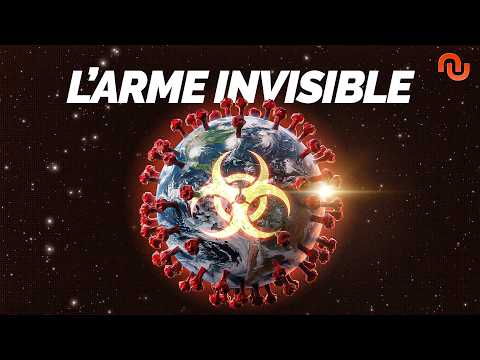
La prochaine guerre mondiale ne sera peut-être pas nucléaire… mais biologique
AI Summary
When we envision a third world war, the imagery is almost always the same: a red button, a high-tech control room, and a mushroom cloud that ends civilization in seconds. However, this transcript suggests that we may have fantasized about the atomic bomb so much that we have overlooked a far more discreet and potentially more effective weapon: a bacteria that has existed for centuries. *Yersinia pestis*, better known as the plague, could be the face of a modern global conflict, characterized not by explosions, but by overflowing hospitals and closed borders.
The plague is often relegated to history books, specifically the "Black Death" of the 14th century, which killed between 25 and 45 million people in Europe. Yet, the transcript clarifies that the plague is not a memory; it is a current reality. While France hasn't seen a case since 1945, the bacteria remains active in Asia, Africa, and the Americas. Researchers like Javier Pizarro-Cerda from the Institut Pasteur note that most cases today occur in Madagascar and the Democratic Republic of the Congo. Surprisingly, the plague also appears annually in the Western United States, in states like New Mexico, Arizona, and Colorado. Between 1990 and 2020, the World Health Organization recorded roughly 50,000 cases across 26 countries. The bacteria is a patient predator, capable of disappearing for 30 years only to suddenly resurface.
To understand why this bacteria is so feared, one must look at its biological mechanism. *Yersinia pestis* is highly pathogenic and proliferates rapidly. It circulates permanently in wild rodents like rats, marmots, and gerbils, using fleas as a vector to move between animals and occasionally to humans. The most common form is the bubonic plague, which infects the lymphatic system and creates painful "buboes." However, if the bacteria reaches the lungs, it becomes the pneumonic plague. This version is a game-changer: it has a short incubation period, a high mortality rate, and, most importantly, it can be transmitted between humans through respiratory droplets. This transition to an airborne threat is what makes the plague a primary concern for global health security.
While the plague is treatable with antibiotics, its effectiveness as a weapon or a pandemic threat relies on the fragility of modern logistics. As seen during the COVID-19 pandemic, global health systems have significant weaknesses. If a diagnosis is delayed or antibiotic stocks are unavailable, the mortality rate of the plague remains devastatingly high. This has led the CDC to classify it as a Category A bioterrorism agent. UN Secretary-General António Guterres has echoed these concerns, warning that the lack of global preparation exposed by COVID-19 could encourage non-state groups to utilize virulent biological strains to cause worldwide havoc.
The transcript further reveals that the militarization of the plague is not a futuristic concept; it is a historical fact. While the 1346 Siege of Caffa—where infected corpses were allegedly catapulted into a city—is debated by historians, 20th-century examples are chillingly documented. During World War II, Japan’s Unit 731 conducted biological warfare in China. In 1940, they dropped grain and plague-infected fleas over the city of Ningbo, triggering a lightning-fast epidemic that killed over 1,500 people. Some historians estimate that such biological programs caused up to 480,000 victims. During the Cold War, the United States explored mass-producing insect vectors, while the Soviet Union’s "Biopreparat" program industrialized the production of *Yersinia pestis* and tested aerosol dispersal on Renaissance Island.
Strategically, a biological weapon like the plague offers an advantage that a nuclear bomb does not: ambiguity. Because the plague exists in nature, an intentional attack could be masked as a natural outbreak, making it difficult to attribute the act to a specific enemy. This "stealth" factor is strategically terrifying for modern states.
However, the transcript concludes with a note of balance rather than alarmism. *Yersinia pestis* is sensitive to its environment and does not survive well when exposed to water loss or specific outdoor conditions. More importantly, medical science is not defenseless. In addition to existing antibiotics, the Institut Pasteur is making positive strides toward a vaccine that could protect high-risk populations. While a microbial world war is not a certainty, the plague serves as a reminder that a biological crisis doesn't need to be spectacular to be destabilizing. It can start slowly and silently, testing the very foundations of health systems, economies, and political stability.