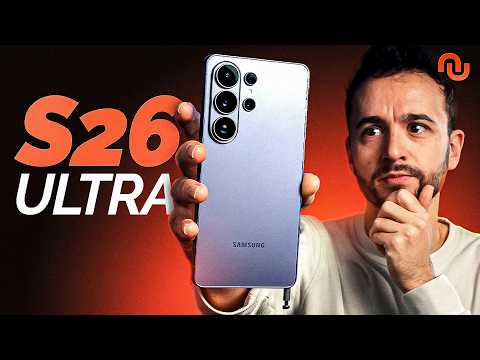
Test du Galaxy S26 Ultra : on ne comprend plus Samsung
AI Summary
The Samsung Galaxy S26 Ultra presents a complex paradox for modern smartphone enthusiasts. While it remains one of the most technically accomplished devices on the market, featuring a stunning display and top-tier performance, it also highlights a shift in Samsung’s corporate philosophy that some find concerning. For years, Samsung was the undisputed king of Android innovation, pushing the boundaries of hardware with every release. However, the S26 Ultra suggests that the company may be moving toward a more conservative, "Apple-like" strategy of incremental updates and market-following rather than market-leading.
The most discussed innovation this year is the "Privacy Display." From a technical perspective, this is a marvel. Unlike traditional plastic privacy filters that permanently degrade screen quality, Samsung’s solution is integrated into the OLED panel itself. By selectively turning off pixels surrounding the viewer’s direct line of sight, the screen narrows the beam of light so that only the person directly in front of the phone can see the content. This is a toggleable feature that can even be automated for specific apps like banking or social media. However, in practice, the technology feels like a first-generation gadget. It negatively impacts contrast, color accuracy, and brightness. Furthermore, it creates practical hurdles; for example, if you hold the phone above your head to take a photo in a crowd, the screen appears black because of the viewing angle. While impressive, it is often more of a hindrance than a help, leading many to leave it disabled.
Beyond the privacy feature, the display remains a high point, yet it is not without controversy. The 6.9-inch OLED panel features incredibly thin borders and exceptional brightness, giving the sensation of holding a pure sheet of glass. However, technical analysis reveals that Samsung has switched from a 10-bit to an 8-bit panel. This means fewer available colors, a surprising downgrade for a flagship device at this price point. It signals a shift away from providing "the best of the best" in every category, a hallmark of the Galaxy "Ultra" line in previous years.
The build quality and materials also reflect a confusing direction. Samsung has moved away from titanium, returning to an aluminum frame. This appears to be a direct response to Apple’s recent design shifts rather than a move based on user feedback, as the titanium on previous models was well-received for its durability. On a positive note, the new glass used on the front and back is significantly more resistant to scratches than previous generations, maintaining the device’s premium look over time.
Charging and battery life are areas where Samsung continues to lag behind its Chinese competitors. The S26 Ultra introduces "Fast Charging 3.0," marketed at 60W. Real-world tests show it reaches about 52-53W, allowing for an 80% charge in roughly 30 minutes. While this is an improvement for Samsung, brands like Xiaomi and Oppo are utilizing silicon-carbon batteries with much higher capacities—reaching 6,000 to 10,000 mAh—and significantly faster charging speeds. Samsung remains stuck at 5,000 mAh. While their software optimization is excellent, allowing the phone to last 24 to 48 hours, the hardware itself is no longer industry-leading. Additionally, the lack of integrated magnetic charging (compatible with the Qi2/MagSafe ecosystem) is a glaring omission, especially since Samsung sells official cases to provide this functionality that should be native to the hardware.
The camera system remains one of the most versatile in the world, but it feels stagnant. It features a 200MP main sensor, a 5MP zoom, and an ultra-wide lens. While night photography has seen slight improvements, the core setup has remained largely unchanged for several years. The 3x optical zoom is still using a 10MP sensor, which feels outdated. Competitors are now integrating one-inch sensors, while Samsung seems content with its current configuration. A new "super stabilization" feature allows users to rotate the phone while filming without the image tilting, but this is achieved through a heavy digital crop, resulting in a significant loss of quality. It is a technological feat but ultimately a "gadget" with little real-world utility.
Samsung’s approach to Artificial Intelligence is perhaps its most pragmatic move. Rather than trying to compete directly with AI giants like OpenAI or Google, Samsung acts as an aggregator. They integrate the best tools from various partners directly into the interface. This includes voice-activated photo editing and AI-assisted keyboard suggestions. While these features are useful, they often require using Samsung’s native apps (like the Samsung Keyboard), which some users find less intuitive than third-party alternatives.
Ultimately, the Galaxy S26 Ultra is an excellent, highly polished smartphone that will satisfy almost any buyer. However, for those who remember Samsung as a pioneer of radical innovation, the device feels like a "recycling" of previous successes. With prices ranging from €1,469 to nearly €2,000, it is a significant investment. For users with an S23 or S24 Ultra, the improvements are too minor to justify an upgrade. The S26 Ultra is a victim of its own predecessor's perfection; it is a 10/10 phone that is struggling to find a reason to exist beyond being the "newest" model. It is a safe, premium choice, but one that suggests Samsung is currently resting on its laurels while others push the envelope.