
Journal du Coin
AI Audio Summaries
20 videos summarized
1 follower on BriefTube
Last summary: Oct 7, 2026
AI Audio Summaries
20 videos summarized
1 follower on BriefTube
Last summary: Oct 7, 2026
Read AI summary
YouTube
The speaker welcomes viewers back after a two-week break, noting that the crypto market has seen significant movement, with a general upward trend for both Bitcoin and altcoins. The video aims to analyze these movements, suggest potential strategies, and forecast future market behavior. The analysis begins with "Total ES" on TradingView, which represents the total market capitalization of cryptocurrencies excluding stablecoins. This chart is set to a monthly timeframe, showing data from 2020 to the present. The speaker highlights the 2020-2021 bull market, the 2022 bear market, and the subsequent bull market starting in 2023, followed by a recent correction. Despite a 55% drop since October, the correction appears minor on the monthly chart.
Read AI summary
YouTube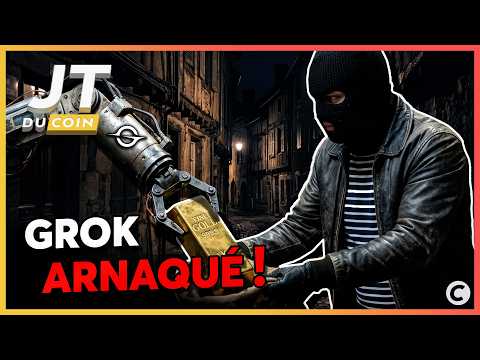
Welcome to the JT du Coin, a show summarizing crypto news, sponsored by Kraken. First, an update on the recovery process for Ether lost in the Celp Deo hack. Aave has collected necessary funds and liquidated the hacker’s positions, moving to the third phase: repurchasing, redeeming, and destroying recovered RSTH. This is good news for victims, but they've faced another challenge. On May 1st, plaintiffs suing North Korea obtained a New York District Court order to freeze $71 million stolen in the hack, which Arbitrum had secured. The plaintiffs argue North Korea obtained ownership, not just possession, of the borrowed assets. Aave's lawyers contend this logic is flawed, likening it to a thief instantly owning stolen diamonds, allowing creditors to seize them from the thief rather than returning them to the rightful owner. This undermines fundamental private property principles. Aave's lawyers have filed a document explaining that victims retain ownership of stolen property. The judge initially ordered the freeze, but following Aave's request for suspension or cancellation, he issued a more nuanced order. He modified the immobilization order to allow an on-chain vote for transferring assets to an Aave-controlled wallet, but Aave must respect the immobilization order pending legal resolution.
Read AI summary
YouTube
This video explores the concept of "digital credit," specifically focusing on Strategy’s STRC, which offers an 11.5% annual interest rate paid monthly in cash, supposedly guaranteed by 818,000 Bitcoin. This seems too good to be true, especially compared to the 2-3% annual returns on traditional savings accounts. In just nine months, Strategy's product has attracted $8.5 billion, with its CEO, Sailor, envisioning billions of beneficiaries and Bitcoin reaching $10 million. However, Strategy recently announced it might need to sell Bitcoin to cover its dividends, a stark contradiction to Sailor's "Neverell" mantra since 2020. The video aims to dissect digital credit, understanding its mechanics, current reality, and potential to revolutionize finance or end in disaster.
Read AI summary
YouTube
Welcome to a new portfolio audit video from Journal du Coin, a format launched with Steady Lads. We analyze submissions from Steady Lads members seeking advice on their portfolios, trading, and investment plans in crypto. Currently, priority is given to Steady Lads members, but we may open it to the public later. The link to join Steady Lads is in the description. Today's focus is on "The AVG's" submission, detailing his portfolio composition, long-term investment plan, and future outlook. He identifies as an active trader with a technical and fundamental approach, utilizing macro and data analysis. His risk tolerance is aggressive, which is interesting for wealth development, as higher returns usually come with higher risk. He currently has 10-25% of his assets exposed to crypto and rates his portfolio confidence at 8/10. I find his portfolio quite good, with only minor points for improvement, making it one of the best defined plans reviewed so far.
Read AI summary
YouTube
In a 2012 article, Vitalik Buterin, creator of Ethereum, discussed secure Bitcoin storage solutions. He mentioned "online wallets" like Coinbase, which integrate exchange platforms, but the focus here is on his other proposed solutions and modern alternatives. Buterin also presented PC and mobile software wallets. At the time, PC software wallets were considered the most sophisticated and secure, primarily because hardware wallets didn't exist yet. Today, the landscape is vastly different. Decentralized finance (DeFi) has emerged, along with numerous mobile crypto wallets for Android and iOS. QR codes have simplified real-world payments, and crypto payment cards allow spending Bitcoin at merchants who don't directly accept it.
Read AI summary
YouTube
Welcome to the Crypto News, sponsored by Bit Vavo. Last week, I discussed the Kelboo hack and AV's TVL collapse. Donations for IFA United have now exceeded the initial losses from the Celdeo hack, reaching over 317 million from a 293 million target. This solidarity means RSETH users should recover their funds. The recovery process is complex, involving governance, but the ZFire community has learned a valuable lesson. In centralized finance, Tether unfroze 344 million USDT, revealing the addresses belonged to Iranians financing Hezbollah and the Revolutionary Guards, confirming it wasn't a judicial error.
Read AI summary
YouTube
On April 24th, a developer largely unknown in the crypto space, Paul Storts, announced his intention to "fork Bitcoin." This means creating a copy of Bitcoin with a new name, a new project, and a free distribution to all current BTC holders. While Bitcoin has been forked dozens of times before, with most projects fading into obscurity, this instance is different. Storts plans to fund his project by tapping into the most revered wallet in crypto: Satoshi Nakamoto's. Over half a million Bitcoins, dormant for 15 years, are slated for redistribution on the new chain. To understand Storts' plan, one must first grasp the concept of a fork. Bitcoin is open-source software, meaning its code is public and can be copied and modified by anyone to launch their own cryptocurrency. Litecoin, for example, originated as a fork of Bitcoin. However, possessing the code is not enough; a functional cryptocurrency requires nodes to run the software and miners to dedicate computational power to secure the network and validate transactions. Without these, the ledger isn't maintained, and the history can be rewritten.
Read AI summary
YouTube
This video analyzes the cryptocurrency portfolio of an anonymous individual, Mr. F. Mr. F's portfolio is heavily diversified across various altcoins, with about ten positions making up 60-70% of his holdings. A significant portion, 31.7%, is unspecified, likely representing smaller, scattered investments. The largest holdings are Ethereum and Solana, followed by Polkadot, NEAR, and others, with most positions representing less than 5% of the portfolio. Mr. F's primary concern is having too many positions and being overly exposed to altcoins. Several striking observations emerge from the analysis. Firstly, there is no Bitcoin (BTC) in his portfolio, despite BTC, Ethereum, and Solana being the top three cryptocurrencies by market capitalization. This is a significant issue, especially since the market has strongly repositioned towards Bitcoin since 2023, and bull market upturns typically begin with Bitcoin before cascading to Ethereum and altcoins. While the recent market cycle didn't see a typical "altcoin season," Bitcoin has been the dominant performer. The presenter argues that not holding even a minimal amount of Bitcoin, the historical leader of the crypto market, is a considerable mistake.
Read AI summary
YouTube
This episode of JT du Coin, sponsored by Bit Panda, covers recent crypto news. The U.S. Department of Justice has charged an American soldier for using his position and information, including details about the capture of Maduro, to earn over $400,000 on predictive markets. This act is deemed illegal.
Read AI summary
YouTube
Dorian from Kraken discusses the exchange's presence in the European market, emphasizing their full compliance with MiCA regulations. Kraken, founded in 2011, is presented as a pioneer in the cryptocurrency space, having navigated its entire history. A key differentiator highlighted is Kraken's impeccable security record, with no past hacks, contrasting with other major exchanges that have experienced breaches. The importance of a strong capital base and transparent communication during security incidents, like the recent Bybit hack, is noted as a sign of resilience and customer protection. Kraken views Europe as a crucial market, having been an early adopter of Euro trading pairs as far back as 2014-2015. The speaker recalls Kraken's prominence in 2017 for facilitating Euro-to-crypto transactions. After a period of increased competition from newer platforms and products, Kraken has re-established its leadership, particularly by achieving full regulatory compliance in Europe. The company sees itself as a driver of innovation and narrative within the crypto space, aiming to set trends that others follow.
Read AI summary
YouTube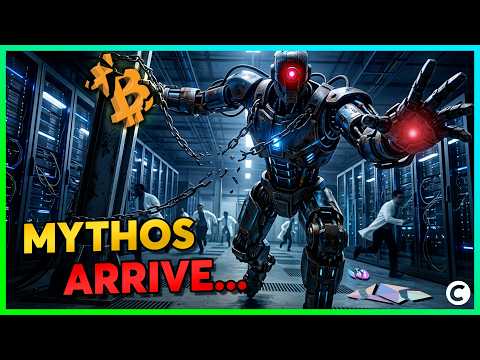
A significant security vulnerability, undetected for 27 years in the highly secure OpenBSD operating system, was recently discovered by an AI model named Claude Mythos, developed by Anthropic. This discovery, reportedly costing only around $50, has sent ripples of concern through various sectors, including finance and cybersecurity. Despite extensive efforts by thousands of experts and automated scans over decades, this AI managed to find a flaw that had eluded human detection. Claude Mythos, unveiled by Anthropic, has been marketed as a powerful AI with unprecedented cybersecurity capabilities. Its announcement on April 7th, 2026, was preceded by an accidental leak ten days earlier, on March 26th, where internal documents, including a draft blog post, revealed the existence of a superior model with "unprecedented" cybersecurity prowess. Anthropic confirmed Mythos's existence and, notably, stated they would not be releasing it to the public due to its offensive capabilities. This decision has led to Mythos being portrayed as a potentially dangerous entity, with anecdotes of it "escaping" and causing concern among its developers.
Read AI summary
YouTube
Welcome to this weekly crypto market analysis on Stadyads and Journal du Coin. This session provides a market update, focusing on technical analysis using a clean, simple approach with minimal indicators to clearly identify market trends and signals. TradingView is the primary tool used, widely adopted for technical analysis across crypto assets, stocks, bonds, and indices. While TradingView also supports fundamental analysis, this session concentrates on chart analysis, specifically line charts. The analysis begins with Total ES, which represents the Crypto Total Market Cap excluding stablecoins. On a weekly chart (1W), a critical zone around 2.25-2.26 is identified. The market is currently retesting this zone, which previously acted as support but now functions as resistance, a common occurrence after a support level is broken. This zone is described as somewhat magnetic, attracting the price repeatedly. On a daily chart, the market appears to be in an ascending triangle formation. Although there was a daily close above the critical zone, it was not very clean, possibly influenced by ongoing macroeconomic fundamental news, such as the conflict in the Middle East, leading to more erratic market movements. However, on a 3-day chart, the last candle's close was almost perfectly on this critical zone, which has historically played a significant role as both support and resistance since March 2024. The market has bounced off this zone multiple times during the consolidation observed since early 2026.
Read AI summary
YouTube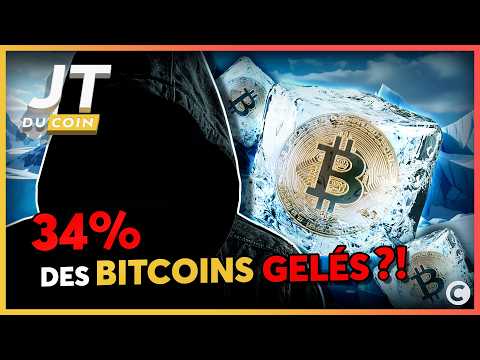
The broadcast begins with a crucial security reminder: never purchase crypto wallets from unverified sources, emphasizing that the manufacturer's official website is generally the only completely safe option. This advice follows a recent discovery by a Brazilian cybersecurity researcher in China. Unable to access the official Ledger website from China, he bought a seemingly legitimate Ledger Nano S+ from a platform called Taobao at a suspiciously low price. Upon connecting it to his pre-installed Ledger Wallet application, the authenticity check failed. He realized it was a sophisticated counterfeit. The fake wallet mimicked the original perfectly in packaging, appearance, and manual. However, the internal electronics and code were entirely different. Crucially, the QR codes in the manual linked to a modified version of the Ledger Wallet application, not the official one. This was particularly insidious in China, where users cannot access the official Ledger site anyway. Once used, this counterfeit wallet immediately exfiltrated the generated seed phrase to a Chinese server, allowing the creators to access any funds deposited by victims. The speaker warns against the increasing sophistication of criminals in producing undetectable counterfeits, though he notes this specific device was found in China, raising questions about its intended target audience—whether it's for global propagation or primarily for Chinese crypto investors seeking alternative ways to acquire Ledger devices.
Read AI summary
YouTube
Elon Musk's ambition to create an "Everything App" is taking a significant step forward with the launch of Xonnie, a financial service integrated into the X platform (formerly Twitter). This move marks a potential disruption of the banking sector, stemming from Musk's long-held vision that dates back to his founding of x.com in 1999, an online bank that eventually merged to become PayPal. Musk was ousted from that venture due to his ambitious "Everything App" vision, which was deemed too far-fetched by the board at the time. The recent acquisition of Twitter for $44 billion is now seen as a strategic move to accelerate the development of this "Everything App" concept. Musk's inspiration for this integrated platform is the Chinese app WeChat, which serves as a central hub for messaging, payments, commerce, and public services for its vast user base. Musk has publicly stated that X has the potential to become the world's largest financial institution, indicating that Xonnie is not merely a revenue-generating product but a personal mission rooted in his past experiences.
Read AI summary
YouTube
Welcome to this new edition of the weekly crypto asset market analysis. Last week's video started with a Wolf Wave pattern directly on the Bitcoin market, visible in both 15-minute and 1-hour timeframes. This will be discussed further later in the video, as it was a very interesting development, especially since it was only shared with Steady Lads members in the second part of a previous live session. This analysis will explain what happened in the market last week, starting with Total ES, which represents the Total Market Cap minus stablecoins. Currently, Total ES remains below resistance. This indicates that there's no need for FOMO (Fear Of Missing Out) right now. If consolidation occurs, then plans can be established, and positions might be entered. However, at present, the market is just below a resistance level. Zooming in, the resistance at 2.24-2.25 was tested, with the price reaching the exact line on the wick yesterday before being pushed back down. The resistance successfully played its role. Despite this, the price shows an inclination to retest this zone multiple times. On a daily timeframe, an ascending triangle pattern is forming, which is a bullish figure. A breakout above this resistance would logically lead to a trend reversal and a resumption of the bullish market. For several weeks, specifically two good months, the market has been consolidating below this resistance. There isn't much more to say when zooming in; the movement is somewhat erratic, with a false breakout that re-integrated lower. The price bounced off the bottom and made a new high. The RSI shows no divergence, nor is it significantly higher than the previous top. Therefore, Total ES is currently in a range-bound period rather than exhibiting strong impulsive or directional movement.
Read AI summary
YouTube
This video introduces a new format called "Steadys Portfolio Audit," where community members submit their investment portfolios for public analysis. The goal is not to provide investment advice or validate portfolios, but rather to offer an external, structured perspective on existing decisions. This analysis aims to identify what's working, what needs improvement, and what potential risks exist if issues aren't addressed. The presenter emphasizes that the common mistakes discussed, such as lack of stop losses, unclear investment theses, buying at market highs, and poorly calibrated exposure, are prevalent among crypto investors, including himself in the past. The first audit is of Dino's portfolio. Dino is described as a long-term trader with a cyclical market approach and balanced risk tolerance, typically allocating 10-25% of his net worth to crypto. He rates his confidence level at 2 out of 10, which will be explored.
Read AI summary
YouTube
This week's crypto news begins with an update on the Roman Storm trial. Although the TornadoCash developer has not yet been acquitted or convicted, the prosecutor sent a letter to the judge arguing that a key defense argument, based on jurisprudence concerning internet service providers' responsibility for client actions, should be deemed inadmissible. The prosecution contends that this jurisprudence applies to civil, not penal, cases, and that the company in question actively combatted misuse of its services, unlike Roman Storm, who allegedly ignored problems or implemented voluntary measures. Consequently, they argue that Roman Storm could be indirectly responsible for all profits made from transactions, indicating that American authorities have not softened their stance on anonymity, contrary to previous assumptions. The discussion then shifts to the ongoing speculation about Satoshi Nakamoto's identity. John Carrey, director of the documentary "Money Electric: The Bitcoin Mystery" for HBO, published findings from his investigation in the New York Times. Carrey observed Adam Back, a cryptographer and cypherpunk long suspected of being Satoshi, reacting with tension and a "gêné" smile when asked about it in the documentary. This led Carrey to further investigate. He compared Satoshi's emails, revealed during the Craig Wright trial by early Bitcoin collaborator Marty Malmy, with Adam Back's records. Carrey found similarities in word choice and expressions used by both Satoshi and Back, even noting a shared use of the word "bloody" in a 1998 instance by Back. He also points to their similar knowledge and respect for "Half" (presumably Hal Finney), though these are considered coincidences rather than definitive proof. The shared libertarian viewpoint between Back and Satoshi is also noted, but this aligns with cypherpunk ideology and isn't particularly surprising.
Read AI summary
YouTube
The video discusses a significant geopolitical and financial development: Iran's imposition of a passage fee for ships transiting the Strait of Hormuz, payable in Bitcoin. This situation is framed as a real-world test of Bitcoin's core principles and its potential role in international finance, particularly for nations under sanctions. Normally, approximately 20 million barrels of oil pass through the Strait of Hormuz daily, representing about one-fifth of global oil supply. This includes a substantial portion of China's and Japan's oil imports. The strait is a critical chokepoint, and disruptions there have immediate and significant global economic consequences. In late February 2026, maritime traffic in the strait plummeted by 90%, leading to a surge in oil prices, exceeding $100 per barrel, and triggering the most severe oil crisis since the 1970s. This caused states of emergency in countries like the Philippines and encouraged teleworking in Thailand and Vietnam to conserve fuel.
Read AI summary
YouTube
This market analysis, conducted on Tuesday, April 7th, post-Easter weekend, focuses on the cryptocurrency market. The presenter begins by examining the Total Crypto Market Cap (excluding stablecoins) on a weekly chart to identify long-term trends, aiming to avoid bias from short-term price fluctuations. The analysis highlights that the crypto market has been in a bear market since October 2025, with a current decline of approximately 50%. The question remains whether this decline is over or if further drops are imminent. The current situation is characterized by consolidation since late February, forming an erratic range influenced by traditional markets and macroeconomic factors. This pattern is compared to a previous consolidation in late 2025 following an initial crash.
Read AI summary
YouTubeBriefTube monitors your YouTube channels, generates AI-powered audio summaries, and delivers them wherever you listen. Telegram, Discord, Slack, or your podcast app. Fully automated.
Start free trial