Crypto en France : La victoire (temporaire) de l'ADAN - Actu Crypto 🗞️
AI Summary
Welcome to the Crypto News, sponsored by Bit Vavo. Last week, I discussed the Kelboo hack and AV's TVL collapse. Donations for IFA United have now exceeded the initial losses from the Celdeo hack, reaching over 317 million from a 293 million target. This solidarity means RSETH users should recover their funds. The recovery process is complex, involving governance, but the ZFire community has learned a valuable lesson.
In centralized finance, Tether unfroze 344 million USDT, revealing the addresses belonged to Iranians financing Hezbollah and the Revolutionary Guards, confirming it wasn't a judicial error.
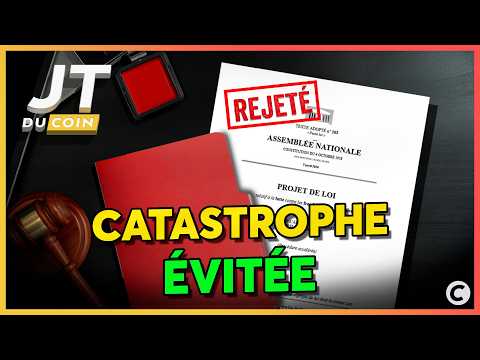
Regarding France, a proposed article 3 of a project, which would have required declaring all crypto wallets and potentially attracting kidnappers, was fortunately removed thanks to industry efforts and some parliamentarians. This temporary reprieve avoids the worst until a new, potentially absurd, text is proposed.
Now, on to more interesting news: Poly Market and predictive markets. A recent study analyzing Polymarket data from early 2023 to late 2025 examines trader performance and market principles, focusing on two theories: the wisdom of crowds and informed bettors. The wisdom of crowds theory suggests that a large number of participants leads to more accurate results than a few specialists, a principle predictive markets often advertise. They argue that the financial incentive for correct predictions amplifies this effect.
The study's authors propose a contrasting theory: a minority of traders with superior information influence predictive markets more and profit disproportionately. Both theories explain correct predictions but differ on information sources and profit distribution. To determine which is correct, the study analyzed trader results and consistency.
Their analysis reveals a small minority (3.14%) of participants win significantly more often, making the market precise. The rest are lucky winners, unlucky losers, or consistently poor bettors. These top performers often react faster to public information, possibly using AI agents, rather than having exclusive knowledge. While insider trading exists, its frequency on predictive markets is hard to quantify. However, large positions taken just before an event's resolution often indicate insider trading. Insiders were found in a small fraction (1950 out of 99,000) of events, but their profits were substantial: a median of $2758 per bet, with the top 1% earning over $180,000. These insiders differ from consistent top winners as they typically trade only once, thus categorized as lucky winners. Ultimately, two categories of true winners exist: those who cheat and those who analyze public information quickly. Both effectively contribute to price discovery. Other participants, whether lucky winners or general losers, contribute by indirectly compensating the top winners for their market insights. Market makers also consistently profit by exploiting volatility rather than predicting the future. If you're not an insider on Polymarket, market making might be the best strategy.
For investment instead of betting, consider Bitvo, a European crypto exchange based in the Netherlands. They offer over 400 assets, user-friendly mobile and pro interfaces, features like programmed investing and staking, and comply with Mika law. They also guarantee client assets up to €100,000, similar to banks. New users get a €25 bonus for creating an account and trading €100 within 7 days via the affiliate link.
In other news, the EU has implemented a near-total ban on Russian crypto activities, including ruble-based stablecoins like Asset A75 and Rubx, the digital ruble, centralized exchanges, and Russian DeFi applications. This also applies to Belarus. While seemingly absurd for DeFi platforms, money laundering is likely the primary reason for using Russian DeFi.
Within the EU, Turkey is making crypto strides. At the Las Vegas Bitcoin conference, Turkey's central bank governor announced a plan to integrate