
Benjamin Cowen
AI Audio Summaries
20 videos summarized
1 follower on BriefTube
Last summary: Oct 8, 2026
AI Audio Summaries
20 videos summarized
1 follower on BriefTube
Last summary: Oct 8, 2026
Read AI summary
YouTube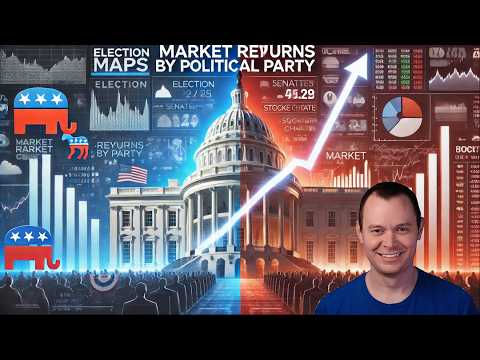
The video explores market returns under different US political party control scenarios, analyzing the S&P 500's performance based on presidential party, congressional control, and combinations thereof. The presenter emphasizes an objective, data-driven approach, noting surprise at some findings. A general observation is that the stock market, represented by the S&P 500, has historically trended upwards regardless of who is in power, especially since 2009. However, deeper analysis of average and median annual returns reveals significant differences based on political regimes.
Read AI summary
YouTube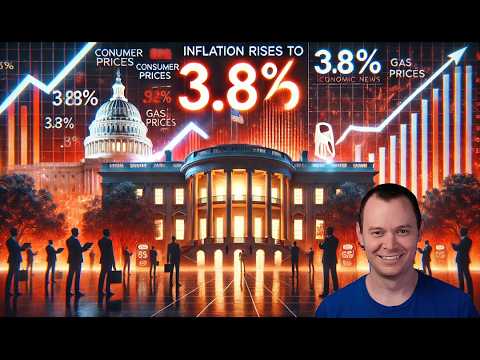
Headline inflation has risen to 3.8%, primarily driven by a supply-side energy crisis stemming from geopolitical conflicts in the Middle East, rather than increased demand. This surge in energy prices has significantly impacted markets, particularly higher-risk assets compared to lower-risk ones. While the S&P 500 remains near all-time highs, the inflation rate coming in hotter than expected (3.8% vs. 3.6-3.7% expected, and core inflation at 2.8% vs. 2.6-2.7% expected) has drastically shifted expectations for rate cuts. The market now anticipates no rate cuts in 2026 or 2027, and it's even considered more likely to see a rate hike in 2027 than a cut. This is a complete reversal from last year's outlook, which priced in several rate cuts for 2026. Despite this, some pockets of optimism persist in the market, with the S&P M2 correlation appearing intact. However, the impact is evident in higher-risk assets like altcoins, which are bleeding against Bitcoin, driving up Bitcoin dominance. This trend reinforces the long-held understanding that crypto is more sensitive to liquidity and rate cuts than the stock market, largely due to its speculative nature and lack of traditional earnings reports. Without the necessary liquidity and rate cuts, these assets continue to underperform.
Read AI summary
YouTube
Bitcoin has reached its 200-day moving average, a significant level historically in bear markets. While it hasn't technically hit it yet, it's very close, just a few hundred dollars shy of the current price. In past bear markets, like 2022 and 2018, Bitcoin rallied to this average and often found resistance. In 2014, it briefly surpassed the 200-day moving average but didn't sustain it. A key counterpoint is 2019, where Bitcoin initially got rejected by the 200-day moving average but eventually moved past it. The current challenge is determining if this cycle resembles 2019 or 2018. Similarities to 2018 include Bitcoin finding a low in February, a higher low in April, and then rallying to the 200-day moving average in May. The price action is remarkably similar, with current lows being approximately 10 times higher than in 2018 (e.g., 60K vs. 6K).
Read AI summary
YouTube
The recent labor market report shows an unemployment rate of 4.3%, consistent with previous data, and initial claims and layoffs remain relatively low, suggesting the economy is not yet in a recession. However, initial claims typically pick up in the summer months, a trend observed in 2023 and 2024, and anticipated for 2025. While some areas of the labor market show weakness, such as low job openings, others, like hiring, have seen a slight increase. A crucial factor for a recession and the end of a business cycle is lower asset prices. The stock market, currently at all-time highs, aligns with patterns seen in previous midterm years like 2014 and 2018, where new highs were achieved despite periods of weakness. The current market behavior is still following the S&P M2 fractal, which, if it continues, could see a market top in September, similar to 2018.
Read AI summary
YouTube
This video discusses Bitcoin and the cryptocurrency asset class's current valuation, noting it's below the logarithmic regression trend line and likely to remain so through 2026. Unlike previous cycles with euphoric rallies, the current cycle saw Bitcoin top out due to apathy and macro concerns like inflation and monetary policy, rather than extreme euphoria. The speaker highlights that despite Bitcoin trading above $80,000, the total crypto market cap has seen minimal movement. Bitcoin's year-to-date return is also down against other asset classes like the S&P 500, Nasdaq, gold, and energy. The transcript suggests the market will likely stay undervalued for the rest of the year, with potential recovery in the next cycle. Historically, periods of significant undervaluation, similar to what's seen now, have occurred in 2010, 2011, and 2015. The speaker expresses optimism for future growth, predicting the total crypto market cap could eventually reach $10 trillion.
Read AI summary
YouTube
Today's discussion focuses on Bitcoin and analyzing the market with a "bear goggles" perspective. It's challenging to discern whether short-term market movements are temporary or indicative of a larger trend. About five to six months ago, I suggested Bitcoin was entering a bear market and that it made sense to maintain a bearish outlook, at least for the first half of 2026, and often mentioned October as a key period. When we experience rallies, like the current one, I question if the present situation differs significantly from previous bear markets. If differences are found, it might be time to remove the bear goggles; otherwise, maintaining a bearish stance remains justifiable. Regarding bear market rallies, I previously stated that I wouldn't attempt to time counter-trend rallies but would discuss when market lows might occur. I predicted a low in February and another in April, potentially a higher low. Technically, the low occurred in late March, making my specific timing slightly off and it wasn't a lower low as I had considered a decent chance for. This illustrates the difficulty in predicting counter-trend rallies precisely.
Read AI summary
YouTube
The speaker discusses Bitcoin's current trading around $78,000 and references previous discussions comparing it to prior midterm years, specifically 2019. The speaker reiterates that Q4 of 2025 was, in their opinion, the optimal time to sell, having clearly stated this at the time. They also mentioned in November that they would not attempt to time every countertrend rally, acknowledging that it's a "fool's errand" to trade them, despite discussing seasonality and potential windows of weakness. This is evidenced by many people expecting Bitcoin to bounce at $75K, only for it to drop to $60K. The speaker notes that the current trajectory is still largely consistent with previous observations. They had predicted weakness in early February and early April for midterm years, based on patterns observed in 2018. While some were upset that the April low wasn't a lower low, the speaker points out that in 2018, the April low was a higher low compared to February. The key is identifying when lows are likely to occur, not whether they are higher or lower. The next anticipated windows of weakness are June and October, as both June 2022 and June 2018 marked lows.
Read AI summary
YouTube
Today's discussion revolves around the last FOMC meeting chaired by Jerome Powell and its implications for the future. It's challenging to discuss these topics without delving into politics, a realm I generally try to avoid due to its divisive nature. However, even Powell himself acknowledged the unprecedented nature of the administration's actions towards the Federal Reserve, which are arguably driven by frustration over the Fed's refusal to lower interest rates. It's important to establish an objective truth: under the previous administration, the Fed raised rates significantly, from 0.25% to 5.5%. While there was a slight drop, the overall trend was upward for years. The argument that this slight drop was a politically motivated attempt to influence an election seems weak when viewed against the backdrop of years of rising rates. Conversely, if the current administration had seen rates trend upward as they did in 2022-2023, the reaction would have been vastly different. In reality, since Trump took office, interest rates have dropped, whereas after Biden took office in 2021, rates increased substantially before a brief drop in late 2024 and 2025.
Read AI summary
YouTube
The discussion begins with an examination of South Africa's proposed crackdown on cryptocurrency. This proposal includes empowering officials to confiscate hardware devices and private keys from individuals attempting to leave the country, with any seized crypto being sold at market rate. Rob notes that while this is concerning, it's not entirely surprising given South Africa's historically weak currency, the Rand, which has significantly depreciated against the dollar. He posits that such measures aim to prevent capital flight and maintain control over wealth preservation, especially as stablecoins pegged to the dollar can act as a store of value in such an environment. Rob also touches upon the US administration's efforts to globalize stablecoins and Bitcoin, lamenting that past administrations have mishandled opportunities, even referencing a "meme coin" incident that he believes enriched individuals involved. He humorously suggests that losing hardware wallets is a common occurrence due to "boating accidents." Ben, on the other hand, expresses less immediate concern about this specific South African proposal, drawing a parallel to the US government's confiscation of gold in 1933 under Roosevelt to stimulate the economy. However, he believes the crypto situation is different because the global economy is not operating on a Bitcoin standard, thus reducing the necessity for widespread confiscation. He doesn't rule out the possibility of other countries attempting similar measures, but it's not his primary worry. Guy highlights that this proposal is partly influenced by the Financial Action Task Force (FATF), an international organization focused on combating money laundering and terrorist financing. South Africa was recently removed from the FATF's gray list, and this crypto crackdown might be a condition for that delisting. The FATF's involvement raises concerns about the potential for such regulations to spread internationally. Guy also laments how anti-money laundering and counter-terrorist financing regulations, while noble in principle, often create undue burdens for ordinary citizens, citing an instance where his brother-in-law's house deposit transaction was delayed due to bank scrutiny, nearly costing him the property. Rob interjects that cash remains the preferred method for illicit activities, making it the "cartel's favorite" and "terrorists' favorite," and that the dollar still reigns supreme.
Read AI summary
YouTube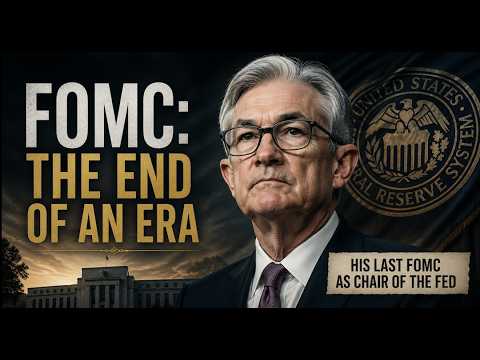
This video discusses the upcoming FOMC meeting, potentially Jerome Powell's last as Chair of the Federal Reserve, marking the end of an era. While Powell may remain a governor until 2028, this meeting signifies a transition. The speaker anticipates Powell will push back against immediate rate cuts, citing rising inflation likely driven by geopolitical conflicts, particularly in the Middle East. Market expectations for rate cuts have already shifted significantly, with projections now extending to late 2027, a stark contrast to earlier forecasts for 2026. Despite the stock market reaching all-time highs and Bitcoin performing well off its lows, the speaker warns against mistaking this for overall strength, especially within the broader crypto market. A historical correlation is drawn between the Energy Select Sector ETF (XLE) and Bitcoin's performance. During Bitcoin's bear market lows in 2022, XLE was experiencing significant upward movements. This suggests that Bitcoin, and cryptocurrencies in general, thrive under loose monetary policy. As oil prices rise due to geopolitical tensions, inflation increases, preventing the Fed from cutting rates as previously anticipated. This dynamic leads to higher-risk assets bleeding into lower-risk assets, a trend observed when XLE started to rise and rate cut expectations diminished.
Read AI summary
YouTube
Bitcoin has recently rallied back to its bear market resistance band, a common occurrence in midterm years. Historically, Bitcoin struggles to hold this band as support during these periods, as seen in 2018 and 2014. While it's possible this time could be different, it's not the base case scenario. There's an argument that because the last top was based on apathy rather than euphoria, a less severe downturn might follow. However, this doesn't fully account for the historical trend of diminishing losses in bear markets, where each cycle becomes slightly more "bearable." Even if Bitcoin doesn't surge as much, it doesn't guarantee a smaller decline, a pattern observed in other markets like the S&P 500.
Read AI summary
YouTube
Today's discussion focuses on Bitcoin and monthly Heikin-Ashi candles. This is a topic that hasn't been discussed in about four years, but it's particularly useful in midterm years to help stay on the right side of the trend. There's been recent discussion about Bitcoin's current rally being "the most hated rally ever," with many claiming it's different from previous patterns. However, by looking at charts through Heikin-Ashi candles, we can reduce noise and better understand the larger trend. Before diving into Heikin-Ashi candles, it's important to note that current market behavior isn't that different from prior bear markets in midterm years, which often feature counter-trend rallies. These rallies don't necessarily signal the end of a bear market or prevent further price increases. The challenge is distinguishing a counter-trend rally from the start of a new bull market. While Heikin-Ashi candles provide confirmation, there's a lag, meaning the low would already be in by the time confirmation appears.
Read AI summary
YouTube
Bitcoin dominance has recently surpassed 60%, a level it has largely fluctuated within for the year. Historically, Bitcoin dominance tends to rise during bear markets following a cycle's end, as seen in 2018 and 2022. However, the current situation is nuanced. Unlike previous cycles, there wasn't a significant rotation from Bitcoin into altcoins, and Bitcoin topped due to apathy rather than euphoria. This lack of a strong altcoin rotation means there's less pressure on altcoins against Bitcoin. A key argument is that Bitcoin remains the strongest asset within crypto, and over the long term, other crypto assets tend to bleed back to Bitcoin. This is further supported by restrictive monetary policy, which discourages investment in higher-risk assets. While the Federal Funds Rate is near the neutral rate (approximated by the 2-year yield), it hasn't significantly decreased, preventing aggressive Bitcoin dominance gains.
Read AI summary
YouTube
The discussion begins with an analysis of the stock market, which remains near all-time highs despite geopolitical tensions and rising oil prices. Investors appear to be ignoring these concerns, a phenomenon described as "climbing the wall of worry." This optimism is partly attributed to the US economy holding up, with earnings season generally showing good results, particularly in AI spending. Additionally, some argue that the stock market is seen as a safer place to put money amidst soaring inflation, creating a self-fulfilling prophecy where dips are consistently bought. A significant observation is the widening gap between older and younger equity holders. Americans aged 70 and above hold 17% of all US equities, while those under 40 own just 3%. This highlights a considerable age and wealth disparity in stock market participation.
Read AI summary
YouTube
In this episode of NFA Live, hosts Rob, Guy from Coin Bureau, and Ben from Into the Cryptoverse discussed market seasonality, unexpected events, and potential future guests. The first question centered on the classic market adage, "Sell in May and go away." Guy acknowledged that this time of year is approaching but wondered if current market conditions would adhere to old norms. He noted a recent crypto bounce, which he didn't expect to last, attributing it to optimism over a potential Middle East ceasefire. Guy predicted that crypto would likely struggle over the summer, advising listeners to monitor the situation.
Read AI summary
YouTube
The speaker begins by noting gold's current trading price around $47-$4,800, following a significant drop of just under 30%. This correction occurred after gold had previously fallen below its 20-week and 21-week Exponential Moving Averages (EMAs) but has since recovered above them. The speaker aims to discuss their long-term outlook for gold and what the remainder of the current year might hold. Looking back at historical gold bull markets, the speaker observes a recurring pattern where recessions in the United States have interrupted these cycles. Examples include the mid-1970s recession during the late 60s/70s bull run and the 2008 recession during the 2001-2011 bull market. Given the current macroeconomic environment and increasing geopolitical uncertainty, the speaker believes gold will remain structurally bullish through the end of the decade. However, they acknowledge that periods of correction, like the one just experienced, can cause uncertainty about the market's direction.
Read AI summary
YouTube
This video provides an update on Bitcoin's position within the current market, focusing on the bare market resistance band and historical patterns. The speaker begins by noting that Bitcoin recently touched the bare market resistance band, specifically reaching within $50-$60 of the 21-week Exponential Moving Average (EMA), which was at $78,415. However, the speaker cautions against interpreting this touch as a definitive rejection. Historical data shows instances where Bitcoin has wick up to this resistance level, pulled back, and then subsequently moved above it before facing further rejection. Examples from 2024 and 2023 are cited, where initial wicks to the resistance band were followed by eventual rallies above it. This suggests that a couple of thousand dollars below the local high doesn't automatically confirm a rejection.
Read AI summary
YouTube
In this video, the speaker discusses Bitcoin's current price action, comparing it to historical patterns, particularly from 2018 and 2022, to speculate on potential future movements. The current focus is on Bitcoin trading around $75,000 in mid-April, having recently swept the highs seen in mid-March but not yet experiencing a significant further rally. A key theme is the concept of seasonality in the crypto market, which the speaker acknowledges is not a definitive predictor but tends to be accurate around 70% of the time. The speaker highlights historical patterns of weakness into early February and early April. They note that while there was weakness leading into early April, it resulted in a higher low rather than a lower low, a pattern observed similarly in 2018 and 2022. In 2018, Bitcoin found a low at $6,000 in February, bounced, and then established a higher low in late March/early April. Similarly, in 2026, Bitcoin found a low at $60,000 in February, followed by a higher low in late March/early April. This suggests that seasonality, in terms of these windows of weakness, has played out, but not necessarily with the expected outcome of lower lows.
Read AI summary
YouTube
In this episode of NFA Live, Ben, Guy from Coin Bureau, and Rob from Digital Asset News discussed several current topics, including X money, the Clarity Act, monetary policy, and the stock market. The conversation began with X money, formerly known as Twitter. Guy explained that X’s ambition to become a "financial super app" is inspired by successful models in China, like WeChat, which integrate numerous features beyond social media, such as payments, utilities, and travel services. This approach aims to boost user retention by keeping people within the app for a wide range of activities. Guy noted Elon Musk’s long-standing goal to transform X into such a super app, referencing a tweet from X’s head of product, Nikita Bier, hinting at a new launch to "fix" crypto. However, Guy observed that X money, as currently implemented, doesn't appear to run on blockchain rails and seems to leverage Visa, deferring to Rob for more details.
Read AI summary
YouTubeBriefTube monitors your YouTube channels, generates AI-powered audio summaries, and delivers them wherever you listen. Telegram, Discord, Slack, or your podcast app. Fully automated.
Start free trial