ReligionForBreakfast
AI Audio Summaries
14 videos summarized
1 follower on BriefTube
Last summary: Jun 18, 2026
AI Audio Summaries
14 videos summarized
1 follower on BriefTube
Last summary: Jun 18, 2026
Read AI summary
YouTube
Conservative American Christian parents often fear that secular universities will lead their children away from their faith, either through aggressive philosophy professors or, more commonly, through new non-religious friends. A new study investigated whether filling a teenage believer's friendship network with non-religious friends leads to a loss of religion. The answer was often yes, but only to an extent. The study builds on Peter Berger's 1967 work, "The Sacred Canopy." Berger argued that humans create social worlds—cultures, institutions, laws, customs, and sacred texts—which are then experienced as objective reality. These socially constructed realities are fragile, and religion stabilizes them by anchoring human-made order in something sacred and unquestionable. For example, marriage becomes a sacred institution, and kings rule by divine appointment. This "sacred canopy" provides answers to fundamental questions and confirms a worldview across society, making it seem obvious and unquestionable.
Read AI summary
YouTube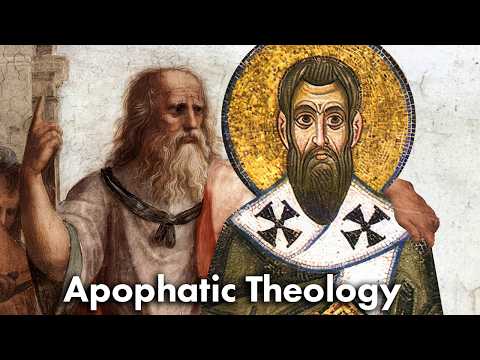
In Exodus, Moses encounters God in thick darkness on Mount Sinai and later asks to see God's glory. God refuses, stating no one can see His face and live. While many interpret this as a physical warning, 4th-century bishop Gregory of Nyssa offered a different perspective. He saw the darkness and God's refusal not as a literal danger, but as a symbol of the spiritual encounter with the divine. For Gregory, God's denial was precisely the granting of what Moses truly sought: an unending desire for God, a spiritual yearning that could never be fully satisfied by a concrete image. To grasp God in human terms, to create a mental image, would be to diminish God, to make Him comprehensible and therefore no longer truly God, but a human construct. God, he argued, transcends all characteristics and is inaccessible to knowledge. This vision of God is an unfillable desire, a continuous reaching for something beyond comprehension. This concept lies at the heart of apophatic theology, also known as negative theology. It's a method of approaching God by articulating what God is not, a tradition spanning from early Christianity through Eastern mystics, medieval Western thinkers, and into modern Eastern Orthodox thought. It challenges conventional understandings of the divine.
Read AI summary
YouTube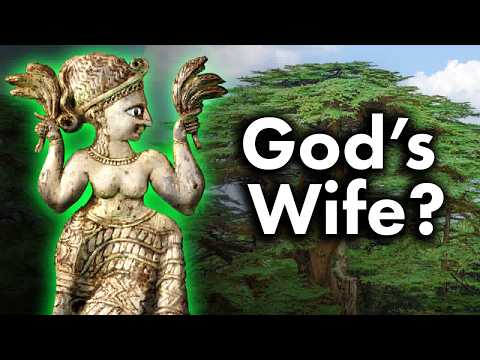
The video explores the ancient Israelite worship of Asher, a figure often presented as a goddess, and her complex relationship with the God of Israel, Yahweh. It begins by highlighting a controversial archaeological find from Kuntillet Ajrud in the Sinai Peninsula: an inscription on a storage jar depicting two figures and reading, "I bless you by Yahweh of Samaria and by his Asher." This inscription is significant because Asher was a prominent goddess in the ancient Near East, and the Hebrew Bible frequently criticizes Israelites for her worship. However, this inscription offers a glimpse into the perspective of her followers. The text delves into the nature of Asher, drawing heavily on Canaanite mythology from Ugarit. Here, Asher, known as Athirat, is the consort of the high god El, the mother of the gods, and a powerful deity in her own right. She is described as the "creatress of the gods" and the "mother of the 70 divine sons," a royal mother goddess linked to fertility and divine royalty. In the Ugaritic Baal Cycle, Athirat plays a crucial role as a "kingmaker," instrumental in establishing Baal's kingship and later in deciding his successor. This establishes Asher as a significant figure in Canaanite religion, holding a position of power and influence.
Read AI summary
YouTube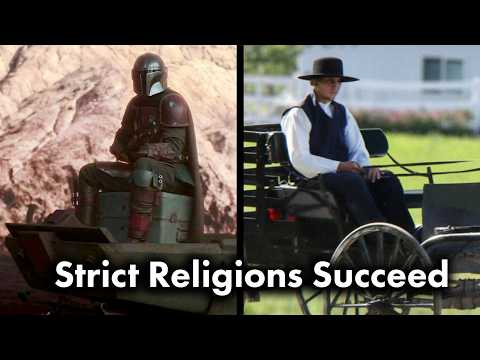
The provided transcript delves into the religious and sociological underpinnings of the "Children of the Watch" faction within the Star Wars universe, drawing parallels with real-world strict religious communities. The speaker, adopting the persona of an anthropologist of religion, argues that the Children of the Watch, characterized by their unwavering adherence to the Mandalorian creed, including the rule of never removing their helmets, exemplify the success of demanding religious groups. The analysis begins by establishing the context of the Children of the Watch's origins: the destruction of Mandalore during the "Night of a Thousand Tears" by the Empire. This catastrophe led to the fragmentation of Mandalorian society, with the Children of the Watch emerging as a group that interpreted the disaster as a sign that their traditions had become too lenient. They sought to revive what they perceived as the "ancient way," which necessitated extreme strictness. This included maintaining their helmets in the presence of any living being, a rule enforced by exile. They formed secret enclaves, adopted foundlings into their creed through ritual rather than biological ties, and operated under a strict code of obedience, encapsulated by the phrase "This is the way."
Read AI summary
YouTube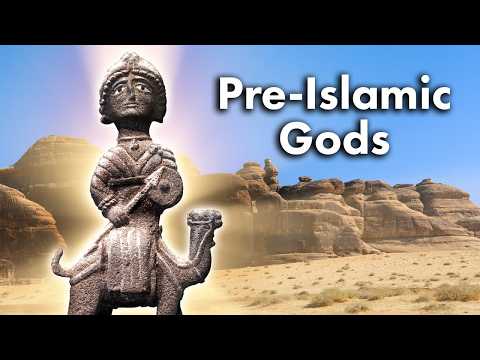
Around the year 800, in the Abbasid heartland of Iraq, an Arab scholar named Hisham ibn al-Kalbi documented pre-Islamic Arabian paganism in his "Book of Idols." This work cataloged gods and sanctuaries, offering a perspective filtered through an Islamic lens, viewing the pre-Islamic period as the "Age of Ignorance." For centuries, this was the primary, albeit biased, source of information about pre-Islamic Arabian religion. However, a more direct, though initially unreadable, source existed: tens of thousands of Old Arabic inscriptions carved into rocks across what is now southern Syria, Jordan, and northern Saudi Arabia. Written in the Safaitic script, deciphered in the late 1800s, these inscriptions date from around the 3rd century BCE to a few centuries before the Prophet Muhammad. These inscriptions provide unfiltered, first-person religious expressions from ordinary people. They contain names of gods, prayers, curses, and sacrifices, offering glimpses into the beliefs and practices of those who lived in pre-Islamic Arabia. A herder, for instance, carved a simple plea to the goddess Allat to find a lost sheep. These individuals were primarily nomads, traversing harsh landscapes with their flocks and caravans, leaving behind a rich tapestry of personal religious utterances, often accompanied by numerous drawings of camels.
Read AI summary
YouTube
A hypothetical woman leaving the Southern Baptist Church after 12 years exemplifies a phenomenon researchers are calling "religious residue." This residue refers to the persistence of religious cognitions, emotions, and behaviors even after someone has disidentified with a religious community. This is distinct from individuals who have never been religious. A 2021 cross-cultural study by Daryl Van Tongeren and colleagues investigated this difference. They compared three groups: currently religious individuals, never religious individuals, and those who were formerly religious (dubbed "duns"). Using implicit association tests (IATs) to gauge gut-level reactions, the study found that "duns" consistently fell between the currently religious and never religious groups. For instance, they showed more positive implicit associations with God than the never religious, and a higher certainty about the supernatural. Furthermore, "duns" engaged in religious practices at more than twice the rate of never religious individuals, even after disaffiliation. This evidence, gathered across the US, Netherlands, New Zealand, and Hong Kong, supports the concept that something "stays" after religious deconversion.
Read AI summary
YouTube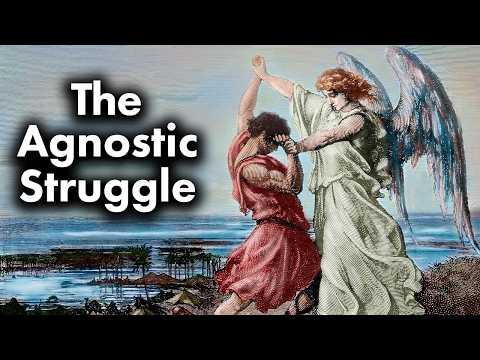
A recent study published in the International Journal for the Psychology of Religion suggests that the distinction between atheists and agnostics is not solely philosophical or epistemological, but also emotional. While atheism is often understood as a positive belief that no God exists, and agnosticism as a suspension of judgment regarding God's existence, the study reveals significant emotional and relational differences. Agnostics, on average, report more spiritual struggles, including wrestling with doubt, ultimate meaning, and moral conduct, indicating a greater sense of anguish and existential restlessness. Concurrently, agnostics tend to hold more positive views of God, picturing God as more loving and less cruel, and feeling a stronger pull towards the divine compared to atheists. The study, led by Dr. Julie Exline and her team, including Kenneth Pargament, a prominent figure in the psychology of religion, carefully defined terms to differentiate between these groups. Atheists were defined as individuals who hold a positive belief that no god or gods exist, further categorized as "closed atheists" (firm in their non-belief) and "open atheists" (conceding the possibility of God but not believing). Agnostics, on the other hand, maintain a suspension of judgment, stating they do not know if God exists. "Closed agnostics" believe no one can know, while "open agnostics" suggest it might be possible to figure out. The common thread for agnostics is uncertainty, which the researchers emphasize stems from personality traits like skepticism and openness, as well as doubt. The deliberate use of narrower definitions allowed the researchers to isolate two psychologically distinct groups, revealing interesting differences that are often missed when these groups are lumped together in surveys as "nuns" or "non-believers."
Read AI summary
YouTube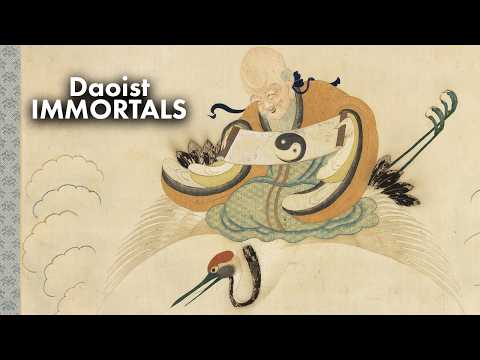
In 1222, Genghis Khan met with the Daoist Master Chongqen, who, despite his name meaning "eternal spring," did not possess an elixir of immortality. Instead, Chongqen suggested a long process of transformation to extend life and achieve transcendence, known as becoming a Daoist "Shien." Shien are supernatural beings in Daoism, capable of traversing realms, possessing extended lifespans, and exhibiting superhuman abilities like flight or teleportation. The term is often translated as "immortal," but this can be misleading. Shien escape ordinary death but do not necessarily exist forever in an absolute sense. Scholar Robert Campany notes that Daoist thought views human and divine, or mortal and immortal, on a spectrum, allowing beings to become more or less refined and long-lived. Translating Shien as "transcendent" better captures this idea, as they operate on a higher level within the same cosmos, rather than escaping it entirely. Daoist texts distinguish between merely avoiding death and transforming into an entirely different being.
Read AI summary
YouTube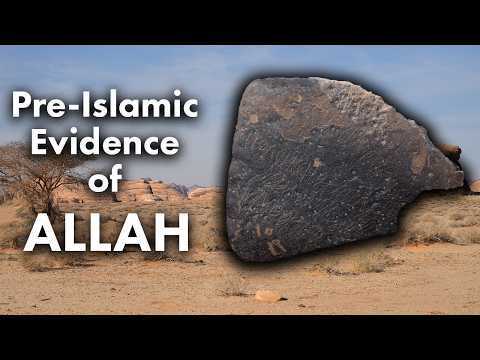
The Quran describes Mecca during Muhammad's time as a city populated by "mushri," often translated as pagans or polytheists. These individuals were Muhammad's primary adversaries, resisting his message, ridiculing his claims, and refusing to worship Allah exclusively. However, the Quran makes a surprising assertion about their beliefs, stating that if asked who created the heavens and the earth, or humans, they would unequivocally say "Allah." They also credited Allah with controlling the sun and moon and sending rain. This seemingly contradictory belief system, where polytheists already acknowledge Allah as a creator god, can be clarified by understanding the term "mushri" more literally as "those who associated others with God." This implies they believed in and worshipped Allah, but also assigned partners or associates to him, praying to lesser deities and invoking intermediaries within a broader polytheistic framework. Some venerated the sun and moon, while others worshipped pre-Islamic Arabian gods like Allat and Manat, yet Allah remained supreme as the creator. This raises the question of how the mushri already knew about Allah. The answer lies in the pre-existence of a god named Allah in pre-Islamic Arabia. Inscriptions from the deserts of Jordan, dating hundreds of years before Muhammad, show Arab nomads invoking multiple gods, including "ba al-samine" (a storm god), "shakam" (a protective deity), and "Allah." This indicates that long before the Quran, ancient Arabs carved Allah's name into stone, used it in prayers, incorporated it into personal names, and, according to recent discoveries, conceived of him as a high god connected to light and creation.
Read AI summary
YouTube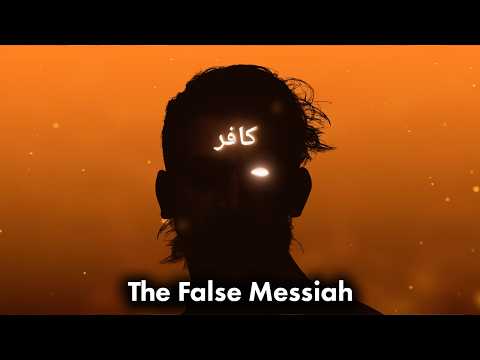
The Dajjal, a figure central to Islamic end-of-the-world traditions, is described as a one-eyed man with the word "kafir" (disbeliever) inscribed on his forehead. He will be barred from entering the holy cities of Mecca and Medina and will lead a formidable army against pious Muslims. Though not mentioned in the Quran, the Dajjal features prominently in later Islamic traditions, particularly in the Hadith literature, as a major sign of the end times. He is often interpreted as a miracle-working impostor, a political tyrant, a cosmic deceiver, or a symbol of systemic corruption. To understand the Dajjal, one must turn to the Hadith, which are reports of the Prophet Muhammad's sayings, actions, or approvals. These reports, compiled in the 8th and 9th centuries, provide vivid descriptions of cosmic upheaval, the appearance of the Mahdi, the return of Jesus, and the rise of the Dajjal. While Sunni and Shi'a Muslims, as well as smaller communities, may disagree on interpretations or the legitimacy of certain Hadith, it is generally accepted that the Dajjal is a real being who will appear at a specific moment before the Day of Judgment.
Read AI summary
YouTube
Jared Henderson, a philosopher and author turned YouTuber, explores the impact of modern technology on human consciousness, ritual, community, and grief. His work on Substack and YouTube delves into topics like attention, reading, artificial intelligence, and synthetic relationships, offering a historical and philosophical perspective on contemporary anxieties. Henderson's journey from academia to YouTube was driven by a desire to engage in intellectual discussions after leaving a PhD program and working in tech. He found the academic job market challenging and missed the intellectual community of university life. His channel initially covered various topics but has since narrowed its focus to philosophical questions about modern life, particularly our technological environment. He emphasizes that while current technological issues, such as the attention economy, have reached an unprecedented scale, they are not entirely new in kind. Similar concerns about information overload arose with the printing press, and historical solutions offer comfort that present challenges can also be overcome.
Read AI summary
YouTube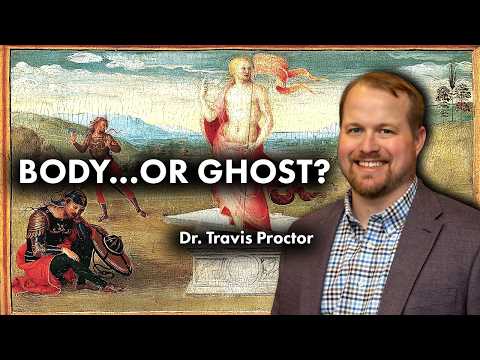
When most modern Christians consider the resurrection of Jesus, the physical nature of his body is rarely a point of contention, generally assuming a bodily resurrection. However, early Christian texts reveal significant anxiety regarding the physical nature of Jesus's resurrected body. The question was whether he was raised in a tangible flesh-and-blood body or something more ethereal, like a spirit or ghost. Some passages depict the resurrected Jesus eating food and inviting touch, such as the story of doubting Thomas, yet in the same scene, Jesus appears and disappears suddenly in a locked room. This ambiguity presented a real theological problem for early Christians, with different texts offering varied answers. Dr. Travis Proctor, a scholar of early Christianity specializing in resurrection traditions and ancient ideas about bodies and spirits, highlights these tensions. His research focuses on "special bodies" in the ancient world, like those of demons, angels, or spirits, which were often thought to have some bodily form, even if not strictly material. Jesus's post-resurrection appearances, such as moving through locked doors or sudden appearances and disappearances, suggest an unusual bodily form. Conversely, other gospel accounts, particularly in Luke and John, emphasize Jesus retaining a regular human body. For instance, Jesus in Luke tells disciples to touch him to confirm he has flesh and bones, "unlike a spirit." This creates a tension between a "spirit-like" body and a "normal human" body.
Read AI summary
YouTube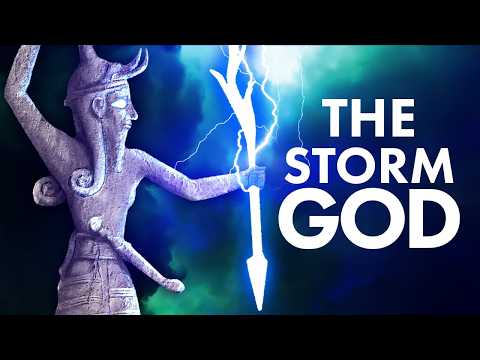
The story of Elijah on Mount Carmel, where he challenges the prophets of Baal to a contest to determine whose god is real, is one of the most dramatic narratives in the Bible. Both sides prepare a sacrifice without fire, believing the true God will respond with fire from heaven. The prophets of Baal call out, dance, shout, and even cut themselves for hours, but nothing happens. Elijah mocks them before praying once, and fire immediately consumes his sacrifice, wood, and even water, demonstrating the powerlessness of Baal and the omnipotence of the God of Israel. Baal was a significant storm god, warrior, and king in the ancient Near East, associated with rain and crop growth. While the biblical narrative presents Baal as a rival to the God of Israel, a closer look at the Hebrew Bible reveals that the God of Israel is sometimes described with characteristics similar to Baal, such as thundering from the heavens, riding on clouds, and defeating the sea and its monsters. This raises questions about the relationship between these two traditions.
Read AI summary
YouTubeBriefTube monitors your YouTube channels, generates AI-powered audio summaries, and delivers them wherever you listen. Telegram, Discord, Slack, or your podcast app. Fully automated.
Start free trial