The Dajjāl: The Islamic Antichrist?
AI Summary
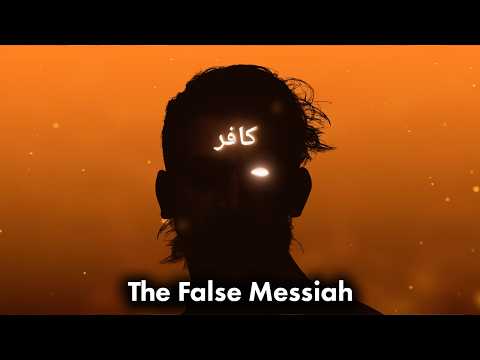
The Dajjal, a figure central to Islamic end-of-the-world traditions, is described as a one-eyed man with the word "kafir" (disbeliever) inscribed on his forehead. He will be barred from entering the holy cities of Mecca and Medina and will lead a formidable army against pious Muslims. Though not mentioned in the Quran, the Dajjal features prominently in later Islamic traditions, particularly in the Hadith literature, as a major sign of the end times. He is often interpreted as a miracle-working impostor, a political tyrant, a cosmic deceiver, or a symbol of systemic corruption.
To understand the Dajjal, one must turn to the Hadith, which are reports of the Prophet Muhammad's sayings, actions, or approvals. These reports, compiled in the 8th and 9th centuries, provide vivid descriptions of cosmic upheaval, the appearance of the Mahdi, the return of Jesus, and the rise of the Dajjal. While Sunni and Shi'a Muslims, as well as smaller communities, may disagree on interpretations or the legitimacy of certain Hadith, it is generally accepted that the Dajjal is a real being who will appear at a specific moment before the Day of Judgment.
Hundreds of Hadith discuss the Dajjal, often repetitively. One influential account in the Sahih al-Bukhari describes the Dajjal landing in the barren areas outside Medina, unable to enter the city. A righteous man will confront him, testifying that he is indeed the Dajjal. The Dajjal will then perform a deceptive miracle: he will kill the man and bring him back to life. The resurrected man, however, will remain steadfast in his belief, rebuking the Dajjal, who then attempts to kill him again but cannot. This account highlights the Dajjal's power to perform apparent miracles and his malicious intent.
Other Hadith elaborate on the Dajjal's character and limitations. Several reports reiterate that angels sent by God will guard Medina, preventing his entry. Similarly, he will never set foot in Mecca, and some later traditions add Jerusalem to the list of protected cities. This suggests that while the Dajjal will have dominion over most of the world, certain sacred spaces will remain beyond his reach, guarded by supernatural forces. The resurrection stunt outside Medina is also clarified, with some Hadith suggesting that God permits this act, further emphasizing the Dajjal's limited, divinely sanctioned power.
Intriguingly, one Hadith recounts a vision of Prophet Muhammad seeing Jesus circumambulating the Kaaba in Mecca, with the Dajjal trailing behind him. Jesus is described with long hair, water dripping from his head, and his hands resting on the shoulders of two men. Following him is a man with tightly curled hair, blind in his right eye, which bulges out like a grape. This figure is identified as al-Masih ad-Dajjal, the lying Messiah, suggesting a dark imitation or distorted double of Jesus.
The Dajjal is also described as performing extraordinary miracles beyond mere resurrection. He will heal leprosy, paralysis, and blindness; cause crops to spring forth; make rain fall; bring livestock to life; move mountains; and stop the sun. These miracles are not for a righteous cause but to gain followers for his evil agenda. In some instances, he is depicted as inverting nature, turning water into fire and fire into water, and convincing people that heaven is hell and hell is heaven. The Prophet Muhammad warned that the Dajjal, being one-eyed, would bring what resembles hell and paradise, but what he calls paradise would actually be hell. This immense power to persuade people toward a false message makes him one of the greatest trials for Muslims, who are encouraged to recite the first ten verses of Surat Al-Kahf (Chapter 18 of the Quran) for protection. The Prophet himself would seek God's protection against the Dajjal.
The Dajjal's most distinctive physical trait is his blindness in one eye, often described as his right eye bulging like a floating grape. This physical description serves as an identifier for believers, but many Muslim scholars also interpret this impaired vision as a spiritual defect, signifying his inability to perceive the truth. Those who follow him are believed to become spiritually blind, unable to discern God's designs. Another dramatic physical feature mentioned in the Hadith is the inscription of "kafir" (disbeliever or infidel) between his eyes, which only believers, literate or illiterate, will be able to read. His followers, however, will be unable to perceive this inscription. Other identifying features include wild, long hair that sticks up like tree branches, an unusual inward-turned gait, pale skin, great height, and an eye that glows like the morning star, though details vary across traditions. The overall message is that the Dajjal is meant to be distinctive, despite his followers' inability to recognize these defining features.
The Dajjal's origins are disputed. Some accounts state he will emerge from Khurasan (roughly between modern-day Iran and Afghanistan), while others place him in Iraq or Syria. One Hadith describes him emerging from Khurasan, followed by people whose faces resemble leather-coated shields, suggesting he will come from afar with his own followers, possibly from Isfahan in Iran. Theories suggest a possible link between Khurasan and Corazine, a town mentioned by Jesus in the Gospels, where the Antichrist is believed by some Christian traditions to originate. The Dajjal is occasionally said to be Jewish, or from the Arab tribe of Banu Tamim in Saudi Arabia. His supporters are varied, including Bedouin Arabs, Turks, Uzbeks, magicians, or even children born out of wedlock. Besides human followers, he is also believed to command legions of demons.
The Dajjal's defeat is pre-ordained. His reign of terror is described as lasting either 40 days or 40 years, culminating in a final confrontation where good prevails. The 40 days are not ordinary days; the first day will be like a year, the second like a month, the third like a week, and the rest like normal days. Another report suggests 40 years, with time accelerating until a day is like the time it takes to burn a palm branch. These events are often linked to the prophesied conquest of Constantinople, with some Hadith suggesting that after being rejected from the holy cities, he will head north to Syria, where he will be killed, possibly en route to Constantinople.
Jesus plays a crucial role in the Dajjal's defeat. After the Dajjal appears, Jesus will descend on a white minaret at the Umayyad Mosque in Damascus and confront him. The location of this confrontation varies, with some traditions placing it at the Gate of Lod (modern-day Lod, northwest of Jerusalem), where Jesus will slay him, while others suggest Turkey or Syria, near Antioch or Aleppo. Regardless of the location, the Dajjal does not survive this encounter; in some accounts, he simply melts upon seeing Jesus. In many Shi'a traditions, the Mahdi, whose name means "the rightly guided one," is the one who ultimately defeats the Dajjal. The Mahdi, often seen as the divinely guided 12th Imam, restores justice to the world and eliminates the Dajjal, the embodiment of corruption and deception.
It's important to note that the Hadith were compiled over 150-200 years after the Prophet Muhammad's death, explaining the variations in the Dajjal's story. Similar themes circulated, sometimes with added details or shifts in emphasis. Scholars have observed striking similarities between the Dajjal and the Antichrist in Christianity. The Arabic term "Dajjal" is cognate with the Syriac "Daggala," meaning false or deceitful, and Syriac-speaking Christians used "Mashiah Daggala" for a false messiah, a phrase very similar to the Arabic "al-Masih al-Kadhdhab" (the anointed liar) used for the Dajjal. The connection between the Dajjal's defeat and the Mahdi (and sometimes Jesus) also mirrors the Christian narrative of Jesus confronting the Antichrist. This suggests possible influence from Jewish and Christian apocalyptic traditions, which were well-known to early Muslims.
The Dajjal has also been likened to Armilus, a deceptive anti-messianic tyrant in medieval Jewish texts. Like the Antichrist, the Dajjal has been linked to historical figures. Some traditions connect him to the Sufyani, a figure said to descend from Abu Sufyan, the father of the first Umayyad Caliph Mu'awiya. This Dajjal-Sufyani figure appears more often in Shi'a narratives, reflecting historical Shi'a resentment against Abu Sufyan's challenge to Ali for the caliphate. Some early reports even suggest the Dajjal was alive during the Prophet's lifetime, possibly a rival prophetic figure in Medina named Ibn Sayyad, who may have been associated with Jewish Merkabah mysticism.
Some medieval narratives propose the existence of multiple "lesser" Dajjals, who are mere forerunners to the capital-D Dajjal, who will claim to be God. Mystics like Ibn Arabi and later Sufis interpreted these lesser Dajjals as "friends of Satan," a shadow hierarchy aligned with deception and ego, with the Dajjal representing the culmination of a broader satanic current. Other Sufi authors focused on the psychological aspect of deception, known as "istidraj," where extraordinary abilities or success are given not as a sign of holiness but to lead individuals further into error. In this view, the Dajjal's miracles are extensions of this principle, and false holy men can metaphorically become agents of the Dajjal. Some mystics internalized the entire end-times drama, seeing the Dajjal as a metaphor for self-deception, inflated ego, and spiritual imposture, with Jesus's killing of the Dajjal symbolizing the triumph of the spirit over the lower ego.
A completely different version of the Dajjal's origin places him coming from the west, based on the story of Tamim al-Dari, a Christian convert. During an expedition at sea, his ship was blown off course, and he was shipwrecked on an uncharted island, possibly near North Africa. There, he encountered a female demon, Al-Jassasah (the informer), who directed him to a monastery where a giant, blind, chained man was writhing in pain. This man interrogated the sailors about the Arabs and the appearance of a prophet, then declared himself the Messiah who would soon visit every city for 40 days except Mecca and Medina. This giant blind man was revealed to be the Dajjal. This story became a genre of adventure literature in medieval North African Muslim communities.
Ultimately, the Dajjal is not a perfectly consistent character across Islamic tradition. His origins, appearance, and timeline vary. He emerges from Khurasan in some reports, or between Syria and Iraq in others. Some traditions suggest he was alive during the Prophet's time, chained on a distant island, while others treat him as a future figure released at the very end of time, sometimes linked to the conquest of Constantinople. This flexibility continues today, with some Muslim thinkers reimagining the Dajjal as a symbol of secularism, materialism, imperialism, or political corruption, while others tie him to conspiratorial modern fantasies. Regardless of interpretation, the Dajjal remains the great deceiver, a figure of trial, distortion, and false power, whose power is temporary and will ultimately be defeated when judgment comes, with believers taking refuge in God and heeding his messengers.