Cryptoast - Le média Crypto
AI Audio Summaries
20 videos summarized
1 follower on BriefTube
Last summary: Sep 29, 2026
AI Audio Summaries
20 videos summarized
1 follower on BriefTube
Last summary: Sep 29, 2026
Read AI summary
YouTube
The discussion starts with a brief acknowledgment of the live stream's unplanned beginning. The main topic quickly shifts to MicroStrategy's potential Bitcoin sales, with the title posing the question of whether this signals the end of "treasury companies." The speakers express a degree of disbelief in the recent Bitcoin price pump, suggesting it's a false rally unsupported by fundamental news. They note that MicroStrategy's announcement of considering selling Bitcoin had minimal impact on the market, implying it was already priced in. A significant portion of the conversation delves into MicroStrategy's financial strategy. It's highlighted that the company began buying Bitcoin in 2020. While initially a sound strategy for a company with strong treasury, MicroStrategy has increasingly relied on issuing debt and new shares. The speakers calculated that since December 2020, their Class A shares have multiplied over fourfold, leading to significant share inflation. The company's core software business generates around $110-120 million in revenue per quarter, which is insufficient to cover their Bitcoin purchases and operational costs.
Read AI summary
YouTube
Michael Saylor, CEO of MicroStrategy, has signaled a significant shift in his long-held "never sell" Bitcoin strategy. On May 5th, he announced that the company would "probably sell a portion of the Bitcoin to fund a dividend, just to vaccinate the market." This statement comes as a surprise, given Saylor's five-year commitment to never selling and his recent predictions of Bitcoin reaching $10 million. The phrase "vaccinate the market" is interpreted as a calculated move to prepare investors for future sales, normalizing the idea that MicroStrategy will eventually divest some of its holdings. For years, Saylor's unwavering stance on holding Bitcoin, often referred to as "HODLing," was a cornerstone of MicroStrategy's identity and a key attraction for investors. As recently as February, he affirmed a commitment to buying Bitcoin quarterly and vowed not to sell even a single satoshi, regardless of price fluctuations. This sudden change in rhetoric raises questions, especially considering MicroStrategy's substantial Bitcoin reserves, exceeding 800,000 BTC. While some anticipate this potential selling to benefit decentralization and create buying opportunities, the announcement has undeniably disrupted the market's perception of the company.
Read AI summary
YouTube
Tonight's discussion focuses on Bitcoin mining, particularly home mining, prompted by a recent individual successfully mining a Bitcoin block and earning a $240,000 reward. While specific details on this miner's setup are scarce, similar cases often involve modest investments, sometimes as low as 200 euros per machine. The speaker, who is developing content on home mining, plans to share insights, tease future projects, and demonstrate various mining machines. The conversation will also cover the potential for return on investment, the utility of certain machines like heat reuse, and basic mining concepts for beginners. The current market situation is briefly touched upon, with the speaker expressing skepticism about the end of the bear market, anticipating further lateral movement or even a dip. For long-term investors, strategic positioning is key, rather than reacting to short-term fluctuations.
Read AI summary
YouTube
Larry Fink, CEO of BlackRock, the world's largest asset manager, has publicly acknowledged the potential for Bitcoin to replace the US dollar as the global reserve currency if the United States fails to control its debt. This statement, unthinkable just five years prior, signals a growing unease within traditional finance about the stability of the current financial system. This concern is not isolated; it stems from a convergence of worrying signals that, when combined, point to a significant global shift. To understand this impending change, the video references the work of Ray Dalio, a legendary investor and founder of Bridgewater Associates. Dalio has spent 15 years studying historical cycles of empire collapse, analyzing 500 years of prosperity, decline, war, and eventual downfall across various global powers. He has developed a six-phase cycle that describes how empires rise and fall, beginning with a new order after a major event, followed by a period of growth, prosperity, and peak power, which eventually leads to excessive debt accumulation. This debt then triggers a pre-collapse phase characterized by rising tensions, culminating in a rupture where order gives way to chaos, and the cycle restarts.
Read AI summary
YouTube
If you own Bitcoin today, you may soon receive a new cryptocurrency called e-cash. However, trying to use or sell it could lead to the loss of your BTC. This video explains the risks associated with e-cash, describing it as a "poisoned gift" that could be costly, and offers advice on how to avoid being trapped. The simplest solution is not to use it at all. To understand the situation, we need to go back to 2017 when Paul Stork introduced the concept of "drivechains." These are a type of sidechain, parallel blockchains to Bitcoin, designed to benefit from Bitcoin's mining and decentralization. While drivechains theoretically offer attractive possibilities, such as decentralized finance protocols or fast transaction chains for daily payments, their real-world impact could be catastrophic. They could lead to a gradual centralization of Bitcoin mining itself, thereby compromising Bitcoin's decentralization. For these reasons, the Bitcoin community has consistently rejected the idea of drivechains.
Read AI summary
YouTube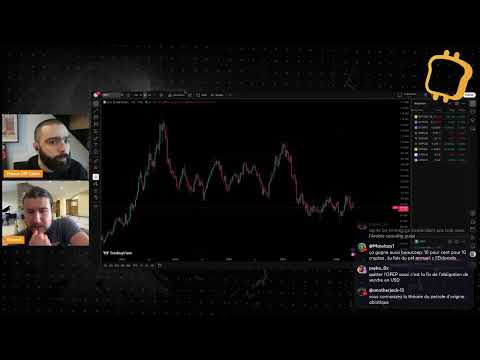
The current market sentiment for Bitcoin remains stagnant, hovering between $75,000 and $80,000, indicating a phase of waiting and observation rather than significant price movement. This week's news covers a variety of smaller, yet interesting, developments. A positive development for crypto users in France is that wallets will not need to be declared. Initially, there was a proposal to require declaration above a certain threshold, but this has been abandoned and will not be included in the law. While some may feel this is a partial victory, it's noted that existing on-chain analysis tools already provide ample data to governments if they need to track crypto holdings.
Read AI summary
YouTube
On April 5, 1933, Franklin Roosevelt signed Executive Order 6102, making gold possession illegal in the United States overnight. Americans were given three weeks to sell their gold coins, bars, and certificates to the Federal Reserve at a state-fixed price, with refusal punishable by ten years in prison. Fast forward to April 17, 2026, and another government is publishing a draft law. This time, it's not about gold, but about Bitcoin. The law it's based on, remarkably, dates back to 1933. The country in question is South Africa. If this bill passes, it will be the first time in history that a state legally grants itself the power to seize its citizens' crypto assets at a price it determines.
Read AI summary
YouTube
The speaker expresses growing concern and frustration over privacy issues, politics, freedom of expression, and liberty. This is a recurring theme in their livestreams, as they believe it's increasingly important to democratize tools for sovereignty and privacy to protect oneself and one's loved ones. The main topic of the evening is an introduction to a significant tool, Nostr, which is gaining traction in France and globally. The speaker notes that many people, especially those outside the crypto community, are unaware or unconcerned about the erosion of privacy and the potential for authoritarianism. They cite examples like the push for identity verification for accessing adult content, which, while seemingly addressing a specific issue, normalizes systematic surveillance and data collection. The speaker argues that such measures are coercive, aimed at monitoring populations, their opinions, identities, and hobbies, potentially leading to censorship.
Read AI summary
YouTube
The discussion begins with a brief market update, noting Bitcoin's recent surge past $79,000. While acknowledging the short-to-medium term positive trend, both hosts express skepticism about its sustainability, suggesting a potential return to lower levels. They highlight the lack of strong underlying catalysts for the current pump, likening it to early 2022 before geopolitical events impacted markets. A significant portion of the conversation focuses on a recent hack of the KELP protocol, resulting in a loss of $292 million. KELP is described as a restaking protocol that allows users to deposit ETH or STETH to receive a synthetic version, RSTH, which can then be used in DeFi. The hack exploited a vulnerability in Layer 0's decentralized verification network (DVN), which KELP failed to implement with multiple verifiers as recommended. The hackers created unbacked RSTH by compromising the bridge mechanism, effectively minting tokens without underlying collateral. This led to a significant loss of Total Value Locked (TVL) on Aave, as the unbacked collateral caused unrecoverable debt. The incident also saturated stablecoin markets as institutions shifted their borrowing.
Read AI summary
YouTube
The world is undergoing a profound transformation, with everything becoming a speculative market, from housing and love to sports and personal data. This hyper-financialization of society is evidenced by people betting real money on traffic jams, weather, military strikes, the existence of aliens, and even the return of Jesus. At one point, nearly a billion dollars were at stake on Poly Market regarding a nuclear weapon detonation. While this may seem grotesque, it reflects a deeper societal shift. A recent study in January 2026 by Northwestern Mutual found that 80% of Gen Z investors engage in high-risk speculative assets because they feel financially behind. They perceive taking asymmetric and ultra-risky bets as their only way to catch up to previous generations. In 1985, an average American needed about 3.5 years of median income to buy a house; today, it takes 5 years. The median age for homeownership in the US has reached 38, an all-time high. France shows a similar trend, with real estate prices more than doubling since 2000, while salaries have not kept pace, making even renting difficult. Research from the University of Chicago indicates that as the perceived probability of homeownership decreases, individuals take measurably higher investment risks.
Read AI summary
YouTube
The live stream begins with a slight delay and technical issues, with the host and guest, Vincent, struggling to connect and display the chat on their computer. They are broadcasting from Paris Blockchain Week. The first topic is the price of Bitcoin, which has seen a slight upward trend, hovering around $75,000 to $76,000. Vincent notes that while there's been a rebound since the dip to around $60,000, Bitcoin remains within a range between $61,000 and $75,000. He points out the lack of significant news that could definitively justify this recent upward movement, suggesting that sometimes markets move without clear catalysts. He also mentions that while the market might be in a "bear market" phase, it has been relatively short if the bottom is indeed behind them. He emphasizes the need for Bitcoin to break above the resistance at $75,000 decisively, otherwise, it risks falling further. He believes that a range-bound market doesn't necessarily need specific news to move up or down, but rather a catalyst or a reason for a breakout. He speculates that a rebound could occur in the coming months, potentially leading to a new year-end low or a consolidation phase for future growth. Despite potential price drops, he remains optimistic about Bitcoin's long-term fundamentals, citing increasing adoption and recognition of its utility.
Read AI summary
YouTube
In March 2014, Peter Thiel, a prominent Silicon Valley figure and early investor in Facebook, met with 19-year-old Vitalik Buterin, the founder of Ethereum. Thiel provided Buterin with $100,000, with the condition that Buterin abandon his university studies to build Ethereum, envisioned as a global, unstoppable computer for financial applications without intermediaries. While initially perceived as an act of philanthropy, this investment has evolved into a significant power struggle for the future of the crypto ecosystem. The narrative posits that Thiel's long-term objective, spanning three decades, has been absolute monopoly. He is characterized not as a typical investor but as a philosopher of power who despises competition, viewing democracy as obsolete and freedom as the domain of a technological elite. Thiel's financing of Buterin was not merely about spotting a computer genius but about laying the groundwork for his own utopia. His strategy involved building an invisible infrastructure while the public focused on cryptocurrency price volatility. He sought to own the foundations of the future, not just bet on it. The tokenization of global assets like stocks, bonds, and real estate onto the blockchain has revealed that the control mechanisms of this new system are concentrated within a single network of influence. The promise of escaping traditional financial elites has, it is argued, led to the creation of a new, potentially more insidious, form of control where transactions are monitored, currency is privatized, and power resides with those who control the protocol.
Read AI summary
YouTube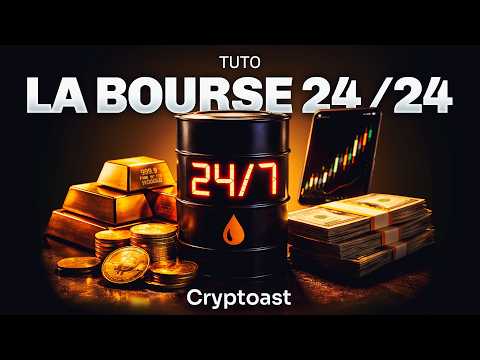
The cryptocurrency ecosystem is experiencing a significant shift as traditional finance integrates with blockchain technology, breaking down decades-old limitations. In just three years, one project, Hyperliquid, has disrupted the market, introducing innovations not only to the on-chain ecosystem but also to traditional finance. Its impact is evident in the daily trading volumes of gold, the S&P 500, and oil, with even Bloomberg using its prices as a reference when markets are closed. Hyperliquid stands out for its reliability and well-executed features, distinguishing itself from many projects that ambitiously attempt to revolutionize the entire ecosystem but often fall short. Initially, Hyperliquid launched as a simple perpetual protocol, enabling the trading of cryptocurrencies. Despite entering a relatively calm market phase, it quickly attracted users, partly due to the prevailing "airdrop" craze, where early adopters received free tokens, sometimes worth thousands of dollars. Hyperliquid notably marked the end of this golden age of airdrops, turning some users into millionaires.
Read AI summary
YouTube
This week's cryptocurrency market update and news review began by noting a calm market, with Bitcoin hovering around $65,000-$66,000. There was a brief mention of a small hack of $280,000 that occurred yesterday, and the potential for it to create contagion in the ecosystem, similar to events in 2022 that led to liquidations and the collapse of some protocols. The speaker reiterated a long-term optimistic view on Bitcoin, despite short-term fluctuations, and advised newcomers to the crypto market to develop a clear strategy, potentially starting with Bitcoin due to its lower risk compared to altcoins. A key observation was the decrease in institutional demand for Bitcoin. MicroStrategy, a prominent institutional buyer, did not purchase any Bitcoin this week for the first time since mid-December, which is considered unusual. Additionally, data from Crypto Quant indicated a decline in demand from corporate treasuries. Mara, a large Bitcoin miner, sold 15,133 Bitcoin (approximately $1.1 billion) in March to repay debt and accelerate its focus on AI. This move highlights a shift in profitability, as Bitcoin mining faces challenges from rising energy costs and increased competition, making AI a more attractive investment for some players. The speaker suggested that this corporate behavior might signal either a capitulation leading to a market bottom or the beginning of a more intense downturn, with clarity only expected in about six months.
Read AI summary
YouTube
While global attention is fixed elsewhere, a potentially more troubling issue for markets is quietly unfolding on Wall Street: the private credit market. For years, this discreet sector promised a smarter, more stable, and highly profitable investment, reserved for insiders, far from public market volatility. Today, this promise is showing cracks, with accumulating worrying signs. Major players like BlackRock, Blue Hall, Morgan Stanley, and Cliff Watuer have all limited withdrawals from their private credit funds due to excessive redemption requests. BlackRock specifically blocked withdrawals exceeding 5% as per contract stipulations. Morgan Stanley restricted redemptions after requests covered nearly 11% of outstanding shares, fulfilling only 46% of requests made during a redemption window. Cliff Watuer capped redemptions at 7% after requests reached about
Read AI summary
YouTube
Électricité de France (EDF), a major electricity producer in France and Europe, faces significant financial challenges, with a debt of 51 billion euros. This situation is exacerbated by the fact that electricity prices in France are tied to the European market, leading to a substantial increase in consumer bills, far exceeding production costs. Geopolitical tensions can directly impact French electricity bills, even when local production is abundant and cheap. The transcript argues that EDF missed a crucial opportunity in 2007, and again in 2017, to leverage its excess electricity production for profit. The core problem identified is the inability to effectively store large quantities of electricity. While batteries exist, they are not a viable large-scale solution due to high installation and environmental costs. The fundamental challenge is that electricity must be consumed almost instantly upon production, and any surplus is typically lost.
Read AI summary
YouTube
This summary provides a comprehensive overview of the key market insights, regulatory updates, and macroeconomic discussions presented in the transcript. **Bitcoin Market Analysis and Strategy**
Read AI summary
YouTube
This summary is based strictly on the provided transcript of a video discussion featuring representatives from Starknet, Kaspa, and the PPRGB project. ### **Starknet: Breaking Power Asymmetry and Extending Bitcoin**
Read AI summary
YouTube
On February 8, 2026, during the Super Bowl, the atmosphere in American living rooms shifted from festive to hostile the moment a Coinbase advertisement appeared. Unlike the 2022 "Crypto Bowl" where companies like FTX and Coinbase were embraced with total euphoria, this 60-second spot—costing $16 million—was met with groans and insults. This moment serves as a stark symbol of a profound shift: the world has moved from crypto-euphoria to outright rejection. The luster of digital assets has faded, and for much of the population, the previous interest has turned into a visceral disgust. The numbers tell a grim story. Since its peak of $126,000 in October 2025, Bitcoin has plummeted by 50%. Ethereum has dropped by roughly 65%, and Solana is hovering near a 75% loss from its all-time high. The promised revolution of an "unstoppable digital order" backed by the American government has failed to materialize. Instead of a steady climb toward a million dollars, the ecosystem is facing an anatomy of collapse that few saw coming.
Read AI summary
YouTubeBriefTube monitors your YouTube channels, generates AI-powered audio summaries, and delivers them wherever you listen. Telegram, Discord, Slack, or your podcast app. Fully automated.
Start free trial