Religion Camp
AI Audio Summaries
12 videos summarized
1 follower on BriefTube
Last summary: Jun 7, 2026
AI Audio Summaries
12 videos summarized
1 follower on BriefTube
Last summary: Jun 7, 2026
Read AI summary
YouTube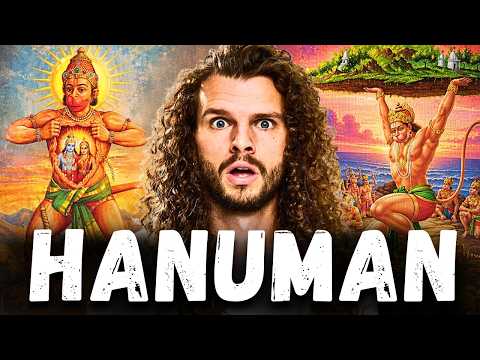
Every morning across India, hundreds of millions of Hindus recite 40 verses of prayer, not to a creator or a cosmic king, but to Hanuman, a monkey god. Ancient texts describe him as a warrior who could fly, once carried an entire mountain to save a dying man, and may still be alive today. The central question is how a supporting character, not a ruler or creator, became one of the most beloved figures in Hindu tradition. Hanuman's story is about unimaginable power used humbly for others. Hinduism is not built with one founder or one main book, like Abrahamic religions. It's a religious civilization thousands of years old, with many major texts, divine figures, and complementary philosophies that vary regionally. Hanuman's story originates from the Ramayana, one of India's two great epics. More than just a book, it has been recited, performed, painted, sung, debated, retold, and filmed, shaping cultural understanding of virtues like loyalty, sacrifice, love, and leadership for 2,000 years.
Read AI summary
YouTube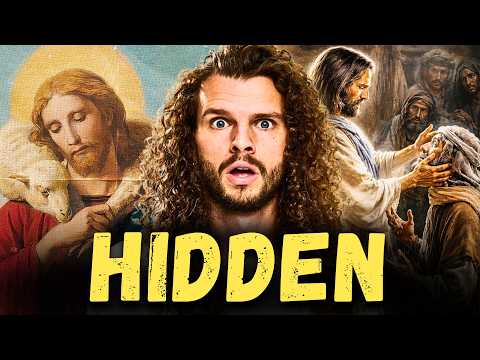
This episode of Religion Camp delves into the miracles performed by Jesus Christ as described in the Gospels, emphasizing their significance as credentials validating his divine authority. The host, Mark Gagnon, alongside his friend Christos Papadopos, explores various categories of these miracles, including nature miracles, healings, exorcisms, and resurrections. The discussion begins by framing miracles within the context of first-century Jewish Judea, where they were not mere displays of power but "signs" (semeion) pointing to the arrival of God's kingdom and Jesus's divine authority. The first miracle examined is the Wedding at Cana, detailed in John chapter 2. Here, Jesus transforms water into wine, addressing a social catastrophe for the hosts who ran out of wine. This event is presented as the first instance where Jesus "revealed his glory," leading his disciples to believe in him. The host notes the cultural significance of hospitality and the potential for lawsuits if it was not met.
Read AI summary
YouTube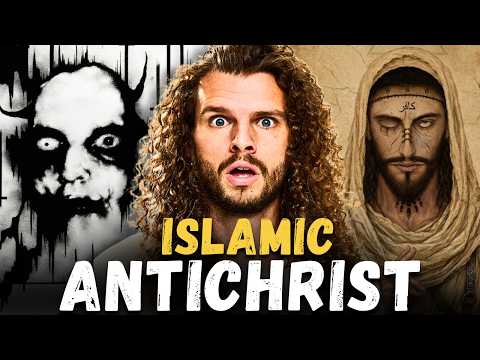
The Dajjal is a figure so feared in Islamic tradition that many practicing Muslims pray for protection against him every Friday. Though not mentioned in the Quran, the Hadith describes him in extraordinary detail: one eye, enormous stature, supernatural powers, and three letters—KFR, meaning disbeliever—written on his forehead, which every Muslim will be able to read, even if illiterate. He is the deceiving Messiah, a counterfeit savior, a threat so significant that every prophet in Islamic history—Noah, Abraham, Moses, Jesus—reportedly warned their people about his arrival. According to some scholars, the conditions for his appearance have never seemed more likely than now. This exploration delves into the evidence for the Dajjal, his identity, how to recognize him, and the signs of his arrival. The speaker, a practicing Catholic, emphasizes that this is an attempt to learn about a religion shared by over two billion people worldwide, doing so in good faith.
Read AI summary
YouTube
This video introduces Ibadism, a branch of Islam distinct from Sunni and Shia traditions, which emerged from the same 7th-century political and theological crisis that initially split Islam. Ibadis, who call themselves "the people of truth and integrity," have faced persecution, exile, and at times, have operated in secret. Despite their history of being hunted, they are now the majority religion in a modern Middle Eastern country, Oman, which is known for its diplomatic neutrality and quiet brokering of peace deals, such as between the United States and Iran, and hostage negotiations in Yemen. Oman has even hosted Israeli Prime Ministers discreetly. The story of Ibadism begins in 657 AD, during the first Islamic civil war, or "fitna," approximately 25 years after the Prophet Muhammad's death. This conflict pitted Ali ibn Abi Talib, the Prophet's cousin, son-in-law, and fourth caliph (and rightful successor in later Shia tradition), against Muawiyah, the powerful governor of Syria. Their armies met at the Battle of Siffin. As Ali was nearing victory, Muawiyah's forces raised copies of the Quran on their spears, signaling a desire for arbitration based on Allah's word. Ali agreed, but a faction of his army, believing Allah had already decreed their victory, rebelled. Their slogan became "no judgment but Allah's," and they walked out of Ali's camp, earning them the name "Khawarijites" (the ones who walk out or seceders).
Read AI summary
YouTube
In 1665, a Jewish man named Sabbatai Zevi declared himself the Messiah in a synagogue in Ottoman Turkey, sparking an extraordinary mass religious movement across the Jewish world. Thousands of Jews, from North Africa to Europe, sold their homes and prepared to follow him to the Holy Land. Rabbis who doubted him were afraid to voice their concerns, and even the secretary of the Royal Society of London had to acknowledge the movement's impact. However, just a year later, Sabbatai Zevi converted to Islam. This event, rather than destroying the movement, paradoxically, in some ways, made it stronger, becoming a profound story about human suffering, weaponized hope, and the resilient nature of belief in the face of contradictory evidence. The 17th century was a period of immense crisis, marked by climate change, plagues, civil wars, and widespread violence, particularly in Europe and the northern hemisphere. For Jewish communities, this era was even more devastating, building upon centuries of persecution, forced exile, and massacres. The year 1648 saw brutal massacres in Poland and Ukraine, led by a Cossack commander, Kamil Nitski, which obliterated entire Jewish communities. These events, known as the Decrees of 1648 and 1649, resulted in the deaths of tens of thousands of Jews, leaving generations without a sense of safety or a permanent home. This pervasive suffering led to a collective yearning for the Messiah, a descendant of King David prophesied to rebuild the temple in Jerusalem and gather the Jewish exiles.
Read AI summary
YouTube
The figure of King Solomon, celebrated in biblical narratives for his wisdom, wealth, and role in building the first temple, also features prominently in other traditions as a master of spirits and demons. These alternative narratives, found in Jewish, Christian, and Islamic folklore, describe Solomon possessing a magical ring that allowed him to command an army of 72 spirits, sealing them into a brass vessel and using them to construct the Temple of God. This concept is explored in texts like "The Lesser Key of Solomon," a Renaissance-era grimoire, which details how a biblical king became intertwined with Western occultism, Freemasonry, and discussions about rebuilding the Third Temple. In the Bible, Solomon is depicted as the son of David who inherited the throne and ushered in a golden age for Israel. His most famous story involves God offering him anything he desires in a dream, to which Solomon humbly requests wisdom to govern his people justly. Impressed, God grants him not only wisdom but also unmatched wealth and honor, making him the wisest and richest king of his era. His wisdom is exemplified in the famous story of settling a custody dispute by threatening to cut a baby in half, discerning the true mother by her compassionate response. Solomon's most significant achievement, according to the Bible, was the construction of the First Temple in Jerusalem, a magnificent dwelling for God designed to house the Ark of the Covenant. The biblical account emphasizes Solomon's exceptional organization, resources, and political reach, without mentioning any supernatural assistance.
Read AI summary
YouTube
The concept of the Antichrist has captivated generations, with each era convinced they had identified this ultimate villain. From early Christians pointing to Nero, to medieval people accusing the Pope, to Napoleon, Hitler, and even American presidents, the certainty has been consistent, despite the subjects changing. This raises the question of how everyone has been so confident yet so wrong for 2,000 years, suggesting a potential misunderstanding of who or what the Antichrist truly is. The term "Antichrist" is a Greek word meaning "against" or "in place of" Christ. Therefore, the Antichrist is not merely an opponent of Christ but also a substitute, offering a counterfeit version of the real thing. This distinction between opposition and imitation is crucial to understanding interpretations of the figure. Surprisingly, the word "Antichrist" appears only four or five times in the entire Bible, exclusively in two short letters attributed to the Apostle John. The Book of Revelation, commonly associated with the Antichrist, never uses the term.
Read AI summary
YouTube
This video explores the concepts of miracles, synchronicities, and coincidences, aiming to differentiate them and understand their place in human experience. The discussion begins with the anecdote of actor Anthony Hopkins finding a lost, annotated book by chance, which prompts the question of whether such seemingly inexplicable events are divine interventions, psychological phenomena, or mere statistical occurrences. The host, Mark Gagnon, explains that "Religion Camp" is a platform dedicated to understanding diverse beliefs and extracting positive aspects from religions. He introduces the core topic: the nature of events that defy simple explanation.
Read AI summary
YouTube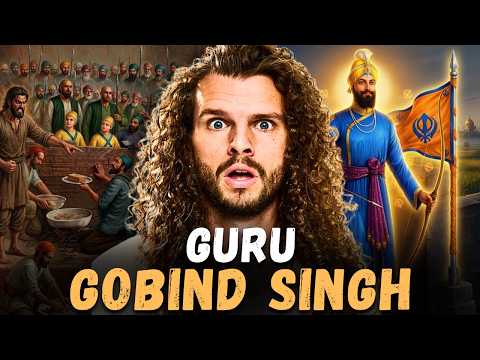
Guru Gobind Singh, the tenth and final human guru of the Sikhs, was instrumental in transforming Sikhism into a resilient community capable of enduring persecution and exile. His legacy, still visible today, was shaped by a vision that forged a community strong enough to survive immense challenges. Sikhism, founded in the late 15th century by Guru Nanak Devji in Punjab, emerged from a critique of the religious landscape of his time. Guru Nanak observed hollow formalities and a reduction in cosmic connection within existing faiths, leading to rituals without meaning and the reinforcement of class structures. He developed a philosophy centered on the radical simplicity of one formless, timeless God, called Waheguru. This God was accessible to all human beings equally, without the need for priests, rituals, pilgrimages, or intermediaries. This message was revolutionary, as it disregarded established religious frameworks, hierarchies, and institutions, particularly the caste system, which Guru Nanak deemed illegitimate. He also asserted the spiritual equality of women and men, emphasizing that salvation came through devotion to God's name, ethical living, and grace, rather than social cues or ceremonies. This reform can be loosely compared to the Protestant Reformation, where Martin Luther challenged the institutional church, advocating for direct access to scriptures and faith alone. Guru Nanak's philosophy was encapsulated in the quote: "Truth is high, but higher still is truthful living," stressing the importance of living one's beliefs.
Read AI summary
YouTube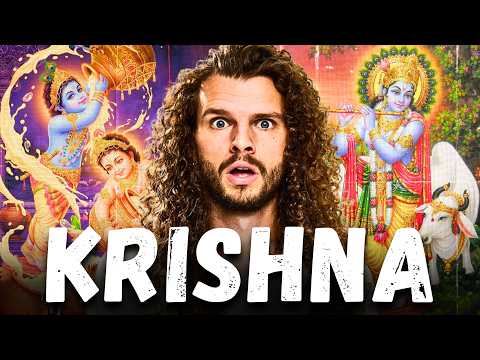
Krishna is a significant figure in Hindu tradition, often counted among the principal avatars of Vishnu. However, in many devotional traditions, Krishna is worshipped more than Vishnu himself. This is largely due to his relatable and multifaceted portrayal in stories, which depict him as a god who spent his childhood stealing butter, getting scolded by villagers, dancing, and later, driving chariots into wars and delivering profound teachings. People don't just worship Krishna; they fall in love with him because of his familiar and intimate nature. The concept of an "avatar" in Hindu theology comes from the Sanskrit word "avatara," meaning "descent." It refers to a being who descends into the material world. Vishnu, as the preserver within the Hindu trinity (alongside Shiva and Brahma), is said to incarnate repeatedly throughout the ages to restore cosmic order, known as dharma. An avatar of Vishnu means that the supreme sustaining principle of the universe takes an embodied form, not merely as a prophet or inspired teacher, but as God entering history. While Krishna is seen as one of these incarnations in many traditions, some devotional schools consider him not just an avatar, but the original source from whom even Vishnu emanates.
Read AI summary
YouTube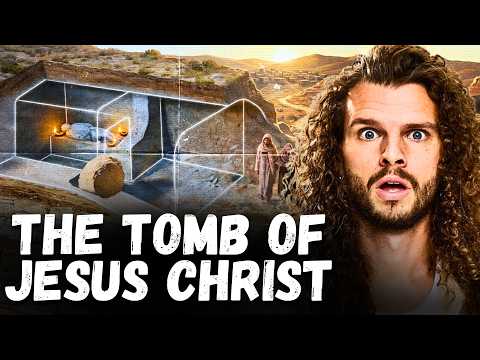
Two billion people globally base their faith on the resurrection of Jesus of Nazareth, an event the Apostle Paul stated is central to faith's validity. However, the New Testament's four Gospels—Matthew, Mark, Luke, and John—each present distinct accounts of this event. These differences include the number of angels at the tomb, Jesus's appearance locations (Galilee versus Jerusalem), the women's reactions to finding the empty tomb (telling everyone versus telling no one), and the narrative's conclusion (some Gospels end with Jesus ascending, others abruptly stop). This discussion aims to lay out these four accounts side-by-side to understand what each Gospel actually wrote, without attempting to prove or disprove the resurrection. The Gospel of Mark is widely considered the earliest and most abrupt account, traditionally attributed to John Mark, a companion of Peter, who recorded Peter's teachings. Composed between 65 and 75 AD, Mark's Gospel is technically anonymous, with the name "Mark" added later. Mark's resurrection narrative, found in chapter 16, is brief. Three women—Mary Magdalene, Mary the mother of James, and Salome—go to the tomb to anoint Jesus's body. They find the stone rolled away and encounter a "young man" (interpreted as an angel) in a white robe inside the tomb. He tells them Jesus has risen and instructs them to tell the disciples and Peter that Jesus will meet them in Galilee. The earliest and most reliable manuscripts of Mark conclude at verse 16:8, stating the women "fled from the tomb, for trembling and astonishment had seized them. And they said nothing to anyone, for they were afraid." This abrupt ending, with no appearance of the risen Jesus, no Great Commission, and no ascension, is highly debated. Many modern Bibles include a "longer ending" (verses 16:9-20), where Jesus appears to Mary Magdalene, then to two disciples, and finally to the eleven apostles, commissioning them before ascending. However, the two oldest Greek manuscripts (Codex Vaticanus and Codex Sinaiticus, 4th century AD) do not contain these verses, and stylistic changes suggest they were not original to Mark. If the original Mark ended at verse 8, it would mean the earliest Gospel contains no resurrection appearance.
Read AI summary
YouTubeBriefTube monitors your YouTube channels, generates AI-powered audio summaries, and delivers them wherever you listen. Telegram, Discord, Slack, or your podcast app. Fully automated.
Start free trial