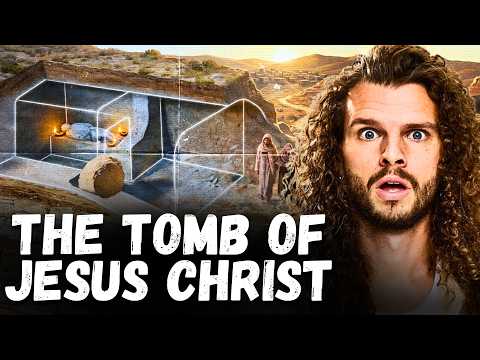
Why the Resurrection Stories Don't Match (And Why it Matters)
AI Summary
Two billion people globally base their faith on the resurrection of Jesus of Nazareth, an event the Apostle Paul stated is central to faith's validity. However, the New Testament's four Gospels—Matthew, Mark, Luke, and John—each present distinct accounts of this event. These differences include the number of angels at the tomb, Jesus's appearance locations (Galilee versus Jerusalem), the women's reactions to finding the empty tomb (telling everyone versus telling no one), and the narrative's conclusion (some Gospels end with Jesus ascending, others abruptly stop). This discussion aims to lay out these four accounts side-by-side to understand what each Gospel actually wrote, without attempting to prove or disprove the resurrection.
The Gospel of Mark is widely considered the earliest and most abrupt account, traditionally attributed to John Mark, a companion of Peter, who recorded Peter's teachings. Composed between 65 and 75 AD, Mark's Gospel is technically anonymous, with the name "Mark" added later. Mark's resurrection narrative, found in chapter 16, is brief. Three women—Mary Magdalene, Mary the mother of James, and Salome—go to the tomb to anoint Jesus's body. They find the stone rolled away and encounter a "young man" (interpreted as an angel) in a white robe inside the tomb. He tells them Jesus has risen and instructs them to tell the disciples and Peter that Jesus will meet them in Galilee. The earliest and most reliable manuscripts of Mark conclude at verse 16:8, stating the women "fled from the tomb, for trembling and astonishment had seized them. And they said nothing to anyone, for they were afraid." This abrupt ending, with no appearance of the risen Jesus, no Great Commission, and no ascension, is highly debated. Many modern Bibles include a "longer ending" (verses 16:9-20), where Jesus appears to Mary Magdalene, then to two disciples, and finally to the eleven apostles, commissioning them before ascending. However, the two oldest Greek manuscripts (Codex Vaticanus and Codex Sinaiticus, 4th century AD) do not contain these verses, and stylistic changes suggest they were not original to Mark. If the original Mark ended at verse 8, it would mean the earliest Gospel contains no resurrection appearance.
The Gospel of Matthew, traditionally attributed to the Apostle Matthew (an eyewitness), is now largely believed by modern scholars to have copied extensively from Mark, casting doubt on its eyewitness attribution. Dated approximately 80-90 AD, Matthew's Gospel was likely written for a Jewish audience. Matthew's resurrection narrative (chapter 28) is more dramatic. Only two women, Mary Magdalene and "the other Mary," go to the tomb, not to anoint the body. Matthew uniquely includes a great earthquake and an angel descending to roll away the stone, terrifying the guards stationed at the tomb. The angel's message is similar to Mark's: Jesus has risen and will meet the disciples in Galilee. The women leave with "fear and great joy" and encounter Jesus on the way. Matthew also uniquely details the Roman guards at the tomb, placed there at the request of chief priests and Pharisees to prevent the disciples from stealing the body. After the resurrection, these guards are bribed by the chief priests to spread a false story of the body being stolen. Matthew concludes with the Great Commission, where Jesus appears to the eleven disciples in Galilee, commissions them to make disciples of all nations, and promises to be with them always. No ascension scene is described.
The Gospel of Luke is attributed to Luke, a physician and companion of Paul, and is considered a carefully researched account, explicitly stating its methodology. Dated around 80-90 AD, Luke, a Gentile, also wrote the Book of Acts as a sequel. Luke's resurrection narrative (chapter 24) is the longest and most detailed. A larger group of women, including Mary Magdalene, Joanna, and Mary the mother of James, go to the tomb with spices at early dawn. They find the stone rolled away and encounter two men in dazzling apparel (angels) inside the tomb, who remind them of Jesus's prophecy of his resurrection. Notably, Luke's angels do not instruct the women to go to Galilee; instead, they tell them to *remember* what Jesus said in Galilee. In Luke's account, all resurrection appearances occur in or around Jerusalem, a significant geographical difference from Mark and Matthew. The women tell the apostles, who disbelieve them, though Peter runs to the tomb. Luke uniquely includes the story of the road to Emmaus, where Jesus appears to two disciples (Cleopas and an unnamed companion) who initially do not recognize him. Later, Jesus appears to the gathered disciples in Jerusalem, emphasizing his physical, bodily nature by inviting them to touch him and eating fish. He opens their minds to understand the scriptures and commissions them. Luke then describes the Ascension, where Jesus leads the disciples to Bethany, blesses them, and is "carried up into heaven." While some early manuscripts omit the phrase about being carried up, Luke's sequel, Acts, further elaborates on the Ascension occurring 40 days after the resurrection.
The Gospel of John, the most theological account, is traditionally attributed to the Apostle John, an eyewitness and Jesus's "beloved disciple." Modern scholars often suggest it went through multiple stages of composition, reaching its final form around 90-100 AD. John's Gospel differs dramatically from the Synoptics (Matthew, Mark, and Luke). John's resurrection narrative (chapters 20-21) is theologically rich and detailed. Mary Magdalene goes to the tomb alone "while it was still dark," earlier than in other Gospels. She finds the stone removed and tells Peter and the beloved disciple that Jesus's body has been taken. Peter and the beloved disciple race to the tomb; the beloved disciple arrives first, sees the linen cloths, and believes, though they don't yet understand the resurrection. Mary Magdalene remains weeping and sees two angels inside the tomb, then encounters Jesus, whom she initially mistakes for the gardener. Jesus speaks her name, "Mary," and she recognizes him. Jesus tells her, "Do not cling to me, for I have not yet ascended to the Father," and instructs her to tell the disciples of his ascension. That evening, Jesus appears to the disciples behind locked doors, shows them his hands and side, but Thomas is absent. Eight days later, Jesus reappears, allowing Thomas to touch his wounds, leading to Thomas's confession, "My Lord and my God." John chapter 21 adds a later appearance by the Sea of Galilee, where Jesus helps disciples make a miraculous catch of fish and has a personal conversation with Peter.
When comparing these Gospels side-by-side, several divergences are clear:
* **Who went to the tomb:** Mark (3 women), Matthew (2 women), Luke (4+ women), John (Mary Magdalene alone, though "we" suggests others).
* **When they arrived:** Mark (sunrise), Matthew (dawn), Luke (early dawn), John (still dark).
* **Stone already moved:** Yes in Mark, Luke, and John; witnessed by women in Matthew.
* **Who they found at the tomb:** Mark (1 young man), Matthew (1 angel descending), Luke (2 men in dazzling apparel), John (2 angels after Peter and John leave).
* **Instructions to women:** Mark and Matthew (go to Galilee); Luke (remember what Jesus said in Galilee); John (no geographical instruction from angels, Jesus tells Mary he is ascending).
* **Did women tell anyone:** Mark (no, in original ending); Matthew, Luke, John (yes).
* **Where Jesus appeared:** Mark (unspecified in longer ending); Matthew (Galilee); Luke (Jerusalem and Emmaus); John (Jerusalem and Galilee).
* **Ascension:** Mark (only in longer ending); Matthew (no); Luke (yes, Bethany); John (implied but not explicitly described in Gospel, though in Acts).
Despite these differences, all four Gospels agree on several core details: the empty tomb, women as the first witnesses (specifically Mary Magdalene), an angelic/supernatural announcement of the resurrection, the stone being moved, Jesus physically appearing after his death (excluding Mark's original ending), the resurrection occurring on the first day of the week (Sunday), and the disciples' initial skepticism or fear.
Christian theologians and apologists often address these discrepancies through several arguments:
1. **Independent Witness Argument:** Like multiple witnesses to an event, variations in detail strengthen the credibility of independent accounts, while agreement on core facts is maintained.
2. **Different Audiences Argument:** Each Gospel writer tailored their narrative to a specific community with unique theological needs, selecting and emphasizing different details.
3. **Complementary Details Argument:** The accounts are not contradictions but complementary, with omissions in one Gospel not necessarily invalidating details in another. For example, if Mark mentions one angel, it doesn't preclude there being two, as Luke states.
4. **Oral Tradition Argument:** Stories circulated orally for decades before being written, allowing details to shift while the core theological claim of the resurrection remained stable.
5. **Galilee-Jerusalem Question:** Apologists suggest Jesus appeared in both locations, with Luke's instruction to stay in Jerusalem referring to a specific period.
Skeptics and critics, however, offer alternative explanations:
1. **Literary Dependence Argument (Markan Priority):** If Matthew and Luke used Mark as a source, their differences are not independent witness variations but deliberate editorial changes to reshape the story for their own theological purposes.
2. **Legendary Development Argument:** Arranging the Gospels in their probable chronological order (Mark, Matthew, Luke, John) reveals a pattern of increasing elaboration from simple to more dramatic and detailed accounts, suggesting legend-building over time rather than access to new historical information.
3. **Contradiction Argument:** Some differences, such as the women telling no one (Mark) versus telling everyone (Luke), or Jesus instructing disciples to go to Galilee (Matthew) versus staying in Jerusalem (Luke), are direct contradictions that cannot be harmonized without imposing external interpretations.
4. **Theological Invention Argument:** Certain details, like Matthew's guards at the tomb or Luke's emphasis on Jesus eating fish, may have been invented for apologetic or theological reasons to counter specific criticisms or heresies (e.g., the belief that Jesus was not physical).
5. **Comparative Parallels:** The resurrection narrative shares parallels with existing Jewish and Greco-Roman stories of heroic figures returning from death or being vindicated, suggesting it draws on familiar literary patterns.
6. **Silence of Paul:** Paul, writing earlier than any Gospel, never mentions an empty tomb or the women's role in his account of the resurrection appearances (1 Corinthians 15), leading some skeptics to suggest the empty tomb tradition developed later.
Ultimately, whether one finds the similarities or differences more compelling often depends on one's starting assumptions. If the Gospels are viewed as divinely inspired, differences are puzzles to be solved. If they are seen as human documents with specific historical contexts and persuasive aims, differences might indicate evolution or agenda. Regardless, something profoundly transformative occurred after Jesus's crucifixion, leading his frightened followers to establish the world's largest religion. Within decades, belief in Jesus's resurrection had spread, and multiple accounts were written, agreeing on the central claim: the tomb is empty, and Jesus is alive. The Gospels' lack of perfect harmony has been used by both believers (as evidence of authenticity) and critics (as evidence of invention). Understanding these accounts, their agreements, and their tensions is crucial for comprehending Christianity, its history, and its impact.