Disturbing Signs of the Antichrist’s Return
AI Summary
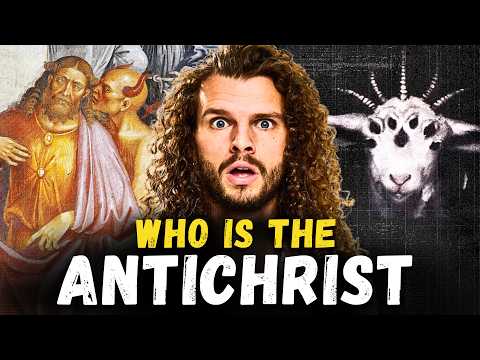
The concept of the Antichrist has captivated generations, with each era convinced they had identified this ultimate villain. From early Christians pointing to Nero, to medieval people accusing the Pope, to Napoleon, Hitler, and even American presidents, the certainty has been consistent, despite the subjects changing. This raises the question of how everyone has been so confident yet so wrong for 2,000 years, suggesting a potential misunderstanding of who or what the Antichrist truly is.
The term "Antichrist" is a Greek word meaning "against" or "in place of" Christ. Therefore, the Antichrist is not merely an opponent of Christ but also a substitute, offering a counterfeit version of the real thing. This distinction between opposition and imitation is crucial to understanding interpretations of the figure. Surprisingly, the word "Antichrist" appears only four or five times in the entire Bible, exclusively in two short letters attributed to the Apostle John. The Book of Revelation, commonly associated with the Antichrist, never uses the term.
In its earliest scriptural context, John's epistles describe "many antichrists" as anyone who denies that Jesus is the Christ, or a "spirit of the Antichrist," a force of deception already at work. This suggests that the Antichrist was originally understood not as a single end-time villain, but as a category or role describing any person or movement that denies Christ's identity and substitutes falsehood for truth.
However, this initial understanding evolved as other New Testament texts, describing a singular, more dramatic figure, were connected. Paul's second letter to the Thessalonians mentions a "man of lawlessness" who exalts himself against God and proclaims himself divine, empowered by Satan with false signs and wonders. While not explicitly called the Antichrist, the parallels led later readers to conflate this figure with John's descriptions. The Book of Revelation further contributed to this evolving image with its depiction of "the Beast," a creature rising from the sea, given authority by Satan, demanding worship, and associated with the infamous number 666.
By around 180 AD, early church fathers like Irenaeus of Lyon systematically wove these disparate scriptural elements together, creating the image of a single figure who claims to be God, rules for a short period, and is then destroyed by Christ. Hippolytus of Rome, around 200 AD, further cemented the idea of the Antichrist as a "black mirror" version of Jesus—a satanic parody of Christ's perfection, born of impurity, gathering sycophantic followers, and performing counterfeit miracles. This "dark mirror" concept became the template for subsequent depictions.
By the early 400s, the villain was complete, assembled from scripture, forming a clear template for the Antichrist. This idea of a supreme deceiver appearing in the final days is not unique to Christianity. Islam has a similar figure, the Dajjal, a false messiah who performs apparent miracles, claims divinity, and leads humanity astray before being killed by Jesus (Issa bin Mariam) prior to the Day of Judgment. While similar, the theological context differs, as Jesus is not divine in Islam. Judaism, while lacking a single equivalent, has traditions of false messiahs and later medieval texts describe Armilus, an anti-Messiah who persecutes Israel. The fear of deception is widespread, but the obsession with identifying the deceiver is particularly pronounced in Christianity, especially among Protestants.
Throughout history, accusations of being the Antichrist have been leveled against powerful, threatening figures ideologically opposed to the accusers. The Roman Emperor Nero was an early candidate, with some scholars connecting him to the number 666 through Gematria, a system of assigning numerical values to letters. Early manuscripts of Revelation even give the number as 616, corresponding to the Latin form of Nero's name.
During the Protestant Reformation, Martin Luther literally and theologically argued that the papacy was the Antichrist, claiming it fulfilled prophetic criteria by sitting in the temple of God and deceiving the faithful. This conviction was incorporated into formal Lutheran documents. Napoleon, an unstoppable military conqueror who reorganized church and state and crowned himself emperor, was also a prime candidate, with numerological calculations attempting to link his name to 666. In the 20th century, Hitler, with his demand for absolute loyalty, quasi-religious mythology, and persecution of Jewish people, was widely identified as the Antichrist by Christian writers. However, some theologians argued that this framing diminished the true horror of his crimes by making them seem like a fulfillment of prophecy rather than human evil.
Even in the 21st century, the accusations continued. Barack Obama was widely accused of being the Antichrist in 2008, with theories circulating online, citing his middle name "Hussein" and his charisma. A 2013 poll reportedly found that 13% of American voters believed Obama was the Antichrist. Conversely, after 2016, Donald Trump faced similar accusations, with his boastfulness, demand for personal loyalty, and his son-in-law's company owning 666 Fifth Avenue cited as evidence. These recurring accusations highlight a pattern: people in power, especially those perceived as threatening or ideologically opposed, are often labeled as the Antichrist, with the structure of the accusation remaining consistent across generations.
The Antichrist has also permeated pop culture, notably in horror films like "Rosemary's Baby" and "The Omen," which feature the sinister child who is secretly the son of Satan. For many, the "Left Behind" series of 16 novels, starting in the 1990s, was highly influential, depicting a charismatic politician, Nikolai Carpathia, who becomes Secretary General of the United Nations and is later revealed to be the Antichrist. This series sold millions of copies and presented a hyperspecific vision of the world's end. A more sophisticated fictional representation is Vladimir Solovyov's "A Short Tale of the Antichrist" (1900s), which portrays the Antichrist not as a figure of horror but as a brilliant, progressive humanitarian who unites the world, fixes poverty, and promotes religious tolerance, subtly replacing Christ with himself.
This evolution reveals that the Antichrist has transcended scripture, moving through theological analysis into pop culture. A significant development in understanding the end times came from John Nelson Darby, a British-Irish theologian in the 1800s. He developed "premillennial dispensationalism," a detailed theological system that provided a step-by-step timeline for the end of the world, with the Antichrist at its center. Darby argued for a globally unified government led by an Antichrist-like figure before Christ's return, and the rapture of true believers before the worst of it. This framework, largely new at the time, made the Antichrist a real, singular, and imminent future figure.
Darby's system gained widespread influence through the Scofield Reference Bible, published in 1909. Cyrus Scofield, an American Bible teacher, embedded Darby's entire dispensationalist framework, including the Antichrist timeline and the rapture, directly into the margins and footnotes of the King James Bible. This meant that readers, perceiving the annotations as authoritative commentary alongside scripture, were exposed to the idea of a coming one-world government and a global commerce controlled by the Antichrist. This was not established orthodoxy but one man's eschatological theory, yet it became functionally inseparable from the word of God for many, shaping generations of fundamentalist Christians. This framework was further popularized by writers like Hal Lindsey ("The Late Great Planet Earth," 1970s) and the "Left Behind" series, and amplified by televangelists like Pat Robertson, who in "The New World Order" (1991) argued for a secret cabal steering the world towards a single government to usher in the Antichrist.
More recently, a different idea has emerged: what if the Antichrist isn't a person at all? Billionaire investor Peter Thiel, drawing on the work of his mentor René Girard, proposes that the Antichrist is a system—an architecture of surveillance and control that mimics salvation while delivering the opposite. This system, composed of algorithms, institutions, and infrastructure, promises security but ultimately beats people into submission. Thiel suggests that one-world control, particularly through AI, could be the Antichrist.
This perspective resonates with current fears surrounding AI. Some interpret AI as a literal component of a "mark of the beast" system, a global surveillance network tracking transactions, monitoring communication, and enforcing loyalty. AI could animate hyper-realistic avatars or robots as the "image of the beast." A more theological argument suggests that if people turn to AI for guidance, comfort, and companionship, they are falling into an "instead of Christ" relationship, outsourcing discernment to a machine rather than God or scripture. Culturally, AI arrives with its own eschatology—talk of singularity, intelligence explosions, and uploading consciousness—which some view suspiciously as a rival religious system with its own prophets (tech CEOs), apocalypse, and promised kingdom.
The current focus on AI as a potential Antichrist figure is partly due to timing, as these systems emerge when many already feel shaped and surveilled by digital forces, mapping to older "mark of the beast" imagery. Symbolically, AI is a disembodied, omnipresent intelligence that can mimic human interaction and generate persuasive deception. Finally, it's also partly projection; each generation projects its fears and uncontrollable elements onto the Antichrist narrative. Cautious theologians, however, view AI more as a test of where trust is placed and how easily judgment is handed over.
The Antichrist, therefore, has evolved from a word appearing in a few biblical verses, originally describing a category of people or a spirit against Christ, to a singular, evil figure, and now potentially a pervasive system. Despite 2,000 years of searching and accusing, the identity remains elusive. Perhaps John's original warning, "Many antichrists have come," was not just a first-century prophecy but a diagnosis of a recurring pattern of evil: where power concentrates, deception is disguised as salvation, and a counterfeit stands in place of the real. This unsettling idea suggests that if the Antichrist is a pattern rather than a person, it will not appear all at once but slowly build until it becomes all-encompassing.