Invest Like The Best
AI Audio Summaries
10 videos summarized
1 follower on BriefTube
Last summary: Oct 13, 2026
AI Audio Summaries
10 videos summarized
1 follower on BriefTube
Last summary: Oct 13, 2026
Read AI summary
YouTube
Brian Chesky, CEO of Airbnb, emphasizes that while founders are often born with innate qualities, becoming a good CEO is a learned skill, often counterintuitive and learned the hard way. His background in industrial design from RISD profoundly influenced his approach, instilling a deep understanding of user empathy, problem-solving, and the critical link between design and commercial success. He learned that industrial design, unlike architecture, is inextricably tied to market viability; a product that doesn't sell is a failure. This perspective, coupled with his early exposure to iconic designers like Raymond Loewy and his fascination with products that captured imagination, shaped his view on creating user-centric experiences. The project of designing a child’s ventilator, which required him to consider the emotional impact on both the child and parents, as well as the pragmatic needs of medical staff, was a pivotal learning experience in navigating complex stakeholder dynamics. Chesky introduces the concept of "founder mode" as distinct from being a CEO. Founder mode, characterized by deep engagement in details and an unwillingness to delegate core responsibilities without understanding them, was effective for early-stage companies. However, as companies grow, founders often transition into CEO roles, which can be challenging. He recounts his own experience during the 2010s, where his company grew so large that he felt disconnected and lost control, akin to being in a car without a steering wheel. This realization, amplified by the pandemic’s crisis, led him to adopt a more intense "founder mode," reviewing every detail of the company, working intensely, and regaining control. He learned that true leadership involves not just hiring great people but actively auditing their work and being hands-on, especially in the initial stages.
Read AI summary
YouTube
The speaker shares profound personal stories and insights on kindness, finance, and life. He begins by recounting a deeply impactful childhood memory at age two and a half when he was separated from his mother at a market. An elderly Black gentleman approached the crying child, took his hand, and helped him find his mother. This simple act of kindness resonated so deeply that the speaker included the unknown man on his nightly prayer list for over a decade. Years later, he saw a 60 Minutes interview with Eugene Lang, who, inspired by his own elementary school experience, promised to fund college for every student in a Harlem class who graduated high school. This resonated with the speaker, leading him to replicate Lang's "I Have a Dream" program in a high-crime area of New York City. This initiative evolved over 14 years, involving after-school programs, tutoring, and addressing social challenges, ultimately culminating in the founding of the Bed-Stuy Charter School of Excellence, which achieved remarkable academic success. The speaker emphasizes that passion alone isn't enough; a well-thought-out plan and effective pedagogy are crucial for success, especially in education and combating poverty. He draws a parallel between the elderly man's kindness and Eugene Lang's initiative, highlighting how one act can create a ripple effect of betterment. He then pivots to his career in finance, distinguishing between investors and traders. He admits to initially railing against Warren Buffett's value investing approach, believing his own trend-following strategy was superior. However, he now expresses deep admiration for Buffett's long-term compound interest strategy, recognizing his own past shortsightedness. He contrasts his own intense, daily fight in the financial trenches as a trader with Buffett's long-term belief in America. The speaker details his early trading experiences, starting in 1976 amidst raging inflation and extreme market volatility. He describes the dramatic rise and fall of silver due to a speculative squeeze by Bunker Hunt, which led to immense wealth for Hunt followed by near bankruptcy in a matter of weeks. This event, coupled with his grandfather’s adage, "you're only worth what you can write a check for tomorrow," instilled in him a deep appreciation for liquidity and a distrust of holding assets long-term. He recounts a friend who could turn small sums into millions through aggressive trading, but often ended up with accounts in deficit, further reinforcing the importance of liquidity and the dangers of extreme volatility.
Read AI summary
YouTube
The conversation highlights a dramatic shift in the AI landscape, moving from a time when execution was difficult and ideas were cheap, to a present where ideas are abundant and execution is significantly easier. This ease of implementation means only truly exceptional ideas can justify the cost of development. A key personal anecdote illustrates this shift: the speaker's firm, initially a heavy AI user with a spend of tens of thousands of dollars on subscriptions like ChatGPT, has seen its AI expenditure "skyrocket" to a $7 million annual run rate. This surge began in late December with the adoption of tools like Claude, particularly by non-technical personnel for coding tasks. This $7 million spend on AI now represents over 25% of the firm's $25 million salary expense, a trajectory that, if continued, could see AI expenditure surpass salaries by year-end. While this rapid growth allows the company to hire less aggressively and grow faster, the speaker anticipates other businesses will soon face the difficult decision of cutting staff as AI enables individuals to perform the work of many.
Read AI summary
YouTube
Alex Carnell, a highly regarded bio and healthcare investor, shares his insights on the current state of life sciences and the future of health. He describes 2025 as the most exciting year in his two decades of experience, largely due to the profound impact of GLP-1 medicines. These drugs, initially known for diabetes management, are now demonstrating remarkable efficacy in addressing the root causes of various diseases, including cardiovascular issues, kidney protection, and even potential applications in treating addictions. Carnell highlights that the widespread adoption of GLP-1s has exceeded expectations and predicts the class will surpass $100 billion in annual revenue. He views this success as the first commercial validation of a potential trillion-dollar revolution in public health, driven by a proactive approach to well-being. Carnell introduces the concept of a "health stack," a multifaceted approach to health that includes both offensive and defensive strategies. The offensive components involve fundamental lifestyle choices like proper nutrition, strength training, and systematic health monitoring, with AI poised to play a significant role in optimizing these efforts. The defensive side focuses on five key dimensions: lipid optimization, cardio-metabolic health, neurocognitive health, inflammatory health, and blood pressure.
Read AI summary
YouTube
Scott Nolan, formerly employee #35 at SpaceX and a long-time investor at Founders Fund, has transitioned to building General Matter, a company focused on uranium enrichment in the United States. His career trajectory is guided by a principle of tackling important problems that wouldn't otherwise be solved, aiming to make a positive impact. Nolan’s journey began at SpaceX, where he was drawn to the potential of revolutionizing the stagnant aerospace industry. He saw SpaceX as a company poised to dominate space launch, a stark contrast to the cost-plus government contracts that characterized incumbents. After SpaceX, he joined Founders Fund in 2011, initially driven by a desire to work and build rather than pursue traditional business school studies. At Founders Fund, under Peter Thiel’s influence, Nolan developed a contrarian investment philosophy. This involved avoiding trends, thinking independently, and seeking out undervalued opportunities, particularly in the "atoms" sector – physical world and hardware companies – as opposed to the digital "bits." This contrarian approach led him to invest in companies like SpaceX and eventually identify the critical bottleneck in the US nuclear fuel cycle.
Read AI summary
YouTube
This conversation with Alan Waxman, founder of Sixth Street, delves into the historical evolution of financial systems, highlighting how regulations and incentives have shaped market structures and investor behavior. Waxman outlines three distinct systems, tracing their origins and consequences. **System 1 (1933-1999): The Era of Stability and Separation**
Read AI summary
YouTube
William Hockey, the co-founder of Plaid and founder of Column, offers a provocative look into building a modern financial infrastructure company. Column is a hybrid entity—a software company that also owns a bank—providing the regulatory and technical backbone for major fintechs like Brex, Ramp, and Wise. Unlike traditional banks, Column generates over 90% of its revenue from software API calls, passing the underlying banking economics directly down to its customers. Hockey’s approach to building Column is rooted in a rejection of "consensus" thinking. He argues that Silicon Valley has become an elite-dominated society that builds for itself, losing touch with the rest of the world. To counter this, Hockey frequently travels to emerging markets like Kinshasa in the Democratic Republic of Congo. He observes that constrained environments breed a unique type of creativity. While the West lives in a world of abundance, emerging markets often "leapfrog" technologies—moving straight to mobile payments or social commerce because they are not tied to legacy systems. For Column, these markets are vital because the US dollar remains the world’s primary operating system, especially in countries where local central banks are untrusted or inflation is high.
Read AI summary
YouTube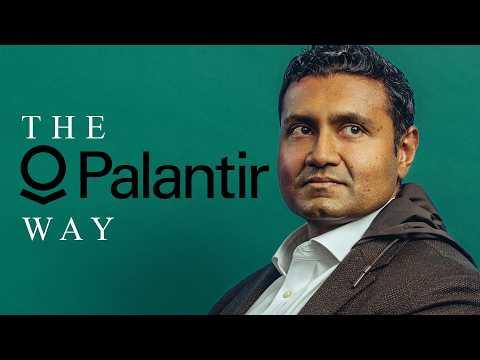
In this wide-ranging conversation, Sham Sankar, the Chief Technology Officer of Palantir Technologies, explores the intersection of historical innovation, corporate culture, and the urgent need for American re-industrialization. Sankar frames his worldview through the lens of "heretics"—visionary figures who defy bureaucracy to deliver transformative results—and argues that the United States must reclaim this spirit to maintain its global standing and security. ### The Philosophy of the Heretic
Read AI summary
YouTube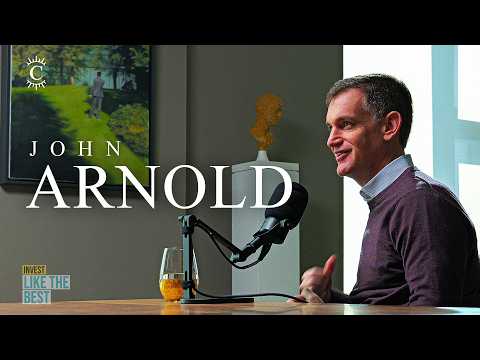
John Arnold, widely regarded as the most successful energy trader in history, provides a masterclass in "cultivating a seat"—the process of building a structural advantage to gain superior perspective, information, and systems. In this wide-ranging discussion, he applies his rigorous analytical framework to the rise of China, the future of the American energy grid, and the reform of broken social systems. **Lessons from China: Speed and Scale**
Read AI summary
YouTubeBriefTube monitors your YouTube channels, generates AI-powered audio summaries, and delivers them wherever you listen. Telegram, Discord, Slack, or your podcast app. Fully automated.
Start free trial