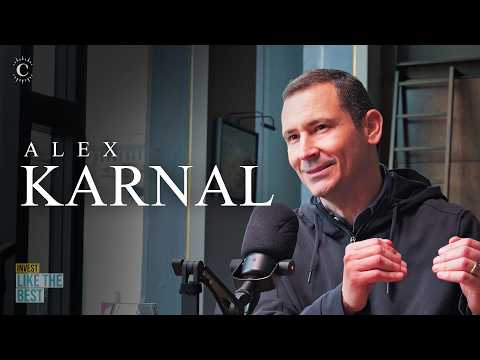
Designing the Modern Health Stack | Alex Karnal
AI Summary
Alex Carnell, a highly regarded bio and healthcare investor, shares his insights on the current state of life sciences and the future of health. He describes 2025 as the most exciting year in his two decades of experience, largely due to the profound impact of GLP-1 medicines. These drugs, initially known for diabetes management, are now demonstrating remarkable efficacy in addressing the root causes of various diseases, including cardiovascular issues, kidney protection, and even potential applications in treating addictions. Carnell highlights that the widespread adoption of GLP-1s has exceeded expectations and predicts the class will surpass $100 billion in annual revenue. He views this success as the first commercial validation of a potential trillion-dollar revolution in public health, driven by a proactive approach to well-being.
Carnell introduces the concept of a "health stack," a multifaceted approach to health that includes both offensive and defensive strategies. The offensive components involve fundamental lifestyle choices like proper nutrition, strength training, and systematic health monitoring, with AI poised to play a significant role in optimizing these efforts. The defensive side focuses on five key dimensions: lipid optimization, cardio-metabolic health, neurocognitive health, inflammatory health, and blood pressure.
For lipid optimization, Carnell points to existing medications like statins and PCSK9 inhibitors that can significantly reduce dangerous LDL cholesterol, thereby lowering the risk of heart attack and stroke. He notes the tragedy of high cardiovascular risk in many individuals, a risk that could be dramatically reduced with current treatments.
Cardio-metabolic health is addressed by managing the body's glycemic environment and visceral fat. GLP-1 medicines are highlighted for their role in preventing the progression from pre-diabetes to diabetes and for facilitating significant weight loss, which has a ripple effect on overall health.
Regarding neurocognitive health, Carnell anticipates upcoming advancements in anti-amyloid medicines, which target the plaques in the brain associated with Alzheimer's disease. He believes early intervention with these drugs could dramatically protect against cognitive decline.
Inflammatory health is linked to diet, with modern food consumption contributing to chronic inflammation. This inflammation, combined with elevated lipids and a brittle vasculature due to high glucose levels, creates a "ticking time bomb" for cardiovascular events and other inflammatory diseases.
Finally, blood pressure management is presented as a crucial defensive layer, exacerbated by high-stress lives, lack of exercise, obesity, and high glycemic environments.
Carnell elaborates on the GLP-1 market, emphasizing that the primary driver for adoption is not just maximum weight loss, but rather a tolerable and sustainable solution that provides a health advantage. He notes the shift towards consumer-centric access, exemplified by direct-to-consumer platforms, and the significant impact of price on accessibility, evidenced by the demand for more affordable compounded versions. The recent launch of the oral version of WGOI is seen as a game-changer, with initial uptake far exceeding expectations, driven by its convenience and more accessible price point. This surge in GLP-1 adoption is seen as a clear signal of people actively taking control of their health.
The conversation then delves into the science behind GLP-1s, explaining that they mimic a naturally occurring hormone that regulates digestion, satiety, and insulin production. The scientific advancement from a short-lived natural hormone to long-acting, potent medications has been a major breakthrough. Carnell emphasizes that GLP-1s are the most important molecule across the five axes of health defense, offering broad protective benefits. He discusses the evolution of dosing from multiple daily injections to weekly and potentially monthly or quarterly options, highlighting the importance of convenience for compliance.
Carnell also details the story of PCSK9 inhibitors, describing them as a near "free lunch" drug for cardiovascular disease. These medications, discovered through human genetics, dramatically lower LDL cholesterol by up to 50% and have shown significant outcome benefits, reducing the risk of heart attacks and strokes by over 20-25%. He contrasts the "free lunch" nature of PCSK9 inhibitors with GLP-1s, which have more notable toxicities like nausea and vomiting, though the benefits often outweigh these risks.
The discussion moves to neurodegenerative diseases, specifically Alzheimer's, acknowledging the historical challenges in this field. Carnell expresses optimism about emerging anti-amyloid therapies that can break up and remove plaques in the brain, potentially slowing cognitive decline. He stresses the importance of early detection and intervention.
Regarding cancer, Carnell frames it as a complex challenge due to late diagnosis and the adaptive nature of cancer cells. He highlights the advancements in early detection through innovative screening tests, such as stool-based and blood-based tests for colorectal cancer, and the ongoing development of multi-cancer early detection technologies. He also touches upon the progress in cancer treatment, including CAR T-cell therapies, which show dramatic efficacy in tumor reduction.
The conversation then shifts to the process of drug discovery, emphasizing the convergence of scientific instinct and substantial capital. Carnell outlines the scientific method, from hypothesis generation through observation and literature review, to experimental design, execution, and iteration. He notes the long and complex journey from initial idea to regulatory approval, often taking years.
The role of AI in accelerating drug discovery is explored, with Carnell envisioning a future of "scientific superintelligence" where AI agents work alongside human scientists to identify novel targets, generate hypotheses, and design experiments at an unprecedented scale. He highlights current AI applications in discovering novel targets and developing molecules in silico, significantly shortening development timelines.
Carnell also touches upon "citizen pharmacology" and the rise of peptide experimentation, acknowledging the growing desire for individuals to take proactive control of their health, sometimes outside traditional regulatory pathways. He notes that regulatory bodies, like the FDA, are also seeking to streamline the drug development process.
Finally, Carnell shares his personal journey, from growing up in an entrepreneurial family to graduating from MIT and entering Wall Street. He recounts his serendipitous entry into biotech investing and his 15-year tenure at Deerfield Management, where he honed his skills in building and backing innovative companies. A pivotal moment in his career was realizing the significant issue of medication non-compliance, which inspired him to co-found Braidwell, a firm focused on ensuring that medical innovations achieve their intended impact. He describes Braidwell's investment philosophy as bringing together diverse expertise to identify companies with groundbreaking technologies and address gaps in current medical offerings, aiming to accelerate human health impact. He concludes by sharing that his wife is the kindest person to him, providing essential support and balance amidst his demanding career.