The Nuclear Fuel Cliff That Could Break AI
AI Summary
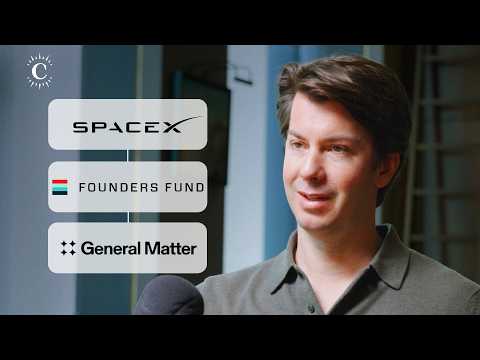
Scott Nolan, formerly employee #35 at SpaceX and a long-time investor at Founders Fund, has transitioned to building General Matter, a company focused on uranium enrichment in the United States. His career trajectory is guided by a principle of tackling important problems that wouldn't otherwise be solved, aiming to make a positive impact.
Nolan’s journey began at SpaceX, where he was drawn to the potential of revolutionizing the stagnant aerospace industry. He saw SpaceX as a company poised to dominate space launch, a stark contrast to the cost-plus government contracts that characterized incumbents. After SpaceX, he joined Founders Fund in 2011, initially driven by a desire to work and build rather than pursue traditional business school studies. At Founders Fund, under Peter Thiel’s influence, Nolan developed a contrarian investment philosophy. This involved avoiding trends, thinking independently, and seeking out undervalued opportunities, particularly in the "atoms" sector – physical world and hardware companies – as opposed to the digital "bits." This contrarian approach led him to invest in companies like SpaceX and eventually identify the critical bottleneck in the US nuclear fuel cycle.
A key lesson from his time at Founders Fund, heavily influenced by Peter Thiel, was the importance of avoiding competition. This applied not only at the company level, where trends attract many players leading to profit erosion, but also at the investor level, where popular trends lead to inflated valuations. Nolan sought opportunities that were important but underappreciated or unaddressed. He identified this quadrant by looking for founders who were deeply passionate about a problem, possessed unique insights into why existing approaches were flawed, and could articulate a compelling, rabbit-hole-worthy vision. Industries that had stagnated due to cost-plus models, like space launch or certain infrastructure sectors, were prime for disruption by new entrants. He also highlighted Airbnb and Spotify as examples of companies that, while initially niche, held immense potential by addressing fundamental human desires and leveraging deep domain understanding.
Nolan learned to trust his intuition while also developing analytical skills. He found that initial gut feelings were often correct, but over-reliance on analysis could sometimes be misleading. He emphasized concentrating on a few high-conviction companies rather than spreading investments too thinly. The concept of "avoiding trends" also extended to valuation; he found that "value deals" in venture capital were often risky, suggesting something might be fundamentally wrong with the company’s prospects. He noted that Founders Fund’s actual dollar deployment often went into companies that became popular, but the key was to invest when the market’s full potential was still underestimated, referencing Peter Thiel’s idea that "the steeper the up, the greater the undervaluation."
Regarding General Matter, Nolan’s motivation stemmed from a long-standing interest in nuclear energy as a clean, reliable, and potentially low-cost energy source. He observed that despite the theoretical advantages of nuclear power, the US had lost its commercial-scale uranium enrichment capability, outsourcing it overseas. This bottleneck, particularly the reliance on Russia for enriched uranium, presented a critical national security and energy independence issue. He identified three "nuclear fuel cliffs": the lack of "Halo" fuel (uranium enriched to 20% U235) for advanced reactors, the upcoming 2028 ban on Russian uranium imports, and the eventual depletion of US Navy enriched uranium stockpiles.
General Matter’s product focuses on uranium enrichment, specifically producing LEU (low-enriched uranium) for existing reactors and Halo for advanced reactors. While the technology for enrichment is not fundamentally different from that used for weapons-grade uranium, the application and enrichment levels (3-5% for LEU, 20% for Halo) fall within international consensus and are crucial for civilian nuclear energy. The company’s North Star metric is "dollars per kilo SWU" (separative work unit), aiming to drive down the cost of enrichment, which is a significant cost driver for advanced reactors.
Nolan emphasizes vertical integration and in-house engineering and manufacturing for General Matter, drawing parallels to SpaceX and Tesla. He believes that controlling the entire process, from engineering to construction, is essential for speed, cost control, and innovation, especially in building large industrial facilities. The company’s DNA is engineering-driven, focused on delivering solutions rapidly and safely, prioritizing schedule and cost.
He views energy as the fundamental driver of human prosperity and economic activity, citing the strong correlation between GDP per capita and energy consumption. The stagnation of US grid growth since the 1990s, contrasted with China’s rapid expansion, highlights a critical need for increased energy production to maintain economic relevance. He argues that while markets are theoretically efficient, physical infrastructure development has long lead times and permitting challenges, making it difficult to respond to sudden demand surges, as seen with the AI data center boom.
Nolan believes nuclear energy is the safest and cleanest form of baseload power, essential for industrial processes and modern demands like data centers. He acknowledges public fears surrounding nuclear safety but points to data indicating it is statistically safer than other baseload sources, with the primary challenge being cost and project predictability, not inherent safety or environmental impact. He believes that making nuclear power cheaper than other sources will be the most compelling argument for its widespread adoption.
The transition from Founders Fund to General Matter was supported by Peter Thiel, who rigorously challenged the idea, forcing Nolan to confront hard questions about the future of nuclear energy and the market for his product. This rigorous vetting process ultimately strengthened General Matter's strategy, ensuring they had a viable market even if nuclear growth was slower than anticipated. Nolan reflects that while investing offers a more comfortable lifestyle, starting and running a company like General Matter offers a unique opportunity for significant impact, a mission he felt compelled to pursue. He is building General Matter with a focus on recruiting top engineering talent, emphasizing a culture of rapid execution, problem-solving, and dedication to a critical national objective.