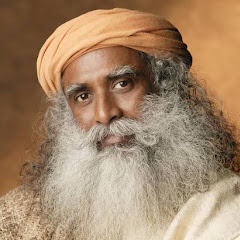
Sadhguru
AI Audio Summaries
18 videos summarized
1 follower on BriefTube
Last summary: Sep 26, 2026
AI Audio Summaries
18 videos summarized
1 follower on BriefTube
Last summary: Sep 26, 2026
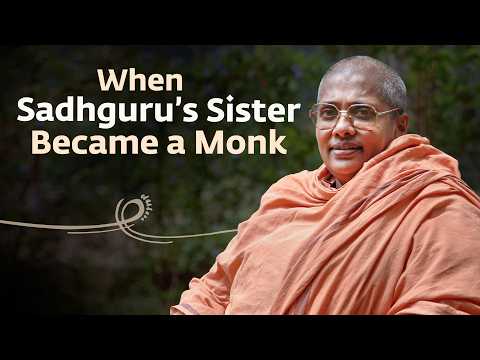
The speaker addresses the challenge of pursuing a spiritual path, or any non-traditional life choice, without causing pain to family. He shares a personal anecdote about his sister becoming a monk. She left one day, and their father wept for three days, deeply heartbroken. This illustrates the emotional turmoil families can experience when a loved one chooses a path they don't understand or approve of. The speaker emphasizes that if one were to always yield to such emotions, nothing significant would ever happen in the world. He cites Jesus's statement, "I have no mother," as an example of a radical detachment necessary for certain spiritual paths, acknowledging it doesn't sound gentle but reflects a profound truth. He advises individuals to first ascertain if their longing for the ultimate is genuine and not merely a whim. A fleeting whim is acceptable, but one that lasts for years impacts a life significantly. Family concern for wellbeing is natural and should be treated with consideration. However, if their actions stem from a desire to impose their own whims rather than genuine concern, it loses value. There's a point where concern transitions into "madness," an overbearing anxiety that can paralyze. At this point, one must break away to pursue their path. He reiterates that it’s impossible to make everyone understand or approve. His own family, even today, doesn't fully approve of his choices, despite his accomplishments. His father, for instance, still hasn't "pardoned" him for not becoming a doctor.
Read AI summary
YouTube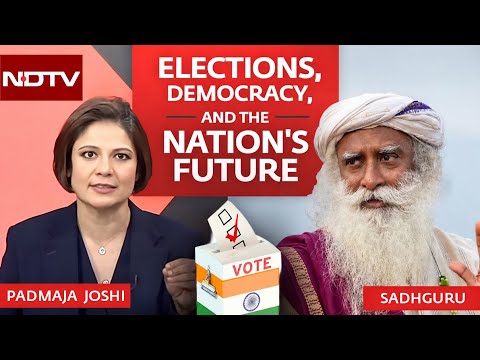
The recent elections in India reflect a profound level of maturity and commitment to democracy among the people. Voter turnout, exceeding 80% in most states and over 92% in some, demonstrates the value Indians place on the ballot and the democratic process, a stark contrast to many Western democracies. This is not merely a political shift but a clear statement from the populace, showing their willingness to bring about change when necessary. The results in West Bengal, where a three-time Chief Minister was significantly defeated, surprised many, but the speaker suggests it was a natural outcome of the Indian public's non-reactive yet resolute nature. While Bengalis are known for their spirited protests, the general populace typically expresses discontent through the ballot, not daily street fights. The victory is attributed to the inspiring commitment of the Prime Minister and the strategic approach of the Home Minister, who demonstrated how to leverage the democratic process effectively. The work of individuals like Mr. Subendu Adhikari, reminiscent of Mamata Banerjee's earlier activism, also played a role. However, the outgoing Chief Minister's reliance on loyalties rather than administrative capacity led to a decline, with corruption and exploitation taking root. A significant factor in Bengal's electoral shift is believed to be events in Bangladesh over the past 12 months, which served as a wake-up call for Bengalis regarding potential future trajectories. The shared history, language, and culture across the artificially drawn border mean that events in Bangladesh deeply resonate in West Bengal, particularly concerning radicalization. While West Bengal is a secular state, the experience of people on the street can differ from official declarations. The historical context of Bengal, a culturally rich "Wanga nation" even in ancient times, has suffered from a decline in intellectual and talented populations due to prolonged periods of violence and lack of administrative foresight, pushing societal issues to street-level conflicts. The speaker emphasizes that political battles should be fought through ballots, not street violence. The migration of a large number of people, including both elites and laborers, from Bengal due to lack of livelihood, protection, and safety, particularly for women, highlights a critical administrative failure that the new government must address with nurturing, not just suppression.
Read AI summary
YouTube
The speaker emphasizes that the spiritual path is a form of madness, contrary to the fundamental human instinct of self-preservation and procreation. Spirituality begins when intelligence transcends these basic drives. The world often pulls individuals back into self-preservation, labeling those who look beyond as abnormal. This is illustrated by a joke about Indian crabs, where any crab trying to escape is pulled down by the others, symbolizing how society hinders spiritual seekers. The speaker shares an anecdote about a couple's 25th wedding anniversary, highlighting how a past entanglement with procreation led to a lifelong commitment that the husband views as a sentence. This underscores the inherent conflicts between basic instincts and the spiritual pursuit, leading to confusion and doubt for seekers.
Read AI summary
YouTube
The solar system's mechanics influence human systems, potentially causing instability, throwing individuals off, or even ending lives. Time is the unifying force of the universe, with gravity as a byproduct. Ancient civilizations understood this cosmic geometry without telescopes, designing calendars that mapped it. By enhancing receptivity, one can experience life's evaporation, becoming a "child of equinox." This discussion focuses on time, specifically the calendar. While modern society often equates time with economic activity—clocking in, paying bills—this is a narrow view. Economics, centered on survival, has reduced the profound phenomenon of time to transactional calculations, a significant error. True survival once meant food and shelter; today, these are complicated and expensive, but should not dictate life. Incidental factors like modes of travel have overshadowed life's fundamentals.
Read AI summary
YouTube
Windows 11 PCs offer a combination of study and play. College students can access the Unreal College deal, which includes select Windows 11 PCs, a year of Microsoft 365 Premium, a year of Xbox Game Pass Ultimate, and a custom color Xbox wireless controller. This offer is available for a limited time, ending June 30th, while supplies last. The speaker also discusses the nature of knowledge, suggesting that an excessive accumulation can be an impediment to openness and joy. However, if one perceives things clearly, knowledge becomes a tool for navigation. Meditation is presented as a way to enhance intellectual capabilities, not by making one inherently more intelligent, but by "clearing up the mess" that obscures mental clarity, much like cleaning a flashlight's glass to reveal a more powerful beam.
Read AI summary
YouTube
Windows 11 PCs offer a limited-time "Unreal College deal" for students, combining study and play. Eligible college students receive a year of Microsoft 365 Premium, a year of Xbox Game Pass Ultimate, and a custom color Xbox wireless controller with select Windows 11 PCs. This offer is available while supplies last and ends June 30th. More details can be found at windows.com/studentoffer. The transcript also discusses the concept of trust, suggesting it means accepting whatever someone does, rather than expecting them to behave in a specific way. True trust should empower, not limit, others. It's advised to handle relationships sensibly, acknowledging that others act based on their own understanding and capabilities. If you can help them evolve, that's great; otherwise, you must decide how to proceed.
Read AI summary
YouTube
This podcast episode of "Sguru of Mystics and Mistakes" features Sguru sharing profound health tips from a yogic perspective, emphasizing the critical importance of connecting with the earth and natural elements for well-being. Sguru recounts an experience at a yogic hospital in India, which challenged the Western medical concept of a hospital. Unlike conventional hospitals with beds and a focus on passive treatment, this yogic approach integrated patients into daily work and therapies, including direct contact with the soil. The American doctors initially visiting were bewildered by the lack of traditional hospital infrastructure, but Sguru explained that the "patients" were actively engaged in work in the garden, barefoot and barehanded, connecting with the earth. This practice, Sguru asserts, is fundamental because the human body is an integral part of the planet. Losing this connection leads to disorganization and ill health.
Read AI summary
YouTube
The transcript discusses "bull spend" in marketing, where budgets are wasted on metrics that don't impress CFOs. LinkedIn is presented as a solution, allowing targeting by company and job title, offering a $250 credit for new campaigns. The conversation then shifts to spirituality, often seen as entertainment, but truly transformative only when the "pain of ignorance" drives a person to seek. It's compared to a caterpillar breaking its cocoon, a painful process leading to flight. If seeking comfort, belief is sufficient, but for life solutions, a proper spiritual process is needed. Solutions themselves aren't painful; the pain arises from clinging to old ways while trying to grow. Finally, starting a business is addressed, with Shopify introduced as a partner providing tools for website design, marketing, and sales, trusted by millions of companies. A $1 per month trial is offered at shopify.com/specialoffer.
Read AI summary
YouTube
Nordstrom Rack is currently offering spring styles at up to 60% off, featuring brands like Rag and Bone, Madewell, Vince, and All Saints. They also have Adidas, and shoppers are encouraged to join the Nord Club for exclusive discounts and early access to new arrivals. A convenient option is to buy online and pick up for free at your nearest Rack store. The transcript then shifts to a philosophical point about human relationships, suggesting that strong, fixed opinions about others and ourselves hinder possibilities in life.
Read AI summary
YouTube
This transcript features a conversation between Sadhguru and a filmmaker discussing the relevance and presentation of the Ramayana to a global audience. Sadhguru begins by emphasizing that the Indian civilization celebrates human success, not just material success. He uses Rama's life as an example, highlighting his resilience through personal tragedies like exile and the kidnapping of his wife, Sita. He contrasts this with a simplistic historical approach, arguing that Indian history, as depicted in the Ramayana, is presented subjectively to be relevant to human experience, not just as a collection of facts. Rama's willingness to endure hardship for a just society and the well-being of his people is presented as his enduring relevance. The concept of "Raja" (king) is linked to a fair and just society, and Rama is portrayed as a leader who prioritized his people's welfare over his own family.
Read AI summary
YouTube
Spring outdoor power deals are available at The Home Depot, including the Milwaukee M18 string trimmer. This cordless tool offers extended run time, speed, and performance. Customers can also receive a select Milwaukee Fuel attachment, such as a pole saw, edger, or brush cutter, at no additional cost with the purchase of the M18 string trimmer. These deals are available through April 29th. The transcript also discusses stress among successful individuals, suggesting that stress indicates a lack of preparedness for one's activities. It proposes that enhancing fundamental human mechanisms, rather than just activity, leads to a more effortless life, whether pursuing success, luck, or a miraculous existence. The individual human being is highlighted as the crucial element.
Read AI summary
YouTube
The discussion delves into profound aspects of existence, consciousness, and the human condition, contrasting them with the limitations of logic and material pursuits. It begins by highlighting the immense destructive potential of nuclear arsenals held by major powers, underscoring the catastrophic consequences of limited identities and unchecked empowerment. A central theme is the nature of creation and the human desire to be a creator. The speaker posits that creation is a continuous, self-generating process, and human beings' tendency to claim authorship stems from an instinctual drive for superiority, exemplified by peacocks displaying their plumage or dominant fish in a school. This instinct, while crucial for survival in the animal kingdom, is deemed inappropriate for crafting human societies, which should ideally function consciously rather than instinctively. The shift from terms like "unfortunate" to "loser" in some societies is seen as a symptom of this overemphasis on winning and losing, a trend attributed to American influence.
Read AI summary
YouTube
The speaker expresses honor and pleasure in addressing the "first state of the nation" and the "most business-friendly state in the country," Delaware, noting that over 60% of Fortune 500 companies are based there, a testament to visionary policies. The discussion then shifts to the miraculous nature of creation, from the blossoming of a flower from dirt to the complexity of a human being evolving from two cells. The speaker emphasizes that if one pays enough attention, nothing on the planet is mundane; everything is miraculous. Among these miracles, the human mind and intelligence are highlighted as the greatest. While technology, such as phones and spacecraft, is impressive, it is merely a product of this human miracle.
Read AI summary
YouTube
The speaker began by emphasizing that life for women has never been as physically comfortable and easy as it is today. He highlighted the convenience of modern amenities like running water and flushing toilets, which were once significant physical burdens. While acknowledging that arrangements for women are better than ever, he questioned whether their experience of life has become "fantastic," suggesting that internal well-being often lags behind external comforts. He stressed the importance of learning "how to be" and cultivating an inner experience that is not dependent on external circumstances, noting that even those in privileged positions can suffer if their internal state is not addressed. He then reflected on the environmental cost of modern comfort and convenience, stating that humanity's pursuit of these things has come at an enormous price for every other creature on the planet. He lamented that despite this cost, many people seem to live their lives as if attending a funeral, even in their "dream cars," rather than with joy and celebration. He urged a shift in perspective, advocating for a life lived wonderfully, especially given the unprecedented physical ease.
Read AI summary
YouTube
The speaker begins by sharing a story about a king who appointed a wise beggar as his chief minister. The beggar agreed on the condition that he would have a private room in the palace where he would spend one hour daily, and the king must never ask what he was doing there or enter the room. The king agreed. Over time, the minister's wisdom greatly benefited the kingdom, but rumors spread that he was hoarding gold in his secret room. Eventually, the king's curiosity got the better of him, and he demanded to see inside. The minister warned that if the king broke his promise, his services would end. The king, convinced there was something to hide, forced the door open. Inside, the room was bare except for a coat hook from which the beggar's old rags hung. The minister explained that every day, he would remove his rich clothes, wear the rags, and sit in the room for an hour to remember who he was and avoid getting lost in the wealth and luxury. With the king's promise broken, the minister changed into his rags and departed. This story serves as an analogy for meditation, where one sheds all the "nonsense" gathered in life and simply exists as a bare human being. The speaker then discusses the idea that one does not need a guru to live peacefully and joyfully, as one possesses the necessary intelligence. A guru is sought only when one desires a "bridge to the beyond." The speaker clarifies that many gurus market themselves as those who will make life smooth and everything "okay," but this is not the promise being made. Instead, the speaker promises that even if "everything goes dead wrong," one will still be "okay." This means that external circumstances might be disastrous, but one's internal state can remain stable. The speaker admits that many people, particularly those focused on earning money, might view his own life as reckless and a "disaster" because he does not hold back or constantly worry about losing things. This freedom comes from the understanding that even if he loses everything, he will still be okay. This volatile and aggressive energy took a long time to cultivate.
Read AI summary
YouTube
This transcript features a teaching story about a guru and a washerman (dhobi) that transitions into a broader discussion on human potential and the importance of self-mastery as a new year begins. The narrative begins with a man bringing his twenty-year-old son to a guru, complaining that the boy is a "donkey" and asking the master to turn him into a man. A passing dhobi, who has no children, overhears this and begs the guru to transform one of his actual donkeys into a human son. Though the guru initially tries to dissuade him, the dhobi’s persistence wins out. The guru instructs him to return in 90 days—joking that if it takes a mother nine months to make a human, he needs at least three months for his task.
Read AI summary
YouTube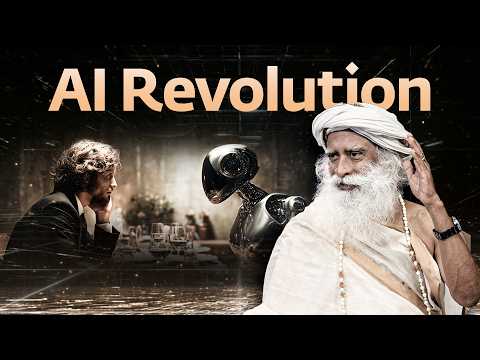
This panel discussion explores the transformative impact of Artificial Intelligence (AI) on mental health, medicine, and spirituality. The conversation brings together clinical experts and spiritual leaders to debate whether technology will replace human professionals and how it is fundamentally altering the human experience. **Will AI Replace the Professional?**
Read AI summary
YouTubeBriefTube monitors your YouTube channels, generates AI-powered audio summaries, and delivers them wherever you listen. Telegram, Discord, Slack, or your podcast app. Fully automated.
Start free trial