How the Hindu Calendar Aligns You with the Cosmos | Sadhguru 360
AI Summary
The solar system's mechanics influence human systems, potentially causing instability, throwing individuals off, or even ending lives. Time is the unifying force of the universe, with gravity as a byproduct. Ancient civilizations understood this cosmic geometry without telescopes, designing calendars that mapped it. By enhancing receptivity, one can experience life's evaporation, becoming a "child of equinox."
This discussion focuses on time, specifically the calendar. While modern society often equates time with economic activity—clocking in, paying bills—this is a narrow view. Economics, centered on survival, has reduced the profound phenomenon of time to transactional calculations, a significant error. True survival once meant food and shelter; today, these are complicated and expensive, but should not dictate life. Incidental factors like modes of travel have overshadowed life's fundamentals.
Yogis view time as the basis of creation, an ungraspable, ever-ticking entity that holds the universe together. The experience of time is relative; unpleasant moments stretch, pleasant ones shrink. Physical existence begins when the "dark nothingness of kala" reverberates and takes form. Daily experience perceives time through changes: Earth's rotation defines a day, the Moon's orbit a month, Earth's around the Sun a year. Everything physical, from smallest to largest, is cyclical, and human bodies, being part of this planet and solar system, are intrinsically linked to its mechanics.
The Gregorian calendar, widely used today, is a "hodgepodge" originating from the Roman Empire primarily for tax collection. The word "calendar" itself comes from "kal len dai," the day debts were due. This numerical convenience disregards cosmic geometry and human experience, ignoring the human system's reflection of the cosmos, particularly the Sun, Moon, and Earth.
In contrast, Eastern calendars, especially the Hindu lunisolar calendar, were devised by mystics interested in human blossoming, not tax collection. They recognized the human mechanism is not an isolated bubble. The first Hindu calendar, estimated 8,000-12,000 years old, has never needed correction because it's based on observation of the universe and solar system, not guesswork. Even with constant air conditioning indoors, cosmic events impact the human system. With necessary work and enhanced receptivity, one can see the human system as a microcosm of the larger cosmos. Yogic sciences state that the individual and the cosmos are three manifestations of the same thing, in synchronicity of time.
A well-known example is the number 108. Of the 114 chakras, 108 are within the physiological framework and require activation. Activating these 108 naturally opens the remaining four. This is why malas traditionally have 108 beads, used for counting mantras or circumambulating energy spaces 108 times, representing the 108 actions needed for mastery over the human mechanism. This is beautifully imprinted from the solar system: the Sun's diameter is 108 times Earth's, the distance between Sun and Earth is 108 times the Sun's diameter, and the distance between Moon and Earth is 108 times the Moon's diameter. Ancient Indian yogis and mystics knew this mathematics and geometry well before Galileo, when much of the world still believed Earth was flat. They calculated distances between celestial bodies and their rotational relationships, even recognizing planetary precession, a concept only understood in modern science in the 20th century. This civilization designed calendars that map cosmic geometry to align human well-being.
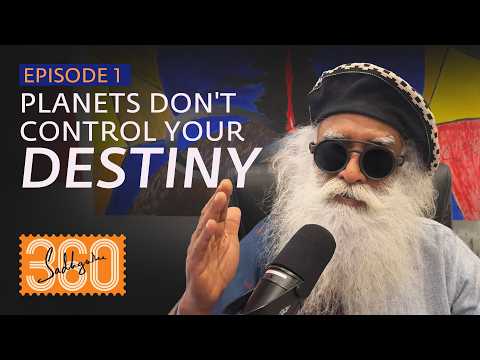
The Hindu calendar recognizes nine traditional "grahas" or influences. Rahu and Ketu are not physical planets but nodal positions of the Moon that cause eclipses. "Rahu Kala" is a daily period. However, this is not about fatalistically blaming planetary positions for one's actions or life's problems. It's about enhancing one's ability to respond to cosmic events. Awareness allows response, and response (not reaction) enables navigation of life's situations. One cannot change the cosmos, but one can learn to "ride this cosmic situation."
The cosmos is a complex mechanism. Aligning with it makes life a dance; failing to align means the same cycles of time can crush you. The cosmos works as it does; it is up to individuals to synchronize with creation, which is "yoga"—yoking oneself to creation and its source.
The Hindu lunisolar calendar, a complex mix of solar and lunar cycles, considers the movements of the Sun, Moon, and Earth. Different regions follow slightly different versions. It's called "Panchangam" (Sanskrit) or "Panchang" (Hindi), meaning "five-limbed calendar." These five limbs are:
1. **Tithi:** The lunar day.
2. **Vara:** The weekday, linked to seven celestial bodies.
3. **Nakshatra:** The Moon's position among 27 star constellations.
4. **Yoga:** A complex calculation combining Sun's and Moon's movements relative to Earth.
5. **Karana:** Specific auspicious timings for performing actions for best results or empowerment.
Months typically start with either the new moon (Amavasya) or full moon (Purnami). The British introduced the Gregorian calendar, a numerical system easy to count but lacking deep celestial relevance. It doesn't highlight full or new moons, which significantly impact human physiology, psychology, and phenomena like tidal waves. The Gregorian calendar's fixed Sunday holiday lacks relevance to human systems. In contrast, traditional holidays were linked to full moons (three days off) and new moons (two days off), recognizing their impact on human systems and birth.
The spring equinox is an important transition from spring to summer, when the planet undergoes changes in solar energy reception. All life is solar-powered. In the Northern Hemisphere, the first full or new moon after the spring equinox marks the New Year, celebrated by festivals like Ugadi.
Precession, the slow wobble of Earth's axis, makes calendar calculations complex. The Hindu calendar accounts for this. Historically, the Sun entering Aries (Mesha) marked the equinox, but due to precession, it's now about 24 days off. This means the sky seen after sunset on the spring equinox today differs from a thousand years ago, a fact known to ancient mystics without telescopes.
Around the equinox, Earth's magnetic envelope, which protects from solar flares and storms, weakens, especially between 23 to 33 degrees latitude, where India, parts of Europe, China, and the US lie. This band experiences maximum development due to optimal solar energy reception without excessive temperatures. Southern India, near the magnetic equator, experiences an intense electrical current band during the equinox. This charge can be a disturbance or an empowerment. The speaker states their life "evaporated" on the autumnal equinox of 1982, becoming a "child of equinox."
Every major bodily function, from heartbeat to thought, is driven by electrical currents and charged ions (calcium, sodium, potassium, magnesium). These ions are affected by magnetic and electric fields. In regions like the magnetic equator or during certain seasons, fluctuating atmospheric electric fields can empower the brain and heart, improving overall function. However, if the system isn't prepared, these environmental spikes can cause premature ion leakage into neurons, leading to migraines, brain fog, irritability, or feeling "freaky."
The yogic system aligns one's geometry with creation's larger geometry, making natural phenomena like solar plasma and electrical charges life-enhancing. While cosmic influences exist, individuals must take responsibility for their inner experience. The human being, unlike other creatures, has the choice of "how to be." Through "sadhana" (spiritual practice), disturbances can become opportunities for growth. Like a hang glider flying best against the wind, challenges can lead to soaring if one is prepared.
One simple practice during equinoxes is to keep hair wet, especially during the four "sandhyas" (transitionary periods): morning, afternoon, evening, and midnight. If hair loss is an issue, at least the top of the head should be kept wet. This can also be done during new and full moons. The period from equinox to solstice is crucial due to peak solar impact. In Southern India, farmers traditionally applied castor oil to their heads during this period to keep them wet, as oil lasts longer than water.
Indian festivals are calendar-oriented, not belief-oriented, designed to align people with celestial movements, making them beneficiaries rather than victims of cosmic forces. Simple prescriptions include consuming seasonal fruits and vegetables. In Southern India, specific cooling, B12-rich foods like "Lakshmi charu" were consumed during intense solar periods.
The Hindu calendar divides the year into two halves: "Uttarayan" (winter to summer solstice), the Sun's northward run, considered a time of harvest and spiritual growth (Kevalya); and "Dakshinayan" (summer to winter solstice), the Sun's southward run, a time for self-work (Sadhana). These periods impact metabolic, glandular, and immune systems. Studies show more neuronal growth during Uttarayan and a cleansing phase in the brain during Dakshinayan. These processes are largely referenced to the Northern Hemisphere due to its historical population density. Festivals are designed to leverage these natural mechanisms.
The Tamil month of Margali (mid-December) is for stability and balance. Practices like cold water dips before sunrise (Brahma Muhurtam) for 40-48 days (a "mandala") improve cardiovascular health by increasing blood vessel flexibility. Beyond health, these practices aim to make body and mind stepping stones for immediate and ultimate well-being, including emotional exuberance and mental sharpness. These are not ends but means to explore profound aspects of being human. Human life begins when survival is secured, allowing one to decide their inner experience, independent of stars and planets.
The Sun, Moon, and calendar are important, but not to be obsessed over. A Kannada mystic, Dear Dasimaya, wrote that for one absolutely with Shiva, there is "no dawn, no new moon, no day, no equinoxes, no sunsets, nor full moons." Such a yogi, in union with "kala" (time) and space, transcends cosmic impacts. The goal of yoga is to put one in charge of life's experience, free from physical creation's cycles. Until that state of liberation, one must learn to ride these cycles, using the "Panchangam" to engineer a wonderful life, appreciating creation's complexity, and above all, exploring human consciousness.