Choosing the Spiritual Path: Clarity & Family Resistance | Sadhguru
AI Summary
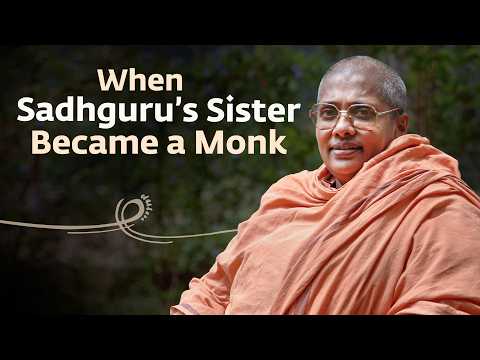
The speaker addresses the challenge of pursuing a spiritual path, or any non-traditional life choice, without causing pain to family. He shares a personal anecdote about his sister becoming a monk. She left one day, and their father wept for three days, deeply heartbroken. This illustrates the emotional turmoil families can experience when a loved one chooses a path they don't understand or approve of. The speaker emphasizes that if one were to always yield to such emotions, nothing significant would ever happen in the world. He cites Jesus's statement, "I have no mother," as an example of a radical detachment necessary for certain spiritual paths, acknowledging it doesn't sound gentle but reflects a profound truth.
He advises individuals to first ascertain if their longing for the ultimate is genuine and not merely a whim. A fleeting whim is acceptable, but one that lasts for years impacts a life significantly. Family concern for wellbeing is natural and should be treated with consideration. However, if their actions stem from a desire to impose their own whims rather than genuine concern, it loses value. There's a point where concern transitions into "madness," an overbearing anxiety that can paralyze. At this point, one must break away to pursue their path. He reiterates that it’s impossible to make everyone understand or approve. His own family, even today, doesn't fully approve of his choices, despite his accomplishments. His father, for instance, still hasn't "pardoned" him for not becoming a doctor.
The speaker recounts his sister's departure in detail. She planned to leave for a monastery, and he, having also contemplated leaving home many times, was the only one she confided in. He describes how she retrieved her certificates, a pre-planned essential for their youthful escape fantasies. On the day she left, their parents were away. He waited until evening to inform his father, allowing her enough time to reach her destination safely. The family's subsequent search and their father's profound grief highlight the depth of their pain. Yet, after some time, his father became extremely proud of her. This demonstrates that while initial pain is inevitable, understanding and pride can eventually emerge.
The speaker then shifts to discussing emotions, stating that "the way you think is the way you emote." Emotion is merely the "juicier and heavier part of the thought." If thoughts are kept on track, emotions will follow. He illustrates this with a humorous story of a 43-year-old headmaster who didn't want to go to school, demonstrating how persistent negative thoughts can generate intense emotions, making a situation "loaded." Conversely, positive thoughts can generate pleasant emotions. Therefore, managing thoughts is key to handling emotions gracefully.
Finally, the speaker addresses Linga Bhairavi, a powerful feminine energy that will be consecrated. He describes her as a "raw energy," more easily experienced and used for material well-being than the subtle Dhyanalinga. He fears she might become more popular than Dhyanalinga, just as preparatory practices sometimes overshadow the ultimate goal. Linga Bhairavi is mercury-based and will require monthly maintenance, unlike Dhyanalinga. She embodies the "Dvi tradition" of goddess worship, a very live force in India. She will not be a three-dimensional figure but will manifest as energy, akin to the powerful Hazar Hut Kali in Dakshineshwar, which is not a 3D figure but emerges from a wall. The priestess there is described as a "goddess herself," embodying a raw, powerful womanhood. Linga Bhairavi will evoke strong reactions—some will love her, others will be terrified, but "nobody can ignore her." She represents womanhood in a "very essential way, in a very raw way."