Bloomberg Originals
AI Audio Summaries
18 videos summarized
Last summary: May 15, 2026
AI Audio Summaries
18 videos summarized
Last summary: May 15, 2026
Read AI summary
YouTube
This transcript features a discussion with Alan Waxman, co-founder and CEO of Sixth Street Partners, about institutional investment in sports, specifically focusing on his firm's minority stake acquisition in the New England Patriots and their broader sports investment portfolio. The conversation, hosted by Jason Kelly and Alex Rodriguez, delves into Sixth Street's investment philosophy, the process of acquiring sports assets, and the future of institutional capital in major sports leagues. Waxman begins by describing Sixth Street's investing ethos as one of "complete flexibility," allowing them to invest across asset classes, geographies, and sectors based on relative risk-reward. He emphasizes a culture of "investor first architecture" with no egos or politics, focused on aligning fund sizes with opportunities. This approach has enabled them to invest in various global sports champions, including Real Madrid, Barcelona, the San Francisco Giants, the San Antonio Spurs, and the Boston Celtics, highlighting a common denominator of alignment in culture, values, and clarity of purpose across these successful franchises.
Read AI summary
YouTube
In Ohio, a private company is producing HALEU, a new nuclear fuel, aiming to fill 11,000 holes with centrifuges to meet the growing demand for nuclear power, driven by a "nuclear renaissance." This resurgence is backed by big tech, with Amazon and Google investing in small modular reactors (SMRs), and political figures like President Trump setting targets for quadrupling U.S. nuclear capacity. The global uranium demand is expected to more than double by 2040, but Russia's Rosatom currently controls nearly 50% of uranium enrichment capacity. Sanctions against Russia are forcing Western countries to re-evaluate and rebuild their nuclear supply chains, from mining to reactor construction. Success in this endeavor could generate new industries and wealth, while failure could undermine confidence in nuclear power for generations. The increased interest in nuclear energy is also fueled by "Nukefluencers" like Isabelle Boemeke, known as "Isodope" on TikTok, who creates short, engaging videos promoting nuclear power. Critics, however, argue that this advocacy glosses over the concerns of anti-nuclear groups. Boemeke, reportedly an investor in a nuclear startup and married to Airbnb co-founder Joe Gebbia, has influenced draft executive orders on nuclear energy regulation. This push marks a significant shift for nuclear power in the U.S., which has seen numerous plant closures in recent decades due to high costs and unpredictable construction timelines, such as the Vogtle Plant in Georgia, which was seven years late and $16 billion over budget.
Read AI summary
YouTube
American soldiers are back in Panama for jungle training with Panamanian forces after a 25-year break, reflecting a Trump administration refocus on the Western Hemisphere. This training is part of a significant US military buildup in Latin America, following the removal of Venezuelan President Nicolás Maduro, which Trump views as a success. While some right-wing Latin American leaders support this expanded US presence to combat criminal cartels, others oppose it, fearing instability. The US defense chief announced a revival of three military bases in Panama, echoing a history that includes the 1989 invasion to remove Manuel Noriega. US jungle training in Panama ceased in 1999 when treaties mandated the transfer of US bases and the Panama Canal to Panama.
Read AI summary
YouTube
The $1.8 trillion private credit market is facing its biggest crisis of confidence, largely due to the existential risk posed by AI to its significant investments in software companies. Private credit firms lend directly to companies, often those backed by private equity, using funds primarily from institutional and, more recently, wealthy retail investors. Concerns escalated late last year when retail investors began attempting to withdraw their money. Firms like Blue Owl limited withdrawals, sold assets, and even saw employees contribute personal funds to meet redemption requests. Despite these efforts, Blue Owl's shares have fallen sharply, reflecting industry-wide unease. Observers note that private credit has been largely untested under pressure until now, drawing parallels to the lead-up to the 2008 financial crisis, though others deem such fears overblown given that these firms don't use bank deposits.
Read AI summary
YouTube
AJ Andrews, a standout softball player and MLB broadcaster, joined Jason Kelly and Alex Rodriguez on "The Deal" to discuss the future of baseball and softball. Rodriguez posed two key questions: how to avoid a major league baseball work stoppage after the 2026 season and how to build on the sport's recent momentum. Andrews began by reflecting on the electric atmosphere of the World Baseball Classic (WBC), calling it one of the most exciting baseball environments she had ever experienced. She emphasized the importance of allowing players to express themselves authentically, both on and off the field. This includes celebrating enthusiastically, wearing personalized gear, and showcasing their personalities beyond just their athletic performance. She noted that the ability for Yankees players to grow beards, a departure from past rules, is a positive step towards appealing to a younger generation.
Read AI summary
YouTube
The semiconductor industry, the engine of the global economy, is experiencing unprecedented growth, driven largely by the artificial intelligence boom. This industry, which produces trillions of semiconductor devices annually, is projected to reach $1 trillion in revenue by 2026. The smallest components on modern chips are incredibly minute, often smaller than viruses and tens of thousands of times narrower than a human hair. These sophisticated chips can command prices of up to $30,000 and are crucial for everything from smartphones and AI servers to defense systems. The manufacturing process for these chips is considered the most complex on Earth, pushing the boundaries of software, hardware, chemistry, and physics. A critical bottleneck in this process is lithography, the technique used to transfer intricate designs onto silicon wafers. ASML, a European tech firm, holds a dominant position in this specialized field, producing the highly complex lithography machines that are indispensable for manufacturing advanced chips. All leading chip manufacturers rely on ASML's technology.
Read AI summary
YouTube
Robert Habeck, Germany's Green Party leader and Vice Chancellor, faced a deepfake video during his 2024 election campaign. The video, produced by a Russian group called Storm-1516, falsely accused him of sexually assaulting a student during a 2017 school visit. The video used AI-generated content, manipulating images of Russian figure skater Yulia Lipnitskaya to create a seemingly real but fabricated accusation. This incident highlights Russia's escalating disinformation campaigns, which leverage social media, influencers, and AI to sow chaos and undermine truth. These operations, backed by Russia’s Military Intelligence Agency (GRU) and overseen by the Kremlin, aim to influence public discourse and target Western democracies without direct military engagement. The strategy involves "narrative laundering," where fabricated stories are introduced, layered into conversations by state media and influencers, and eventually become part of mainstream discussion.
Read AI summary
YouTube
In a volatile market, quantitative trading firm Jane Street has emerged as a top player, making a record-setting $39 billion in 2025, surpassing major banks. This success, however, has drawn scrutiny, with accusations of market manipulation, which the firm denies. Jane Street thrives on high-frequency trading, executing hundreds to thousands of trades in milliseconds. They act as "middlemen" in transactions, facilitating orders for apps like Robinhood and Schwab. Their strategy involves exploiting price inefficiencies through arbitrage—buying low and selling high rapidly, making billions. They also serve as "market makers," injecting liquidity into the system, particularly crucial for Exchange Traded Funds (ETFs).
Read AI summary
YouTube
Steve Young, the NFL Hall of Famer, discusses his transition from professional football to private equity and co-founding HGGC, a $10 billion firm. He reflects on the initial challenges of shifting careers, emphasizing the importance of humility and starting from the ground up, much like in sports. Young shares how he initially tried to downplay his athletic fame when meeting investors, but eventually realized it could be a useful tool for connection, as exemplified by an investor who asked to play catch. Young explains his motivation for entering private equity stemmed from his law school studies and a board position at PowerBar. This led him to meet his long-time partner, Rich Lawson, and together they built a business, which eventually led to sponsorship from Bain Capital to start their own private equity firm. He contrasts the early days of private equity with today's highly competitive landscape, noting the significant growth in the number of firms.
Read AI summary
YouTube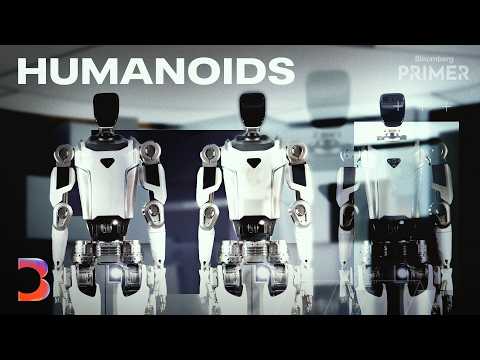
Humanoid robots are experiencing a surge in development and investment, moving beyond research labs into real-world applications with the potential to revolutionize labor. This advancement is driven by breakthroughs in Artificial Intelligence (AI), particularly the concept of "physical AI," which integrates specialized AI with robotic bodies equipped with sensors, batteries, and actuators. The goal is to create robots capable of learning and adapting to unpredictable environments, unlike traditional programmed robots. This paradigm shift could lead to a multi-trillion dollar market by 2050, with applications expected in homes, hospitals, and especially factories. Companies like 1X are at the forefront, developing robots such as Neo. Neo's behavior is entirely AI-driven, processing sensory data through large neural networks to generate motor commands for tasks ranging from balancing and walking to manipulation. The success of such robots hinges on the availability of vast amounts of data. AI has transformed robotics by eliminating the need for task-specific coding; instead, everything is data-driven, enabling robots to perform a wider variety of tasks and improve over time.
Read AI summary
YouTube
The AI sector is experiencing intense competition, with Anthropic emerging as a significant challenger to OpenAI's early dominance. Anthropic is attracting substantial investor interest, with its valuation reportedly reaching or exceeding $800 billion, positioning it as one of the world's most valuable startups. A key driver of this hype is Anthropic's latest model, Mythos. Access to Mythos is highly restricted, limited to a select group of companies outside of Anthropic itself. This limited release, known as Project Glass Wing, includes prominent Silicon Valley players such as Apple, Google, Palo Alto Networks, Crowdstrike, the Linux Foundation, and Amazon. This arrangement is unusual, as these companies are typically fierce competitors, yet they are being granted early access to Anthropic's intellectual property and even opportunities to provide feedback on its development.
Read AI summary
YouTube
The story of modern technology is intrinsically linked to the evolution of batteries, particularly the lithium-ion battery. Introduced about thirty years ago, this battery was a game-changer, offering lighter weight and more power, and it quickly revolutionized consumer electronics. Sony, recognizing its potential, sought to integrate this technology into as many devices as possible. As production scaled up, the cost of lithium-ion batteries decreased while their power capacity increased, a phenomenon explained by Wright's Law, which posits that increased production leads to lower costs. This trajectory has now propelled another revolution: electric vehicles (EVs). In the 2020s, advancements in battery power and cost-effectiveness have made EVs increasingly accessible, mirroring the earlier impact on consumer electronics. The speaker emphasizes that driving an EV is essentially driving a battery. China has emerged as the global leader in battery technology and production. Chinese EVs are already more affordable than their gasoline counterparts, with four of the world's top five battery manufacturers located in China. BYD, a prominent Chinese company, even rivals Tesla for the title of the largest EV maker globally. This intense domestic competition has spurred Chinese companies to expand their reach internationally. While markets like the US and EU have shown some resistance to cheaper Chinese EVs, many emerging markets have readily adopted them, significantly shifting the global power balance.
Read AI summary
YouTube
Natural gas is a crucial and abundant fuel, but reliable supply has often been a challenge. Liquified Natural Gas (LNG) was developed to bridge this gap, serving as a versatile energy source for power generation, industry, and transportation across regions like India, Japan, Asia, and Europe. These areas have long-term contracts for LNG, underscoring its importance for their economies. Qatar, a major supplier, was known for its reliable exports until recently. The energy landscape has been significantly disrupted by an Iranian strike on Qatar's Ras Laffan industrial city, home to the world's largest LNG export plant. This facility, operational for 30 years without a single missed delivery, sustained extensive damage, with repairs expected to take years for parts to restart. This incident has exposed the fragility of a global energy system heavily reliant on LNG, particularly from regions now deemed vulnerable.
Read AI summary
YouTube
Prediction markets are online platforms where individuals can bet on future events, ranging from who will be the year's richest person to the return of Jesus Christ. Platforms like Kalshi and Polymarket have seen an explosion in popularity over the past year, with partnerships with major media outlets like CNN and CNBC, and integration plans with Google. MLB has even named Polymarket its official prediction market partner, and the owner of the New York Stock Exchange has invested in Polymarket. These platforms are increasingly entering mainstream discourse. The amount of money involved in these markets has skyrocketed. Kalshi, for example, now handles $3 billion in notional trading weekly, a hundredfold increase from $30 million at the beginning of 2023. Similar growth is observed with Polymarket. This boom has led to the emergence of a new class of market watchers who place trades based on news and available information. Some individuals have reported significant financial gains, using their earnings to pay off student loans or cars. However, most participants tend to lose money, with a particular concern for young males aged 18 to 35.
Read AI summary
YouTube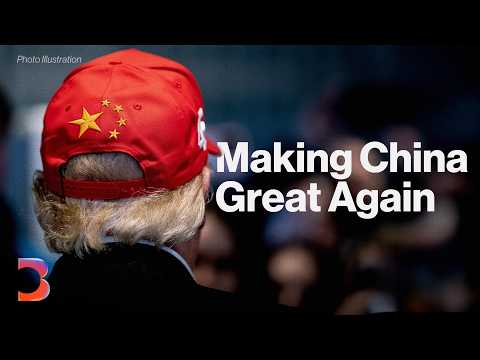
China's President Xi Jinping often speaks of "changes not seen in a hundred years," which have been unexpectedly delivered by Donald Trump. Amid global instability, the U.S. is perceived as a force for unpredictability, providing China an opportunity to present itself as a stable global power. China benefits from the U.S. getting entangled in the Middle East and views Trump's challenges to the existing U.S.-dominated order as a chance to assert its influence. Trump's initial trade war prompted China to realize the dangers of dependence on the U.S. China's exports to the U.S. declined by about 20% last year, yet China achieved a record trade surplus of $1.2 trillion by diversifying its consumer base away from the U.S. The U.S.-China relationship is pivotal for the century, shaped by two leaders with contrasting approaches: Trump, who is brash and impulsive, versus Xi Jinping, who is guarded, methodical, and plays the long game. Chinese policymakers see Trump as transactional but unpredictable, noting that many of his threats, labeled as "Trump Always Chickens Out" (TACO) on social media, are not executed. Interestingly, Trump is popular on Chinese social media, with nicknames like "Chuan Jian Guo" (Trump, the Nation Builder), which implies he helps China become a superpower.
Read AI summary
YouTube
The Gulch, a challenging and undeveloped area in downtown Atlanta, is being transformed into Centennial Yards, a $5 billion project. This ambitious undertaking aims to revitalize downtown Atlanta, which has seen power and investment shift outwards since the 1960s. Centennial Yards will feature 6 million square feet of development, including 1 million square feet of retail, 5,000 apartments, and a half-million-square-foot entertainment district, with some components opening in time for the 2026 FIFA World Cup. The project faces significant hurdles due to the Gulch's location over active rail lines and its lack of infrastructure. Building on the site requires massive structures on stilts, 40 feet up, to match the street grid, an estimated $400 million cost just for the elevated construction. An additional $300 million is estimated for basic infrastructure like electricity, water, and sewer. Despite these challenges, Tony Ressler, who bought the Atlanta Hawks in 2015, envisioned "LA Live" for the site, believing in the potential for downtown Atlanta's transformation.
Read AI summary
YouTube
Hungary faces an election on April 12th, with Viktor Orban, who has been a dominant figure in European politics for over 15 years, currently trailing by double-digit percentage points. Orban, known for his adeptness at maintaining power and his clear appetite for it, now sees his position and the Hungary he has shaped under immense pressure. The country is grappling with stagnant growth, high inflation, and mounting scandals, compounded by the emergence of a formidable opponent, the surging Tisza party. The outcome of Hungary's election holds significance not only for its citizens but also for Europe, the US, and Russia. Regardless of who wins, the incoming government will face significant challenges in addressing societal, economic, and political concerns. Hungary's influence extends beyond its size within Europe, as its membership in the European Union grants it the power to veto decisions of global importance. This has become evident through Orban's frequent opposition to joint initiatives by EU and NATO allies. For instance, Hungary plans to block all EU decisions concerning Ukraine until oil flow through the Druzhba pipeline is restored, and it notably delayed NATO's expansion to include Finland and Sweden. Critics often suggest that the Hungarian government's stance frequently aligns with the interests of Russia, and sometimes China, particularly through its continued embrace of Russian energy contracts amidst EU sanctions. This position largely reflects Prime Minister Orban's priorities and his desire to move beyond the country's former Soviet occupation, leading him to cultivate ties with Moscow, Washington, and Beijing. He has also engaged in US politics, endorsing Donald Trump in both his presidential campaigns, with Trump returning the favor.
Read AI summary
YouTubeBriefTube monitors your YouTube channels, generates AI-powered audio summaries, and delivers them wherever you listen. Telegram, Discord, Slack, or your podcast app. Fully automated.
Start free trial