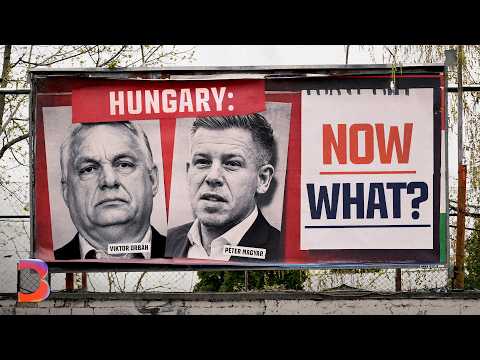
Viktor Orbán and the Fight for Hungary
AI Summary
Hungary faces an election on April 12th, with Viktor Orban, who has been a dominant figure in European politics for over 15 years, currently trailing by double-digit percentage points. Orban, known for his adeptness at maintaining power and his clear appetite for it, now sees his position and the Hungary he has shaped under immense pressure. The country is grappling with stagnant growth, high inflation, and mounting scandals, compounded by the emergence of a formidable opponent, the surging Tisza party.
The outcome of Hungary's election holds significance not only for its citizens but also for Europe, the US, and Russia. Regardless of who wins, the incoming government will face significant challenges in addressing societal, economic, and political concerns. Hungary's influence extends beyond its size within Europe, as its membership in the European Union grants it the power to veto decisions of global importance. This has become evident through Orban's frequent opposition to joint initiatives by EU and NATO allies. For instance, Hungary plans to block all EU decisions concerning Ukraine until oil flow through the Druzhba pipeline is restored, and it notably delayed NATO's expansion to include Finland and Sweden. Critics often suggest that the Hungarian government's stance frequently aligns with the interests of Russia, and sometimes China, particularly through its continued embrace of Russian energy contracts amidst EU sanctions. This position largely reflects Prime Minister Orban's priorities and his desire to move beyond the country's former Soviet occupation, leading him to cultivate ties with Moscow, Washington, and Beijing. He has also engaged in US politics, endorsing Donald Trump in both his presidential campaigns, with Trump returning the favor.
Orban's political machine is rooted in a system he began constructing years ago. He first came to power in 1998 as the leader of the right-wing Fidesz party, lost in 2002, but returned in 2010 with a mission to institute "regime change" and build what he termed an "illiberal state," stemming from his disdain for liberal democracy. Early actions included changing the electoral system, which critics argue solidified Fidesz’s advantage, and pushing through a new constitution that involved removing the top Supreme Court justice. He also installed political loyalists in state institutions and the media, with business allies taking over or shutting down newspapers, effectively creating a national echo chamber where public media serves as a megaphone for the governing party, constantly portraying external threats.
For years, this control helped Orban manage the political narrative despite growing economic strains. After returning to power following the financial crisis, his government oversaw years of modest growth, rising wages, and new factory jobs, delivering tangible financial benefits to families. However, sustaining these benefits has become increasingly costly due to a sputtering economy. High inflation, particularly after the pandemic, has severely impacted Hungarians' ability to make ends meet, and house prices have more than tripled since 2015, outpacing income growth.
Orban initially benefited from a period of low inflation, global growth, and significant EU funding. Critics argue much of this was wasted on visible, prestige projects while neighboring countries like Poland advanced, leaving Hungary lagging in areas like income per capita, household spending, and university rankings. The government has had to cut investments, including in public services, to the point where Orban issued an executive order to stock hospitals with toilet paper. Big industrial bets, intended to restart growth, have fallen short. Orban sought to position Hungary as an economic bridge between East and West, attracting Asian battery makers to support the German car industry's transition to electric vehicles. However, a slower-than-expected EV transition and struggles in the German economy, on which Hungary relies for exports, have hindered success. Additionally, scandals involving toxic chemical leaks from battery factories have fueled public anger.
Compounding these issues, the widening gap between a well-connected elite and ordinary Hungarians, coupled with significant corruption—Hungary has dropped to last place in Transparency International's EU rankings—created a volatile situation. This opening was seized by Peter Magyar, a former insider of Orban's elite. Magyar, using the previously marginal Tisza party, largely bypassed Orban's media machine by engaging directly with voters across the country. His appeal is straightforward: maintain popular policies, eradicate corruption, fix public services, and repair Hungary's relationship with the EU. Magyar aims to attract disillusioned Fidesz voters without alienating the center.
Faced with a genuine challenger, Orban has reverted to his familiar strategy of defining new enemies. His campaign is built on fearmongering, shifting from previous targets like the center-left opposition, Brussels, George Soros, migrants, and LGBTQ communities, to now focusing on the war in Ukraine. Campaign posters warn that while life in Hungary is tough, it could be much worse, implying that "cheeky Ukrainians" risk this stability. Orban also portrays himself as a strong leader respected by global figures, though this message is resonating less across society.
Even if Orban's Fidesz party loses the election, it doesn't necessarily mean a complete loss of power. Fidesz would still be a powerful party with substantial resources, media control, and a demonstrated will to power. Furthermore, captured state institutions could continue to represent Fidesz's interests, potentially significantly blocking the actions of a new government. Orban remains a formidable political force that few would count out.