The $10 Billion Hunt for the Rocks That Power the World
AI Summary
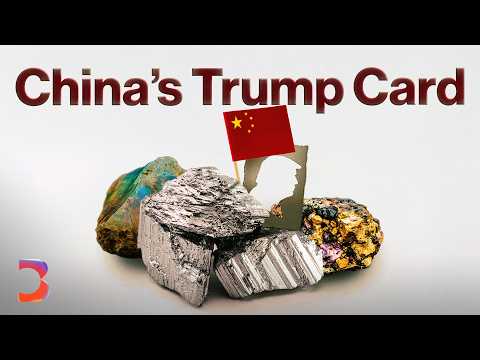
Rare earths are crucial for modern technology, forming the backbone of powerful magnets used in everything from phones to electric vehicles and missile systems. China dominates the global supply chain, controlling 80-90% of rare earth production and processing, and has demonstrated its willingness to use this dominance as geopolitical leverage. This was starkly illustrated during the US-China trade war when China imposed export controls on rare earths, prompting the automotive industry to warn of factory shutdowns due to a lack of permanent magnets.
This vulnerability spurred a global effort to build alternative rare earth supply chains. Rare earths are a group of 17 chemically similar metallic elements essential for creating heat-resistant, high-performance magnets. China possesses the world's largest rare earth deposits, particularly of the more valuable heavy rare earths, which enhance magnet performance. The real choke point, however, is the processing and magnet production stages, where China holds approximately 90% control. This processing is costly and environmentally damaging due to toxic waste, leading many Western countries to cede this stage to China.
China first weaponized its rare earth dominance in 2010 by restricting exports to Japan over a territorial dispute. Although temporary, this exposed Japan's vulnerability and served as an early warning. Historically, the US was a major player, but China strategically developed rare earths as a key industry, making it cheaper to source from there. This led to Western companies exiting the market due to thin margins, high labor costs, and environmental concerns, while consumers benefited from cheap, reliable supplies.
Now, companies like Australia's Lynas are rebuilding the supply chain outside China, securing contracts with entities like the US Department of Defense for heavy rare earths. Rebuilding this specialized sector requires not only factories but also skilled engineers, an area where China has a significant advantage with its dedicated universities. The urgency for the US has increased due to depleted defense stockpiles during conflicts, necessitating replenishment of rare earth-dependent weapons systems.
Brazil is also a significant bet for new deposits, with substantial rare earth clay reserves, and is receiving US backing. The US is also investing domestically, notably in MP Materials. However, China's sheer scale poses a challenge, capable of squeezing margins of emerging competitors. Western nations are intervening with financial backing to support these new ventures and mitigate risks. While China's export restrictions are easing, bans for use in US weapons remain a red line. Building a diversified supply chain is a long and arduous process. Japan, for instance, has reduced its reliance on China from 90% to 60-70% over 15 years. A more realistic goal for the next decade is a diversified supply, perhaps 50-50 between China and other sources. Significant public funds are being invested globally in rare earth ventures outside China, with commercial-scale production of permanent magnets and rare earths expected from multiple nations within five years, marking a potential win for diversification.