AI Audio Summaries
15 videos summarized
Last summary: May 14, 2026

Earning $75,000 a year is a significant achievement, but it can also feel like a trap if not managed properly. Many individuals at this income level end the year with little to show for it, wondering where their money went. This often stems from a lack of structure, allowing the approximately $5,000 monthly take-home pay to be spent without a clear purpose. To break free from this cycle and build wealth, a structured approach is essential. The solution presented is the "conscious spending plan," which divides take-home pay into four categories. This framework aims to automate wealth building.
Read AI summary
YouTube


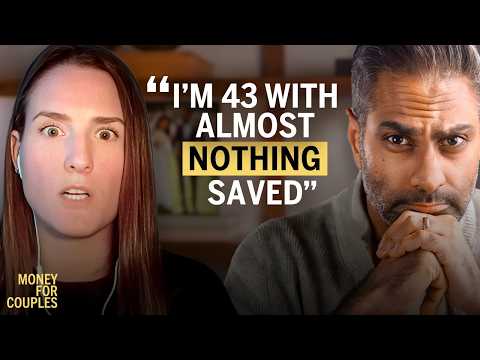
Nicole and Shane, a couple in their 40s who have been together for 8 months and are getting married in 11 days, sought financial guidance to combine their individual money habits and build a shared rich life. Nicole, 40, had adopted a "rich life" focused on travel, fine dining, and discretionary spending, including $500 dresses, after reading a financial book three years prior. Shane, 48, was a natural saver whose living expenses were largely covered by his nonprofit job, meaning he rarely worried about money. Their financial situations were distinct, and they aimed to merge them effectively. Their combined financial snapshot revealed assets of $245,000, investments of $239,900, savings of $265,000, and debt of $171,664, resulting in a net worth of $588,000. Their fixed costs were remarkably low at 36%, investments at 14%, savings at a high 42%, and guilt-free spending at a very low 8%. While they had done many things right individually, the challenge was to synergize their finances as a team.
Read AI summary
YouTube
The speaker emphasizes that travel should create magical memories, not lead to needing a "vacation after the vacation." This magic comes from invisible decisions, not always the most expensive ones. He draws a parallel to weddings, where people splurge on photographers because the photos are treasured annually. Similarly, travel should be approached with the intention of creating lasting memories. The speaker shares his approach to travel, which involves living the trip three times: in the planning, during the experience, and when sharing it. To enhance this, he and his wife hire local photographers in new cities. These photographers take them to parts of the city they wouldn't discover otherwise, capturing authentic moments of them eating, talking, and laughing, rather than just selfies. While initially feeling indulgent, these photos have become cherished memories that compound in value over the years. This highlights that some spending reveals its true value much later.
Read AI summary
YouTube
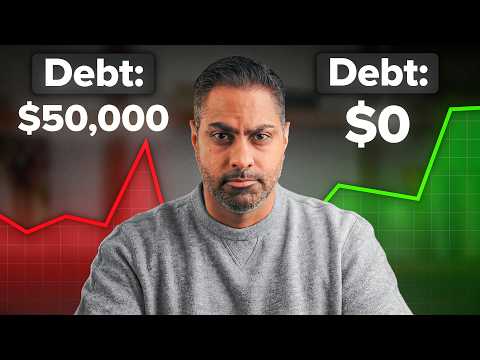
Canceling subscriptions won't solve significant debt; the interest alone is the real problem. With over 20 years of experience, the speaker outlines six proven steps to eliminate debt fast, emphasizing that the most crucial step isn't about cutting costs. Step one: Slow down your debt by addressing the interest rate. At 27% APR on $50,000 debt, over $1,000 monthly goes to interest, not the principal. Call your credit card company to request a lower APR; a five-minute call can save thousands. Inquire about hardship programs for more manageable payment structures, ensuring it doesn't affect the total amount owed. Consider a 0% introductory APR balance transfer if qualified, but prioritize systematic debt payoff.
Read AI summary
YouTube
Michaela and Dave, a couple in their early thirties with two young children, earn a combined annual income of $278,000 but struggle significantly with spending money, even to the point of wearing worn-out clothing. Their net worth is nearly $1.5 million, with $1.32 million in investments and $545,000 in assets, though they have $195,000 in mortgage debt. The host of the show aims to help them overcome a scarcity mindset that prevents them from enjoying their wealth. Michaela shares an example of wearing leggings with holes for four years because she couldn't justify buying new ones, even for $55-$65, until they were on sale for half price. Dave admits he's even worse with clothes and has an uncomfortable office chair he's had for four years, unwilling to spend $100-$150 on a new one despite back pain. Both acknowledge this behavior is at odds with their financial situation and cite the unknown future and potential expenses as reasons for their frugality. Dave describes it as a "hoarders mentality," over-planning for retirement, while Michaela struggles to plan beyond the next few years, focusing on a fuzzy idea of retirement and college for their children. They both tie their identity to work and purpose, fearing what they would be without it.
Read AI summary
YouTube
Buying a house is often presented as a cornerstone of financial success and generational wealth in America, leading many to believe that renting is inherently for the poor. However, this ingrained belief often overlooks the significant financial burdens and complexities of homeownership, potentially leaving individuals "house poor." Many people, like the 26-year-old nurse who immediately fell into poverty after her first mortgage payment, are blindsided by the true costs. The initial shock of a mortgage payment is often just the beginning. Unexpected maintenance issues, such as broken pipes or a faulty water heater, can quickly deplete savings. A general guideline for maintenance costs is 1-3% of the purchase price annually. These unforeseen expenses can turn the dream of homeownership into a financial nightmare, especially if not adequately planned for. While some might claim these struggles are "worth it in the long run" due to property value appreciation, this often fails to account for "phantom costs" like taxes, interest, and opportunity costs. Many homeowners don't truly understand if their purchase was a good financial decision, often relying on the societal narrative that homeownership is always beneficial. The dramatic inflation of housing prices during events like COVID-19 is an anomaly unlikely to repeat, making past appreciation an unreliable predictor for future returns.
Read AI summary
YouTube
Christina and Aaron, a couple married for 10 years with two children in Toronto, face significant financial challenges despite a combined annual income of $210,000. Their net worth is $191,000, but they carry $106,000 in debt, half of which is on high-interest credit cards. Their financial habits show a high fixed cost of 79%, only 1% invested, and 1% saved, with the latter primarily for gifts rather than a robust savings account. They have only two weeks' worth of savings, a precarious situation given their two children and high cost of living in Toronto. Both Christina and Aaron admit to a fundamental lack of trust in themselves and each other when it comes to money. Christina associates money with numbers, which she has struggled with since childhood, leading to feelings of stupidity and frustration. Aaron describes their relationship with money as "non-existent," characterized by avoidance and unspoken conversations. They acknowledge a cycle of trying and failing to address their finances, often waiting until situations become dire.
Read AI summary
YouTube
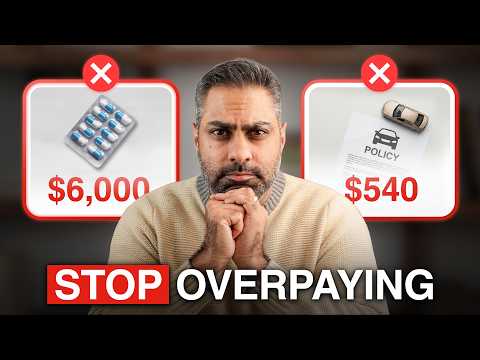
This video by Ramit Sethi provides actionable strategies and scripts for negotiating down various monthly bills, aiming to save viewers thousands of dollars annually. The core principle is that many common expenses are negotiable, and companies are motivated to retain existing customers rather than acquire new ones, which is significantly more expensive. **Credit Card APR:**
Read AI summary
YouTube
Molly and Jason, a couple aged 45 and 46 with a two-year-old daughter, face significant financial challenges despite a combined household income of $142,000 annually. Their savings stand at zero, with a net worth of $4,000 and a debt of $46,000. Molly describes their situation as living paycheck to paycheck with virtually no savings, actively trying to improve their financial standing, particularly after the increase in daycare costs which frequently overdraws her account. The couple maintains entirely separate finances. Molly manages most household bills, which are in her name, while Jason, the primary earner, sends her money multiple times a month via Venmo. This arrangement leads to Molly often having to request funds, sometimes negotiating amounts based on Jason's checking account balance, and frequently facing the risk of late fees. She finds this process frustrating and confusing, describing it as "scrambling" and acknowledges her difficulty with budgeting software due to a lack of clarity on incoming funds. Jason admits he doesn't track his spending frequently and has been largely disengaged from the financial management, stating he hasn't focused on it.
Read AI summary
YouTube
To design intentional, relaxed, and worthwhile trips, start by deciding the theme of the trip before planning anything. This initial decision, whether for adventure, relaxation, culture, or connection, acts as a filter, simplifying subsequent choices and preventing overbooked, scattered itineraries. For example, if the theme is relaxation, there's no guilt in spending a day at the hotel rather than rushing to museums. This approach ensures activities align with the chosen theme, making planning easier and the experience more coherent. Next, prioritize spending money to improve how you feel, rather than how things look. Avoid optimizing for Instagrammable locations or impressive deals if they don't contribute to a positive feeling. Instead, identify aspects of travel that typically cause discomfort or irritation and allocate funds to mitigate them. This could mean choosing flight times that don't disrupt sleep, paying for a more comfortable seat, or avoiding chaotic situations. The goal is to make the experience feel better, not just look good.
Read AI summary
YouTube
Bradford and Lisa, a couple with three children, moved from Canada to Colombia six and a half years ago with the intention of staying for only a year. However, they now find themselves "stuck," unable to afford a move back to Canada due to their financial situation. Their net worth is $273,000, with assets of $120,000 and investments of $153,000, but only $1,500 in savings and $1,300 in debt. Their fixed costs are 68% of their income, investments are 14%, and guilt-free spending is 17%, with 0% allocated to savings. This lack of savings is identified as a major problem, limiting their options. Lisa, originally from Colombia but raised in Canada, initially saw the move as a "money hack" due to the lower cost of living in Colombia compared to North America. However, she now feels trapped. While Bradford, a teacher, found a good job he enjoys, Lisa struggles to find meaningful work that pays adequately by North American standards. She views job offers of around $1,200 a month in Colombia as insufficient, comparing it to Canada's minimum wage of $15 an hour, leading her to feel undervalued and that her time is wasted. This disparity in career satisfaction and earning potential is a key driver for her desire to return to Canada. She also feels trapped because Bradford is content to stay in Colombia indefinitely, while she is not.
Read AI summary
YouTube
The speaker, with 21 years of experience spotting financial scammers, aims to equip viewers with seven red flags to avoid them. **Red Flag 1: Making Money Overly Complicated.** Scammers often use jargon like "tax-loss harvesting" or "asset-backed tokenization" to confuse people, especially those with simple financial needs like credit card debt. They also employ conspiracy theories, claiming "the banks" or "Wall Street" are hiding secret strategies accessible only to the ultra-wealthy. The speaker argues that genuinely wealthy individuals don't hide their methods; they simply operate at a different level. Real experts, like Warren Buffett, offer simple advice, such as investing in low-cost index funds. The speaker emphasizes that trying to copy the strategies of billionaires is misguided for most people. Those who truly understand money can explain it clearly. A simple test is to ask if the strategy can be explained in one or two sentences. If it sounds complicated and the only solution is to buy a service, it's a red flag.
Read AI summary
YouTube
Gabriella and Chris, married for 12 years with four children, are facing severe financial struggles despite both working multiple jobs. Gabriella, 36, applied to the show to save their marriage, stating a need for Chris, 40, to earn more and focus on his career. Chris, a traveling electrician, also works shifts at a local brewery, often on weekends, which Gabriella dislikes due to his frequent absence during the week. Their financial situation is dire: assets of $796,000, investments of $99,000, but zero savings and $493,000 in debt, resulting in a net worth of only $42,000. Their fixed costs are 109% of their income, meaning they spend more than they earn monthly. This structural deficiency is alarming, as they are accumulating debt faster than they can pay it off, a path that can lead to homelessness.
Read AI summary
YouTube
Traditional financial advice often hinders wealth building. Instead, a counterintuitive approach can lead to a "rich life," defined by conscious spending, strategic financial decisions, and focusing on major gains rather than minor cuts. **Rule 1: Spend More on What You Love.**
Read AI summary
YouTube
This session focuses on "Your Money Map to 100K," aiming to provide specific numbers and a new perspective on money, emphasizing both numerical goals and a clear vision for a rich life. A common delusion is that simply earning more money will solve all financial problems and make one rich. While increased income is beneficial and can resolve many money issues, it doesn't automatically fix systemic problems. Without proper financial systems at a lower income level, earning significantly more will not magically create them. The speaker challenges the idea of avoiding "lifestyle creep" entirely, suggesting that as income rises, spending can and should increase, alongside investments and savings, to enjoy a "rich life." The goal is not to hoard money until old age but to have a healthy relationship with it, where spending is not inherently "bad" and not spending is not inherently "good." This involves understanding one's numbers and confidently making financial decisions, rather than maintaining a toxic relationship with money driven by guilt or fear. Achieving a net worth of $100,000 is presented as a significant milestone, representing a first taste of financial freedom. It allows for choices like refusing overtime, splurging on gifts, and having a substantial emergency fund to navigate unexpected events. The journey to the first $100K is often the most challenging, but it becomes easier due to the power of compound interest.
Read AI summary
YouTubeBriefTube monitors your YouTube channels, generates AI-powered audio summaries, and delivers them wherever you listen. Telegram, Discord, Slack, or your podcast app. Fully automated.
Start free trial