You’re Wasting Thousands on Travel (And Not Even Enjoying It)
AI Summary
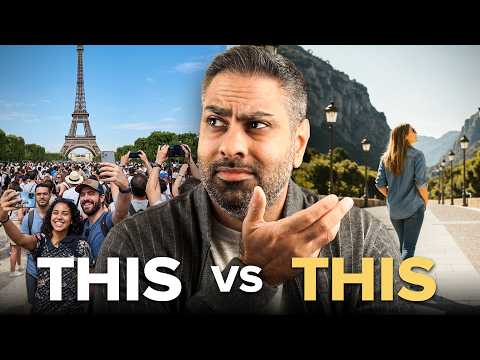
The speaker emphasizes that travel should create magical memories, not lead to needing a "vacation after the vacation." This magic comes from invisible decisions, not always the most expensive ones. He draws a parallel to weddings, where people splurge on photographers because the photos are treasured annually. Similarly, travel should be approached with the intention of creating lasting memories.
The speaker shares his approach to travel, which involves living the trip three times: in the planning, during the experience, and when sharing it. To enhance this, he and his wife hire local photographers in new cities. These photographers take them to parts of the city they wouldn't discover otherwise, capturing authentic moments of them eating, talking, and laughing, rather than just selfies. While initially feeling indulgent, these photos have become cherished memories that compound in value over the years. This highlights that some spending reveals its true value much later.
He advocates shifting focus from transactional decisions like hotel and flight costs to the feelings and memories a trip will create. This change in perspective redefines what's worth paying for.
Another key strategy is hiring experts to enhance the travel experience. On his honeymoon safari, after struggling to take good photos with a rented camera, he hired the lodge's photographer to teach them wildlife photography. This led to a magical learning experience, resulting in beautiful photos displayed at home. The core idea is to elevate experiences by hiring local people who can help you learn something, whether it's a food tour to understand culture through cuisine, or an archaeology professor to explain museum exhibits. These experiences are often affordable and can be found on platforms like Airbnb Experiences. He recounts hiring a group of formerly homeless boys in Nairobi who now run tours showing where they grew up, offering profound insights into their lives and local culture. This not only enriches the traveler's experience but also supports the local economy.
Sometimes, cheaper options can lead to more magical experiences. The speaker describes a time in Kyoto where a hotel laundry service quoted $325. Rather than paying, he and his wife found a local laundromat. Despite the language barrier and initial confusion, the experience of navigating the local laundromat together became a fun "mission" and a cherished memory, saving money and creating a unique ritual they now repeat on long trips. This illustrates that a "rich life" isn't about eliminating all friction; sometimes, discomfort or minor challenges can add something special and memorable.
Relationships can also transform travel experiences. The speaker learned this by working with a travel agent, who often works for free by earning commissions from hotels. He shares an instance where his travel advisor introduced them to the manager of a New York hotel before their arrival. This relationship led to a triple upgrade, providing them with an enormous, apartment-like room worth thousands of dollars. This demonstrated the immense power of working with the right people who have established connections.
Being "understood" is presented as a different, yet equally valuable, type of upgrade. The speaker, who loves nice hotels, ensures his assistant sends a pre-arrival letter outlining preferences, such as fresh berries instead of wine. He recounts arriving at a Tokyo hotel to find a jewelry box of hand-picked berries, a small detail that was incredibly meaningful due to his childhood memories of strawberries being a luxury. This personalized attention makes him feel cared for, highlighting that great experiences aren't accidental but happen when expectations are set.
He also shares a story from an Oberoi hotel in India where a misunderstanding about car pick-up time (24-hour vs. AM/PM) was mistakenly attributed to the hotel. Despite it being the guests' fault, the hotel took responsibility, upgraded their car, and even sent a cake to their home with an apology. This level of service, though expensive, exemplifies someone "always looking out for me" and creates unforgettable loyalty.
The speaker cautions against overly packed schedules that can ruin an experience. He describes a trip to Thailand that, while looking great on paper with many tours, felt exhausting and like constant management rather than enjoyment. A planned food tour became unenjoyable because he was tired and not in the right state of mind. He concludes that great trips run on "intention" and a focus on how one wants to feel, rather than rigid schedules.
Finally, he emphasizes that the best experiences are often designed quietly and involve learning and emotional connection. He recounts a design and architecture tour in Kyoto that led to a private visit with two local architects. They discussed the design of his luxurious hotel room, offering insights he wouldn't have gained otherwise. This interaction provided a deeper appreciation for the hotel's design and became a profoundly memorable moment. Such "invisible" experiences, often quiet and focused on people and beauty, are what truly create magical travel.
The ultimate rich life, he concludes, is about creating meaningful experiences and moments of awe, whether expensive or free, by focusing on how you want to feel and how you want your loved ones to be seen, rather than just transactional aspects of travel. He shares a deeply personal experience of surprising his mom and aunt on a tiger safari in India with a specially curated dinner, tailored to their life journey, which he considers his most meaningful travel memory. This highlights the power of surprising people and making them feel heard.