"We’re worth $1.5M but I refuse to buy new pants"
AI Summary
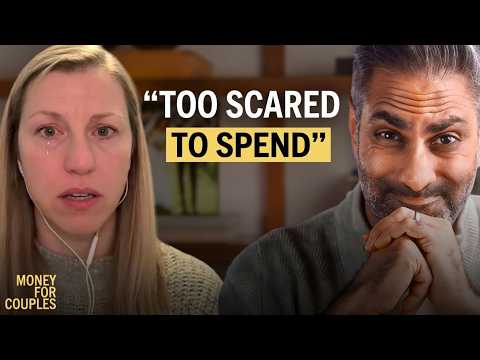
Michaela and Dave, a couple in their early thirties with two young children, earn a combined annual income of $278,000 but struggle significantly with spending money, even to the point of wearing worn-out clothing. Their net worth is nearly $1.5 million, with $1.32 million in investments and $545,000 in assets, though they have $195,000 in mortgage debt. The host of the show aims to help them overcome a scarcity mindset that prevents them from enjoying their wealth.
Michaela shares an example of wearing leggings with holes for four years because she couldn't justify buying new ones, even for $55-$65, until they were on sale for half price. Dave admits he's even worse with clothes and has an uncomfortable office chair he's had for four years, unwilling to spend $100-$150 on a new one despite back pain. Both acknowledge this behavior is at odds with their financial situation and cite the unknown future and potential expenses as reasons for their frugality. Dave describes it as a "hoarders mentality," over-planning for retirement, while Michaela struggles to plan beyond the next few years, focusing on a fuzzy idea of retirement and college for their children. They both tie their identity to work and purpose, fearing what they would be without it.
Recent life events have intensified their financial anxieties. Dave experienced a sudden heart issue, requiring hospitalization, which was a shock especially five months postpartum for Michaela. This health scare, coupled with the stress of a new baby, felt like a significant step back, forcing a focus on the present rather than the future. Simultaneously, Michaela’s mother was diagnosed with stage 4 cancer while Michaela was five months pregnant. This diagnosis, combined with Dave’s hospitalization and a new potential health scare for Dave (a cyst possibly being cancerous), has left them feeling frozen and uncertain about the future. The potential need to support Michaela’s mother financially, as she did not save for retirement, adds to their stress about unknown future bills and how to balance enjoying life with financial preparedness. Michaela anticipates becoming her mother's primary caregiver.
The host draws a parallel to a psychology study where people remain inactive in a smoky room, highlighting how individuals can freeze in the face of crisis. He emphasizes the importance of action, even if it seems like an overreaction, drawing from his own experience leaving New York City at the start of the COVID-19 pandemic. He notes that Michaela and Dave are not lazy or irresponsible but are "frozen," which is a deeply human response.
The conversation then shifts to their financial numbers. Their conscious spending plan reveals significant assets and investments, which they acknowledge are "amazing." However, they admit to shorting their assets by $30,000-$40,000 by not accounting for vehicles. Their combined gross monthly income is $23,186, totaling $278,228 annually. Michaela was shocked to learn their household income was nearly $100,000 higher than she thought, feeling her heart drop and questioning "what now?" without feeling guilty about spending. This underestimation of their income, compounded by Dave’s commission-based pay and stock options, highlights a communication gap. Michaela admits she trusts Dave with the financial details, focusing instead on childcare and household management, a common division of "invisible labor."
Dave’s upbringing was middle class, with both parents working. His family didn't have deep conversations about money but also lacked scarcity. He recalls being made to return money earned from selling stuffed animals, indicating a nuanced view rather than outright restriction. He started his first job around age 10, hoarding cash in a shoebox, saving most of it, which the host identifies as a scarcity mindset.
Michaela’s upbringing was marked by financial stress. Her parents divorced when she was eight, and her mother filed for bankruptcy. Her father’s construction business had ups and downs. Money was a constant source of stress, with few positive conversations and no vacations for her mother. This experience instilled in Michaela a fear of reaching old age and being unable to travel or enjoy life, especially now that her mother is ill. She learned early on to be independent and self-reliant, taking her first job at 14. Her brother passed away at 24, and her father six years ago, further shaping her perspective on life's brevity and the importance of maturity. She remembers more negative than positive childhood experiences, feeling she had to be the parent to her parents. This led her to prioritize her own financial stability, ensuring she wouldn't struggle as her mother did. She admits that even now, having achieved financial security, she feels guilty wanting to spend.
The host emphasizes that while their scarcity instincts were beneficial in building wealth, they are now hindering them. He proposes that they need to unlearn these ingrained beliefs and behaviors. The idea of a "rich life" has been largely financially based, with goals focused on accumulating money rather than experiencing life.
When discussing future plans, Michaela expresses a desire for experiences like a European trip, but struggles to envision the details, comparing it to an unrealistic dream. The host suggests smaller, more achievable steps, like going to lunch and ordering appetizers or getting a massage, and strongly advises banning the word "need" from their vocabulary, as it reinforces scarcity thinking.
Dave’s upbringing was middle class, with both parents working. He recalls a lack of deep financial conversations but also no overt scarcity. He started working young, saving cash in a shoebox, and his biggest splurge was a new bike. The host notes that this behavior, along with Michaela's, has created a "supercharged scarcity couple."
Their money identity as a couple has been centered on saving as much as possible for retirement. While they acknowledge being "rich," the idea of stopping saving is uncomfortable, not due to lack of funds, but a perceived lack of maximum return. The host points out that their large savings account, exceeding 12 months of emergency fund, is precisely for emergencies, and the concern over yield is misplaced.
The host facilitates a shift in their Conscious Spending Plan. They agree to allocate $1,500 per month to a vacation fund, redirecting it from their savings and reducing their monthly investment contributions slightly. They aim for a trip within the next year, before their oldest starts kindergarten. They also commit to a $300 monthly budget for date nights, including childcare, and a monthly massage for Michaela, with Dave’s enjoyment of golf also being acknowledged.
A significant revelation occurs when the host reveals their projected retirement savings: $18.2 million if they stopped contributing now. This number is startling to both, with Dave expressing embarrassment at how little they've given themselves and others despite their wealth, and Michaela feeling relief that future financial stress related to her mother’s care is less concerning. They realize their scarcity mindset has prevented them from enjoying their success and creating a meaningful legacy.
The host encourages them to be proactive in using their money for experiences, suggesting they don't need to wait for ideal circumstances. He proposes concrete actions: moving Michaela’s mother closer now, taking vacations without hesitation, hiring help for childcare, and renovating their home. He emphasizes the importance of using intentional language, focusing on what they *do* want to achieve rather than what they *don't* want or can't afford.
For their home life, they envision a clean house with regular cleaning services, a dedicated office space for Dave with better lighting and a comfortable chair, and an organized closet for Michaela. They also want a new coffee maker and to continue enjoying higher-quality coffee beans. For larger aspirations, they discuss a European trip, potentially to Spain, Portugal, and Italy, involving food, architecture, and possibly vineyards. They consider bringing their children and inviting family to assist with childcare, allowing for adult-only time. The host proposes options like shorter trips for just the couple, or hiring a travel nanny.
The financial plan is adjusted to accommodate these desires. They agree to allocate $1,500/month to vacations, $300/month for date nights (including sitter costs), and a monthly massage for Michaela. Dave’s golf hobby is also implicitly supported. The host stresses that spending on experiences and self-care is not wasteful but an essential part of a rich life, especially given their financial capacity. They are encouraged to prioritize what they want to do, then consider logistics like childcare, and finally money, rather than the other way around.
The conversation concludes with a powerful affirmation of their accomplishments and the potential for a fulfilling life. The host highlights that even if they stopped saving now, they would still have an immense amount of money by retirement, underscoring that their current frugality is unnecessary and limiting. The focus shifts from accumulation to responsible spending, meaningful experiences, and potentially philanthropy. The host emphasizes that their journey from scarcity to abundance is ongoing, but they are now equipped with the awareness and tools to embrace their wealth and create the rich life they deserve.