Grand Angle
AI Audio Summaries
9 videos summarized
1 follower on BriefTube
Last summary: Sep 20, 2026
AI Audio Summaries
9 videos summarized
1 follower on BriefTube
Last summary: Sep 20, 2026
Read AI summary
YouTube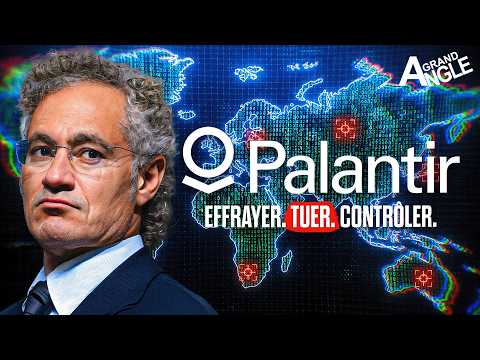
The capacity of free and democratic societies to assert themselves requires more than just moral appeal; it demands hard power, and the hard power of this century will be built on software. Alexander Karp, author of "Technological Republic" and CEO of Palantir, a major American tech company with a key role in US defense strategy, is at the forefront of this idea. Palantir, valued at approximately $350 billion on the stock market, develops software that helps states, armies, and intelligence agencies aggregate and analyze vast amounts of data to make operational decisions. Founded in 2003 by Karp and Peter Thiel with initial funding from In-Q-Tel, the CIA's venture capital fund, Palantir's DNA has always been at the intersection of tech and American intelligence. It was not a company that grew closer to the state over time; it was born within it. For comparison, Lockheed Martin, the world's largest military contractor, responsible for F-35s, THAAD missiles, anti-missile defense systems, and reconnaissance satellites—essentially the industrial backbone of the Pentagon—is valued at around $135 billion. This means that, in the market's perception, Palantir is worth almost three times Lockheed Martin, despite generating merely over $4 billion in revenue annually, compared to Lockheed Martin's $75 billion. This valuation appears absurd by classical financial standards, yet it persists, having survived numerous warnings and critical reports.
Read AI summary
YouTube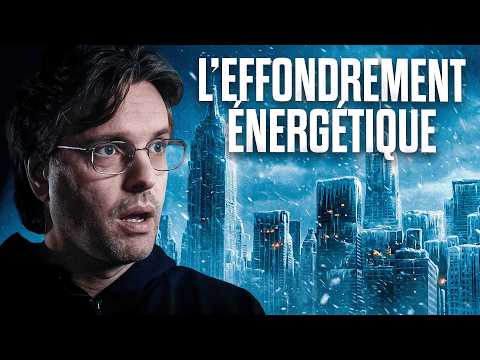
Texas experienced a massive winter storm that brought temperatures below freezing for days, leading to widespread power and water outages, and hundreds of deaths. Homes were severely impacted, with frozen pipes, ice waterfalls from ceilings, and massive icicles inside. This was not a minor inconvenience but a matter of survival. The primary role of the grid operator, ERCOT, is to maintain balance across the grid. When generators failed to produce enough energy during the storm, ERCOT had to reduce power to loads, resulting in blackouts. There was a near-catastrophe, with the state almost losing the grid for months, coming minutes away from a total blackout. The event served as a major wake-up call for Texas, including political leaders and the governor, prompting a focus on preventing similar occurrences in the future, even though 100-year storms cannot be stopped.
Read AI summary
YouTube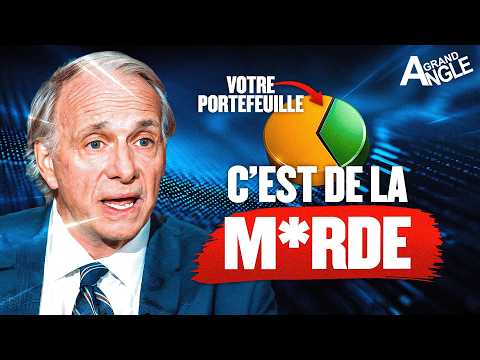
For over 70 years, the financial industry has promoted the 60/40 portfolio, comprising 60% bonds for security and 40% stocks for growth. This strategy, rooted in Harry Markowitz's 1952 Modern Portfolio Theory, is mathematically appealing because it combines assets with negative correlation, aiming for the best possible return for the lowest risk. For four decades, this approach was highly successful, but this success was largely due to a unique historical period between 1980 and 2020, which Ray Dalio describes as a phase of peace and prosperity. During this time, globalization exported inflation and imported deflation, interest rates plummeted from nearly 20% to zero, and massive liquidity injections inflated all financial assets. In this environment, the 60/40 portfolio was invincible; when stocks fell, central banks lowered rates, mechanically increasing bond prices and activating the safety net. However, the world has changed. Since 2022, bonds have started moving in tandem with stock markets, amplifying portfolio movements instead of moderating them. This shift is attributed to the return of persistent inflation, which causes the correlation between stocks and bonds to turn positive. When the economy is stressed, stocks fall, and bonds also fall as interest rates rise to combat inflation, turning the safety net into a dead weight. The 60/40 portfolio is no longer a universal solution, as it is effective during disinflationary periods but ineffective during inflationary ones.
Read AI summary
YouTube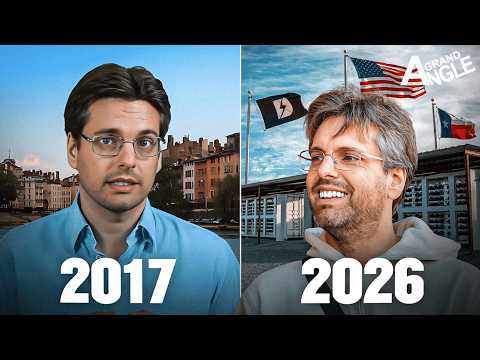
The speaker begins by reflecting on the nine-year anniversary of their YouTube channel, Grand Angleto. They recall starting with basic videos on inflation and the utility of money, filming in their living room on a green screen while their wife took their children to the park, and editing late at night. After five months of intense effort and little sleep, they earned only 37 cents in ad revenue, but were driven by the growth in views, comments, and engagement, believing they were building something significant. Their efforts intensified, juggling a part-time job, two young children, the channel, and family life for two years. In February 2018, they interviewed Charles Gave, a pivotal moment, followed by other notable figures. In October 2018, they launched an investment newsletter with Charles Gave and Guillaume Rouvier. Eventually, they left their part-time job to focus entirely on real estate and Grand Angle.
Read AI summary
YouTube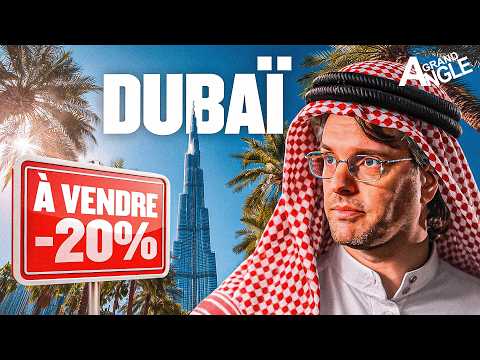
This video discusses Dubai's business model and the speaker's personal investment strategy, which he calls the "three burrows strategy." This strategy involves taking maximum risk across three uncorrelated investment pillars: private equity (investing in unlisted companies), anti-fragile refuge assets (specifically Bitcoin), and high-risk, high-potential luxury real estate, particularly in Dubai. The speaker emphasizes that Dubai's success is not based on oil. While Abu Dhabi, a neighboring Emirate, possesses 95% of the UAE's oil reserves and financially supported Dubai during the 2008 crisis, oil and gas now account for only about 2% of Dubai's GDP, down from nearly 50% in the 1970s. The strong political and financial ties between Abu Dhabi and Dubai are crucial, as is their shared federal budget for common expenses, alongside individual emirate budgets.
Read AI summary
YouTube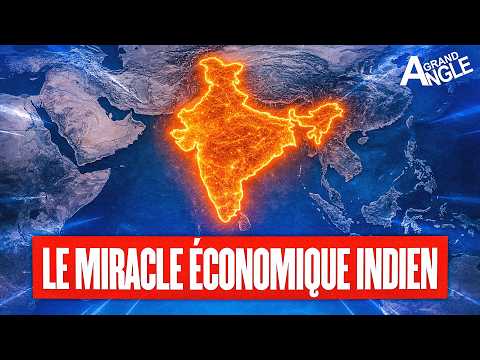
For over a year, the global economy has been shaped by Washington’s "America First" rhetoric, promising that high tariffs would force factories to return to U.S. soil. However, according to the Peterson Institute’s modeling of 2025 data, the reality has diverged from the promise. While these tariffs have slowed global growth and fueled inflation, they have not collapsed the U.S. trade deficit. Instead, they have triggered a massive recomposition of global trade. Deficits with China and Europe have indeed shrunk, but they have been offset by rising deficits with partners like Mexico, Vietnam, and Taiwan. Rather than a "miraculous" relocation of industry to the United States, the world has seen a redirection of flows, with India emerging as a primary strategic anchor in this new global map. While the West is currently exhausted by "Schumpeterian" growth—driven by technological disruption and AI that often fragments the social fabric—India has entered a phase of "Ricardian" growth. This is growth through connection: building roads, bridges, and optimizing comparative advantages. This model is more popular because it enhances existing structures rather than destroying them, mechanically raising the general standard of living. India is no longer just an emerging country playing catch-up; it is becoming a central pillar of the global industrial hierarchy.
Read AI summary
YouTube
The military operations conducted by the United States and Israel in Iran represent more than just a phase of global uncertainty; they may signal a historical shift equivalent to the fall of the Berlin Wall. This perspective is shaped by the understanding that the Middle East is currently undergoing a fundamental realignment. While the situation is volatile, the underlying dynamics suggest a transition away from a decades-old theocratic model toward a new regional order. To understand this shift, one must look at the divergence between Iran and its neighbors since the 1979 Islamic Revolution. Before the revolution, under Shah Mohammed Reza, Iran pursued a path of rapid modernization known as the "White Revolution," which included land redistribution and women's suffrage. The 1979 revolution replaced this monarchy with a theocracy that prioritizes a "resistance economy" aimed at the eradication of Israel and the defiance of the West. Today, this model mirrors the terminal stages of the Soviet Union. The Iranian state controls 70% to 80% of the GDP, much of which is captured by "Bonyads"—clerical-run industrial conglomerates that function as a state within a state. This predatory system prevents structural reform, leaving the Iranian population in a state of economic stagnation where the GDP per capita is currently lower than it was before the fall of the Shah.
Read AI summary
YouTube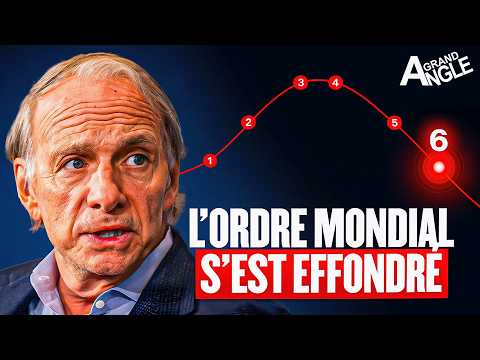
Current global events indicate that we have reached a critical decision-making point, signaling the collapse of the post-1945 world order. World leaders recently gathered at the Munich Security Conference to acknowledge that the era of established international rules has ended, replaced by a period of "great power politics." In this new phase, described as "Phase 6" of a recurring historical cycle, the rule of law is superseded by raw power. As the previous structures of security and commerce dissolve, the risk of a profound recession—or something even more transformative to the monetary order—becomes imminent. The fundamental difference between internal national order and external international order is the presence of enforcement. While nations have police and courts to resolve disputes, international relations operate under the "law of the jungle." Because international organizations like the United Nations lack more wealth and power than the strongest individual countries, those powerful nations ultimately dictate the rules. Conflict arises when a dominant power begins to weaken while a rising power approaches its strength. In these moments, disagreements are rarely settled by lawyers; instead, they are resolved through threats and, eventually, five distinct types of warfare: trade, technology, capital, geopolitics, and military combat.
Read AI summary
YouTubeBriefTube monitors your YouTube channels, generates AI-powered audio summaries, and delivers them wherever you listen. Telegram, Discord, Slack, or your podcast app. Fully automated.
Start free trial