Celui qui contrôle l’Intelligence Artificielle contrôle le monde
AI Summary
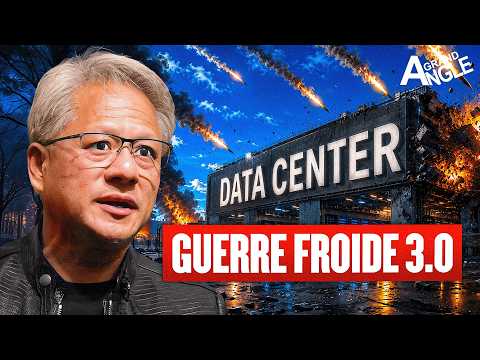
The Islamic Revolutionary Guard Corps (IRGC) in Iran claimed to have destroyed an Amazon cloud computing center in Bahrain and later targeted an Oracle data center in Dubai. This action follows a message from Iran to Western chanceries, stating that if Washington attacks Iran, Tehran reserves the right to retaliate by targeting a data center, specifically mentioning the Stargate site under construction in Abu Dhabi. This facility, while officially a data center, is described as a power hub for major AI players like OpenAI, Oracle, Nvidia, Cisco, Softbank, and G42, effectively representing a significant portion of Western AI infrastructure in the Gulf.
This shift indicates that warfare is moving towards 21st-century productive capital: computing power. Unlike oil, factories, or ports, computing power concentrates all industrial dependencies into one tool. A single gigawatt of AI requires chips, lithography machines, production factories, water for cooling, endless electricity, land, cables, fiber optics, and now, military protection. When an asset centralizes so many strategic dependencies, it transitions from a commercial commodity to a sovereign instrument, authorized, taxed, forbidden, and defended by force if necessary. Iran's targeting of a data center is the military manifestation of this shift.
Another facet of this change is seen in Donald Trump's decision to allow Nvidia to sell its H2 chips to approved Chinese clients, but with a 25% levy on sales. This was accepted because, months earlier, regulatory adjustments had forced Nvidia to announce a negative charge of $5.5 billion due to export restrictions on GPUs to China. These events highlight the increasing power of states over computing power, a new key productive capital of the 21st century, moving its control from tech companies to strategic state oversight.
This new economy can be visualized as a seven-story pyramid. At the top are models and applications like ChatGPT, representing the media layer. The second floor holds cloud services and data centers such as Azure, AWS, Oracle, and Stargate, which are vital for hosting models and large-scale inference. The third level consists of chips from Nvidia, AMD, Broadcom, and Huawei, which convert electricity into statistical intelligence. The fourth floor comprises foundries, with TSMC as the absolute leader in chip production. The fifth floor contains critical equipment, notably ASML in the Netherlands, which holds a near-monopoly on EUV lithography machines essential for advanced chip manufacturing. The sixth floor is the physical base: power plants, high-voltage connections, cooling systems, water reserves, land, and building permits, emphasizing that AI is a heavy infrastructure industry. Finally, the seventh floor embodies law, security, and sovereignty, including export controls, sanctions, licenses, military alliances, and armies protecting strategic routes, cables, factories, and sites.
Fascinatingly, as one descends this pyramid, market valuation and media attention increase, with companies like OpenAI, Anthropic, Nvidia, Microsoft, and Google attracting the most investor interest. However, in terms of actual power, the reverse is true. At the top of the pyramid, a single official's signature can destabilize hundreds of billions in market capitalization. The $5.5 billion loss for Nvidia in one quarter was not due to falling demand or product quality but sovereign law interrupting cash flows. This indicates that the true winners of the AI revolution will not solely be determined by engineering, genius, or capital, but by states. States intervene at all seven levels of the pyramid, possessing the unique capacity for transversal action. Nvidia, despite its exceptional industrial machine and market capitalization exceeding Japan's GDP, has limited real power, scope, and strategic freedom.
The US Bureau of Industry and Security’s restrictions on AI chip exports to China, aimed at preventing Beijing from acquiring computing power for military applications, led Nvidia to adapt by designing throttled versions of its chips (H800, H20) to stay below Washington’s technical thresholds. However, in April 2025, the Trump administration further tightened regulations, banning the H20. This resulted in $5.5 billion in provisions for losses for Nvidia, as already manufactured stocks became unsellable. While Trump eventually re-authorized exports to China for a 25% "passage fee," China, viewing the US as a rival state rather than just a customer, has not generated any revenue for Nvidia from the H200 in China. Beijing is actively seeking to reduce its dependence on American permission, leading Chinese companies like Baidu, Alibaba, and Tencent to turn to Huawei's Ascend 950 PR chips, demonstrating that high-level AI can now run on domestic technologies without Washington's approval. This US policy, while short-term effective in slowing China's access to top Nvidia computing power, accelerates the long-term goal of building an autonomous Chinese AI technological system.
This geopolitical struggle extends to non-US and non-Chinese strategic companies. Taiwan's TSMC, which produces nearly all advanced chips globally (including Nvidia's H200), has announced a $165 billion investment in six US factories in Arizona under American pressure. However, a Taiwanese rule (N2) prevents TSMC from producing chips abroad that are less than two generations behind those made in Taiwan. While TSMC produces 2nm chips at home, its Arizona factory is just starting 4nm production. This "silicon shield" ensures Taiwan's indispensability in advanced microchip manufacturing, making a Chinese invasion an economic catastrophe for the world. TSMC's industrial strategy is, in essence, a defense policy.
Similarly, ASML in the Netherlands, the sole manufacturer of EUV lithography machines essential for advanced chips, has delivered zero EUV machines to China since 2009. Under direct pressure from Washington and the Foreign Direct Rule, the Dutch government refuses to renew export licenses. This rule allows Washington to control the final destination of any product manufactured outside the US that incorporates critical