AI Audio Summaries
11 videos summarized
4 followers on BriefTube
Last summary: May 6, 2026
Read AI summary
YouTube
This broadcast explores the Petrine corpus, a body of early Christian literature attributed to Saint Peter, examining both canonical and apocryphal texts to understand Peter's historical figure, his attributed writings, and potential Gnostic influences. The Petrine corpus includes the First and Second Epistles of Peter, recognized in the New Testament canon, as well as numerous apocryphal texts such as the Preaching of Peter, the Apocalypse of Peter (in both its proto-orthodox and Gnostic versions), the Gospel of Peter, and the Acts of Peter and the 12 Apostles. These texts span a wide period, with the First Epistle of Peter dated between 80 and 110 AD and some later texts extending into the 2nd to 4th centuries, indicating that Peter himself could not have authored all of them.
Read AI summary
YouTube
This conference explores the mysteries surrounding the Order of the Temple, addressing questions about a possible Templar treasure, the existence of a secret society within the Templars, their religious beliefs, and the idol Baphomet. The presentation is divided into five parts: the Templars' foundation and fall, the enigma of material treasure, Templar architecture and archaeology, their beliefs and the Baphomet idol, and the order's survival and its modern manifestations. The Order of the Temple was founded by Hugues de Payns, a nobleman from Champagne, who traveled to the Holy Land between 1104 and 1107. He did not participate in the First Crusade but later returned to settle there permanently. Facing difficulties in the East, de Payns and other knights, including Geoffroy de Saint-Omer, conceived of a military order to protect pilgrims and trade routes in the Holy Land. This led to the unofficial creation of the order around 1118 or 1119. While popular legend speaks of nine founding knights, historical texts written a century or more later are the source of this number, suggesting a symbolic rather than strictly historical origin.
Read AI summary
YouTube
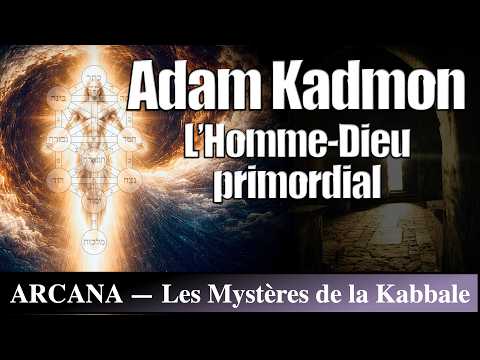
The cabalistic tradition introduces Adam Cadmon, or the primordial man, a cosmic being that existed before the world's creation. This figure symbolizes the structure of the universe, God, and humanity, all conceived as sharing a common symbolic architecture. Adam Cadmon, often translated as "primordial man" or "original man," is central to esoteric Jewish theology, fundamentally shaping the cabalistic understanding of creation, the cosmos, and the divine-human relationship. It's crucial not to mistake Adam Cadmon for a mythical character like Noah or Abraham. Instead, he represents a metaphysical principle, a cosmic archetype that symbolically illustrates how divinity manifests in the world. Etymologically, "Adam Cadmon" means "ancient Adam" or "primordial Adam." He should not be confused with Adam Rishon, the first man in the biblical Genesis narrative, who belongs to the manifested world of creation. Adam Cadmon exists at a prior cosmic level, that of the divine plan itself, in emanation.
Read AI summary
YouTube
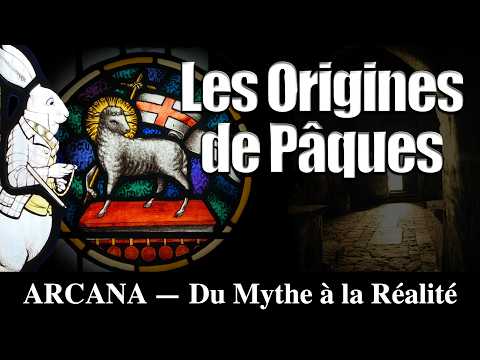
The Christian celebration of Easter, while central to Christianity, has origins much older than the religion itself, intertwining themes of death, resurrection, sacrifice, and the regeneration of nature. Theologically, Easter is more significant and older than Christmas, commemorating the foundational event of Christianity: the resurrection of Jesus Christ. Without Easter, Christianity as we know it would not exist. According to the canonical gospels, Jesus of Nazareth was crucified in Jerusalem after being accused by Jewish authorities and condemned by Roman authorities. Following his last supper, Jesus was arrested, interrogated, and delivered to Roman prefect Pilate. Judged for sedition and royal pretensions, he was crucified on Friday, died, and was buried. On the third day, Sunday morning, his tomb was found open and empty, and Jesus subsequently appeared alive to several disciples. This sequence of events is presented not merely as an execution and resurrection, but as Jesus offering himself as a sacrifice to redeem humanity's sins, thus opening the path to redemption and salvation. This act transformed Jesus from a spiritual master or prophet into the Son of God, the victor over sin and death.
Read AI summary
YouTube
This YouTube live stream marks the 10th anniversary of the channel "Arcana Mystère du Monde." The host, Ludovic, expresses initial stress but emphasizes that a lack of stress can be a bad sign. He thanks the viewers, stating the channel wouldn't exist without them, and highlights their role in making the channel live through likes, comments, and shares. He also mentions the "boost" function for YouTube's algorithm. The evening's structure includes:
Read AI summary
YouTube
This broadcast focuses on history and archaeology, aiming to provide a lighter discussion on the topic, announce a new series of at least 12 episodes on ancient civilizations, prehistory, protohistory, and lost myths, and explore how to approach history and archaeology on the internet. The speaker begins by addressing the documentary "La Révélation des Pyramides" (The Revelation of the Pyramids), released 16 years ago. While not intending to debunk it, the speaker notes its significant impact on what is called "alternative archaeology" or "romantic archaeology," sometimes pejoratively termed "pseudo-archaeology." The documentary was well-produced, visually appealing, and posed intriguing questions, captivating many enthusiasts of ancient civilizations. This led to a surge in independent research and the creation of numerous YouTube channels and other documentaries in a similar vein, such as "Bâtisseurs de l'ancien monde" and "Mégalithes, un monde oublié."
Read AI summary
YouTube
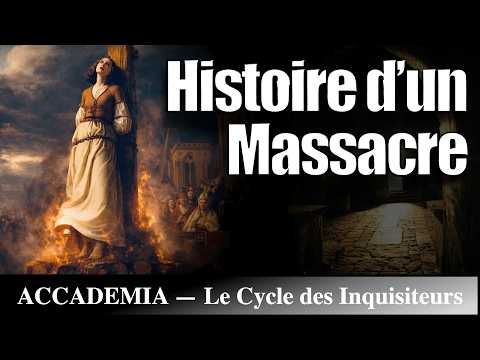
This episode of L'Academia for March 2026 delves into the broad concept of "inquisitors," extending beyond the historical Catholic Church organization to encompass any ecclesiastic, judge, magistrate, philosopher, or theologian who opposed, combatted, and, to some extent, persecuted certain philosophical and mystical currents. This episode specifically focuses on the "hunt for witches." The discussion begins by defining witchcraft. Etymologically, the term derives from the Latin "sortiarius," meaning "to cast spells" or "to tell fortunes." In ancient Greek, "goessia" referred to the art of invoking spirits. Modern definitions often associate witchcraft with negative magical practices, aiming to harm individuals, animals, or plants, and causing misfortune. However, the speaker emphasizes that the original meaning of "sorcellerie" (witchcraft) was more neutral, referring to someone who could "tell sorts" or consult destiny, implying the ability to alter or change fate through invisible forces, natural laws, or otherworldly entities. This original sense was neither inherently good nor bad; the morality of the act depended on the individual's intentions.
Read AI summary
YouTube
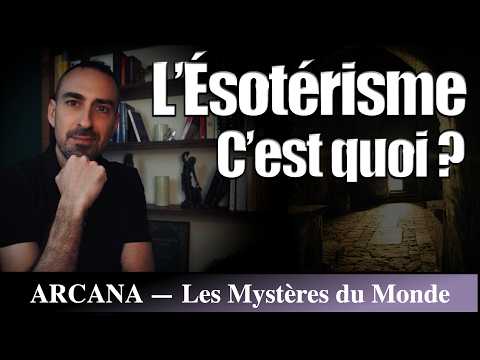
This summary provides a comprehensive overview of the nature, history, and practice of esotericism based on the provided transcript. ### Defining Esotericism: Beyond the Myths
Read AI summary
YouTube
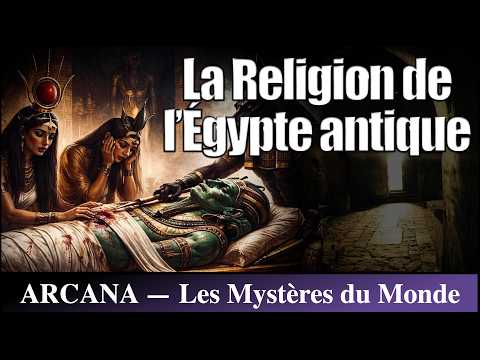
This summary explores the complex reality of ancient Egyptian mythology, religion, and cults, moving beyond the "Egyptomania" of the 17th and 18th centuries to examine the actual beliefs practiced over 3,000 years of history. ### The Problem of Context and Egyptomania
Read AI summary
YouTube
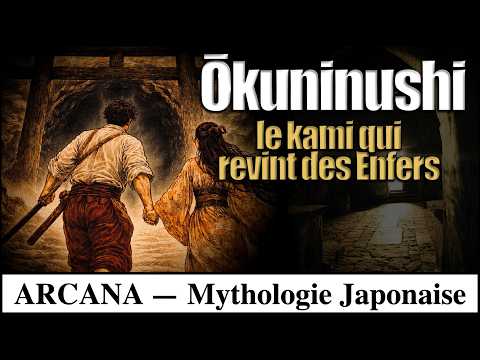
In the vast tapestry of Japanese mythology, long before the arrival of the celestial gods, a pivotal deity named Okuninushi had to endure death, journey through the underworld, and experience resurrection to establish the foundations of the human world. As a central figure in Shintoism, Okuninushi is revered as a great civilizer associated with medicine, agriculture, fertility, marriage, and prosperity. Unlike historical figures who were divinized later, such as the scholar Sugawara no Michizane, Okuninushi appears in ancient sources like the *Kojiki* as a kami from the very beginning. While some scholars suggest his myths might echo distant Jomon-period traditions, he remains a purely mythological descendant of the storm god Susanoo and Princess Koshinada Hime. Okuninushi’s primary place of worship is the Izumo-taisha shrine, one of Japan’s oldest and most significant religious sites. Every year, during the tenth lunar month known as *Kamiarizuki*, deities from across Japan are said to gather there for divine deliberations, with Okuninushi occupying a central role. His legend begins in the province of Izumo, where he lived as the youngest of eighty brothers. These brothers were cruel and ambitious, and all sought to marry the beautiful Princess Yagami of the neighboring Inaba province. They forced Okuninushi to accompany them on their journey merely as a humble luggage bearer.
Read AI summary
YouTubeBriefTube monitors your YouTube channels, generates AI-powered audio summaries, and delivers them wherever you listen. Telegram, Discord, Slack, or your podcast app. Fully automated.
Start free trial