AI Audio Summaries
7 videos summarized
1 follower on BriefTube
Last summary: Jun 5, 2026

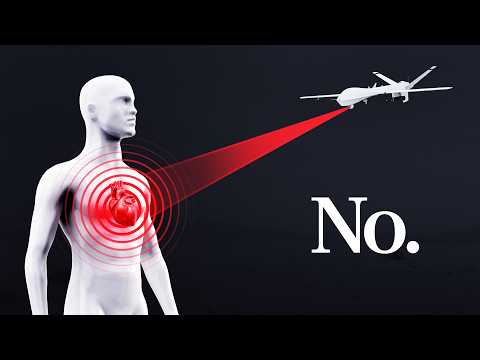
On April 3rd, 2026, an American fighter plane was shot down over Isfahan, Iran. The pilot was rescued quickly, but the weapon system officer (WSO) landed deep within hostile territory, injured. He had a rescue beacon but could only use it sparingly to avoid detection. The US needed to pinpoint his location in hundreds of square kilometers of desert. Surprisingly, the WSO was rescued just 40 hours after the crash. According to a New York Post article, the CIA deployed a futuristic device called "Ghost Murmur" that could detect the magnetic field produced by his heartbeat from kilometers away. This technology would need to overcome magnetic signatures from other sources like soldiers, vehicles, animals, and Earth's magnetic field. The article stated that advances in quantum magnetometry, specifically sensors built around microscopic defects in synthetic diamonds, made this possible. This claim sparked a media frenzy, with many questioning its feasibility.
Read AI summary
YouTube
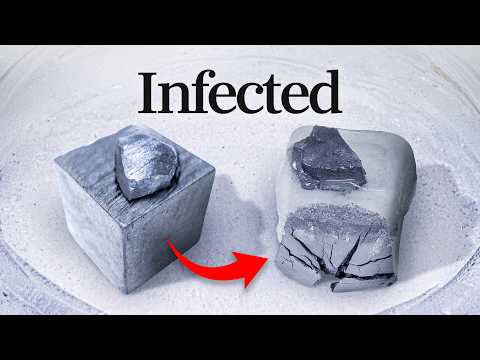
In 1996, a drug called ritonavir was introduced to treat HIV, rapidly becoming a miracle for patients. By 1998, 75,000 patients were taking up to 20 pills daily, transforming a fatal condition into a manageable one. Each batch of ritonavir capsules underwent rigorous quality control, including dissolution tests to ensure they dissolved within 30 minutes for proper absorption. For two years and 240 consecutive lots, the drug never failed. However, an analyst discovered a capsule that did not dissolve properly, triggering an emergency shutdown. The entire batch was destroyed, and the production line was deep-cleaned to eliminate contamination. The next day, the same issue recurred: clear capsules turned white and cloudy. Technicians found the paste filled with millions of tiny, needle-like crystals, previously unseen. Attempts to recreate ritonavir in the lab also yielded cloudy, white paste, baffling researchers. Despite checking all ingredients, settings, temperatures, and procedures, everything appeared correct. Within a week, all ritonavir produced by both the lab and factory became cloudy.
BriefTube monitors your YouTube channels, generates AI-powered audio summaries, and delivers them wherever you listen. Telegram, Discord, Slack, or your podcast app. Fully automated.
Start free trialRead AI summary
YouTube
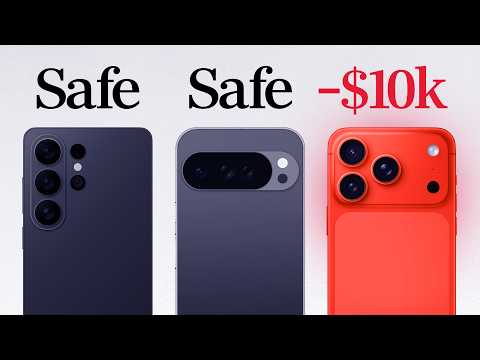
The video demonstrates a unique hack that allows money to be stolen from a locked iPhone using its mobile wallet, specifically targeting Apple Pay with a Visa card in Express Transit Mode. The hack was developed by cybersecurity experts Professors Ioana Boureanu and Tom Chothia from the University of Surrey and was first made public in 2021, yet the loophole remains unaddressed. The demonstration begins with the host, Henry, attempting to steal money from MKBHD's (Marques Brownlee's) locked iPhone. Initially, Henry charges $5 from Marques's phone using a regular payment terminal while the phone is locked and placed on a device. The transaction is approved without any interaction from Marques, who immediately sees a $5 charge on his phone. Henry then escalates the attempt to $10,000, which is also successfully approved and charged to Marques's account, again without any verification or unlocking of the phone. This highlights the severity of the vulnerability, as the only limit to the amount that can be stolen is the cardholder's bank account limit.
Read AI summary
YouTube
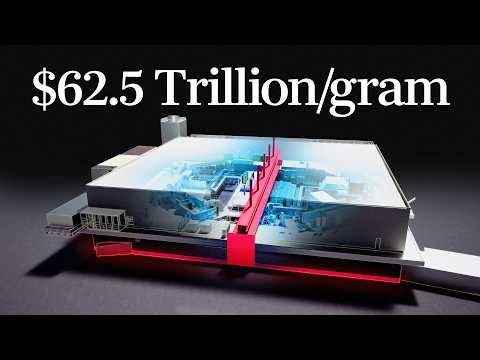
Antimatter, a substance that annihilates matter upon contact, is being produced and studied at CERN, the European Organization for Nuclear Research. This process, governed by E=MC², is the most violent known in physics. CERN's antimatter factory creates approximately 20 million antiprotons per minute by accelerating protons to 99.93% the speed of light and smashing them into an iridium target. This makes antimatter the most expensive substance, valued at trillions of dollars per gram. The primary goal of creating antimatter is to study it and understand why the universe is predominantly composed of matter, a fundamental mystery in physics. This quest traces back to Paul Dirac's equation, which united special relativity with quantum mechanics and predicted the existence of antiparticles with the same mass but opposite charge as their matter counterparts. The accidental observation of the positron (anti-electron) a year later confirmed Dirac's theory.
Read AI summary
YouTube
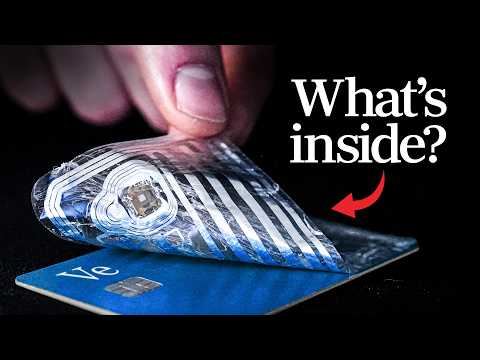
This video explores the hidden technologies within credit cards, tracing their origins back to a CIA counter-surveillance operation and examining their evolution in terms of security and convenience. The narrative begins with a demonstration of how acetone, commonly found in nail polish remover, can dissolve a credit card, leaving behind the internal antenna and chip. This visual sets the stage for understanding the physical components of these everyday objects.
Read AI summary
YouTube
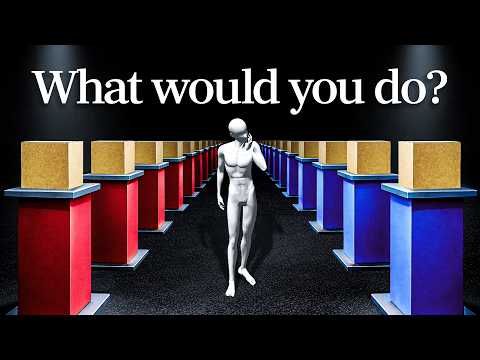
Newcomb’s Paradox presents a thought experiment that challenges our fundamental understanding of rationality, free will, and decision-making. The setup is straightforward: you enter a room containing a supercomputer and two boxes. Box A is transparent and clearly contains $1,000. Box B is opaque, and its contents are a mystery. You are given a choice: you can either take only Box B (one-boxing) or take both Box A and Box B (two-boxing). The twist lies in the supercomputer’s role. It is a near-perfect predictor that has analyzed thousands of people before you with almost total accuracy. Before you even entered the room, the computer predicted what you would do. If it predicted you would take only the mystery box, it placed $1 million inside it. If it predicted you would take both boxes, it left the mystery box empty. Crucially, the prediction and the placement of the money happened in the past. The boxes are already set; nothing you do now can physically change whether the million dollars is inside Box B.
Read AI summary
YouTube
In 2024, the global tech community narrowly avoided a digital catastrophe when a lone developer discovered a sophisticated backdoor in XZ Utils, a critical data compression tool used in nearly every Linux distribution. This event exposed a fundamental vulnerability in the internet's infrastructure: the world’s most secure systems often rely on small, obscure libraries maintained by single, unpaid volunteers. The story of how we became so vulnerable begins with the birth of the open-source movement. In the 1980s, researcher Richard Stallman founded the Free Software Foundation after being denied the source code to fix a jammed printer. He believed software should be free to run, study, change, and share. This philosophy led to the creation of the GNU Project and, eventually, the Linux kernel by Linus Torvalds. Today, Linux powers everything from supercomputers and nuclear submarines to the majority of the world’s internet servers. Because the code is open, it is governed by "Linus’s Law," which suggests that "with enough eyeballs, all bugs are shallow." However, the XZ incident proved that when a project is obscure enough, those eyeballs may not be looking.
Read AI summary
YouTube